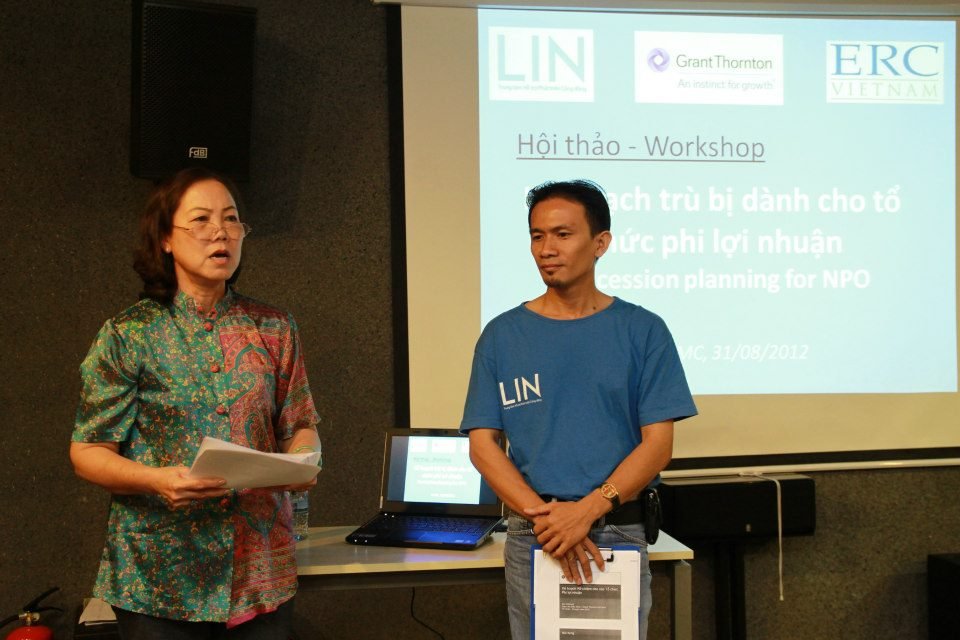
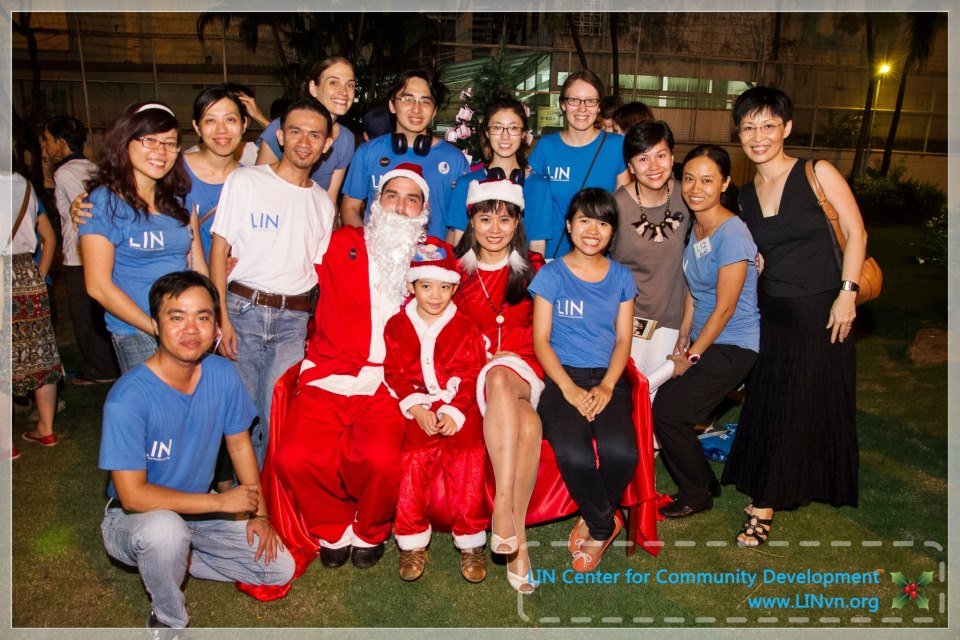
HSBC Volunteers meet with Nhan Ai Volunteer Group (NPO) & Rio Group (Skilled Volunteers)
As part of LIN's Community Partnership Initiative 2014 (CPI 2014), which is designed to enhance NPO's financial sustainability, HSBC bank in Vietnam organized fove Action Learning training sessions for five NPOs on the 14th, 21st, and 28th of June.
The sessions' agenda focused on solving current obstacles through the Action Learning Method, by channeling the participants' knowledge and experiences into the most effective solution for complicated problems. The "father" of this method, Professor Reginald Revans, explained that Action Learning is asking the appropriate questions at the right moment and coming to action.
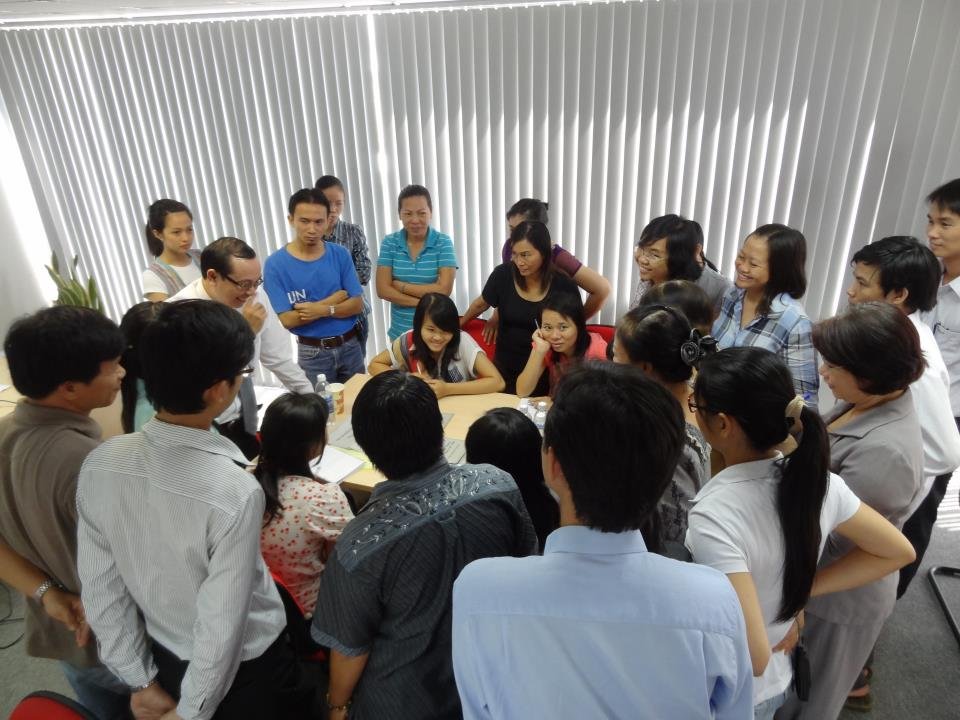
With their respective training experience in HSBC Vietnam, Mr. Nguyen Viet Anh and Mr. Nguyen Lan alternatively acted as "Coach", and applied the Action Learning method in every meeting. In each session, the NPO played the role of the "Problem Presenter", while eight other members, including HSBC staff and each of the NPO's skilled volunteers, played the role of the "Questioners". There were also observers from other NPOs. Consistent with the Learning by Doing approach, the rule to "only ask; or only answer the previous question" was strictly followed. Solutions to problems of NPOs appeared after each 3-hour meeting, and many paths created to building a better future for the organizations.

After using the Action Learning, Mrs. Hong To Hue Lan, head of Ceporer Hoc Mon, said "I have gained insight into some of the practical ways to develop the organization; from writing down all processes and strategies as a social entrepreneur, to recruiting outstanding personnel for administration, and to researching the building path for the social enterprise via Internet and erudite professionals."
Mrs. Le Thi Thu Thuy, director of Thao Dan Child Center, another NPO that joined the Action Learning, can define precisely the essence of their drawbacks. She said, "I believe our financial problem originates from the lack of professionalism in administration. After this training, I will reconstruct the human resource department, standardize evaluation and head towards investing into a business project in the near future."
Meanwhile, volunteers believe that the method is a new problem-solving approach, but the 3-hour-or-more meeting reduces concentration. There are some elements to this method that are far from practice and is a gap that needs closing through positive thinking and a "change-daring" spirit. However, its impacts are undeniably effective. From the participants' contribution, NPOs can start removing current barriers and start witnessing the upcoming changes towards a better direction.