By Carina Schmid | Director of Global Health Progams
I am excited to share that I participated in a webinar on the Girls Not Brides Scoping Study (see our March report) on June 14th, alongside Professor Dr. Martine Bouman from the Center for Media and Health and Kriss Barker, PhD, from the Population Media Center, to discuss some of the projects featured in the study with an international audience. Please access this link to listen to the recorded event: https://www.youtube.com/watch?v=ViloZKbafkc&feature=youtu.be
I focused on Ouro Negro’s approach to using Entertainment-Education to engage listeners in challenging social norms around child marriage. Our recent evaluation revealed that Ouro Negro listeners were more likely than non-listeners to discuss health and equality topics covered on the show with their significant others, highlighting the program’s positive effect on interpersonal communication. There was also an increase in the perceived importance of delaying marriage until age 18 or older among families and community members after the show was broadcasted. Specifically-- exposed listeners believed that gaining maturity was a benefit of delaying marriage and that there were no social sanctions for getting married after 18. These evaluation results demonstrate a promising positive change that could shift social norms to discourage child marriage.
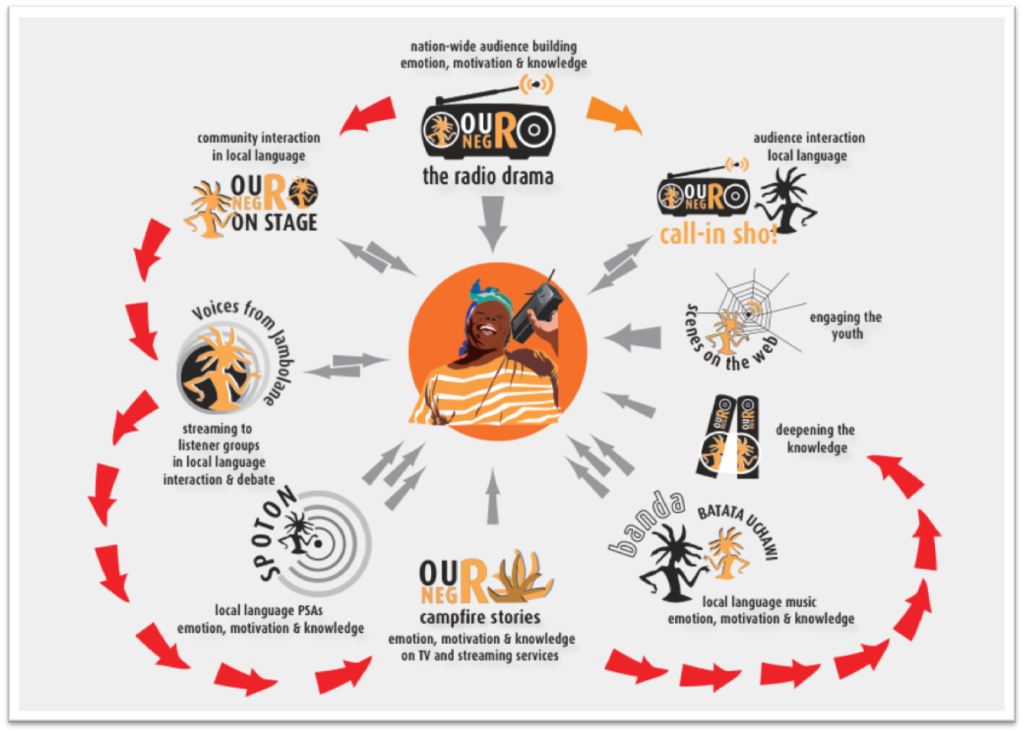
So what’s next for Ouro Negro? While the creative team is busy producing the next season of this dynamic radio drama, Ouro Negro’s storylines are extending from the air waves to town squares through community theater productions that are performed in local languages and accompanied by facilitated discussions to spark conversations among the live audiences. We have also just launched Ouro Negro ao Vivo!, a pre-recorded talk show produced by multiple radio stations in local languages in which the radio hosts engages local experts and audience members, using the drama as a vehicle for people to reflect on how these issues affect their own lives. The show also provides an opportunity to feature information that is tailored to specific communities. Radio hosts receive Toolkits with talking points and episode summaries to help guide the conversation.
By Carina Schmid | Program Manager
By Carina Schmid | Program Manager
Project reports on GlobalGiving are posted directly to globalgiving.org by Project Leaders as they are completed, generally every 3-4 months. To protect the integrity of these documents, GlobalGiving does not alter them; therefore you may find some language or formatting issues.
If you donate to this project or have donated to this project, you can receive an email when this project posts a report. You can also subscribe for reports without donating.