By Jennifer Smith | Executive Director
With the support of our GlobalGiving donors, the International Legal Foundation conducted an assessment of the legal aid system in Laos in February 2018. We found that the lack of early access to quality counsel, poor training for legal aid providers and an insufficient system of administering legal aid to people in need of legal aid services were leading to persistent rights violations that have resulted in a legal aid crisis in Laos. To assist the Lao government in addressing the challenges to achieving access to justice for poor and marginalized accused the ILF now plans to provide assistance to Lao legal aid providers.
In our assessment in February, the ILF determined there was a critical need for criminal legal aid services in Laos to challenge illegal and arbitrary actions of authorities that violate the rights of the poor, such as illegal detention, torture, and the lack of access to government evidence. This need has been acknowledged by the Lao government in two decrees on legal aid, issued in 2017. These decrees set out principles, regulations, approaches, and measures for the creation and use of Legal Aid Funds, which will promote access to justice through free legal aid. Access to legal aid creates equality before the law and provides opportunities for justice to those suffering from systemic disadvantages such as the poor, people with disabilities, children, defendants in death penalty cases, and female victims of violence and human trafficking. These decrees are supported by Laos’ legal aid regulation and the Constitution, which provides for the right to counsel, defense, and equality before the law.
Despite these on-paper protections, rights violations Lao courts are distressingly common. One of the main issues is that there is no culture of defense in Laos. As of 2016, there were approximately 200 licensed lawyers in the Lao Bar Association, from which only about 30 actively practice law (with most residing in Vientiane – the capital city). There are some efforts to increase the number of lawyers and improve legal education with 20 new lawyers being licensed in 2017. Of this small group of lawyers some are appointed to represent people in accordance with the legal aid decrees mentioned above, while others only provide advice and assistance through Legal Aid Offices managed by the Ministry of Justice. Although this is the beginning of a structure for the provision of legal aid, neither the legal aid clinics nor the legal aid offices operate based on internationally recognized best practices and standards in criminal defense representation. There is no system of mentoring and training to ensure that lawyers are providing quality representation to their clients, and no monitoring and evaluation system measure performance or outcomes. As a result, legal aid training in Laos is ad hoc, and practitioners are flying blind.
Most critically, people are not receiving early access to legal aid. Lawyers are only appointed after the investigation has been completed, which is problematic for two reasons: First, the investigation often runs as long as seven to ten days, during which time the defendant is kept in detention without regard for their rights. Second, the trial phase is often too late in the process to effectively protect clients from coerced statements and confessions, abuse, and torture, or to advocate for release or diversion. This delay also impedes proactive defense investigation and access to information necessary to ensure the right to counsel and to defense. As a result, most poor and marginalized people arrested in Laos do not get access to quality counsel and are forced to stand unrepresented and unprotected before the court. In a recent example, four criminally accused co-defendants stood unrepresented before the court, each was interrogated by a three panel court, the judges convened briefly behind closed doors and returned with verdicts of guilt for each defendant and they were immediately sentenced. Without the presence of counsel none of the accused was able to access his right to defense or counsel as granted by Lao’s constitution.
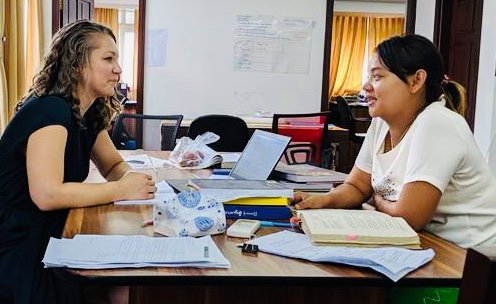
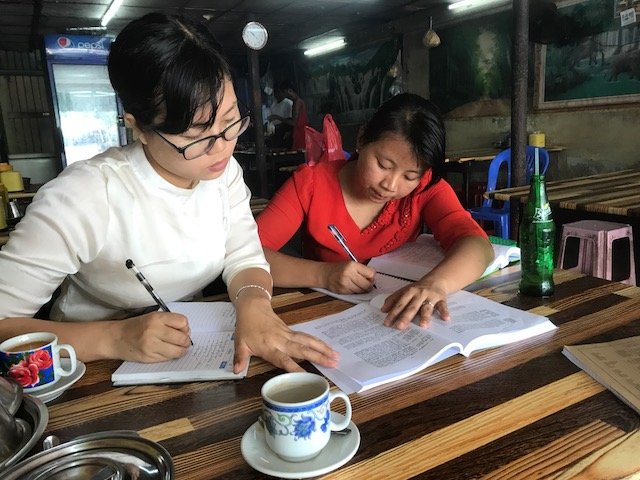
As a part of its approach for the Laos program, the ILF will seek to partner with existing government institutions to develop legal aid capacity through the ILF’s signature mentoring programming with the support of International Fellows. The ILF’s International Fellows program recruits recognized experts in criminal defense to provide day to day case by case mentorship and training to local legal aid providers that will lay the groundwork for reform. The fellows adhere to ILF’s rigorous legal aid standards such as the 10 Practice Principles articulated in ILF’s Measuring Justice Defining and Evaluating Quality for Criminal Legal Aid Providers while bringing along personalized lessons from their careers as public defenders in jurisdictions around the world. Our standards, which are available for download, have been hailed by legal practitioners around the world as a definitive set of interational best practices, and we're excited to tailor them to the laws and conditions of Laos.
We have made incredible strides in our Southeast Asia programs. In contrast to traditional funding sources, GlobalGiving gives us the flexibility that we need to conduct assessments and respond in real time to local legal aid crises as illustrated by the ILF successful expansion into Myanmar in 2017. The ability to dedicate resources to recognizing issues with criminal justice systems and then acting to mitigate them is vital to our mission. Please consider renewing your donation today and helping us to advance access to justice in Laos and around the world.
Project reports on GlobalGiving are posted directly to globalgiving.org by Project Leaders as they are completed, generally every 3-4 months. To protect the integrity of these documents, GlobalGiving does not alter them; therefore you may find some language or formatting issues.
If you donate to this project or have donated to this project, you can receive an email when this project posts a report. You can also subscribe for reports without donating.