By Jennifer Smith | Executive Director
The International Legal Foundation is dedicated to ensuring that the poor and vulnerable have access to legal aid in post-conflict and transitioning countries around the world. With your assistance, the ILF was able to travel to Laos the first week of February 2018 to assess the ongoing crisis in access to legal aid services; and determine how we may be able to help address the crisis.
Over the course of our assessment, we found that the right to legal aid in Laos is in a severe state of crisis, resulting in an unjust system of justice that places poor persons at constant risk of illegal arrest and detention, coerced and tortured confessions, and wrongful conviction. The 2016 Country Report on Human Rights Practices, published by the U.S. Department of State, lists “abusive prison conditions; lack of due process, including arbitrary arrest and detention” among the worst human rights abuses in Laos, alongside a political atmosphere that encourages discrimination in policing. The report further states that the Laotian government “neither prosecuted nor punished officials who committed abuses, and police and security forces acted with impunity.”
A significant impediment to access to legal aid is the severe dearth of lawyers. In a country of 7.5 million people, there are only 200 practicing lawyers. Even worse, the only lawyers engaging in practice are the ones who work in the appellate courts in the capital. This is despite the fact that juveniles, disabled, and mentally ill accused are guaranteed a lawyer under Laotian law. In a recent trial, a courtroom observer from The Asia Foundation witnessed four defendants go before the tribunal for their first court hearing: three criminal, one civil. None of the accused had a lawyer, and there was no telling how long they had been detained before this first court appearance.
Without access to legal aid, the majority of people in Laos do not have any meaningful access to justice. The Laotian government incentivizes villages against reporting crimes, instead encouraging them to engage in community arbitration, which can often lead to unfair procedures and unjust outcomes for the poor and vulnerable. Additionally, while these village mediation centers are only supposed to adjudicate civil matters, the ILF found evidence that they are often used in criminal matters as well.
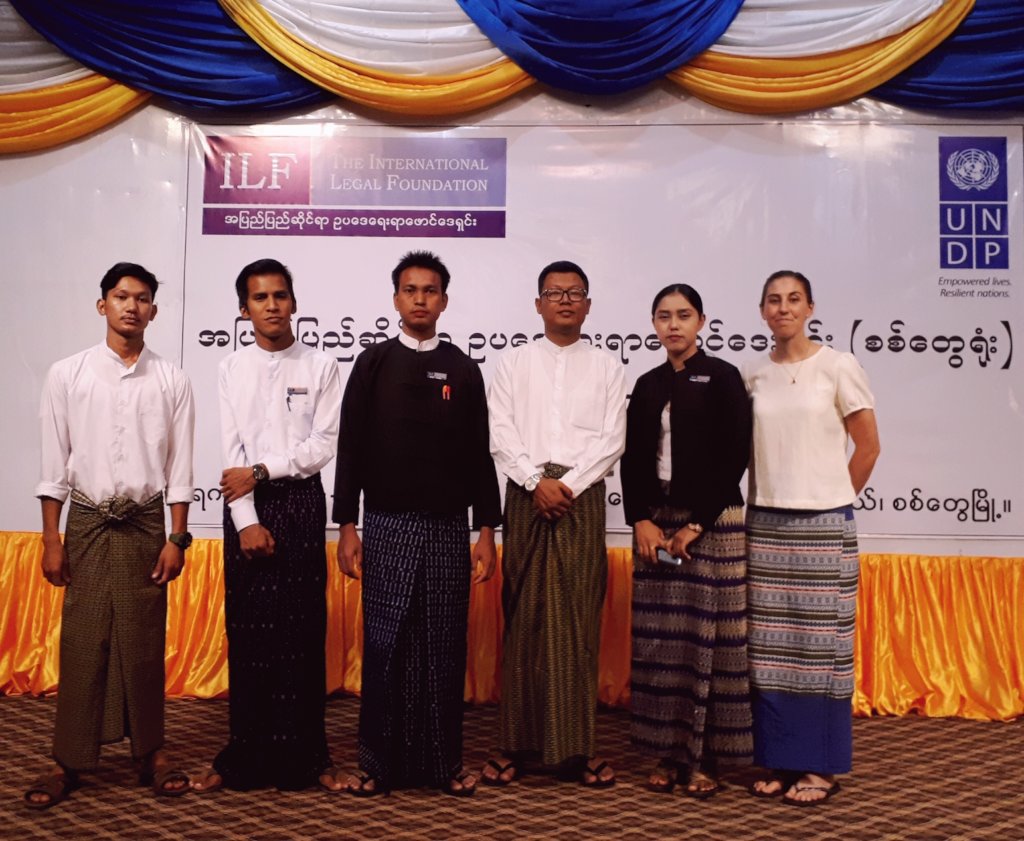
However, there are signs of hope. The UN Development Programme reports that 20 new lawyers were licensed in 2017, a 10% increase. With your help, the ILF will work to see how it can assist Laos to provide meaningful access to legal aid to poor and vulnerable accused, as we have recently done in neighboring Myanmar.
Project reports on GlobalGiving are posted directly to globalgiving.org by Project Leaders as they are completed, generally every 3-4 months. To protect the integrity of these documents, GlobalGiving does not alter them; therefore you may find some language or formatting issues.
If you donate to this project or have donated to this project, you can receive an email when this project posts a report. You can also subscribe for reports without donating.