By Lisha McCormick | Director, Partnerships & Development
Last Mile Health
Quarterly Report October - December 2014
Ebola Response Update
Working with the Rivercess and Grand Gedeh County Health Teams, Last Mile Health (LMH) has executed a coordinated Ebola response effort and laid the foundation for rebuilding a resilient health system covering all eight administrative districts in Rivercess County, and three districts in Grand Gedeh, with a total population of close to 93,000 people. Teams in both counties and in Monrovia are ensuring that the response reaches across the community, facility and national levels.
Facility Level: By January, LMH medical teams visited all 33 health facilities in Grand Gedeh and Rivercess Counties, training staff in effective infection prevention and control (IPC). Through the establishment of a MESH (Monitoring & Enhanced Supervision of Health facilities) network, LMH will follow-up monthly to troubleshoot problems and ensure that standards are being maintained. LMH-developed IPC measures for health facilities have been shared and are being used by organizations across the country.
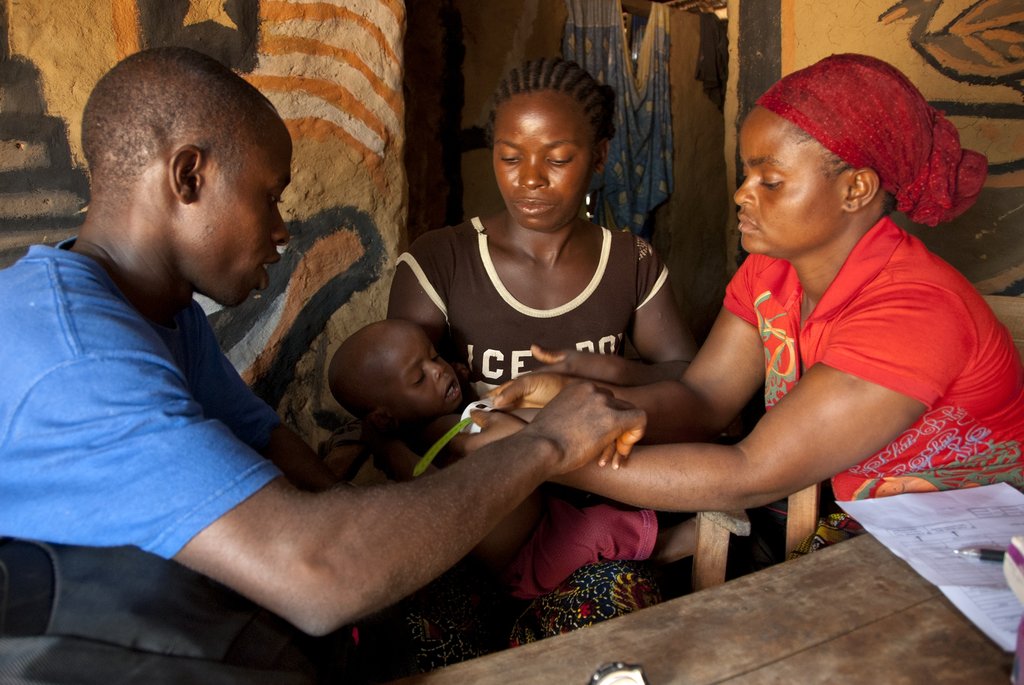
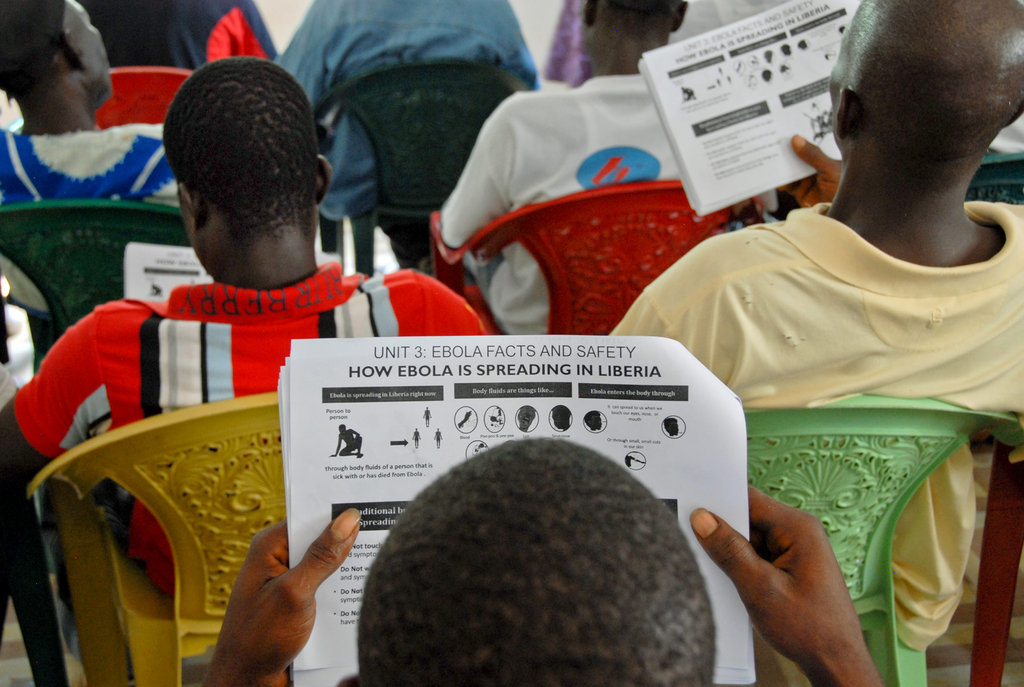
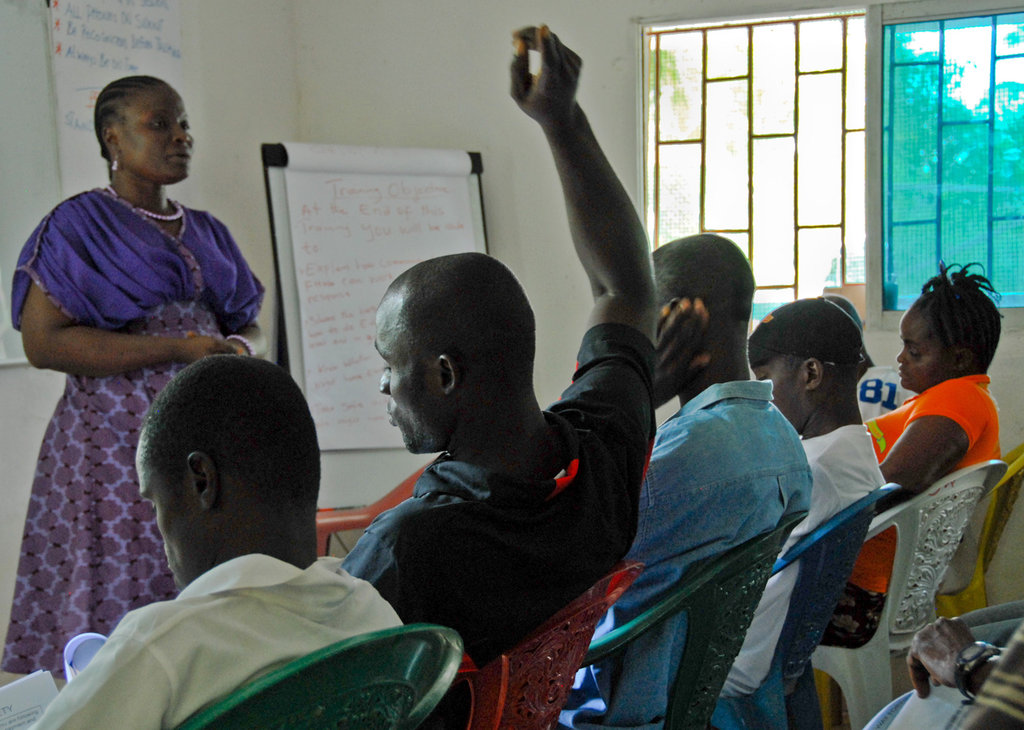
Community: By the end of December, LMH trained 132 community health workers (CHW), 23 CHW supervisors and 133 community health committee members in Ebola response and social mobilization. CHWs were also trained in case identification and contact tracing.
National: LMH provides ongoing support to the Ministry of Health (MOH) in developing and implementing a cohesive national Ebola response strategy, through embedding LMH staff in the Incident Management System, and participation in the MOH’s restoration of health services initiative.
Impact in Konobo: Key Performance Indicators
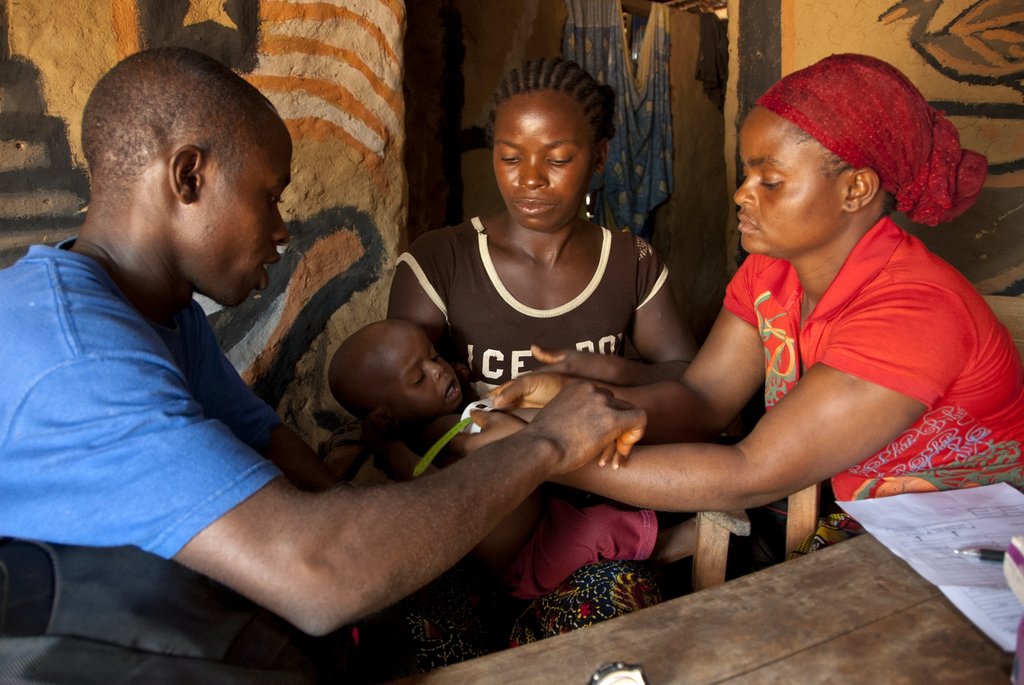
While Liberia has grappled with this monumental public health crisis, its already fragile progress on key health indicators has stagnated, and in many areas, regressed. The MOH estimates that almost 50% of health services are not functioning at full capacity. Both Grand Gedeh and Rivercess have experienced major reductions in immunization rates and maternal health services. Rates of women receiving the WHO-recommended four or more antenatal care (ANC) visits in Grand Gedeh have dropped from 81.5% to 62.2% and vaccination rates have plummeted by 50%. In Rivercess, the percentage of women who receive four ANC visits has fallen from 65% to 41.3%. While community health services have halted in many regions, in Konobo, LMH’s 55 FHWs have preserved and restored health services. FHWs have treated over 4,000 cases of childhood pneumonia, malaria and diarrhea since the outbreak began and maintained high levels of facility-based delivery (79%) and prenatal care (95%).
Recent data collected by our Monitoring and Evaluation team show progress in Maternal and Neonatal Health (MNH) in particular. As displayed in the graph below (reflecting five year averages), over the last two years, there has been an 18.4% jump in the number mothers receiving the WHO-recommended four antenatal care (ANC) visits, and the number of pregnant women who received zero ANC visits dropped 50%. LMH remains committed to Konobo and will work with its FHWs to restore the upward trend as Liberia recovers from Ebola.
Mapping Our Growth
Konobo: In 2012, LMH piloted its FHW model in Konobo—the lightly shaded region on the right of the map. Now its innovation site for testing new features of the model, LMH rolled out a new ‘near-facility’ cohort of FHWs in Konobo. Near-facility FHWs fill a gap in the referral link between remote FHWs and the facility. For example, these 13 new near-facility FHWs will be able to monitor pregnant women who have relocated closer to the facility during the month prior to their due date. Combined with the original cadre of 42 FHWs, LMH now supports a total of 55 FHWs and 6 FHW Leaders in Konobo.
Gboe-Ploe, the central shaded area on the map, is one of the most isolated regions in Liberia, with some villages located a 23 hours’ walk from the nearest health facility. In December, LMH sent a small team to assess the area and reconfirmed its commitment to replicate the program and recruit 26 FHWs to serve an area of 6,300 people.
Rivercess County represents the largest portion of LMH’s work to scale-up the FHW model in 2015. Relationships built with the County Health Team through collaborative Ebola response work have paved the way for future growth, with LMH committed to serving the county and its residents on a more permanent basis. It is hoped that by September, the first two FHW modules will have been delivered to roughly 297 FHWs. These include provision of integrated Community Case Management (iCCM) services for malaria, diarrhea, and acute respiratory infection, and signify the commencement of essential health care provision for an estimated 72,000 people.
Vision for National Scale – the Health Workforce Program
At the government level, LMH’s Health Systems Policy & Planning team have been working with the Ministry of Health (MOH) and the Clinton Health Access Initiative (CHAI) to develop a 10-year Health Workforce Program (HWP). The plan seeks to train and deploy over 11,000 professional community health workers (CHWs) across Liberia as part of health systems strengthening founded on community-based healthcare provision.
Her Excellency, President Ellen Johnson Sirleaf has voiced strong support for the plan, saying ‘I could not agree more about building local capacity. Our 10-year health workforce plan is about building that capacity at all levels – particularly at the bottom.’
LMH is committed to partnering with MOH and CHAI to deliver a comprehensive, universally accessible health system through the HWP that serves rural Liberians, ending the inequality of access to services based on living too far from a health facility. In 2015, LMH will work with the Rivercess County Health Team to recruit and deploy close to 300 CHWs for 100% coverage of the county. Combined with facility support, this network of CHWs will restore and improve the quality of essential health services and create a countywide model for rebuilding a resilient health workforce that can be replicated nationwide as part of the National Health Workforce Program.
Serving the Last Mile: Going to Gboe
On December 31st, Steve Selinsky checked in for LMH’s assessment team: “Crashing for the night in Zammie Town. Happy New Year all.” Meaning? Last Mile Health is back in Gboe, for good.
Gboe is the southern region of Gboe-Ploe, a geographically remote and neglected district in the southwest corner of Grand Gedeh County. The dense jungle and sprawling rivers and creeks leave all but one community in Gboe inaccessible by road. Most trails between communities are too narrow even for motorbikes, and can only be reached on foot. There is no cell service (Steve’s message was sent via an InReach Satellite Communicator), no electricity, safe water supply or latrines, no policing or health facility, and no external organizations working in region. Last year, an international health partner trained a cadre of general Community Health Volunteers, but only one of these has ever requested more medical supplies, signifying a serious lack of service provision.
In October 2013, Team ‘Not For Fun’ – affectionately named because of the torrid travel required to reach Gboe – trekked out to the remote region to scope the area as a potential LMH site and to welcome a group of valued partners and friends who visited to gain a first hand view of the settings in which LMH operates. The need, even for the most basic of services, was confirmed—two thirds of children under-five were found to have at least one of the most pressing childhood illnesses: malaria, pneumonia or diarrhea. Half had all three. With the nearest facility a 23-hour walk away, community members are likely be considered not ill enough to make the trip worth the effort, or too ill to be capable of making it.
Just over one year later, in December 2014, Steve Selinsky (LMH Project Officer) led a team back into Gboe to conduct a further assessment and begin community engagement with six villages. Patrick, LMH mechanic, ensured that the team’s motorbikes bore them safely to and from the area, while Theo, a long-serving member of LMH and FHW Leader, explained to community members what LMH does, how we work, and what our impact is on the health of communities.
Plans are now being made for how the FHW program will be successfully translated into, and sustained in, Gboe. Compared with Konobo, Steve describes Gboe as ‘an entirely different game’. Gboe’s isolation, its absence of available health services, and indeed any other services, places it firmly under the definition of ‘last mile’. Motivated rather than daunted, LMH will work to fulfil our commitment to Gboe and bring life-saving essential health care provision to the region in 2015.
Project reports on GlobalGiving are posted directly to globalgiving.org by Project Leaders as they are completed, generally every 3-4 months. To protect the integrity of these documents, GlobalGiving does not alter them; therefore you may find some language or formatting issues.
If you donate to this project or have donated to this project, you can receive an email when this project posts a report. You can also subscribe for reports without donating.