By Alex Stott | PR and Communications
Despite being long forgotten to many in the West, the Lao victims of the Indochina War still struggle with their daily lives. Often with debilitating injuries and unable to work, veterans and their families survive mostly off of a government pension and whatever the women can bring home.
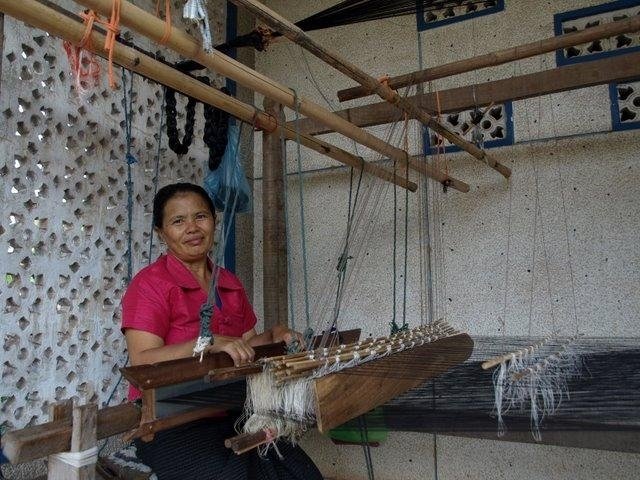
Women in Laos suffer more inequality than women in most other countries, but this doesn’t stop those with talent and drive to break through the gender barriers. The women of the 790 Disabled Veterans Village are doing just that, and SEDA is by their side in their battle against economic and gender inequality. SEDA is continuing with its support for the weaver women through a microfinance project to inject capital and training into their community. The unique weaving of Laos is revered internationally, but often village-bound weavers lack the marketing skills to access markets beyond their local trading centres.
SEDA empowers the weavers with small capital loans to invest in their village industry, while also giving them valuable access to international markets for their products. The project is showing increased success, and February 12 saw the visit of Denis Nkala, chief of the South-South Unit (Asia and Pacific) of the UNDP Regional Centre in Bangkok. Denis was given a tour of the village to see firsthand the spinning and dying techniques of these resourceful villagers. Using 100% organic methods, the cloths go through a cycle from dying and warping, to threading, to weaving—all by hand on traditional looms.
“Community-level projects worldwide are all finding their own ways to address sustainability, and we have seen one such story today,” said Denis.
Denis was joined on his visit by SEDA’s Lao and international volunteers, alongside founder Souly QuachAngkham. Once the display was over, the whole party was treated to a village feast of Lao sticky rice and fish, and none were left unsatisfied.
“We are so glad of SEDA’s support, and we hope UNDP’s presence can lead to further success in the future,” the head of the weavers’ cooperative, Vilay Thong, said.
The women and SEDA were keen to stress that this was not a celebratory visit. With the recent expansion of the cooperative group by 25 members, there was still work to be done, but the mood was nonetheless upbeat and optimistic about the future.
In many ways, it is up to the women now to continue with these early successes, but the support of SEDA and partners, along with the UNDP will surely give them the best possible shot at building a sustainable model of community-level income generation for their daughters and granddaughters.
Project reports on GlobalGiving are posted directly to globalgiving.org by Project Leaders as they are completed, generally every 3-4 months. To protect the integrity of these documents, GlobalGiving does not alter them; therefore you may find some language or formatting issues.
If you donate to this project or have donated to this project, you can receive an email when this project posts a report. You can also subscribe for reports without donating.










