By Atsuko Hattori and Yoshitaka Okada | Vice Board and Board Representative of DSIA
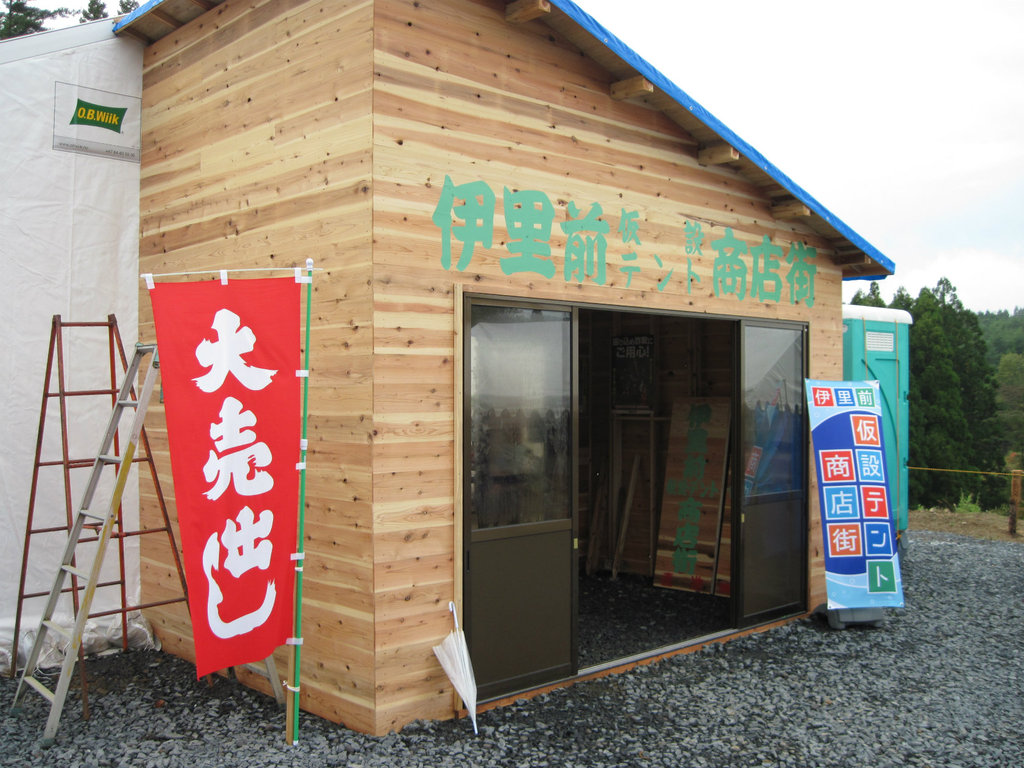
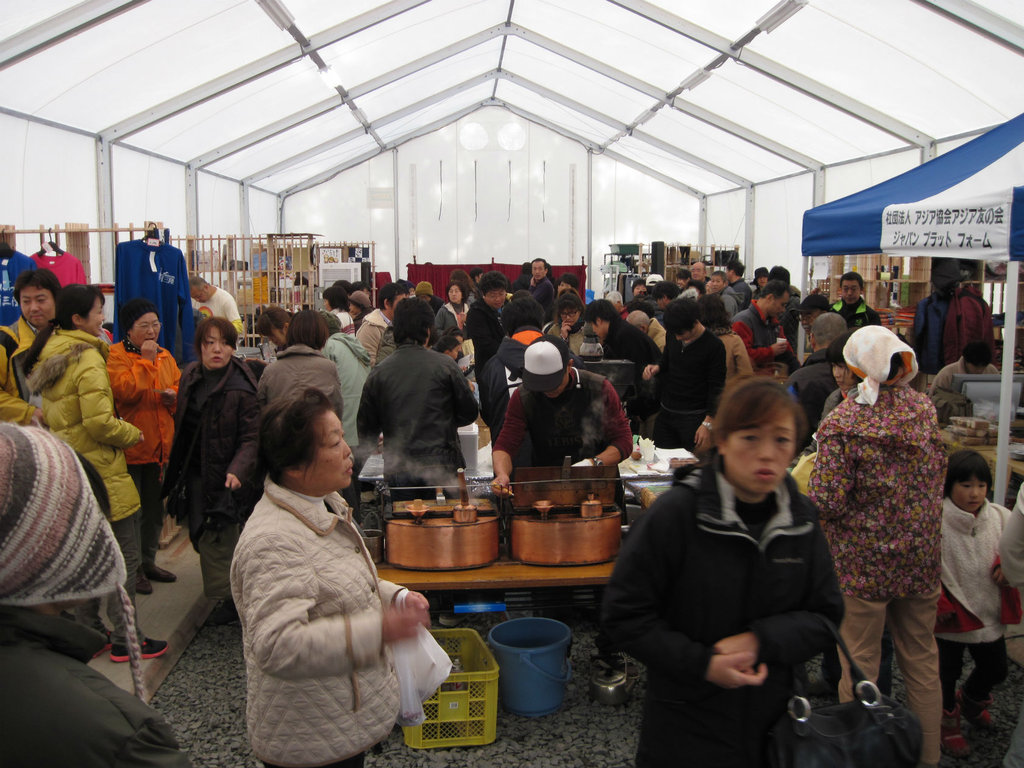
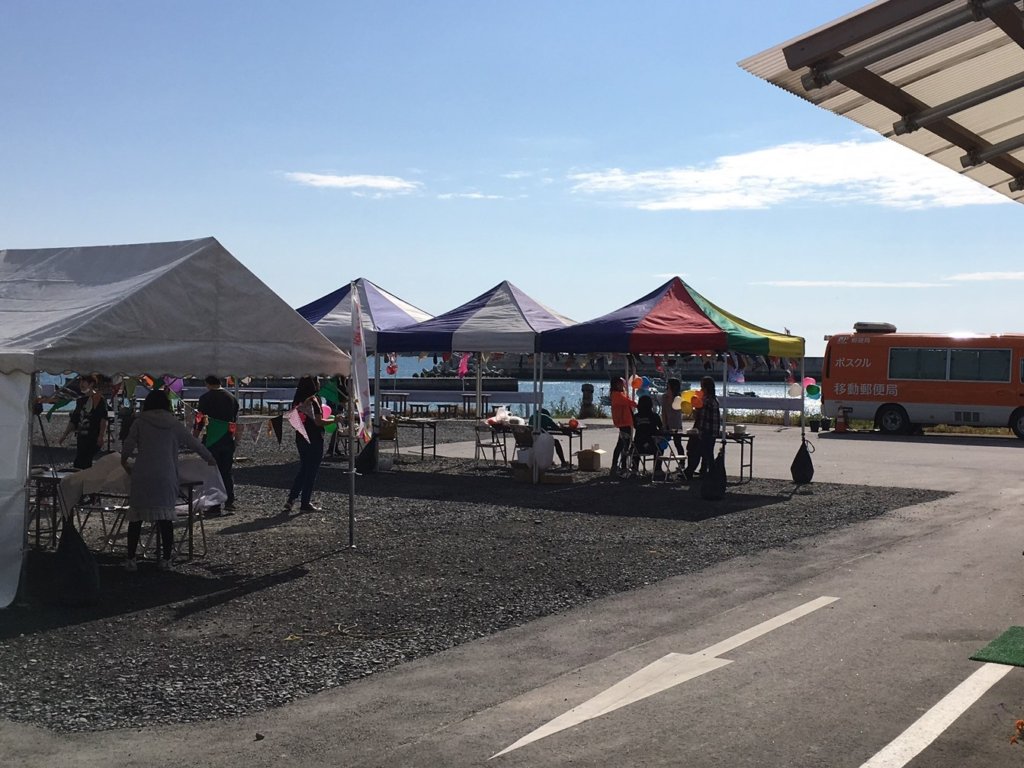
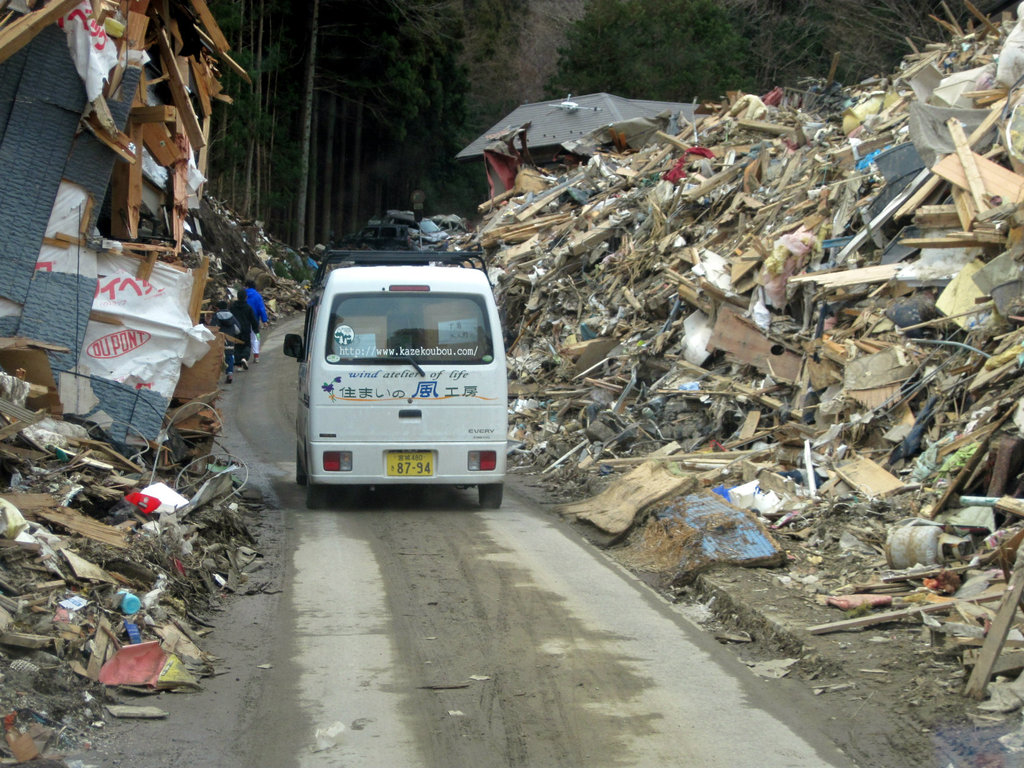
Still many dump cars are going back and forth, busy in raising the level of land (Picture 1) to be use for building the final main shop arcade. It is scheduled to be completed in April 2017. On Oct. 19th, 2016, the ceremony of starting to build the arcade was conducted. Besides, an exit of a highway will be also constructed. Since the temporary shop arcade this weekend will organize an event, it has quite many young people gathering. It seems that the place is busy with people and trucks, giving a strong impression of redevelopment (Picture 2). But people in the town seems to be split into two groups of those who remember the old scenery before the disaster and elementary school children up to the third grade who do not remember the past scenery and grew up with the sound of redevelopment.
During the past five years, children took school buses for the safety of children, funded by the redevelopment budget, costing 0.2 billion yen a year. With the government budget cut for redevelopment, now a discussion is taking place even to cut school buses, unless the Minami-sanriku Township will finance the operation, which is unlikely to come up with a budget of such a big sum.
Besides, children used to walk a long distance, while the younger generation has been riding the school bus, losing a valuable opportunity to build their muscle. Although school buses are likely to be maintained, while dump cars are speeding in the main street, local culture, which used to maintain a sense of community as well as the physical strength of children, seems to have disappeared. How can the redevelopment of the past culture be achieved? It is quite a difficult question, since they feel that they are moving to a completely unknown direction.
When redevelopment construction ends and when the scenery and people’s practices change, how do people face this new stage? On October 1, 2016, the Tomura Community Center was opened, which was in the past a junior-high-school building whose first floor was destroyed by Tsunami. The school was forced to merge with another school. With some repairs, it is now used as a community center, which includes the Disaster Learning Seminar Room and a room for collecting and keeping disaster-related materials. Only existing high school, Shizukawa High School in the neighboring part of the township, now suffers from the decline of student enrollment, and decided to reduce one class down to three classes from the next April. Now, the township is planning to use the unused classroom to keep documents related to the disaster, so that people do not forget the incident.
Job opportunities for the younger generation has also changed. In the past, they all worked as fishermen, but now a significant number of them work in construction businesses involved in the redevelopment of the area. They work in small- and medium-sized construction subcontractors, which pays far less salary than that of an ordinary businessman. A big question is whether they will be continuously employed after the completion of redevelopment construction. Can they find a job a few years later? This also generate a worry to shop owners in the arcade, since the consumption will drastically decline when no job is available to young people. Besides, inequality between young fishermen and unemployed people will be a serious social problem.
According to the Committee for Redeveloping Isatomae Community, the number of people participating in its meetings have drastically declined. The redevelopment of hard infrastructure is undeniably advancing, while that of soft side is carrying a hidden bomb of aggravating community problems.
One informant to this report decided not to move into the newly built arcade. Instead, he will use a part of his new house, to be established in a redevelopment community of 100 houses. In this way, he believes that he can respond better to the needs of familiar local people and provide goods and services. Other than fishing business, this community may be the only source of stimulating economic activities in Isatomae.
Links:
Project reports on GlobalGiving are posted directly to globalgiving.org by Project Leaders as they are completed, generally every 3-4 months. To protect the integrity of these documents, GlobalGiving does not alter them; therefore you may find some language or formatting issues.
If you donate to this project or have donated to this project, you can receive an email when this project posts a report. You can also subscribe for reports without donating.