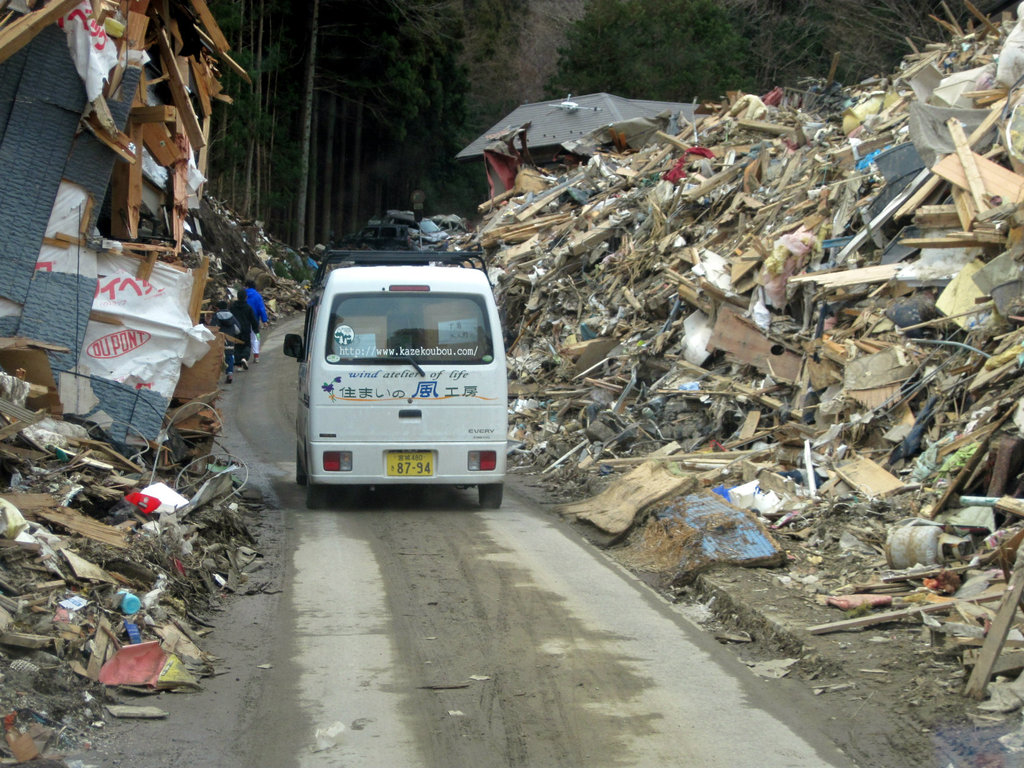
By Yoshitaka Okada | Board Representative, Ippan Shadan Hojin DSIA
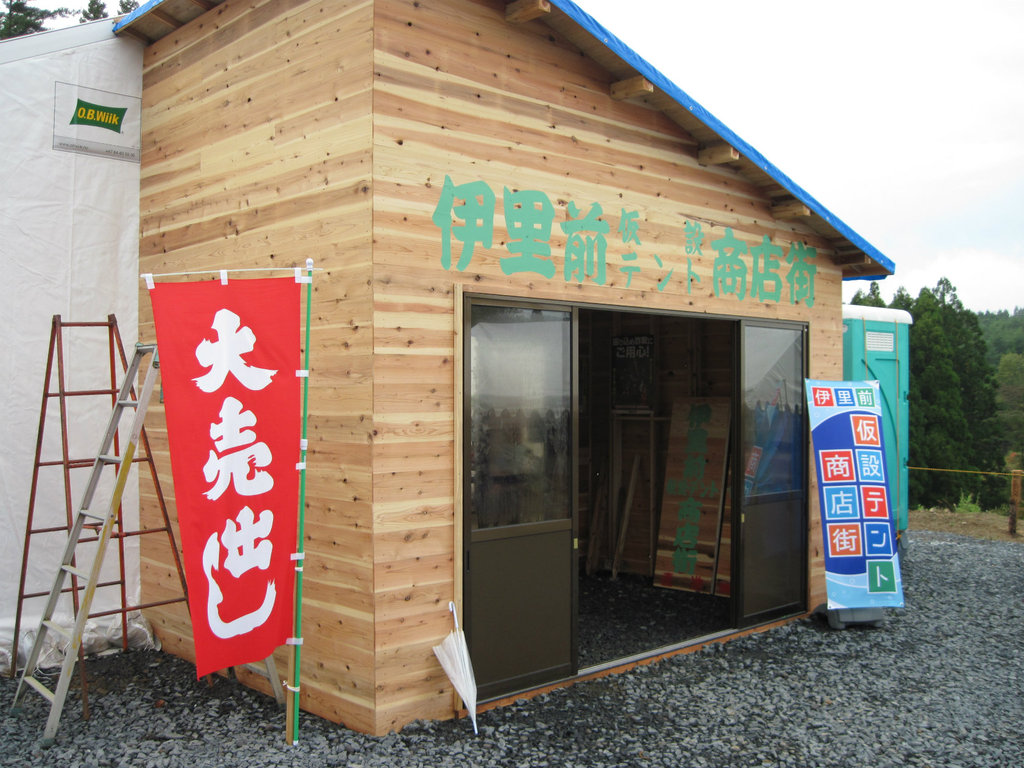
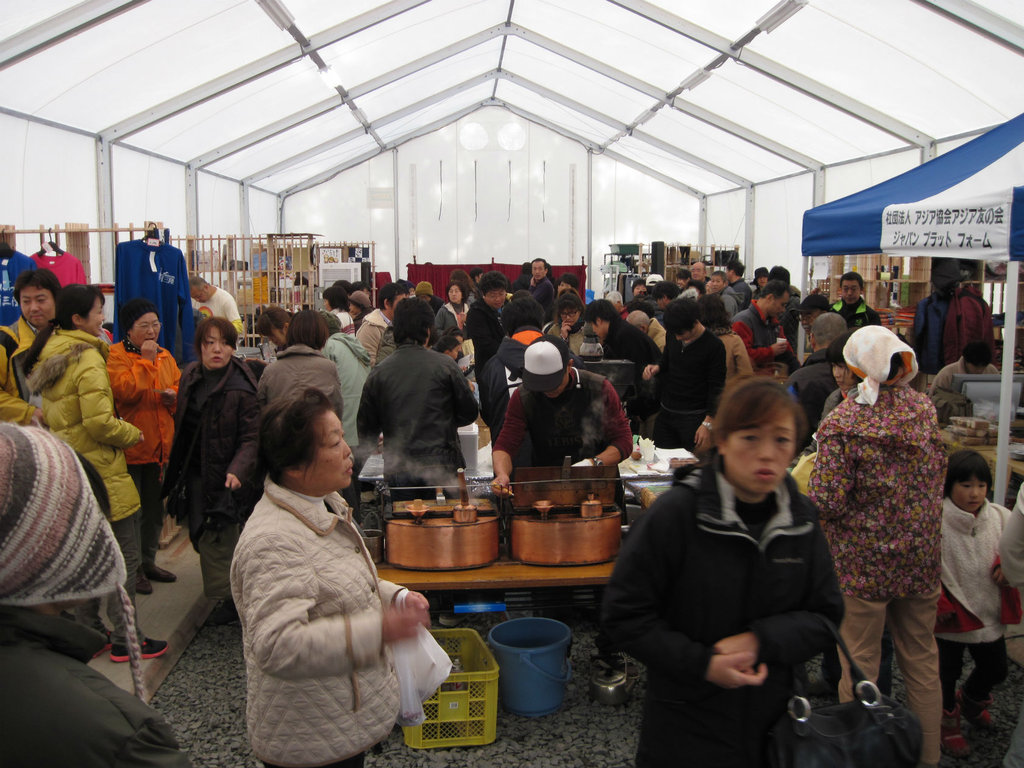
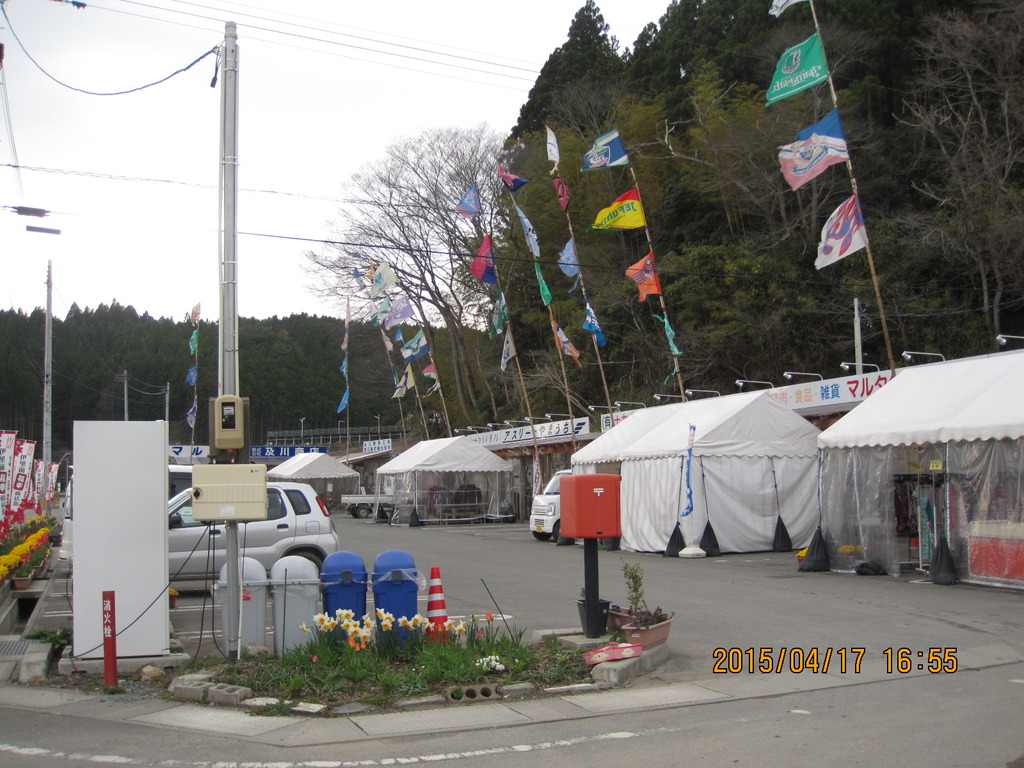
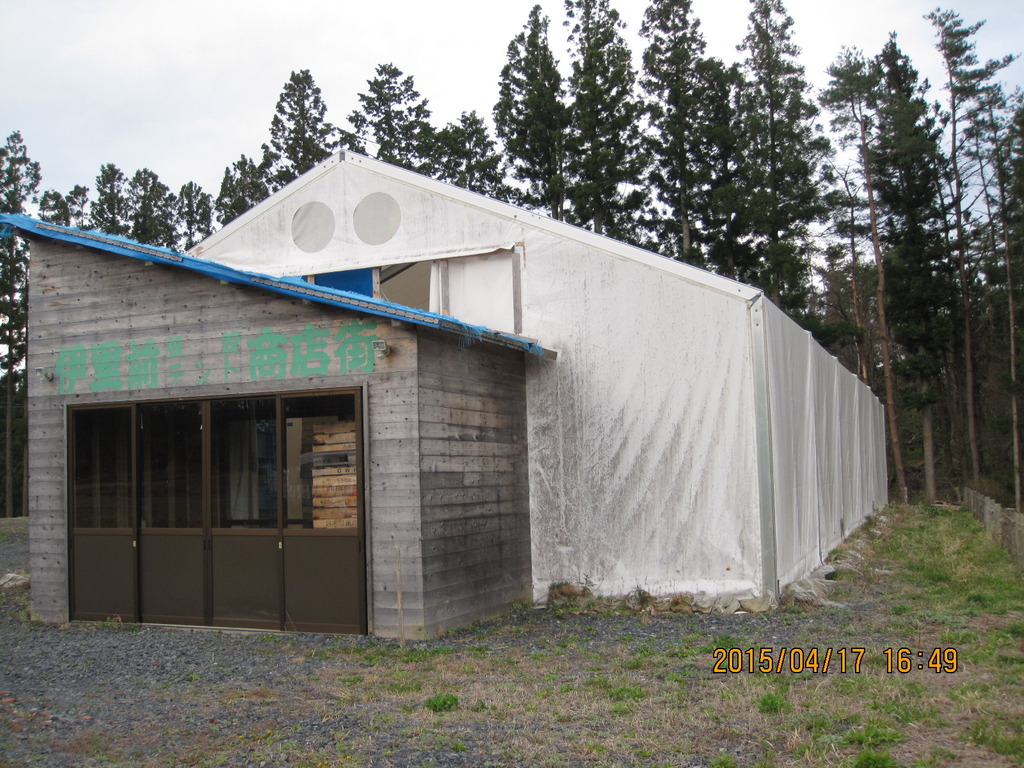
One good news is that the Isatomae Fukko Shopping Arcade (IFSA) now has a clear schedule of moves to a temporary place (in August 2015) and also to the final place (December 2016). Now, people there started seeing the long-waited end of a tunnel..
The other good news is that a support by a labor union of a company mediated by the DSIA may come to be soon finalized. Three people from the labor union came to discuss with the Head of the IFSA, and proposed to sell some of seasonable commodities to about 6,000 full- and part-time union members. For special events organized by the IFSA, union members can voluntary come to not only help their events, but also participate in events. The labor union also offered to purchase a winner’s cup and medals for a football competition among eight grade school teams in the area. They even offered to give discount tickets to all participants to purchase their food sold by dispatched kitchen cars from the company. They are now trying to work out the details.
One very sad news is that the Head of the IFSA was refused to move into the final Arcade to be started in December 2016. He was the one the DSIA negotiated for establishing a temporary shop tent in 2011, has been the key representative of local organizations to receive GlobalGiving donations, and is now trying to organize a system of support to be provided by the labor union mediated by the DSIA. He is the present head of the IFSA, has organized many events to bring tourists, and has been negotiating with the city government for reconstruction. He has been truly devoting to the development of the Isatomae Community.
Why did this happen? In the next month, a new company, which manages shopping arcades in both Sizugawa and Isatomae, will be established. Since the preparatory committee of the company is trying to prevent the future bankruptcy of the company, they developed very strict standards. Their goal is to prepare for the company’s sustainability of the next twenty years. This sounds a very good idea. But the committee asked consultants from Tokyo to evaluate the businesses of all members, and decided that members not having a prospect of survival for the next ten years will not be allowed to move into arcades, even if they have money and wish to join. Since the IFSA Head is operating a clothing and sport goods shop, consultants informed him of future market prediction, which will clearly decline due to shrinking children population. Their prediction turned out to be that he may do well for the next five years, especially due to the reconstruction of the area, but after that, it may become fairly difficult to continue his business. To me, what is taking place now is quite wrong. One reason is because nobody can decide to exit from one’s business other than those who operate businesses themselves. The other reason is that he has been diversifying into a few other businesses just recently which is not yet becoming big. But in many rural areas, it is very common to operate several small businesses to generate some decent revenues. Since I lived in a remote area in Niigata, I saw some companies expanding their businesses frequently through diversification. In a sense, he can dynamically cope with changes in the market as he faces environmental changes. Tokyo consultants treat the situation of each member very statically, and do not see evolutionary potentials. I personally feel that such decision should be left to the initiatives of individual members whether one is to take a risk or not and that the market will come to pressure individuals to make their decisions.
In order to keep the stability of this arcade company, this company is to invite a Tokyo-based convenience store. I am in favor of bringing it to the arcade, as long as they work to help local economy develop rather than simply sucking up the business opportunities of the local. How can it be done? This is clearly another difficult area, since it is far less costly to bring everything from what has been mass produced in other areas. A less populated area will not succeed in generating its economic dynamics without the base of community support and movements. People in Isatomae may end up facing much tougher situations than before if the community disintegrates. Some people criticize some types of consultants for their motives to make money from government subsidies with little interest in helping community development, though how to develop a less-populated area is a difficult issue and a central issue discussed presently in Japan.
Links:
Project reports on GlobalGiving are posted directly to globalgiving.org by Project Leaders as they are completed, generally every 3-4 months. To protect the integrity of these documents, GlobalGiving does not alter them; therefore you may find some language or formatting issues.
If you donate to this project or have donated to this project, you can receive an email when this project posts a report. You can also subscribe for reports without donating.