By Lynn Glover | Chief Executive Officer
IMPACT REPORT: NUMERACY PROJECT 2025
Introduction
The Numeracy Project was established to address the foundational mathematics challenges experienced by young learners in the early years of schooling. The project focused on improving numeracy understanding through small-group, hands-on learning interventions designed specifically for learners whose home language is isiXhosa.
The programme was developed in response to concerning baseline assessment results among Grade 1 learners and aims to provide an effective, low-cost, scalable solution that can be extended into Early Childhood Development (ECD) environments.
1. Baseline Assessment Findings
At the commencement of the project, a baseline assessment was conducted with 271 Grade 1 learners. The assessment measured whether learners had achieved the expected benchmark skills appropriate for their age group.
The findings highlighted significant developmental and educational challenges:
1.1 35% of the learners did not achieve the required benchmark levels and the average percentage obtained by the 271 learners was 48%. (40% in mathematics is the required pass mark for Foundation Phase)
1.2 Many learners required teachers to read and explain assessment instructions to them.
1.3 A particularly alarming finding was that many learners were unable to write their own names independently.
These results demonstrated severe foundational learning gaps, particularly in early numeracy readiness, language comprehension, and fine motor development.
2. Project Design and Intervention Strategy
The project sample was intentionally selected from the highest-performing learners identified during the baseline assessment. This approach was based on the understanding that high-achieving learners in mainstream classrooms are often insufficiently challenged because teachers must slow the pace of teaching to support underachieving learners.
2. By working separately with the stronger learners:
2.1 Learners received enriched and stimulating numeracy support suited to their abilities.
2.2 Classroom teachers were able to dedicate more focused attention to learners requiring additional support.
3. Programme Structure
3.1 Learners attended two sessions per week
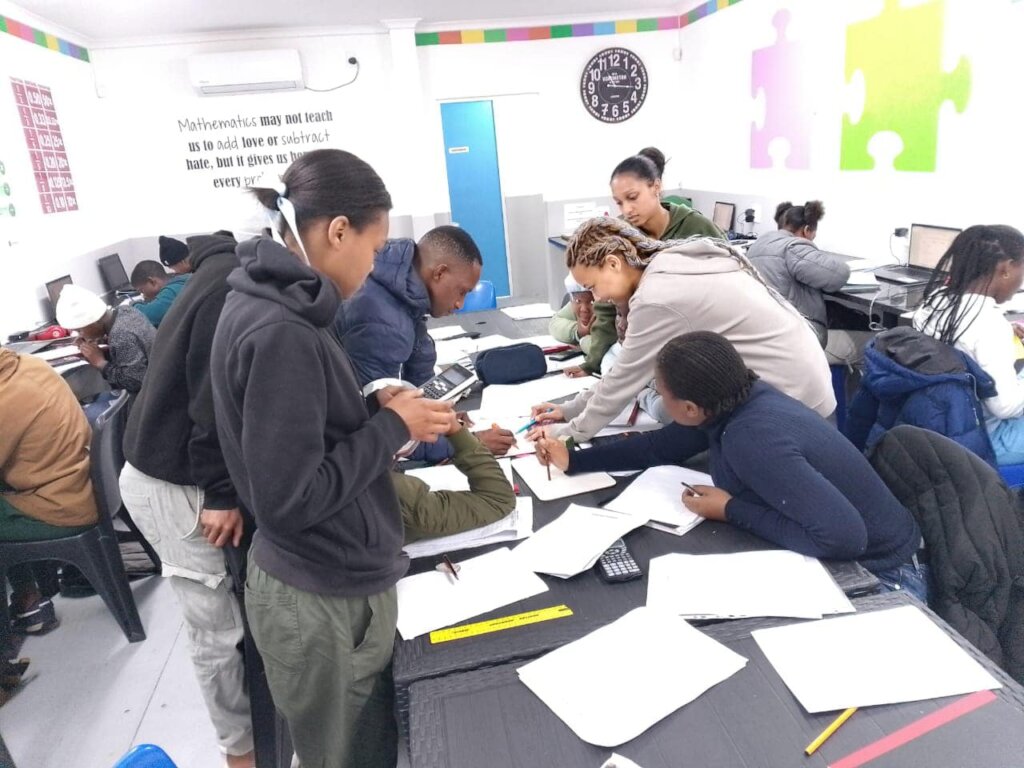
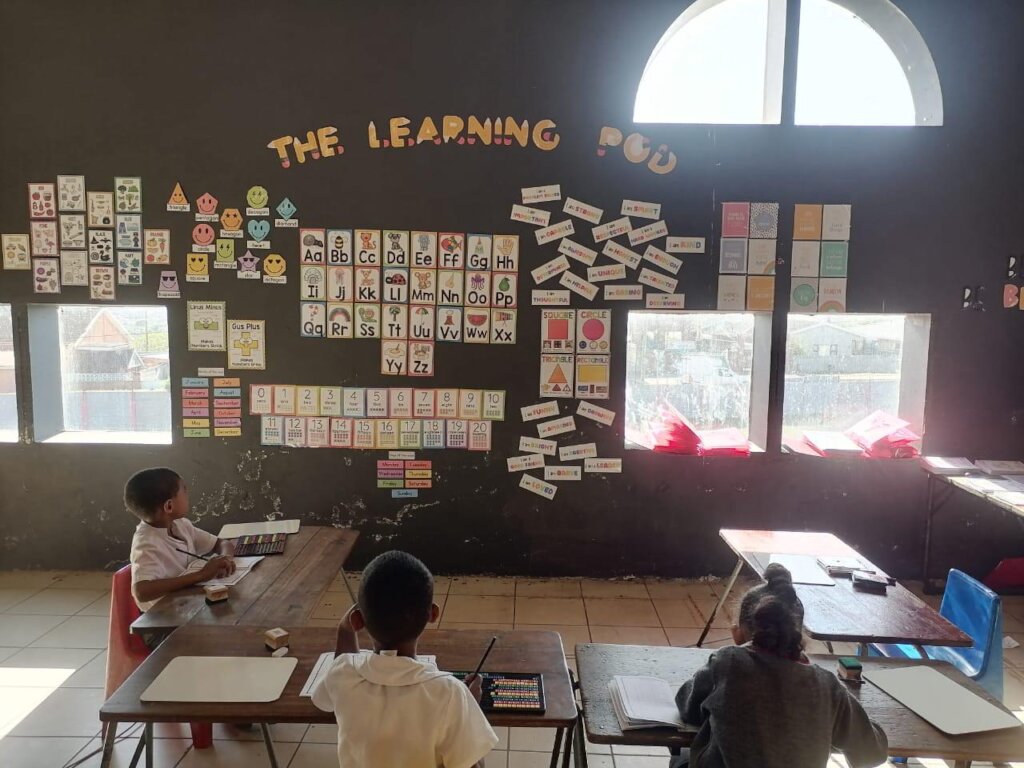
3.2 Sessions were conducted in groups of four learners
3.3 Each session lasted 45 minutes
3.4 The intervention was implemented over an 18-week period, commencing at the beginning of April 2025
The small-group structure allowed tutors to provide:
a) Individualised attention
b) Continuous learner engagement
c) Hands-on learning experiences
d) Immediate feedback and support
4. Teaching Methodology
The Numeracy Project was designed using:
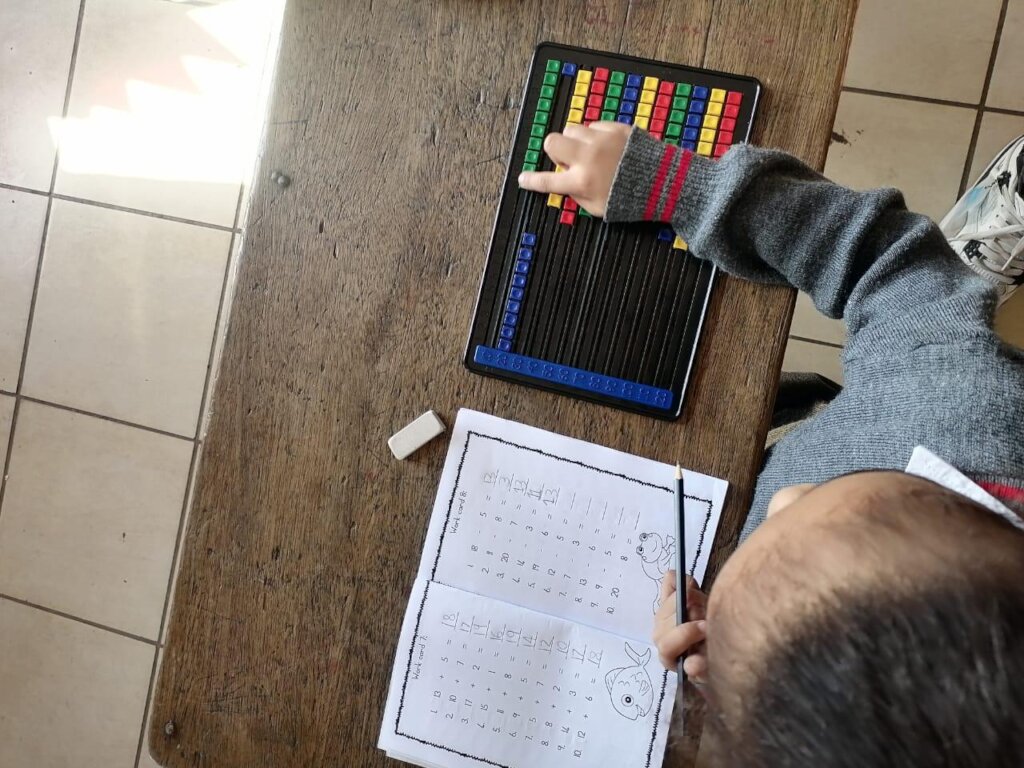
4.1 Low-cost reusable manipulatives
4.2 Structured written lesson plans
4.3 Clearly defined lesson outcomes
4.4 Scaffolded teaching approaches
The programme strongly emphasised:
a) Hands-on learning
b) Repetition and reinforcement
c) Language-sensitive teaching strategies
d) Conceptual understanding before abstraction
Recognising that the learners are primarily isiXhosa mother-tongue speakers, the programme intentionally incorporated the language of mathematics into every lesson from a practical and experiential perspective. This enabled learners to connect mathematical concepts with meaningful language development.
Importantly, the programme:
a) Does not rely on electricity or internet connectivity
b) Uses reusable manipulatives
c) Is affordable and scalable in low-resource environments
Prepared packs of four manipulatives are assembled for each lesson, ensuring consistency and ease of implementation.
5. Project Outcomes and Impact
Over the 18-week intervention period, learners demonstrated improvement across all assessed areas of numeracy development.
Key observed outcomes included:
5.1 Increased confidence in mathematical activities
5.2 Improved recognition and understanding of mathematical concepts
5.3 Enhanced participation during lessons
5.4 Better ability to follow instructions independently
5.5 Greater learner engagement through tactile learning methods
5.6 Improved language use relating to mathematical concepts
The small-group environment created opportunities for learners to actively participate and receive direct support tailored to their individual learning needs.
The success of the intervention has reinforced the importance of:
a) Early numeracy intervention
b) Language-sensitive teaching methodologies
c) Practical, hands-on learning approaches
d) Small-group instructional models
6. Expansion into Early Childhood Development (ECD)
The positive outcomes of the Numeracy Project have directly influenced the decision to extend the programme into the ECD sector.
The ECD adaptation of the programme will provide practitioners with:
6.1 Daily structured lesson plans
6.2 Reusable manipulative packs
6.3 Scaffolded teaching guidelines
6.4 Practical training on implementation
ECD practitioners will be trained to:
a) Use the materials effectively
b) Deliver structured numeracy lessons
c) Apply scaffolded learning techniques
d) Support early mathematical language development
This expansion aims to ensure that foundational numeracy skills are developed before learners enter formal schooling, reducing the learning gaps identified during the Grade 1 baseline assessments.
Conclusion
The Numeracy Project has demonstrated that targeted, hands-on, language-sensitive interventions can significantly improve early numeracy development among young learners.
The project successfully addressed critical gaps in foundational learning while also providing a practical and affordable model for implementation in low-resource communities. Through structured small-group teaching, reusable learning materials, and scaffolded lesson design, the programme created meaningful educational impact within a relatively short intervention period.
The development of this programme into ECD settings represents an important step toward strengthening school readiness and improving long-term educational outcomes for learners.
LYNN GLOVER (MRS)
CHIEF EXECUTIVE OFFICER
30 APRIL 2026
Project reports on GlobalGiving are posted directly to globalgiving.org by Project Leaders as they are completed, generally every 3-4 months. To protect the integrity of these documents, GlobalGiving does not alter them; therefore you may find some language or formatting issues.
If you donate to this project or have donated to this project, you can receive an email when this project posts a report. You can also subscribe for reports without donating.



Support this important cause by creating a personalized fundraising page.
Start a Fundraiser