By Mridu Kamal | Program Manager
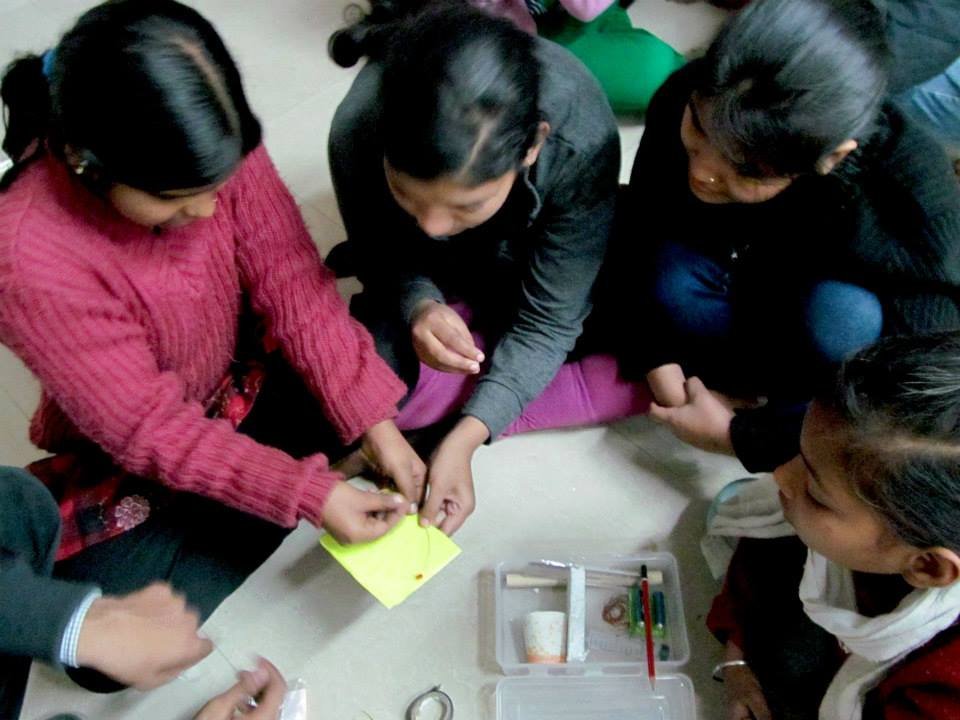
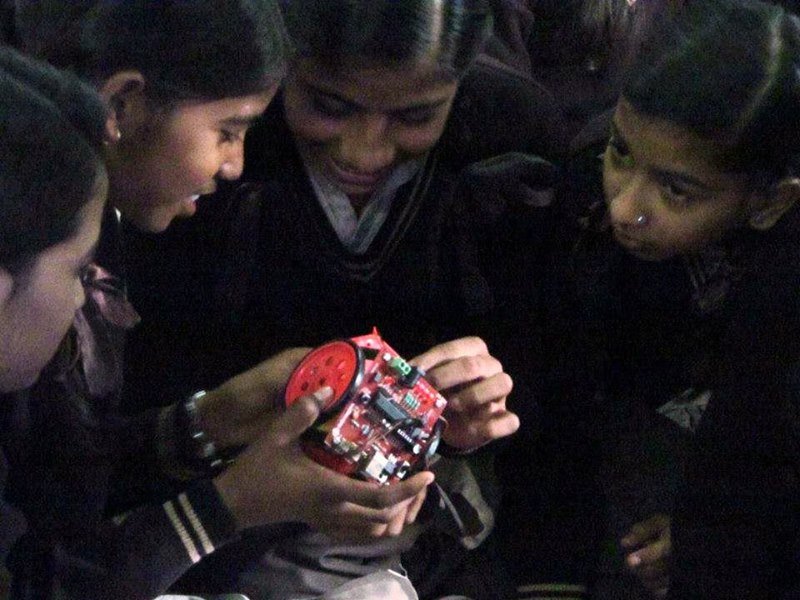
It’s been 10 months since these little innovators started coming to Jugaad Lab and exploring application of STEM (Science Technology Engineering Math). Who knew that these little innovators would turn into such inspirations for their friends that they would also like to be associated with the program? Around 20 girls are enrolled in Jugaad lab studying in classes 6th to 10th between the age of 10 to 14 years. These girls attend regular classes to understand basic science and maths concepts aligned as per their school curriculum and based on that they make different projects such as drawbot (a robot which can draw), paper circuit based lantern, clock models etc. They are always enthusiastic to do some hands on work making anything based on the concepts of science. The teaching methodology is contextualised to their lives such a way that it helps them ask questions around social issues based on their experience or their information. Separate workshops and sessions are conducted to discuss around their queries and through that build their understanding and give them some relevant information related to their health, bodies and lives. The irregularity as well as drop out of girls is one of the major challenges the program team faces due to reasons like lack of safety and security for the girls in the community, pressure to take tuitions and poor health.
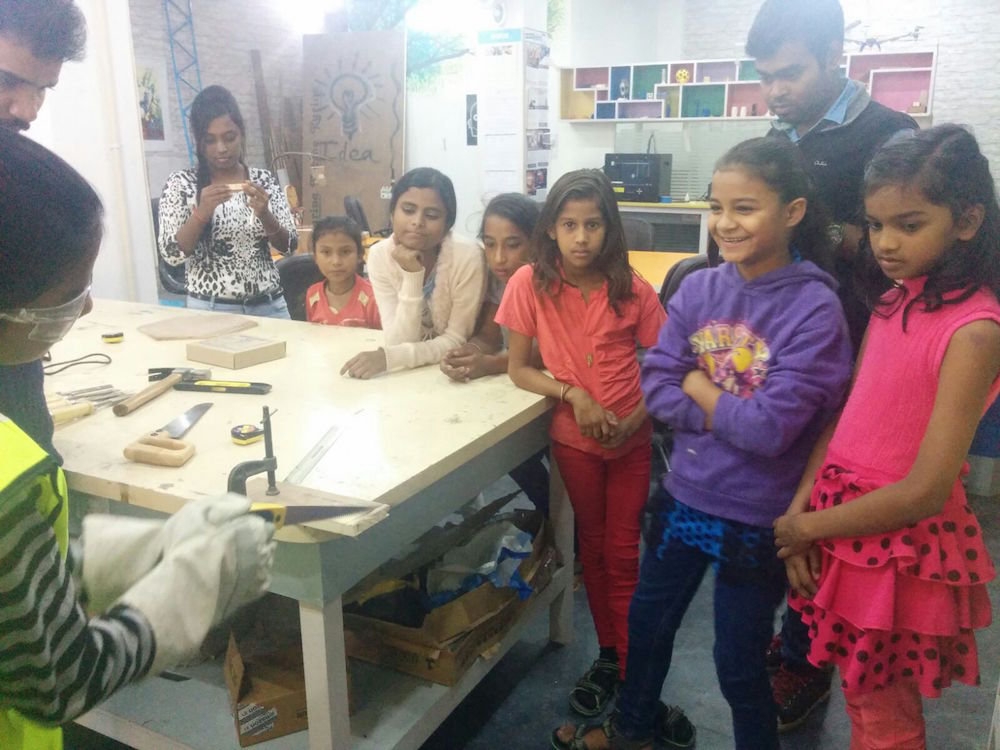
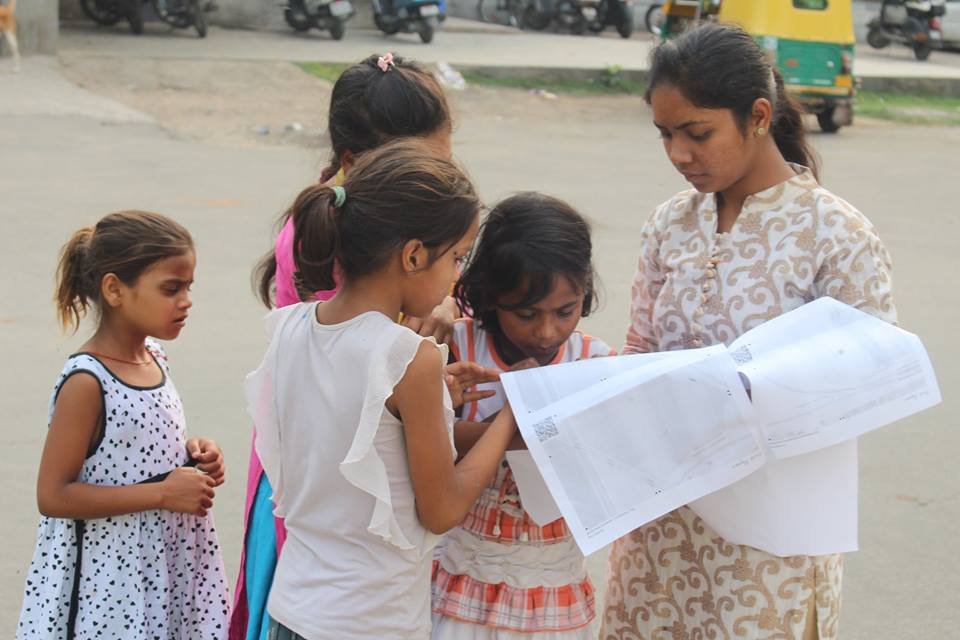
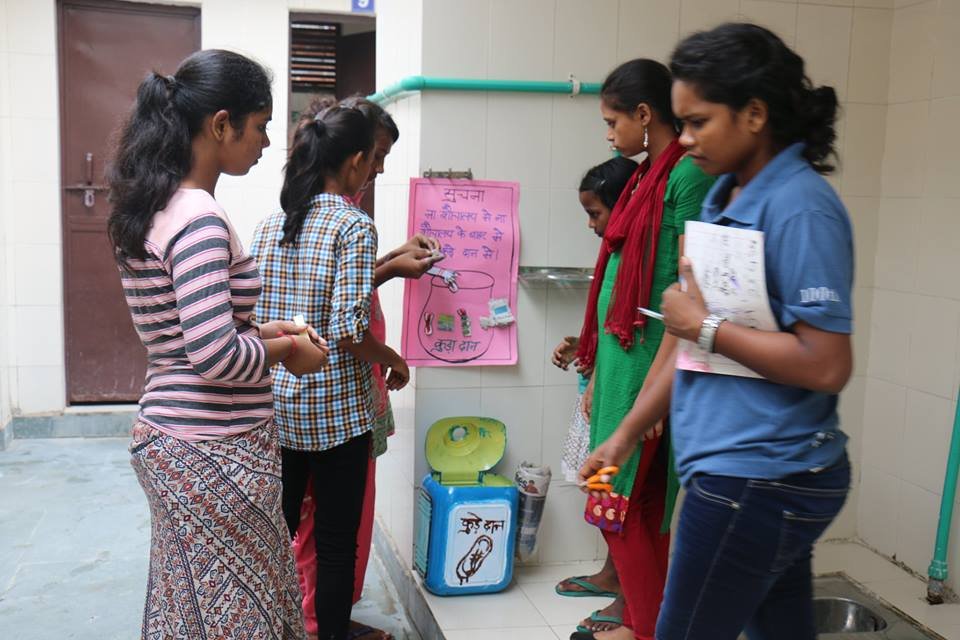
A Hackathon summer camp was organised with the participants of the program followed by a community action. The objective of this camp was to help the participants build an understanding on how science based innovation can work to bring a social change. Thus the camp had two broad aspects – One was to revise the learnt concepts and teach new concepts of science and its use and the other was to identify a problem in their community which they would find solution to. The girls identified four such problems. They were - absence of a dustbin to dispose sanitary napkins in the community toilets; absence of street lights which increases the problems related to safety, absence of a way to dispose the waste in and around the community, and lack of water facility near households. The first project that they worked on was to design disposal bins for sanitary napkins, prepare them using plastic cans and install them in the community toilets with the directive charts on how to use them.
The next project they are working on is to make a solar lamp to resolve the lack of street lights. They started with making a small solar panel to check whether they have applied the right concepts and whether it works or not. They will eventually make a bigger one which could be installed in one of their communities.
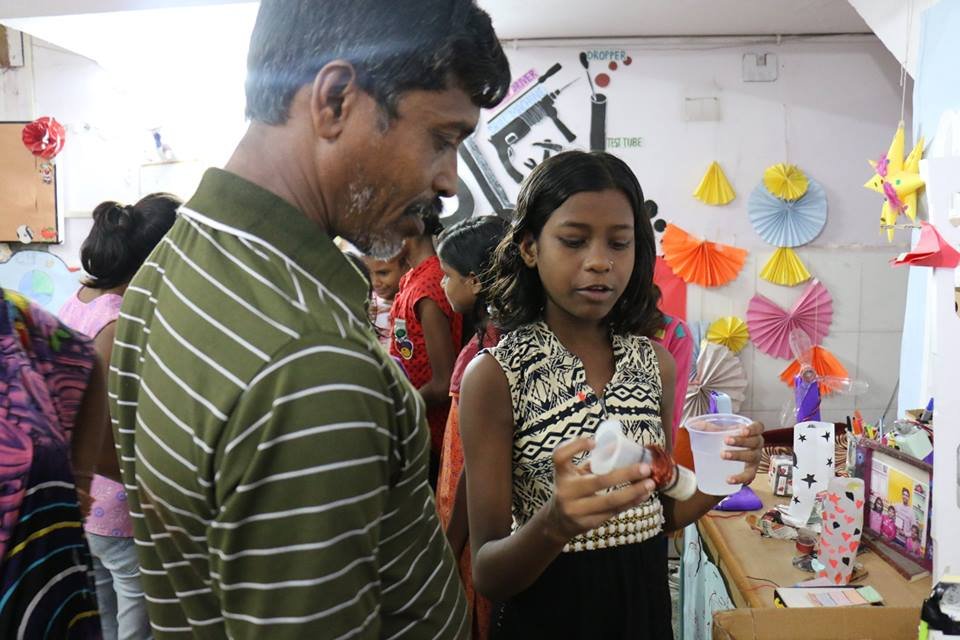
A parent’s meeting was organised last month to give an update about how their daughters are doing and how it is going to help them, to give them an idea of what this program aims at and what kind of place is Jugaad lab where their daughters come to study. The parents were awestruck to see the way their daughters explained about Jugaad Lab and the different projects they made. Parents were also taking interest in knowing about the different floor games and wall charts which were used while explaining different concepts in the class. The parents were happy and they shared their experiences of how they felt to see their daughter’s progress and enthusiasm towards science and maths. Such engagement with the community and parents is very important in order to be able to sustain the girls in the program.
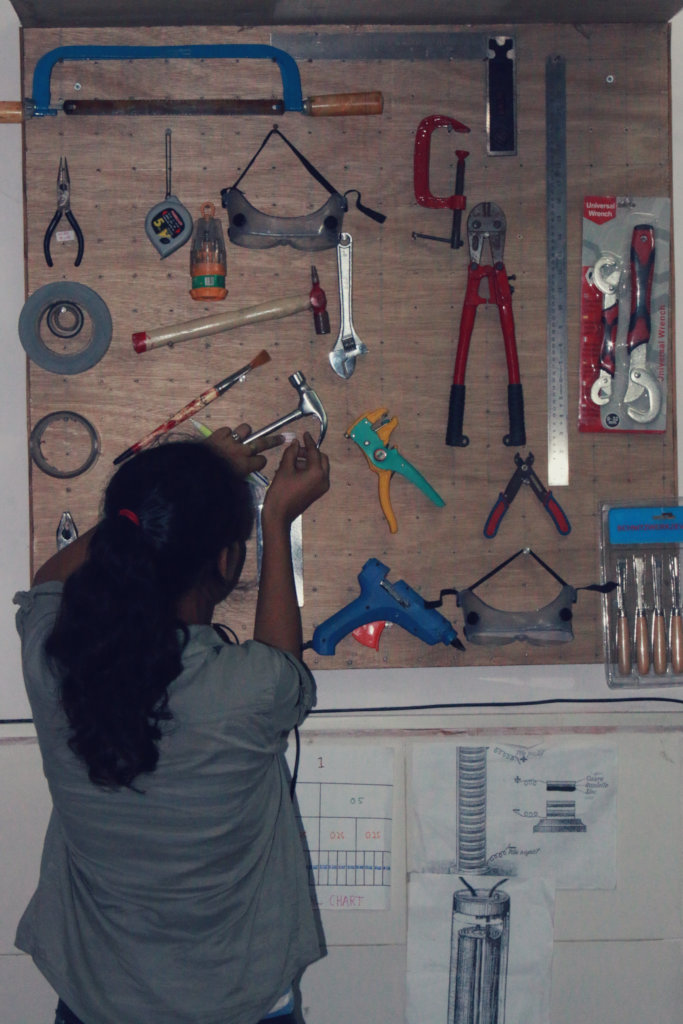
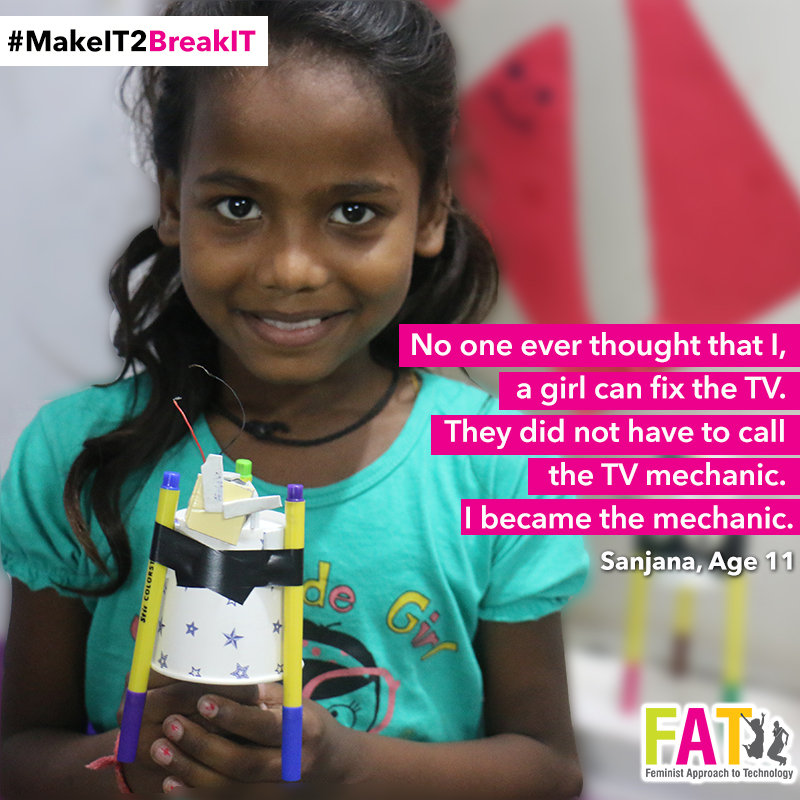
There are two important activities planned ahead. One is a campaign where these little innovators will make stuff and break the stereotypes related to science and technology surrounding them. The other is the creation of a maker’s space accessible to these little innovators from the disadvantaged families in urban poor settlements of south Delhi, with all the required equipments and tools to enable them to explore their imaginations around the possibilities of science and technology.
We are very grateful for your support and contribution to the success of this initiative so far, and we look forward to your association with this project.
Project reports on GlobalGiving are posted directly to globalgiving.org by Project Leaders as they are completed, generally every 3-4 months. To protect the integrity of these documents, GlobalGiving does not alter them; therefore you may find some language or formatting issues.
If you donate to this project or have donated to this project, you can receive an email when this project posts a report. You can also subscribe for reports without donating.