By Frederika Hazeova | Communications and Fundraising Manager, IPcko
Thank you for continuing to support Crisis Mental Health Help for young people, as well as everyone that needs it. Your generosity makes it possible for us to show up — in crisis moments, in schools, in detention centers, online and offline — wherever people need us most.
Here is a glimpse into what we have been doing over the past four months.
Some young people cannot come to us — so we go to them
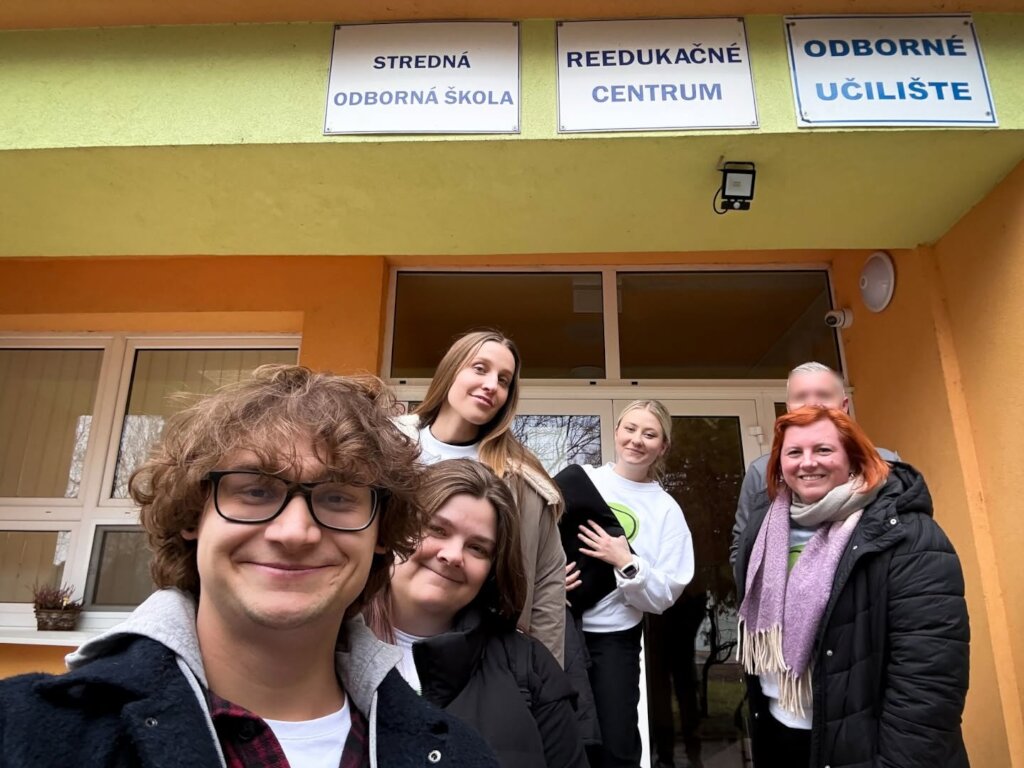
Our team of psychologists has begun visiting reeducation centers across Slovakia, where young people carry heavy life stories: loss, violence, loneliness, families that failed them. In these visits, we meet with the young people themselves — talking about emotions, anger, relationships, conflicts — things they often carry silently, with nowhere safe to put them. Gradually, trust builds, and their stories begin to surface.
We also meet with the staff of these centers. These are people who carry enormous responsibility every day, often without adequate support. Many speak of exhaustion and facing difficult situations alone. They deserve to be heard too.
Through specially configured tablets in three reeducation centers, young people can now anonymously contact our Crisis Helpline at any time they need — complemented by in-person visits from our team. This pilot project, supported by the Ministry of Education, Research, Development and Youth of the Slovak Republic, is just a beginning. Our goal is to expand this model to further facilities across the country.
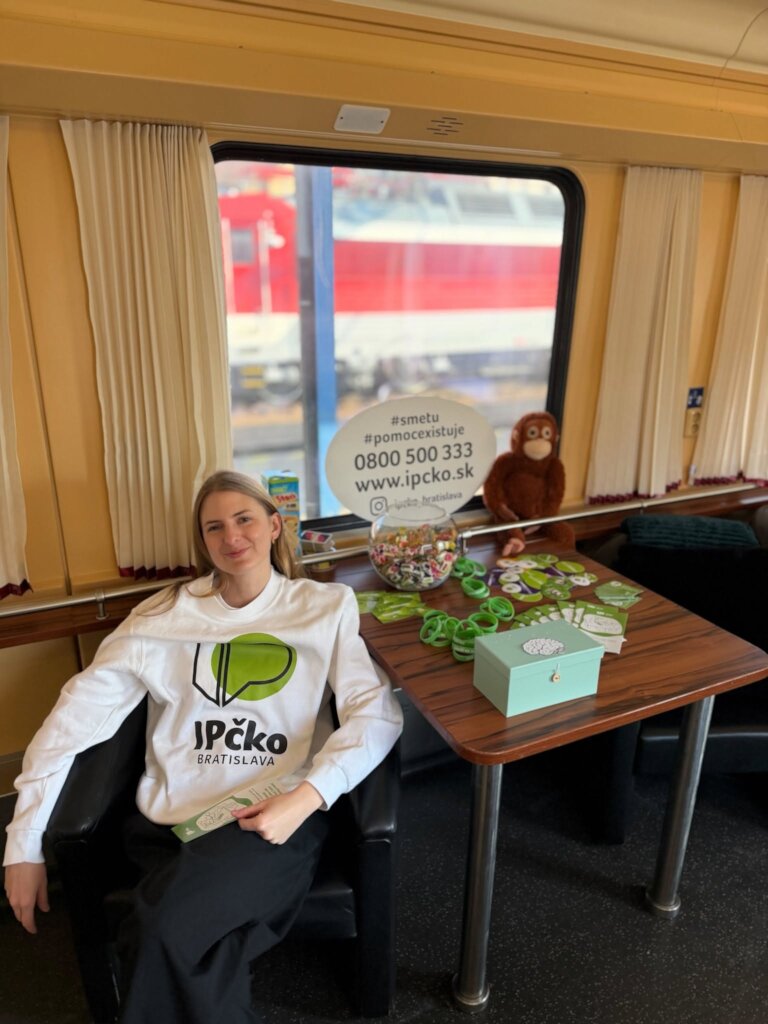
Kácko on wheels: Psychological Support on the Train
March has brought our work on the road — or rather, on the rails.
In partnership with ZSSK (Slovak Railways), our psychologists traveled the full route from Bratislava to Košice and back, transforming a social railway car into a temporary Kácko — our safe space for in person psychological help. Passengers could stop by, sit down, and talk about whatever they were carrying. Many did. And our psychologists listened to the stories that people had been traveling with silently, by themselves.
Education: Building a Stronger Net
Over the past months, we have been increasing our effort in training frontline professionals across Slovakia.
We delivered our Foundations of Crisis Intervention training in multiple cities — a three-day program where participants work with real cases from IPcko's practice, are being trained in stabilization techniques, and explor how to support someone in crisis while also caring for themselves.
We organized free trainings for school psychologists, teachers, counselors, and social educators across all regions of Slovakia, responding directly to what these professionals face every day in schools: emotional crises, conflicts, and questions that don't have easy answers.
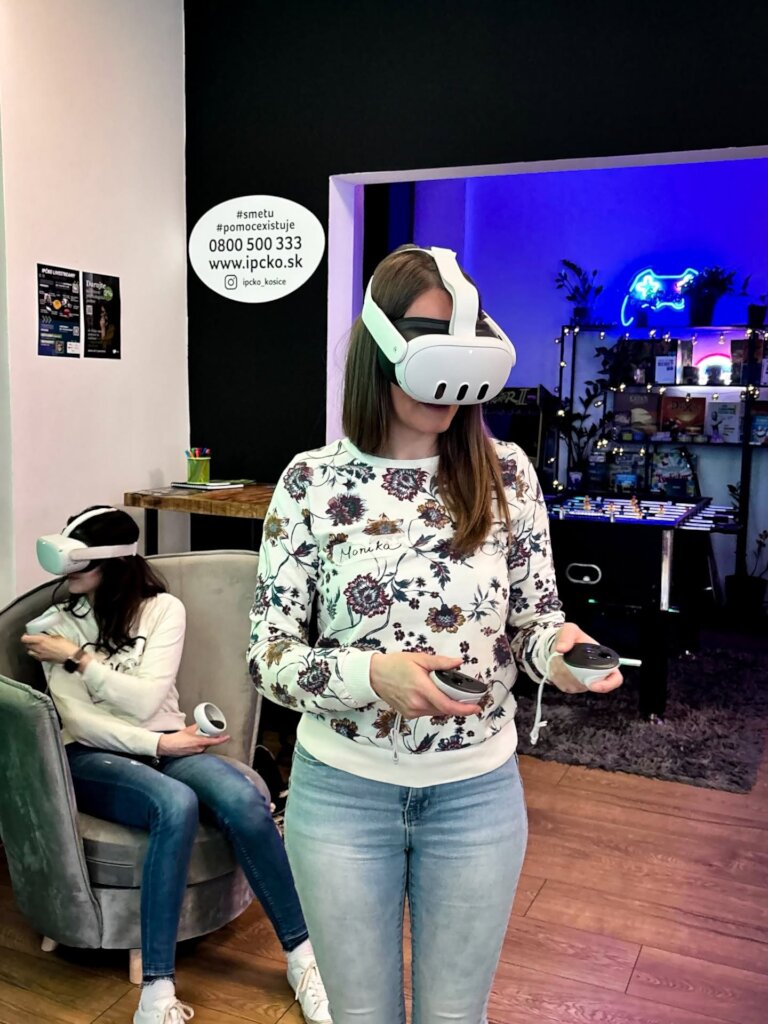
In Košice, we welcomed staff from a therapeutic educational sanatorium to explore how modern technologies — including virtual reality — can support work with young people. VR can help with focus training, relaxation, creating safe spaces for difficult conversations, and gradually overcoming fears — and we showed them how to use these tools.
We also delivered a training for secondary school professionals focused on building psychological resilience — in students, parents, and school staff alike — and on creating safer, more open school environments. We also carried out another education on self-harm and we co-organized a mini-conference bringing together experts, psychologists, and young people themselves to discuss what today's generation truly needs.
We also launched a new long-term educational program for professionals working with youth. The opening sessions focused on youth mental health, generational differences, and building bridges between adults and Generation Z and Alpha. Coming modules will cover digital environments, radicalization, disinformation, AI, crisis intervention, as well as online field work.
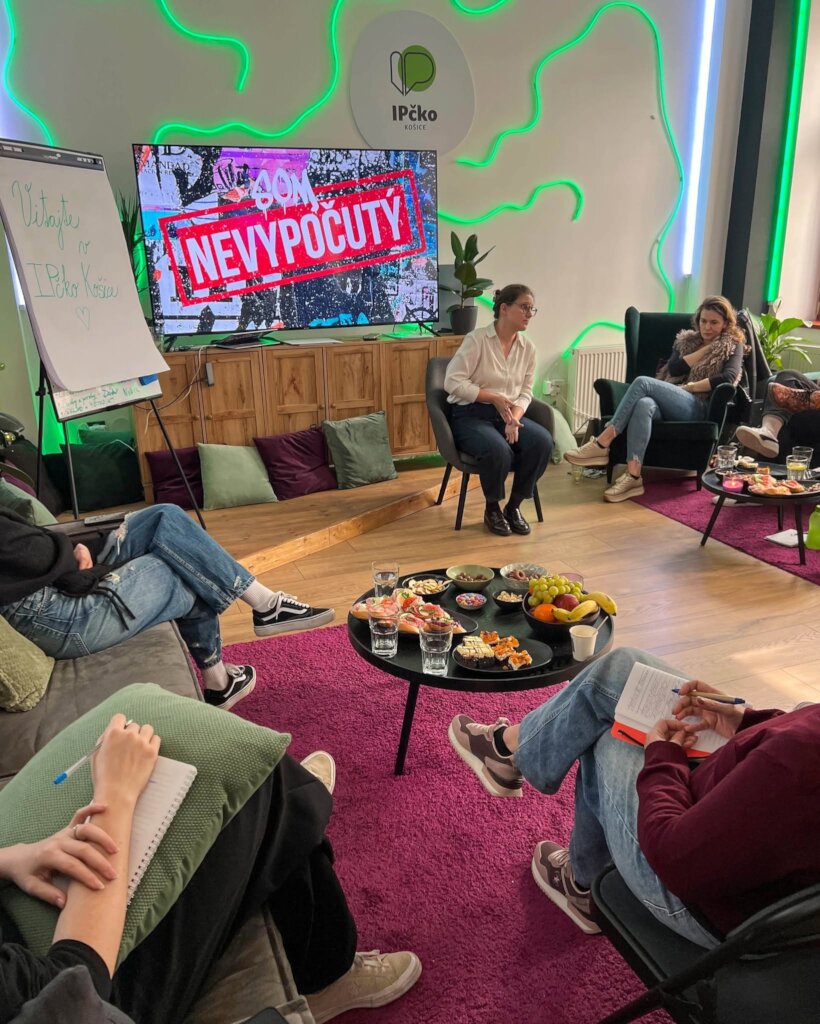
And we continued with our Nevypocutý educational program - for radicalization prevention, in which we have already trained almost 500 experts from all around Slovakia.
We Know What Young People Think about Social Media Regulation
Together with research agency Focus, we gathered thirty-one young people across four Slovak cities, to participate in our focus groups. Sharing their views on the benefits and risks of social networks, how these platforms affect them personally, and what could be done to prevent harm.
Key findings: young people are aware of the dangers of social media and are not opposed to regulation — but they don't want to navigate this alone. They believe parents and platform owners should play the primary role, yet they gave parents a grade of 3 (on a Slovak grading scale, roughly a C-minus) for their understanding of the online world. Young people call for better content moderation and are united on the need for some form of regulation — though divided on the question of minimum age limits.
We published the full research findings, along with ten recommendations that emerged from the conversations — and five additional recommendations from IPcko, emphasizing participatory approaches, meaningful offline alternatives, a network of accessible low-threshold centers, media literacy support for parents and professionals, and available anonymous psychological help for all.
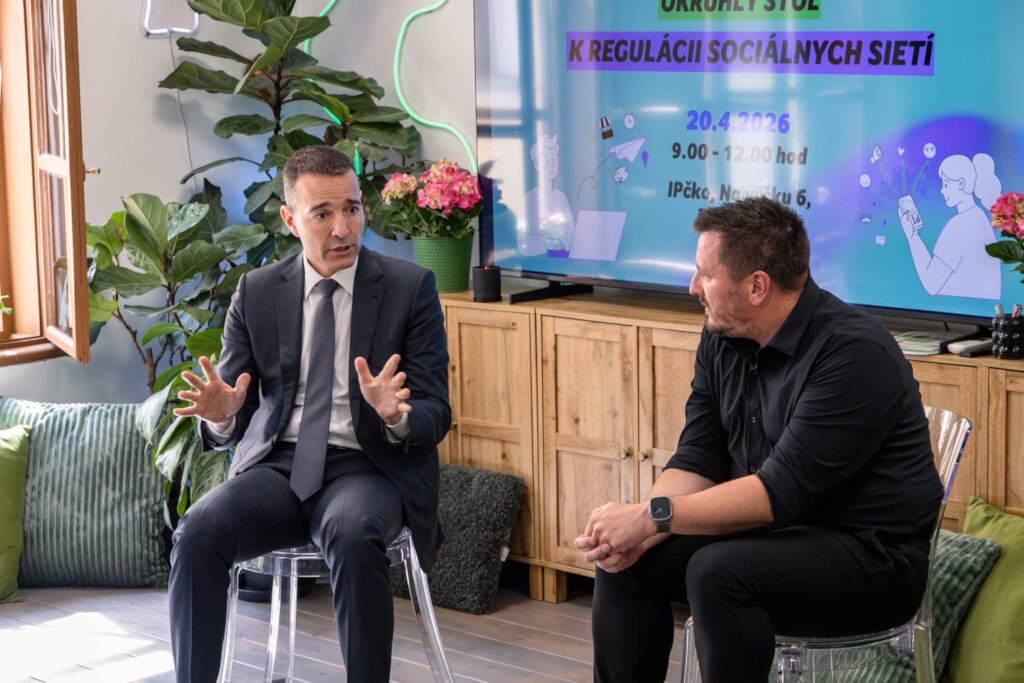
We followed the research with a roundtable bringing together key figures in upcoming social media legislation — including the Minister of Education Tomáš Drucker, representatives of child and adolescent psychiatry, school psychology, mobile operators, the EU Commission, the Police, and others. The central message: regulation alone is not enough. The real question is not what to ban, but what we can offer instead — to young people, their parents, teachers, and the professionals around them.
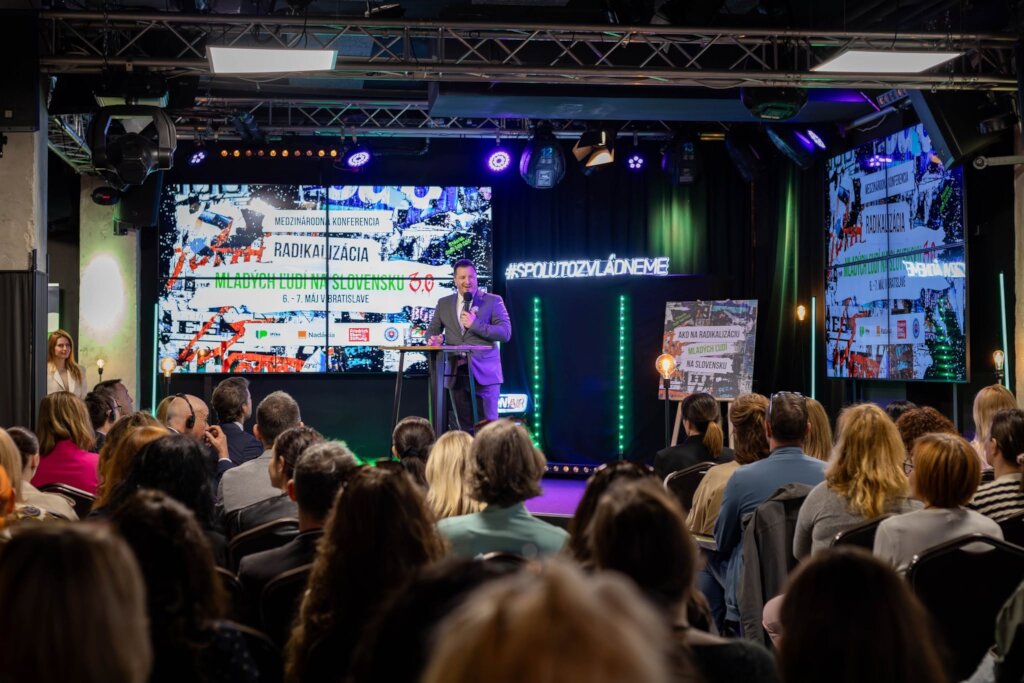
International Conference: Radicalization of Youth 3.0
We organized the third edition of our international conference on youth radicalization, bringing together experts from Slovakia and from abroad — including guests from Finland, Denmark, and Austria.
Over two days, participants explored how radicalization begins (often in online spaces), the psychology of a young person moving toward extremism, the link between misogyny and violent extremism, radicalization in digital gaming communities, and concrete prevention models from across Europe.
The Minister of Education spoke about upcoming legislative changes. The President of the Slovak Police addressed the complexity of extremism beyond the security lens. Our own team shared field experience from IPcko and presented our Nevypocutý ("Unheard") project, which supports young people who feel overlooked and dismissed.
NEPUKNI: A Positive Challenge and a New Podcast
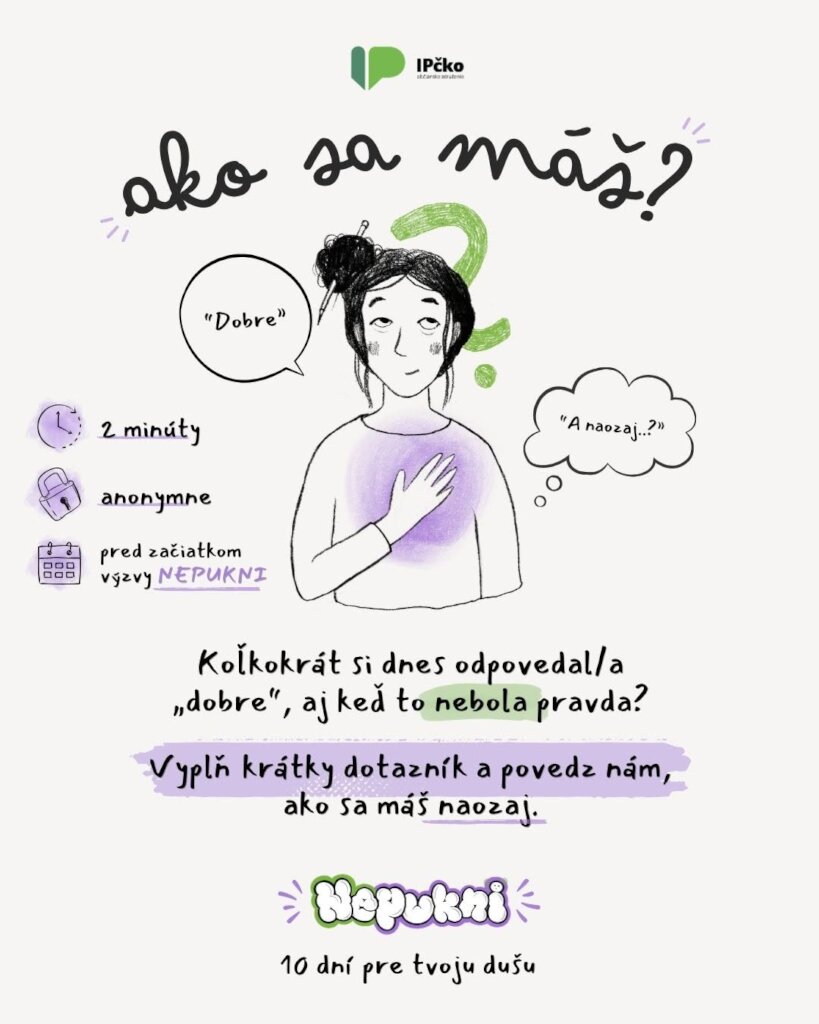
We launched NEPUKNI ("Don't Burst") — a 10-day email challenge designed for anyone who sometimes feels like they're carrying more than they can hold: students before exams, people whose phones don't stop ringing after work hours, parents who take care of everyone around them but forget about themselves.
Over 10 days, participants receive one small, gentle challenge per day — no pressure, no judgment, no need to be perfect. Just a few minutes, for themselves.
Alongside the challenge, we launched the NEPUKNI podcast — a series of conversations with IPcko psychologists about the topics people bring to us most often, but rarely speak about openly in their lives. The first episode tackled loneliness: why we can feel alone even when surrounded by people, what it does to our everyday lives, and how to find a way through. New episodes will continue to explore what to do when things start to feel like too much.
THE MOST IMPORTANT PART?
WE CONTINUE TO BE HERE - NONSTOP and FOR FREE
Behind every project and initiative, our core work continues without a break.
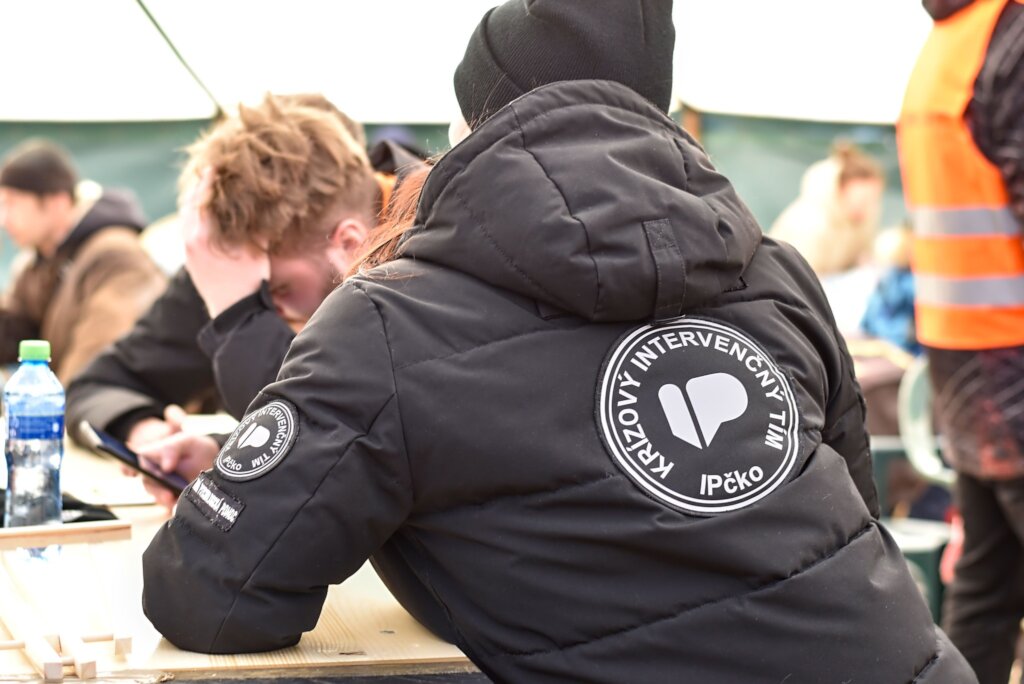
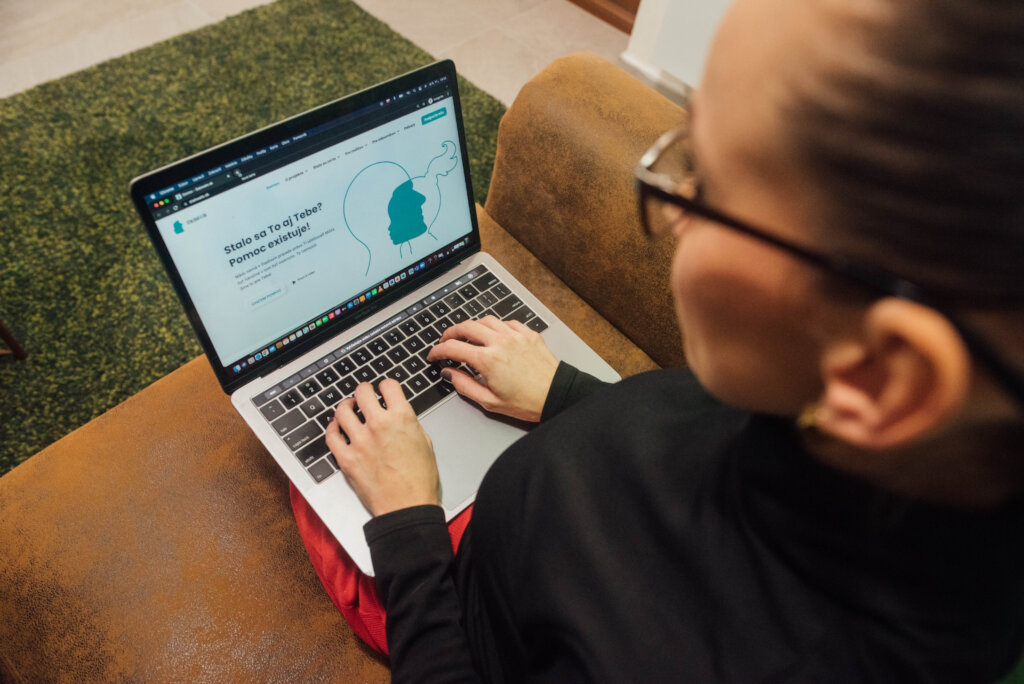
Every day — 365 days a year — we provide free, anonymous, round-the-clock crisis psychological help through our Crisis Helpline IPcko (phone, chat, and email). Our online field team monitors closed communities and actively reaches out to vulnerable young people in the digital spaces where they spend their time. Our low-threshold youth clubs across Slovakia offer young people under 30 a safe space to belong, grow, build a community, and access informal psychological support. Our crisis intervention teams go directly to people in acute crisis, wherever they are.
This is the steady heartbeat of IPcko — and it beats because of your support.
Thank You
Because of you, #HELPEXISTS.
Your support keeps our services free, anonymous, and available to anyone who needs them — at any hour, on any day.
Thank you for helping with us.
Links:
Project reports on GlobalGiving are posted directly to globalgiving.org by Project Leaders as they are completed, generally every 3-4 months. To protect the integrity of these documents, GlobalGiving does not alter them; therefore you may find some language or formatting issues.
If you donate to this project or have donated to this project, you can receive an email when this project posts a report. You can also subscribe for reports without donating.



Support this important cause by creating a personalized fundraising page.
Start a Fundraiser