By Rachele Rosati | Cure First Research Fellow
Dear Global Giving Donors and Followers,
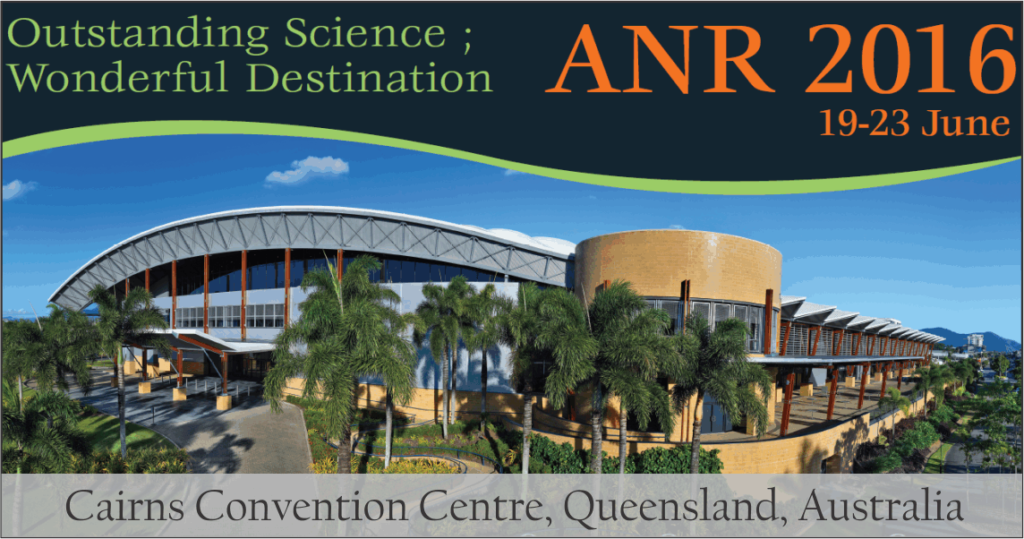
Sorry to be late to report on the progress of this project, but I have been in Australia for the Advances in Neuroblastoma Research Congress (ANR2016). While in Cairns, I was able to share a poster displaying my studies on novel genes as future targets for combination therapies with retinoic acid. I also met with many scientists working on neuroblastoma. It was particularly inspiring to hear talks from Dr. Julie Park from Seattle Children’s Hospital and from Dr. John Maris, from Children’s Hospital of Philadelphia, both of whom are collaborators with Cure First. Now I am back at the bench and computer, and it is my pleasure to give you an update of the past three months on the Neuroblastoma Project.
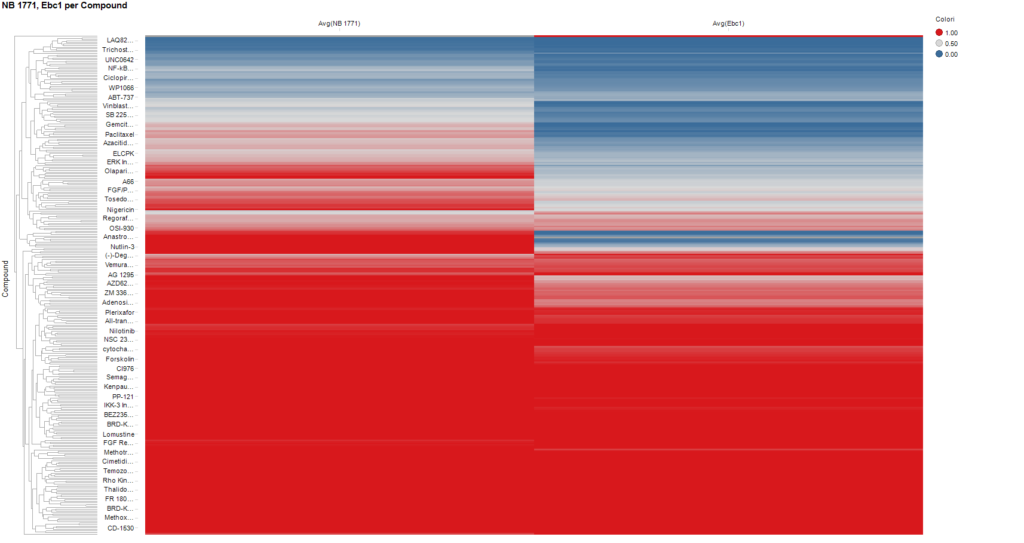
After the success in establishing the first Patient-Derived Tumor Xenografts (PDTXs) ex-vivo, growing as tumorspheres in 3D, I was able to proceed with designing a high-throughput drug screen experiment with a library of 345 drugs compiled by the (Cancer Target Discovery and Development) CTD2 network. This drug library has 120 FDA-approved drugs and 225 targeted agents that are in clinical trials, phase I or phase II. The main goal of using this drug library was to interrogate as many genes and molecular pathways as possible in order to have a broader and more complete view of the spectrum of the responses of each individual tumor. The first general result is shown here, illustrated by a heat map graph that recorded the AUC (area under the curve) of each drug obtained by high-throughput screeen (HTS) in two patient derived neuroblastoma cell lines. The smaller the AUC (intense blue color), the more the sample shows response to a respective drug, while resistance, i.e. larger AUC, is shown in red. Producing a functional map for every sample, each from a different neuroblastoma sample from a different child, demonstrates both individual and common sensitivities. Many good results are coming from new potential drugs. More work is needed to validate these results and extend them to more samples, but we are extremely hopeful we can identify future new therapies for high-risk neuroblastoma.
Thank you for your support!
Project reports on GlobalGiving are posted directly to globalgiving.org by Project Leaders as they are completed, generally every 3-4 months. To protect the integrity of these documents, GlobalGiving does not alter them; therefore you may find some language or formatting issues.
If you donate to this project or have donated to this project, you can receive an email when this project posts a report. You can also subscribe for reports without donating.