By Rachele Rosati | Research Fellow
Dear Cure First and Project Neuroblastoma supporters,
In December the scientific board of Cure First met to receive an update on the progresses that we made in 2017. We not only presented our most recent findings, but also highlighted the essential support that you were able to give us making the Neuroblastoma project possible. Thanks to your support, we obtained crucial results which will directly impact the lives of patients and help the scientific community to better understand this disease.
I like to start the new year by reflecting on the impact that the results of our NBL project will have on the future of medicine. There is a high rate of failure in cancer therapies. Many of the drugs will never make it to market because their efficacy can only be proven in a small subset of patients enrolled in the clinical trial. But nevertheless, these drugs would have the potential to help some patients, we just have to find the right drug for the right patient. To increase success, we could pre-screen the cancer therapies in patient derived live cells, instead of testing drugs in cells lines, that they do not recapitulate the behavior of cancer cells. Testing the drugs directly into cancer patient derived organoids (3D mini-cancers in a dish), before we decide on a therapy for the patient, is the right approach to deliver personalized treatments.
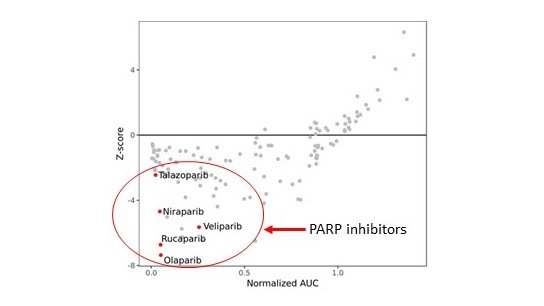
I’m very excited to announce, that thanks to your help, we got one step closer to do exactly this. We tested more than 400 different drugs on cancer organoids from 9 NBL patients in our collaborative project with CHOP (Dr. John Maris from the Children Hospital of Philadelphia). The results demonstrate that each of those tumors have unique and non-overlapping drug sensitivities. Currently, sequencing would be used to find these unique sensitivities, but in most cases genomic alterations weren’t concordant with drugs our screen highlighted. This means that mechanisms which make a patient sensitive or resistant to a drug are much more complicated and often cannot be defined by a single mutation. Therefore, genomics is only a small part of the entire cancer picture that tells the patient’s story. That’s why we need to test the drugs on the patient’s cells to find the most efficient treatment. In some of the NBL cases, these drugs are approved to treat completely different types of cancers. Would pediatric oncologists prescribe a drug approved for prostate or ovarian cancer to their patients? In the past the answer was no. However, now with the results of our functional test, showed in Figure 1., where it’s clear that a child cancer is highly sensitive to a group of drugs (PARP inhibitors) that are mainly approved for ovarian cancer, they will start to think about it.
Our compelling results indicate how important personalization of treatments are for cancer patients and we are excited to deliver this innovation to NBL, to make sure every child receives the most efficient treatment in future. We will address the challenges of performing such a test in the next update.
Thanks for all your extensive support,
Project reports on GlobalGiving are posted directly to globalgiving.org by Project Leaders as they are completed, generally every 3-4 months. To protect the integrity of these documents, GlobalGiving does not alter them; therefore you may find some language or formatting issues.
If you donate to this project or have donated to this project, you can receive an email when this project posts a report. You can also subscribe for reports without donating.