By Katy Allen-Mtui | Director
Newsletter Autumn 2026
I hope this finds you in good spirits.
In Rwanda the last school year ended on 3rd July, and schools opened for the new school year on 7thSeptember.
In Tanzania the schools opened on 6th July and will close for the school year on 4th December. The national examinations for Standard VII pupils took place on the 9th and 10th of September, and internal school examinations will take place in the next few weeks.
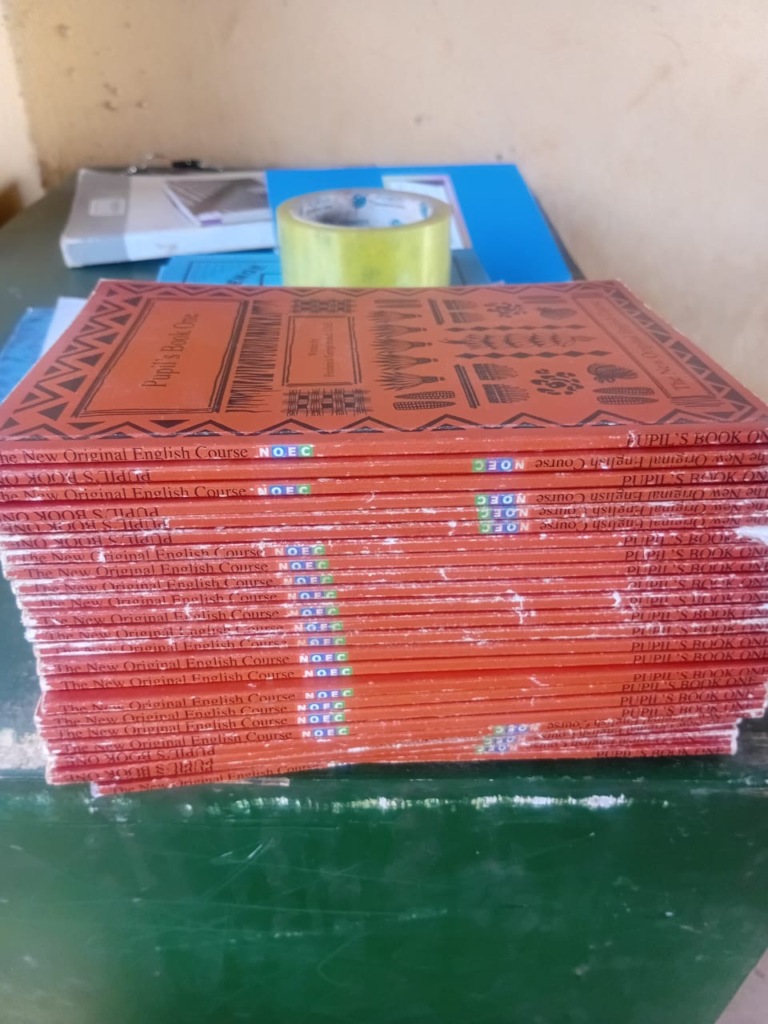
At Bright Pre and Primary School in Tanzania they now have enough classrooms for their pupils to continue into secondary school. This follows a national directive that all primary schools should be able to offer their pupils secondary education which was to start from 2027 but has now been pushed back to 2028. A new curriculum was to have come into effect from 2024. The books to match the curriculum which were prepared by the Ministry for Education have been severely criticized in parliament and in the press. Some may recall that we met the current Minister for Education, Professor Adolf Mkenda, on 30th January 2024 and his lament was that he had no spare money to spend on books. However, it seems that yet again money has been found and spent, and still books for primary education are not only insufficient in number to be able to be used to any effect in classrooms but also the content is not of good enough quality to help the teachers or the pupils. It is disheartening when we see the results that the use of the New Original English Course (NOEC) books have brought for both teachers and pupils.
The NOEC, in its original form, was last used in Tanzania in the early 1970s. There were the only books, and so there was no separate curriculum. Pupils who used the course books for the full six years, ending when they were 14 years old, were fluent English speakers, and the level of their language proficiency matched that of most university undergraduates today. When the NOEC ceased to be used the Content Pages of the books were crudely used as headings for the new 1970s curriculum. That took no account of the reason why the NOEC had introduced items in the specific order. For example, on the first introduction of the past simple tense, the NOEC uses just three irregular verbs (sit, stand and go) so that the pupils see a different word to help them understand a different meaning. For instance, with the appropriate action, the teacher says, “I am sitting on the chair”. They she moves away (to give physical distance and to show distance in time) and says “I sat on the chair”, or “I am going to the door”, “ I went to the door”. Once that is done, the regular past simple verbs are introduced and used extensively, with a gradual introduction of other irregular verbs. The new 1970s curriculum made no reference to that reasoning, and to this day the past simple tense is introduced with no regard to regular or irregular verbs. Over the years the curriculum has lost any reference to the design of the NOEC. Books have been designed by topic, rather than the NOEC’s design of introducing sentence structure, after sentence structure and so building the ability to speak English correctly. The use of topics tends to muddle sentence structures and builds only random vocabulary.
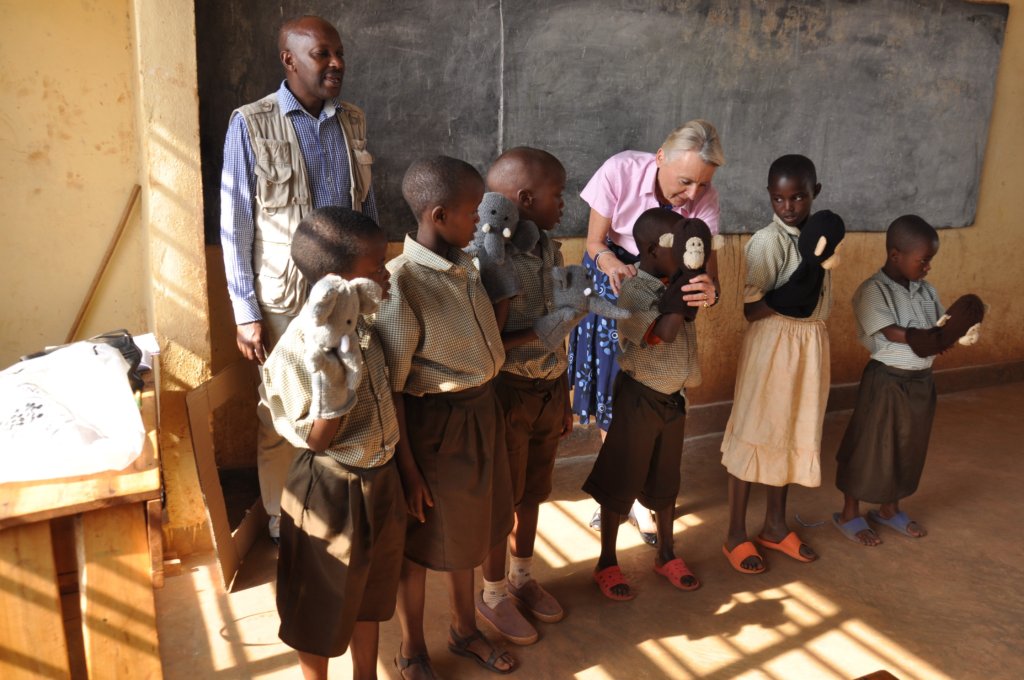
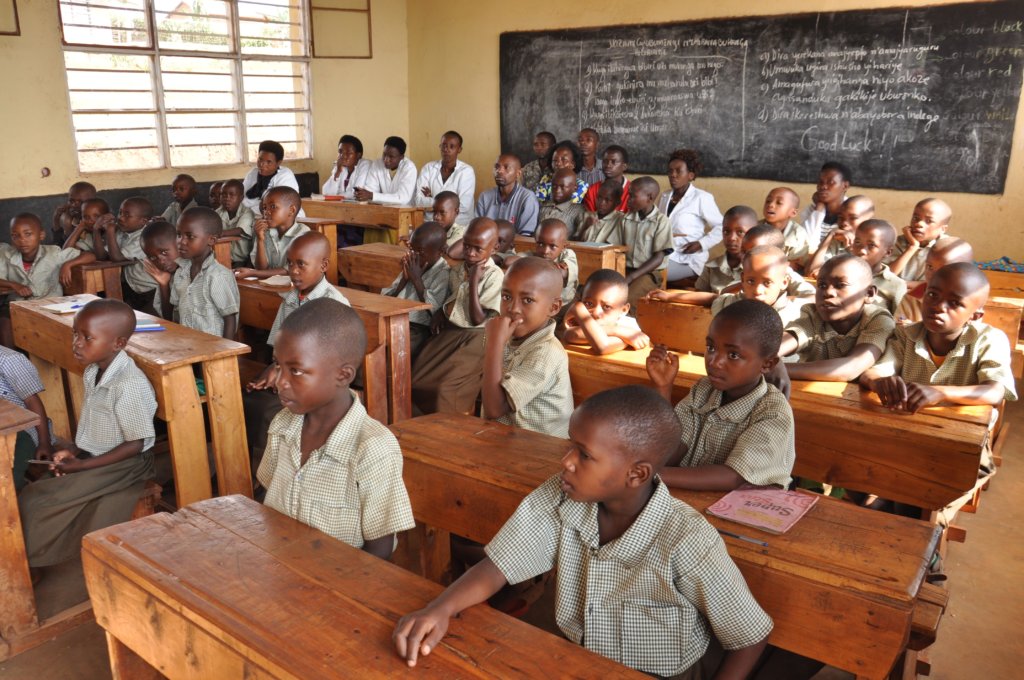
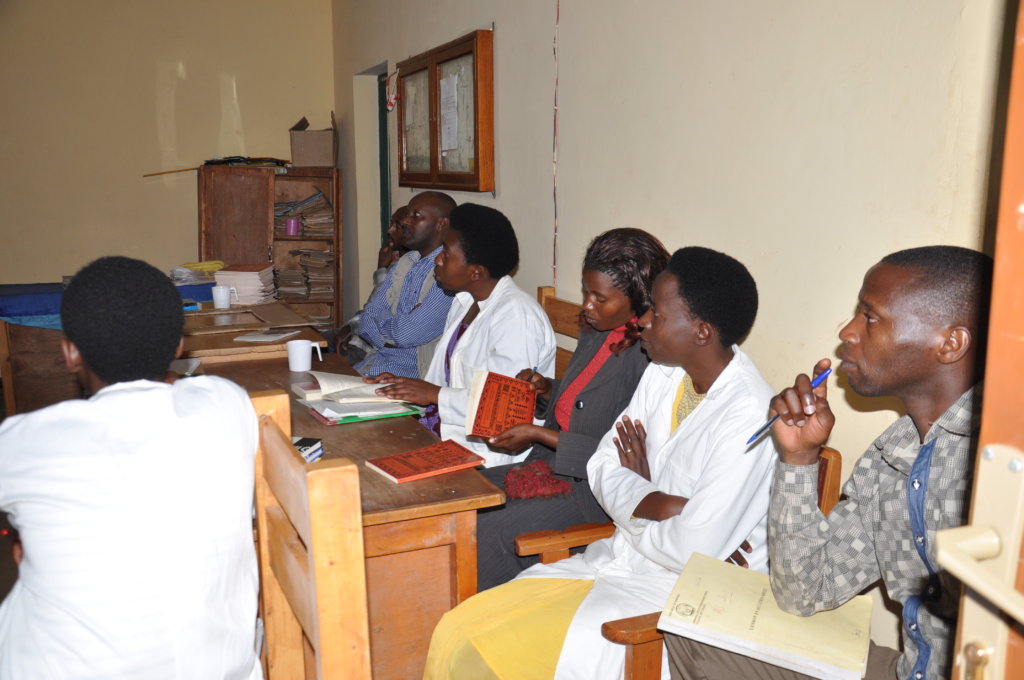
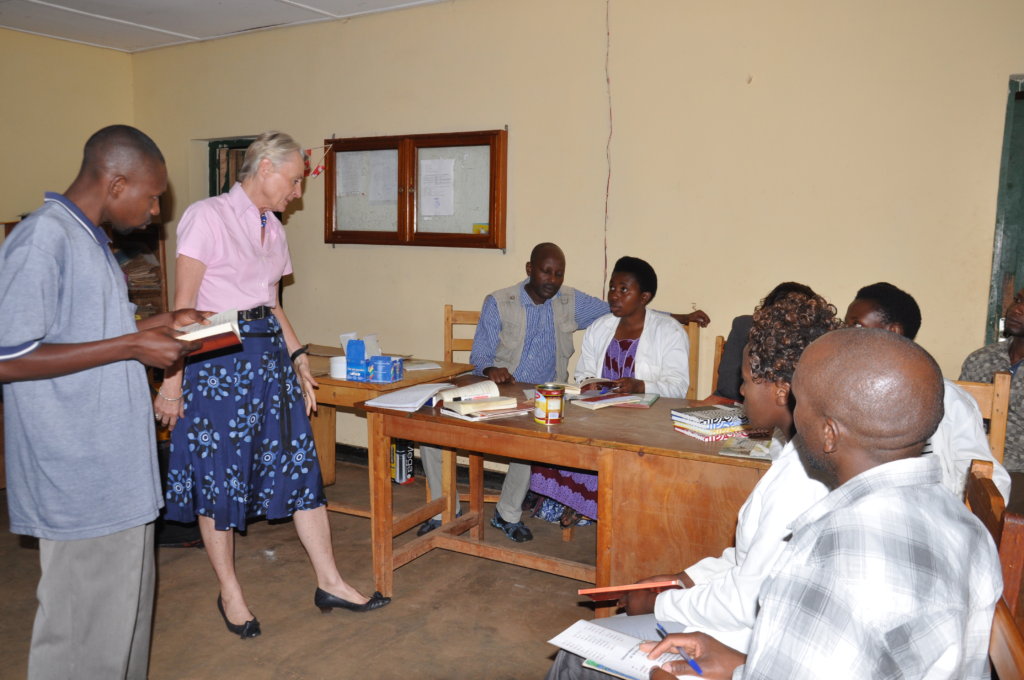
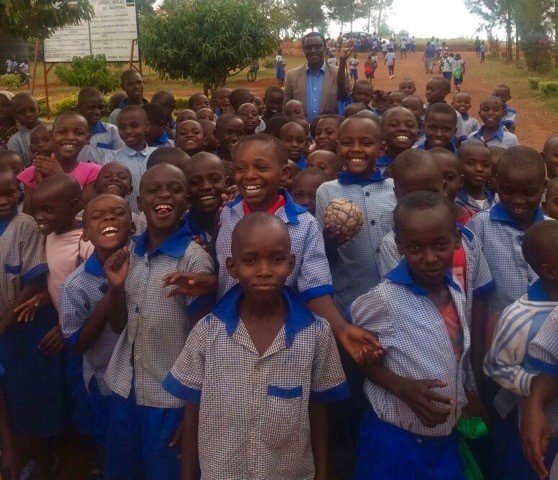
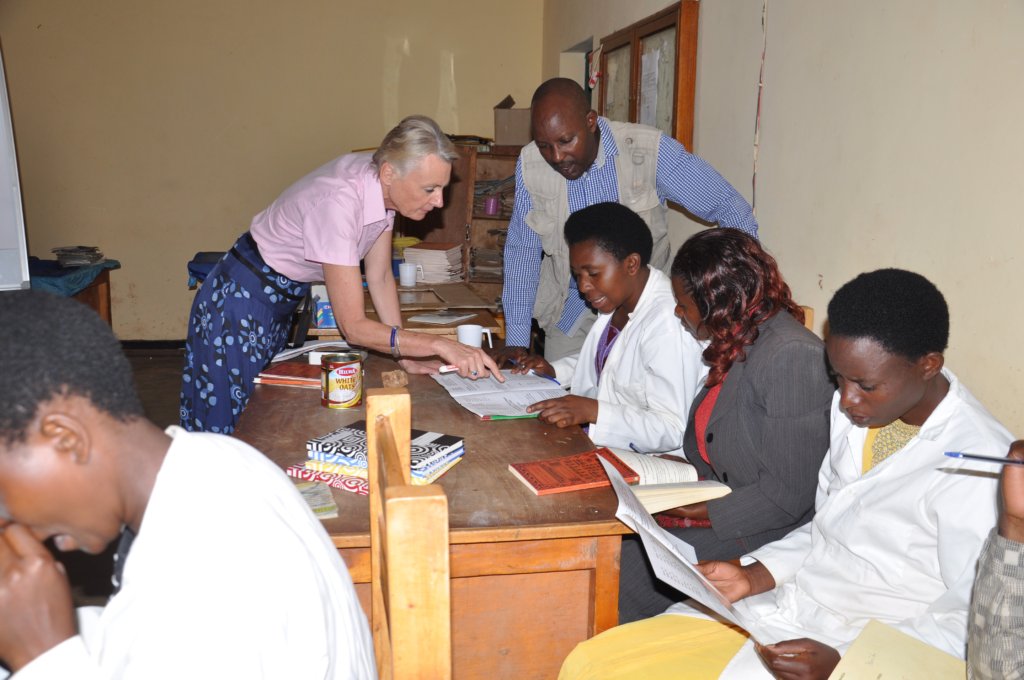
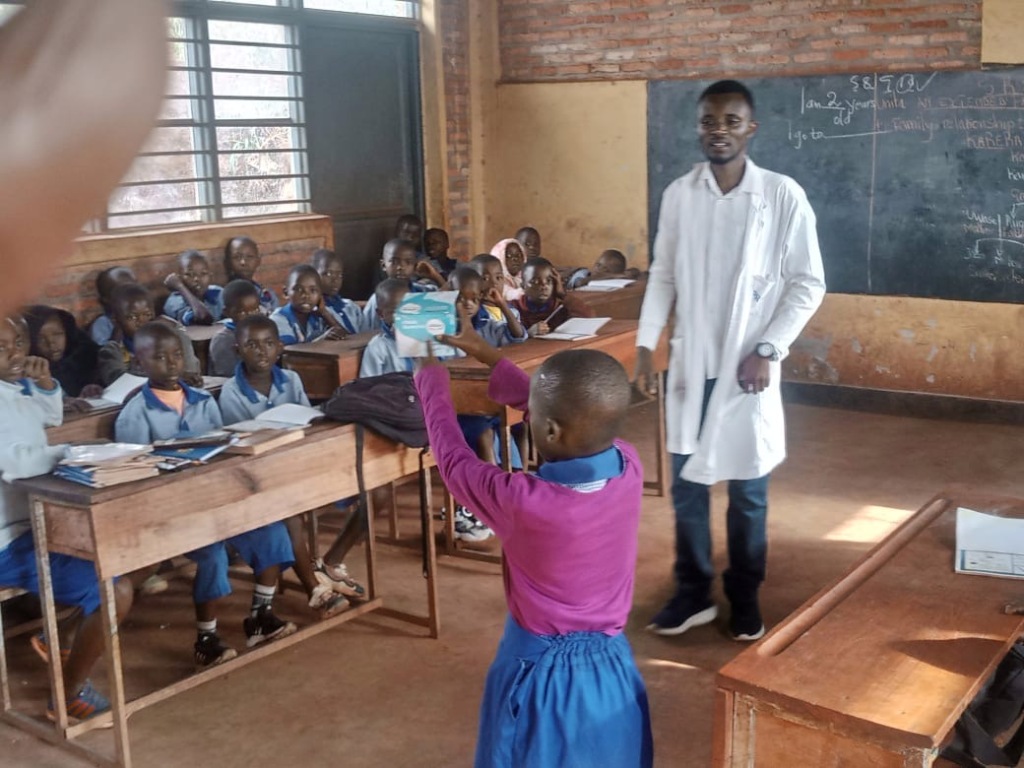
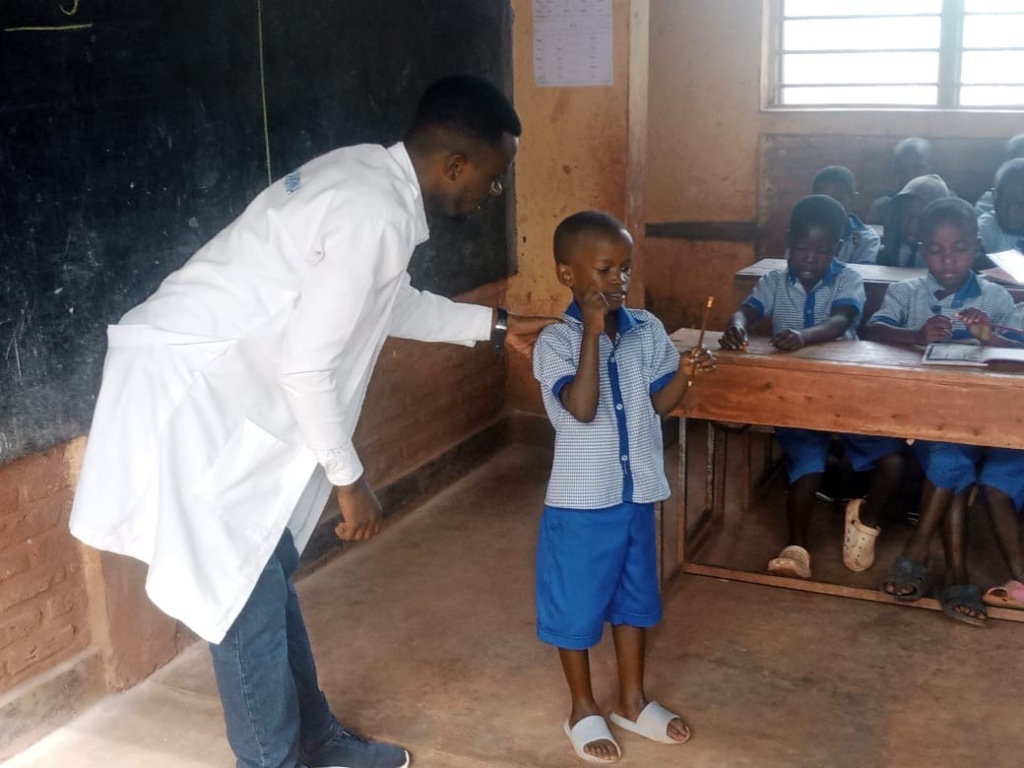
In Rwanda, the new school year is underway with enrolment of pupils and the inevitable changes in the allocation of teachers to schools. In Rudakabukirwa primary school there are two new teachers, Protais and Theogene who are using our NOEC books with Primary 2 and Primary 3 respectively. They are already learning the teaching methods from the books, and seem to be enjoying the process. Teacher Josephine is there to guide them with her many years of experience using the books with wonderful results.
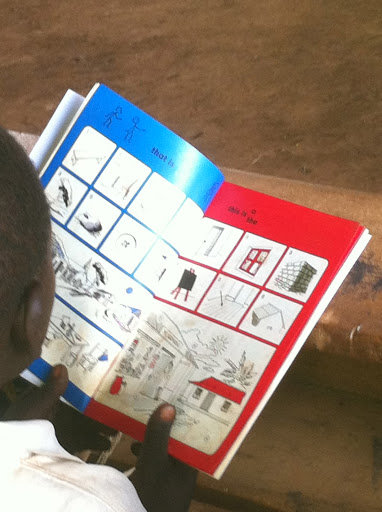
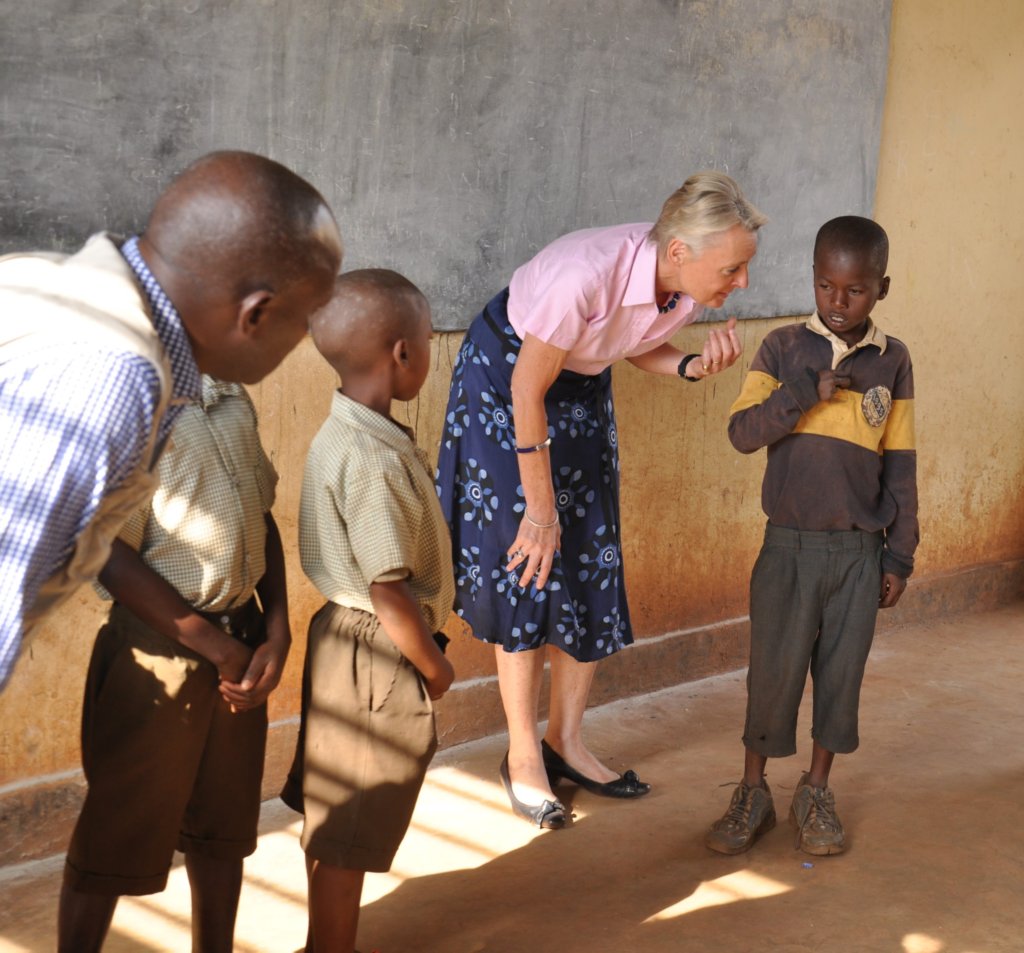
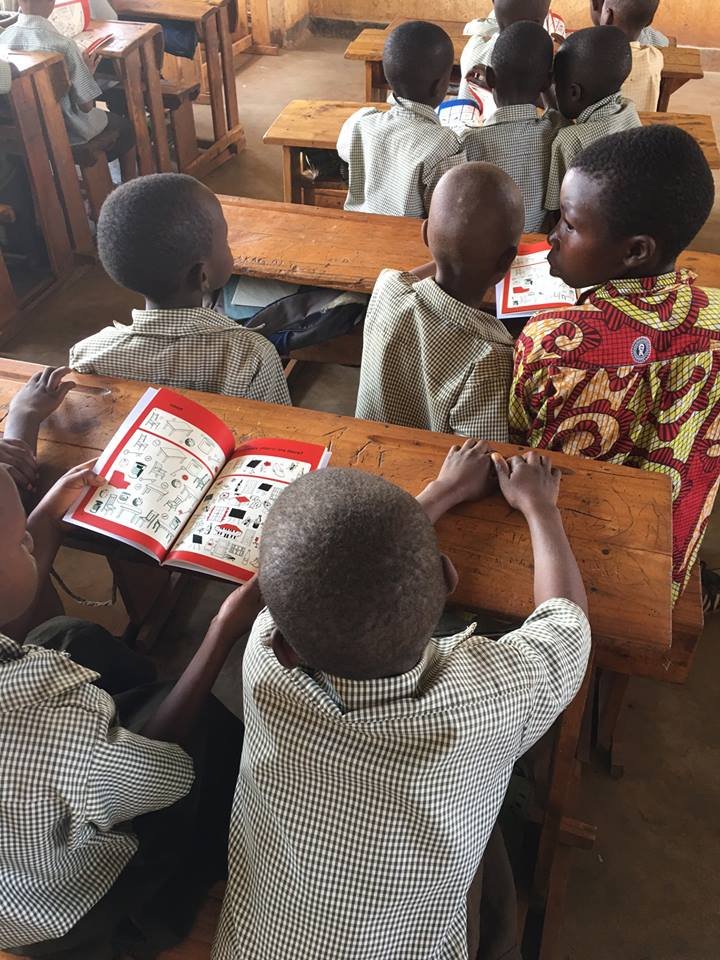
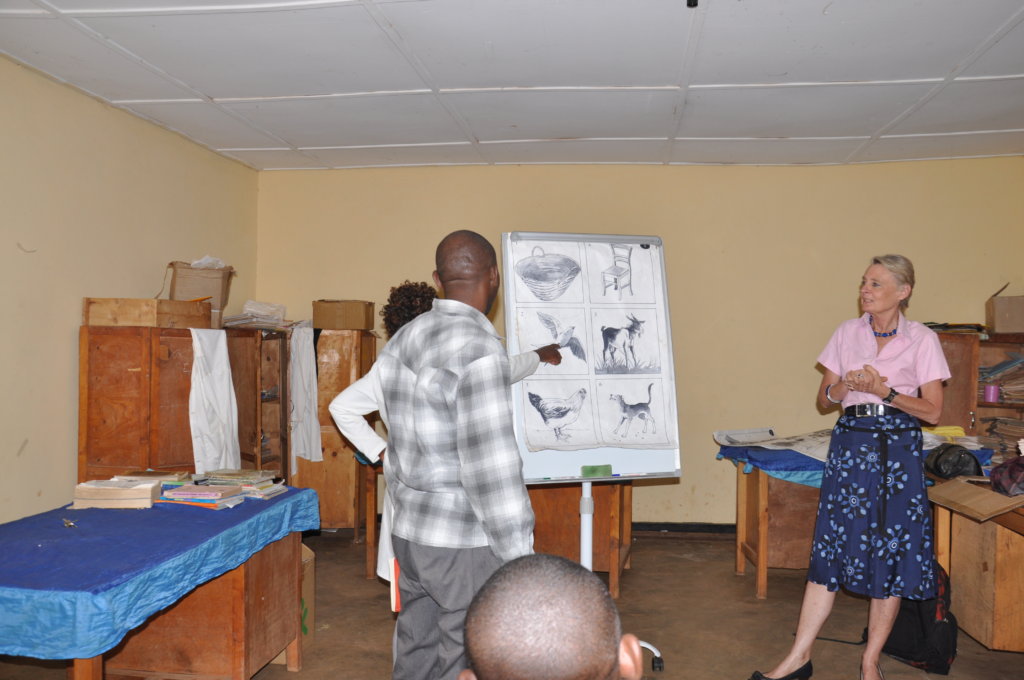
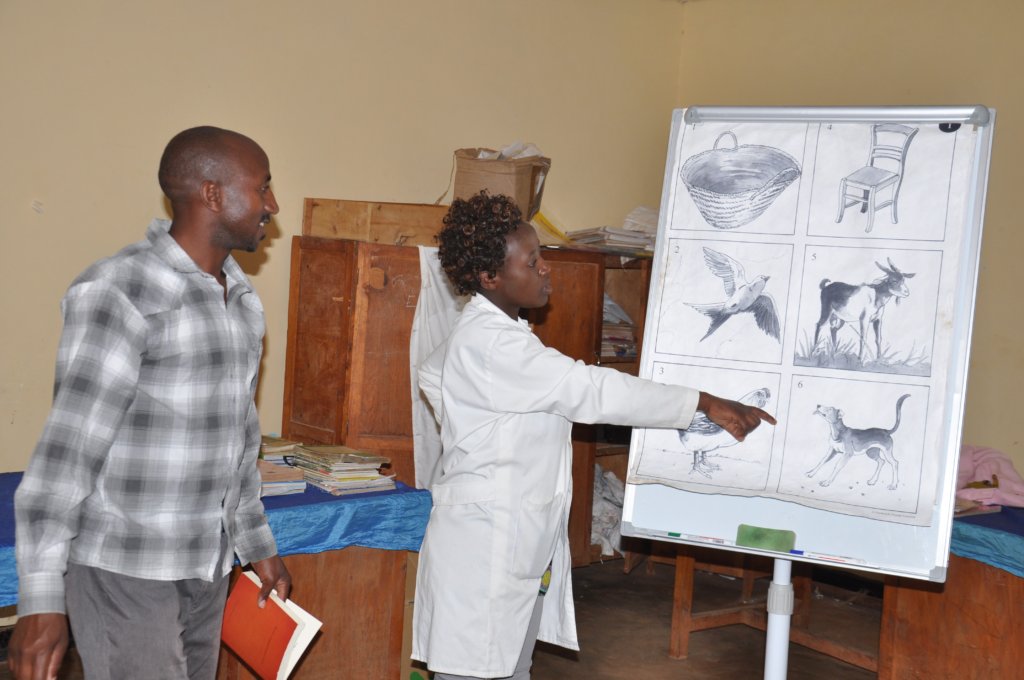
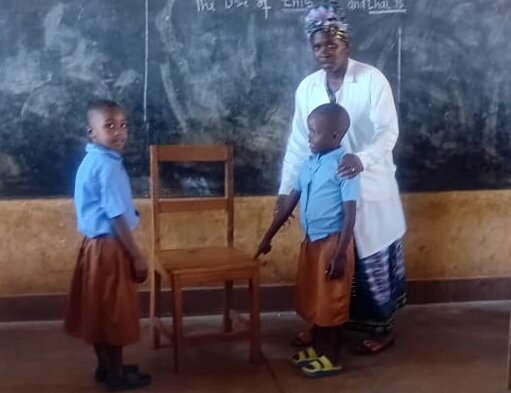
At Cyili primary school Teacher Florence has started the new Primary 1 pupils with their introduction to English before she goes on maternity leave in December. The very first lesson introduces the vocabulary chair, table, book, and introduces the sentence structure, ‘This is a …..’ The teacher is guided by the Teacher’s Book, with instructions in Kinyarwanda, Touch the chair and say, “This is a chair”. Say again very clearly, “This is a chair”. Repeat, ‘a chair, a chair, chair, chair”. The teacher follows the same format for ‘table’ and ‘book’. Then the teacher is instructed to question and answer, ‘What’s this? This is a chair. (Thisizza chair)’.
With those clear and easy instructions, the pupils hear the target sentence structure many, many times. They learn just three nouns. They hear the question, but that is for passive use only and is not for them to learn at this stage. The teacher gives the correct sentence stress, as it is shown in bold in the Teacher’s Book. Only after all that, do the pupils start to touch one of the three things, and practise the new language. By that stage it is unlikely that any pupil will make a mistake as the demonstration has been so thorough and the meaning has been clearly seen. For pupils in their very first English lesson this gives enormous confidence.
Compare that to the curriculum which begins with “What is your name? My name is….” That introduces the fiendishly difficult possessive adjective (my/your) and a noun that is abstract (name) and so cannot be seen or touched. Let me put you in the position of the pupils and put it in Swahili. Pretend you are 6 years old and you have not had the English version above, and you can assess the contrast in difficulty: Jina lako nani? Jina langu ni Katy. As opposed to: Hii ni penseli Hii ni kalamu Hii ni meza (pencil, pen, table).
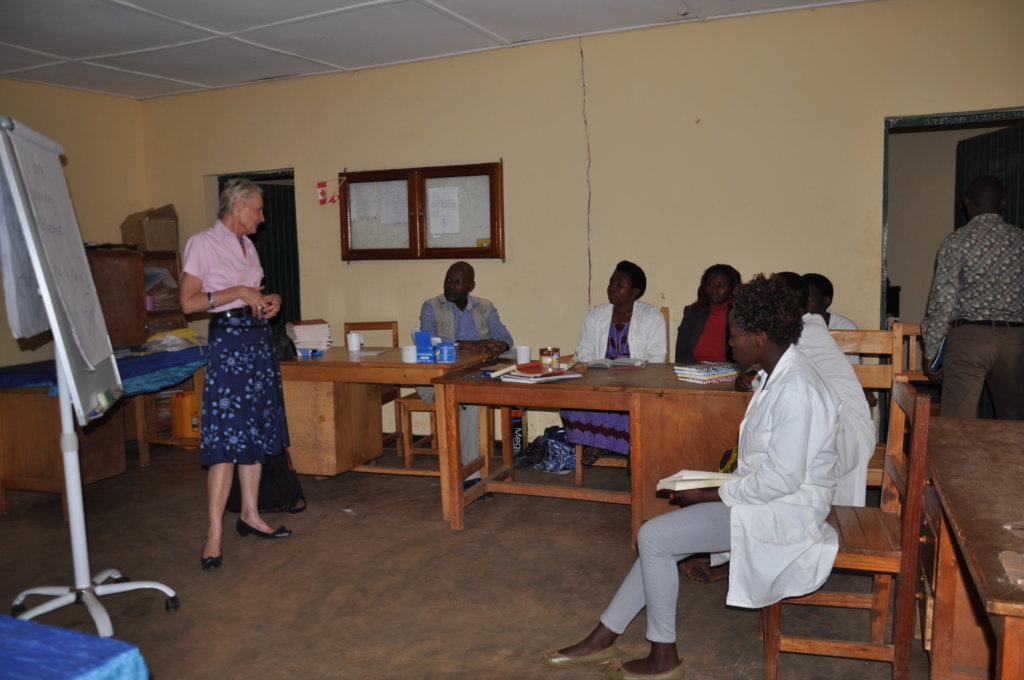
At the end of June, teachers who are aspiring to be future head teachers took examinations, and there was an emphasis on an English proficiency examination with an oral component. Those teachers who had used the NOEC books reported that they were at a great advantage over other teachers
However, drought looms over Rwanda at the time of writing, and there is no milk. The cows are not producing enough, and people are buying powdered milk if they can. The future of the children who we are helping and teaching may not look rosy but an education with English and thinking skills might be their chance for success and survival.
Thank you again for helping to invest in their future. Your generosity and compassion is so very much appreciated.
Many, many thanks and all best wishes.
Katy
Project reports on GlobalGiving are posted directly to globalgiving.org by Project Leaders as they are completed, generally every 3-4 months. To protect the integrity of these documents, GlobalGiving does not alter them; therefore you may find some language or formatting issues.
If you donate to this project or have donated to this project, you can receive an email when this project posts a report. You can also subscribe for reports without donating.



Support this important cause by creating a personalized fundraising page.
Start a Fundraiser