![]()
ZimConserve successfully implemented a community-based mushroom cultivation project using an innovative bucket system approach. This initiative empowered local community members, particularly women, with sustainable livelihood skills while promoting food security and income generation. The project demonstrated the viability of low-cost, scalable mushroom production methods suitable for resource-constrained environments.
Project Background
Zimbabwe faces ongoing challenges related to food insecurity, unemployment, and limited economic opportunities, especially in rural and peri-urban communities. Mushroom cultivation presents a viable solution due to its:
Low startup costs
Short production cycles
High nutritional value
Growing market demand
Minimal land requirements
Project Goals
Introduce accessible mushroom farming techniques to community members
Provide practical training in bucket system cultivation
Empower women and youth with income-generating skills
Enhance household food security and nutrition
Create sustainable livelihood opportunities
Project Implementation
The Bucket System Method
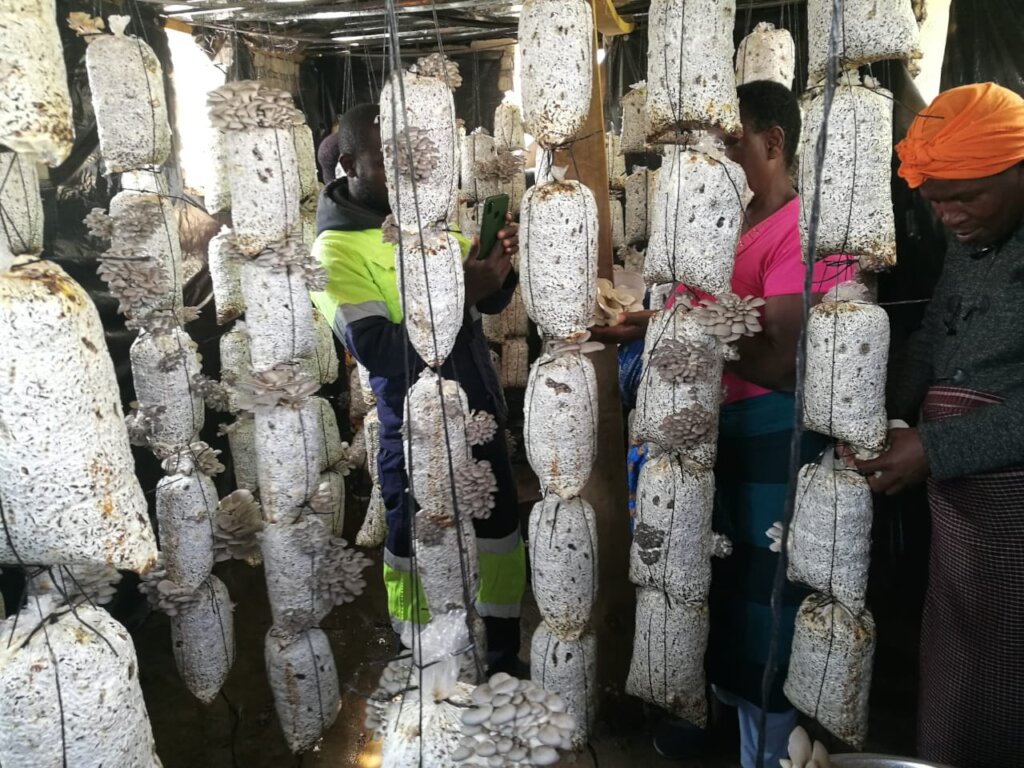
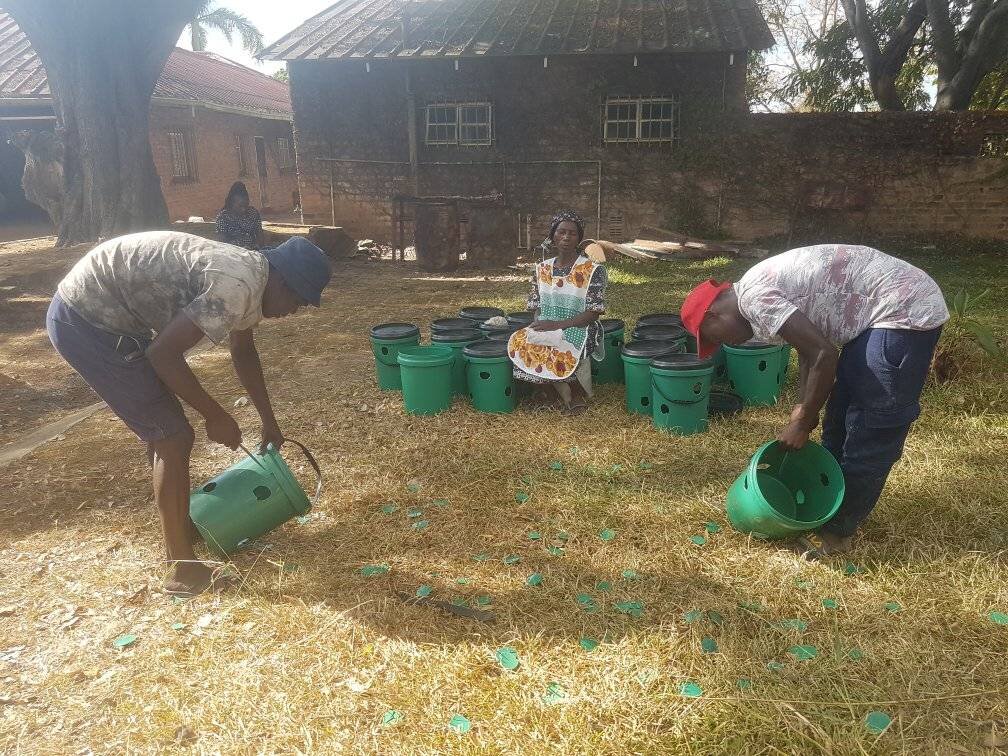
The project utilized a simple yet effective bucket system for oyster mushroom cultivation:
Materials:
Plastic buckets with ventilation holes
Sterilized substrate (agricultural waste materials)
Mushroom spawn
Basic growing medium
Advantages:
Cost-effective and accessible
Space-efficient for urban and rural settings
Easy to maintain and monitor
Scalable for small to medium production
Minimal water requirements
Training and Capacity Building
ZimConserve conducted comprehensive training sessions covering:
Substrate preparation and sterilization
Spawn inoculation techniques
Environmental control and moisture management
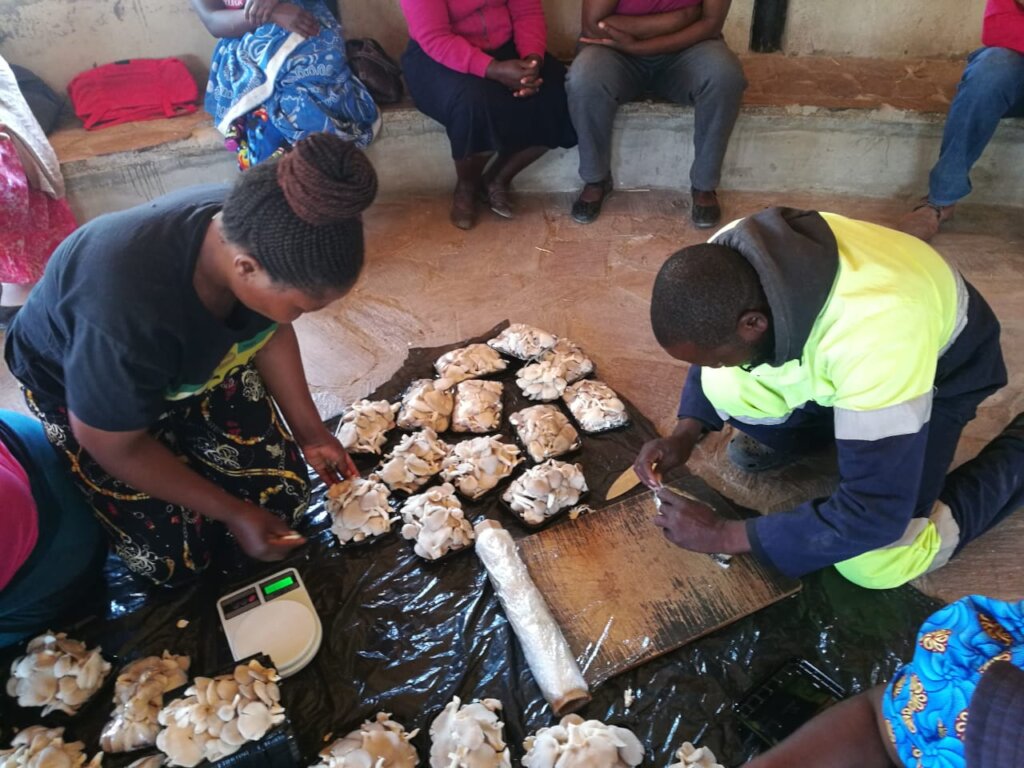
Harvesting and post-harvest handling
Marketing and business development
Record keeping and quality control
Community Engagement
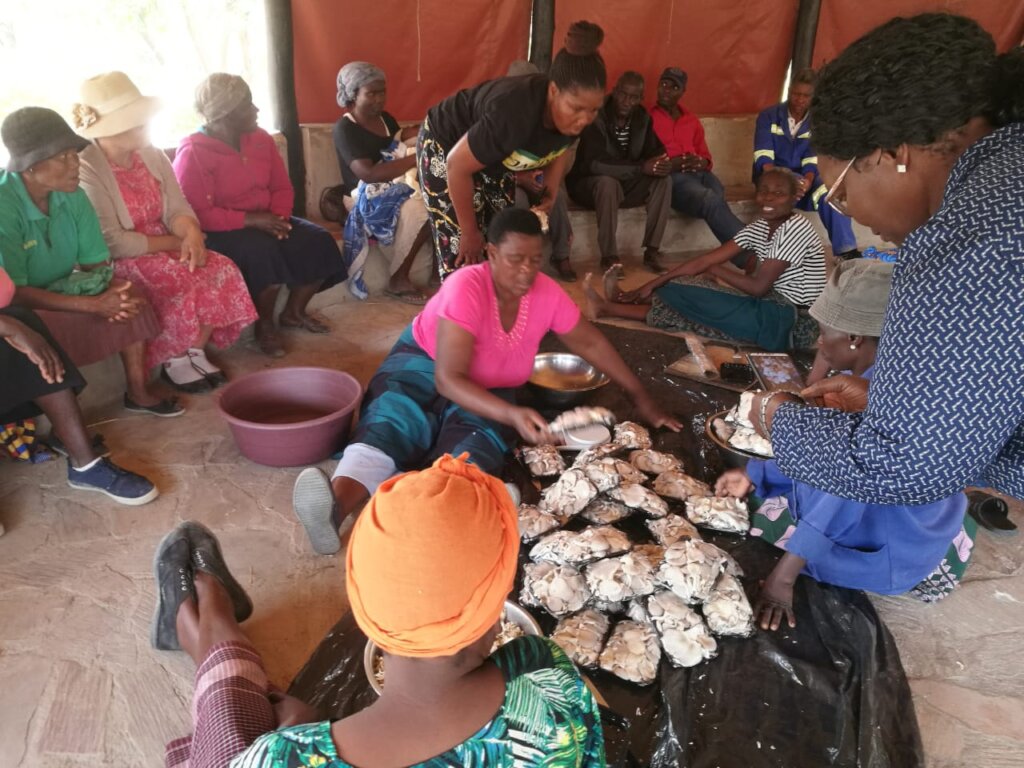
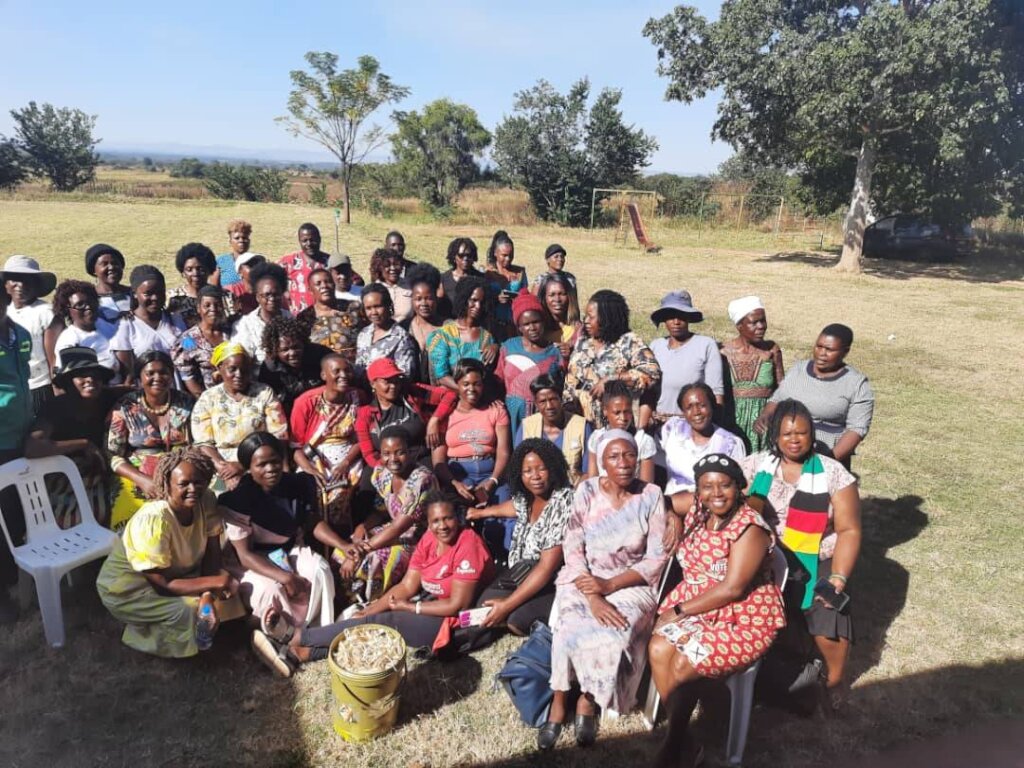
The project brought together a diverse group of community members, with particular emphasis on women's participation. Training sessions were held in accessible community spaces, fostering peer learning and collaboration. The group-based approach enabled:
Knowledge sharing among participants
Mutual support and problem-solving
Collective marketing opportunities
Stronger community bonds
Project Outcomes
Successfully established multiple production units using the bucket system
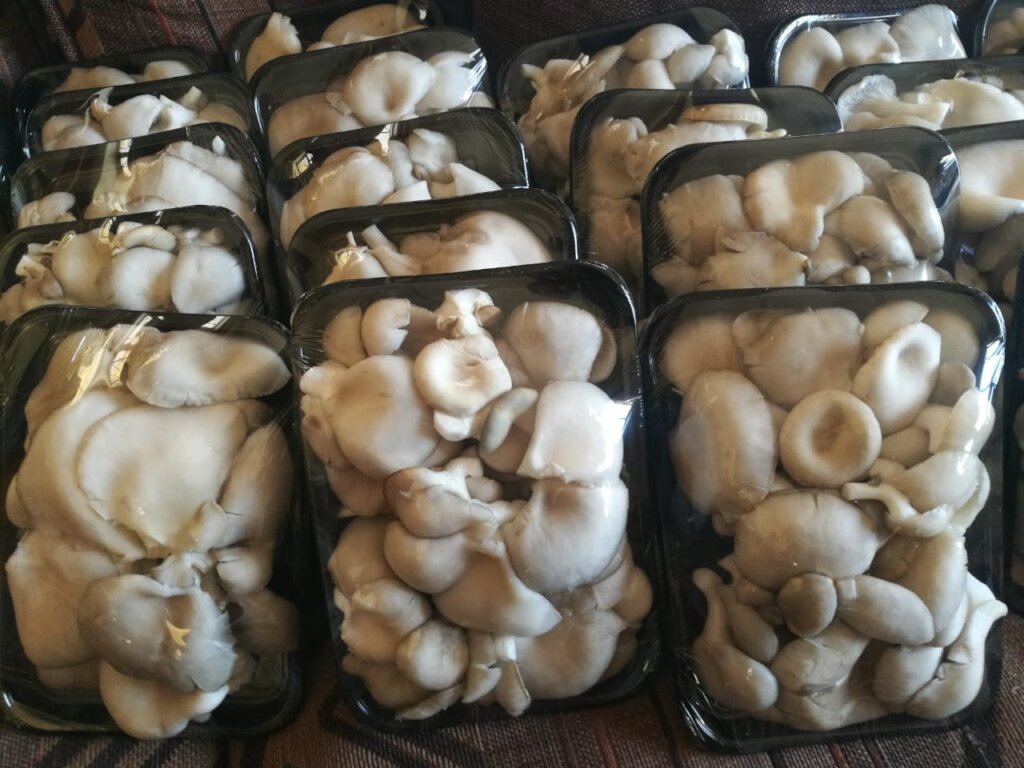
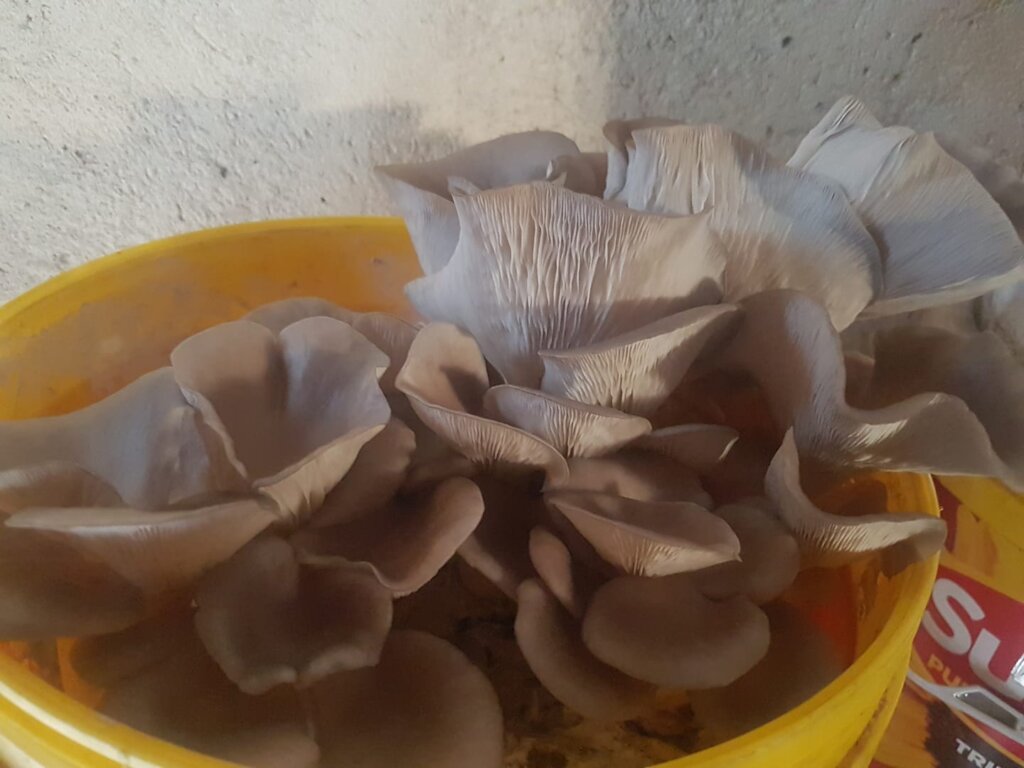
Achieved healthy oyster mushroom yields as evidenced by the quality of harvested produce
Demonstrated the viability of small-scale mushroom farming in local conditions
Capacity Development
Trained over 50 community members in mushroom cultivation techniques
Established a network of trained growers capable of independent production
Created a foundation for knowledge transfer to additional community members
Economic Impact
Provided participants with new income-generating opportunities
Enabled diversification of household livelihood strategies
Created potential for value addition through processing and packaging
Social Impact
Empowered women with technical and entrepreneurial skills
Strengthened community cohesion through collaborative learning
Enhanced household nutrition through access to protein-rich food
Challenges and Lessons Learned
Initial learning curve in substrate preparation and sterilization
Maintaining optimal humidity and temperature conditions
Limited access to quality spawn in some periods
Market development and price negotiation
Transportation of fresh produce to markets
Key Lessons
Simple, low-cost technologies are more readily adopted by communities
Hands-on training is essential for skill development
Group-based approaches enhance learning and sustainability
Ongoing technical support improves success rates
Market linkages must be developed alongside production capacity
Sustainability and Future Outlook
Participants equipped with skills for independent production
Use of locally available materials reduces dependency
Established peer support networks for troubleshooting
Integration with existing agricultural activities
Recommendations for Scale-Up
Expand Training: Reach additional communities and train more participants
Market Development: Establish formal linkages with retailers, restaurants, and institutions
Value Addition: Introduce drying, packaging, and processing techniques
Cooperative Formation: Organize growers into cooperatives for bulk marketing
Spawn Production: Develop local spawn production capacity to reduce costs
Financial Services: Connect participants with microfinance for expansion
Quality Standards: Implement quality control and certification systems
Next Steps
Monitor and support current participants
Document best practices and success stories
Seek partnerships for project expansion
Explore opportunities for value chain development
Conduct market research for product diversification
Financial Overview
Investment Areas:
Training materials and facilitator costs
Starter kits (buckets, spawn, substrate materials)
Transportation and logistics
Monitoring and technical support
Community engagement activities
Cost-Effectiveness:
The bucket system approach proved highly cost-effective, with low per-participant investment yielding significant capacity building and income generation potential.
Conclusion
The Bucket System Mushroom Farming Project successfully demonstrated that simple, accessible technology combined with quality training can empower communities to develop sustainable livelihoods. ZimConserve's approach of community-centered implementation, hands-on training, and ongoing support created a foundation for long-term impact.
The project's success lies not only in the production of nutritious food but in the empowerment of community members—particularly women—with knowledge, skills, and confidence to pursue entrepreneurial opportunities. The bucket system model offers a replicable framework for expanding mushroom cultivation across Zimbabwe and beyond.
Moving forward, ZimConserve remains committed to supporting project participants and scaling this initiative to reach more communities, contributing to food security, economic empowerment, and environmental sustainability.
Acknowledgments
ZimConserve extends gratitude to:
All project participants for their dedication and enthusiasm
Community leaders for their support and collaboration
Training facilitators and technical advisors
Partners and supporters who made this project possible
![]()
![]()
![]()
![Share on Twitter]()
![Share on Facebook]()