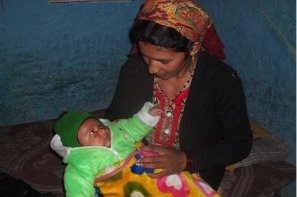
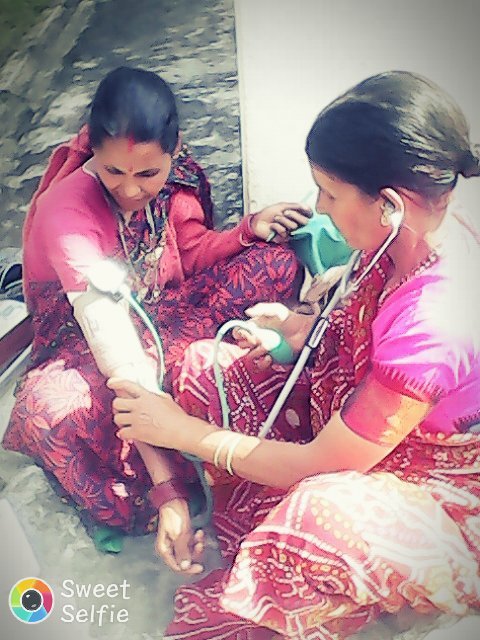
Our community and public health program is spread across 105 villages in the remote Okhalkanda block of Nainital district, which covers a population of 51,734.Our team of 49 health workers are striving hard to achieve our objectives- i.e., improve maternal health, reduce maternal morbidity, improve child health, decrease child morbidity and mortality, and overall promote comprehensive, preventive and curative health care services in Central Uttarakhand.
We have been able to demonstrate the following achievement in a 3 year cycle in our community health project (2010-2013)
- Increase in complete primary immunization rate from 99% against a baseline figure of 64%
- Increase in institutional deliveries from 9 – 31 %
- Aarohi trained midwives were responsible for 58% of all home deliveries
- Infant malnutrition in 24 villages Okhalkanda dropped to 13% in 2014
- 71% of women got full Antenatal Care against almost nil, in 24 project villages in of Okhalkanda Block in 2013
- A Mobile Medical Unit (MMU) was acquired from the state government and it is being run regularly for 8 days every month bringing vital medical services including ultrasound to some 7,200 patients annually.
- Aarohi’s rural clinic and outreach services treated 8,306 patients in 2014-15 compared to 3,877 in 2012-13, and conducted 209 major surgeries for those who are unable to get access to such services in the region.
Highlights for the Year 2015
Antenatal coverage: All pregnancies are being tracked, and 99.3% pregnancies are being registered in the government health centres. Antenatal coverage has reached 97%, which denotes 97% of pregnant women received at least one antenatal checkup by skilled care providers.
Postnatal coverage:97% women received postnatal checkups at home by accredited social health activists (ASHA) and Swasthya Karmis (SKs).
Menstrual hygiene:To promote menstrual hygiene in the villages, a bathroom was constructed in the Kalagar village and this is being used by many women and girls in the village.
Complete primary immunization:Complete primary immunization has reached 92%, which means 92% children got vaccinated with BCG, three doses of pentavalent, three doses of OPV and measles.
Model Anganwadi:Model Anganwadi started functioning, essential playing and learning materials were procured for preschool children.
School health:We covered 182 schools, in 105 villages and educated more than 1000 students per month on topics like personal hygiene, domestic hygiene, and environmental hygiene, prevention of diarrhea and method of ORS preparation at home.
Training and capacity building: Intensive training of village health workers (ASHAs and SKs) on the aspects like ANC, PNC, growth monitoring, primary care, community mobilization. 114 ASHAs and 111 TBAs have been trained in various aspects of maternal and child health.
Curative services
- Total patients seen in 2015 – 10,680
- Number of patients treated in the hospital- 1910
- Total screening in special health camps- 510
- Total surgeries done in health camps- 47
- Total Dental screenings in OPD- 592
- Dental screening for children in schools- 160
- Total number of dental extractions- 172
- Total dental fillings- 111
- Total patients registered for mobile health camps- 6799
- Total laboratory investigations done in mobile health camps- 7759
- Total ultrasound- 1681
- Ultrasound of ANCs- 1191
Maternal health
Reduction in maternal mortality and morbidity is one of the objectives of the project. All pregnancies are being registered and more than 50% pregnancies were registered early at 12 weeks of pregnancy. Antenatal coverage, that is pregnant women are seen by skilled care providers at least once during pregnancy , has reached97%. Pregnant women who had complete or full ANC which means at least three ANC, one TT and 100 IFA were 13.5%. ASHAs are being trained in identification of high risk pregnancies and danger signs, 60% of HRPs were identified and referred to the hospital for treatment. Anaemia during pregnancy is considered as high risk during pregnancy, 48.3% pregnant women were found anaemic and given IFA tablets. About 40% ANCs are being done in MMU and villages where there is no road connectivity village ANC camps are being organised and women in the remote villages are also availing essential antenatal services and receiving IFA and calcium tablets.
Last year 37% of deliveries were institutional deliveries and 47.6% home deliveries were conducted by Aarohi trained Dais.
97.7% women received postnatal checkup by ASHAs and SKs. Postnatal coverage has increased to 78% which means 78% women received PNC within 48 hours of delivery, of which 20% of women received all seven PNCs, continuous training and monitoring is being done to increase the coverage of postnatal check up.
Child health
Promotion of child health is another objective of the project. Last year, 4570 children between the age groups of 0-5 years were monitored for growth and weight. Of this 67.2% children were found to be of normal weight, and 29.6% children were underweight (less weight according to age). Among the underweight children, 7.4% were severely underweight, and they were referred to the hospital for treatment.
Last year 1903 children in 182 schools were educated on personal hygiene, domestic hygiene, environmental hygiene and prevention of diarrhea.
More than 80% newborns were kept to the breast immediately after birth. People are giving colustrum to the newborns and harmful practices like early bathing has also reduced in the community. To improve the child health and nutrition, parents are made aware of their child’s health. For underweight children, parents are being counseled and advised to take extra care of nutrition for their children. This is done every month as part of the village health nutrition day.
Capacity building
35 new villages have been added in the project. For proper implementation of our activities, we have selected a new team and their training is under process. Last year, 3 supervisors cum trainers and one trainer attended 15 days training on aspects like ANC, PNC, primary care, first aid. Our team of technicians attended an 8 days workshop on incinerators and installed 6 of them at Satoli. Training of ASHAs and TBAs is conducted every month. In the newly added 35 villages, selection of SKs and Dais is under process. To improve the capacity of project staff, 2 coordinators attended workshop on communication in Faizabad. Last year, a team of 28 members including 19 ASHAs, 6 project supervisors, 3 coordinators went for an exposure visit to Sadbhawana, a nonprofit organization in Basti, Uttar Pradesh. During this exposure ASHAs learnt how to conduct proper VHND and how to conduct adolescent meeting. Further they had meetings with ASHAs and they shared their experiences and learnt how to work more effectively with fewer resources.
Comprehensive health care
Every month health promotion and awareness is discussed in the meetings. Last year we conducted 961 Matruh Samuh meetings, 104 village health sanitation and nutrition committee meetings and 29 general meetings. Health related videos, such as prevention of diarrhea, water purification and water borne diseases, antenatal care, growth monitoring, and menstrual hygiene are screened in the Matruh Samuh meetings with the help of tablet cum projector. This has increased the male participation, and number of participants in the meetings has also doubled - people are taking more interest in the meetings!
Linkage with government and NGOs
Aarohi got permission to run Sachal, a mobile medical van, for another 5 years. The Sachal provides services of 8 days of mobile health camps every month. It covers more than 100 villages and 566 patients every month.
Social determinants of health
Health is affected by several factors like personal, social, environmental and economical factors. To address social factors we are promoting installation of smokeless chulhas. Till March 2016 we have expanded this programme to 54 villages by constructing 500 chulhas in the project area.
Target of the project was to achieve 500 chulha in five years but due to positive outcome and demand from the village target achieved in half time. We are planning to construct 1000 more chulhas till the end of project. A study was done to assess the quality of smokeless chulha in terms of carbon mono oxide emission; it was found that CO emission from improved chulha was about 60% lesser than traditional chulha.
Looking ahead and Challenges
Although some indicators have improved in the Okhalkanda block, but we still need to improve in the areas of institutional delivery, family planning, breast feeding and child mortality. These continue to remain- a challenge for us. Remoteness of villages, lack of health infrastructures , lack of connectivity in terms of roads and telephones, and retention of human resource are highly challenging areas that we are trying to cope with. This year we added 35 new villages in the project area, and we are working in the entire Okhlakanda block by covering a population of 54,535. As per the framework of our project, we will drop of the 35 oldest villages from the project in July 2016. We are continuously trying to avert all preventable maternal deaths. Our ASHAs and field supervisors are promoting full ANCs and PNCs, and carrying out early identification of complicated and high risk cases so that a referral can be done on time!
![Share on Twitter]()
![Share on Facebook]()