By Kim Wensel | National Grants Manager
Tahirih’s work to mitigate the impacts of Hurricane Harvey has evolved to be responsive to the current needs of residents in the Houston area, particularly immigrant women and girls fleeing violence. Our efforts in 2018 include:
Ensuring Access to Legal and Social Services
In the immediate aftermath of Hurricane Harvey, Tahirih contacted all of its current clients to make sure they were safe and determine what additional support was needed. Now, roughly seven months out, we continue to see needs associated with Harvey’s devastation. In total, the percentage of Tahirih’s clients affected is roughly similar to that observed in the general Houston population – about 15%-20% of clients, or about 282 individuals and their family members that Tahirih is currently serving. Many of these individuals had unique needs, for example, their house was flooded, they lost their only car, or they could not meet rent because they could not get to their place of business. Tahirih is triaging these cases, and making referrals, providing social services, and deploying direct financial assistance funds it raised in the aftermath of Harvey.
*Name changed to protect client privacy.
Co-leading the Harvey Systems Project
As part of our leadership in the Houston Immigration Legal Services Collaborative (HILSC), Tahirih co-chairs the Access to Services committee. Since Harvey, this committee has been working on a Harvey Assistance fund plan. A subcommittee recently interviewed four candidates for the Harvey Systems project, which has three main goals:
The committee is also working on a collaborative advocacy letter to Harris Health regarding barriers to services for undocumented clients and has a meeting set up with a senior staff member to discuss further.
Community Mobilization. Tahirih, in collaboration with the Houston Immigration Legal Services Collaborative and a law firm in Pennsylvania, led efforts to develop a Houston-wide evaluation of all the federal, state and local disaster-relief programs available to those impacted by Harvey, and how those programs can be accessed by immigrants. Harvey brought to light additional, legal barriers preventing immigrants from seeking access to key assistance programs, and the critical need to remove those barriers to enable the assistance to be utilized. For example, there is a program called SNAP that provides disaster aid, and undocumented immigrants are eligible to participate. However, applicants need to enter a Social Security Number in order to apply, and many do not have an Social Security Number. As part of the evaluation, the SNAP program is identified as a source of support, along with critical instructions about how to enter a string of zeros in place of a Social Security Number. This tool, which was completed at the end of 2017, will directly inform the Harvey Systems Project, and the ongoing work of Tahirih and the community.
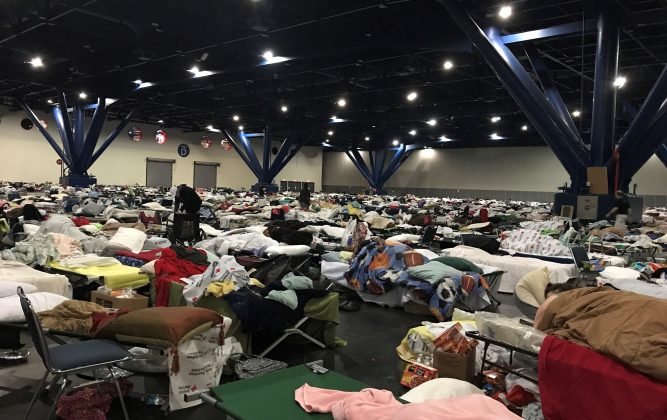
Civil Liberties Advocacy. Tahirih continues working with the Department of Homeland Security to address grievances about monitoring of disaster aid efforts by Immigration and Customs Enforcement. While immigrants were given assurances that enforcement efforts would not be exercised against those seeking assistance during and after Hurricane Harvey, Immigration and Customs Enforcement agents were seen patrolling shelters and other relief sites. Even more troubling, when Tahirih set up immigration and domestic violence assistance tables in the Convention Center shelter themselves, five different individuals supporting immigrants observed and photographed ICE agents patrolling the tables inside the shelters. Tahirih has organized three conference calls with Homeland Security to share this information with the Civil Rights and Civil Liberties department, and that team is coming to Houston to discuss and evaluate its response to the disaster relief efforts.
Links:
By Justin Greene | Chief Development and Marketing Officer
By Justin Greene | Project Leader
Project reports on GlobalGiving are posted directly to globalgiving.org by Project Leaders as they are completed, generally every 3-4 months. To protect the integrity of these documents, GlobalGiving does not alter them; therefore you may find some language or formatting issues.
If you donate to this project or have donated to this project, you can receive an email when this project posts a report. You can also subscribe for reports without donating.