By Justin Greene | Chief Development and Marketing Officer
In the months since the hurricane made landfall in Houston, we have continued to assist our clients with the additional legal challenges created by the storm. For example, providing legal services became vastly more complex when key documents needed to support a legal argument were lost in the floods, and participating in legal meetings or court appearances became impossible at times due to flooded roads or cars lost to flooding. Further, Tahirih’s clients who are seeking asylum and are often required to comply with telephone check-ins and wear large ankle monitors as a condition of their release from an immigration civil detention center. Without electricity, completing mandatory scheduled telephone check-ins became impossible for clients who could not charge their cell phones or their ankle bracelets.
Social services needs also expanded exponentially, with most clients experiencing severe challenges. Many were in elevated states of financial distress. In addition to losing their homes and belongings, clients lost critical income and access to transportation. They experienced heightened risk of eviction, and worried about their ability to sustain rent payments, their access to sufficient food, and their ability to navigate transportation needs. Until their legal issues are resolved, Tahirih clients often have no authorization to work and unreliable sources of income. The impact of the storm multiplied their acute needs.
In the immediate aftermath of the hurricane, Tahirih mobilized to develop a plan to respond to emergent client needs and took the following actions:
o Helping clients reschedule hearings and appointments with federal agencies, such as USCIS, that they were unable to attend during the week of Hurricane Harvey;
o Updating client addresses with the immigration court and federal agencies;
o Assisting clients in collecting lost documents;
o Ensuring that clients have legal counsel to assist them with appealing FEMA denials
o Ensuring clients are able to access legal counsel to support them with landlord and tenant issues occurring as a result of Hurricane Harvey;
With the initial period following Harvey behind us, Tahirih has focused on three major initiatives to continue to mitigate the impact of the storm on our clients.
In addition to the initial client outreach described above, Tahirih took another opportunity after two months to contact its clients to determine what further support was needed. In total, the percentage of Tahirih’s clients affected is roughly equal to that observed in the general Houston population – about 15%-20% of clients, or about 150-260 individuals and their family members that Tahirih is currently serving. About 81 of these households had severe needs, for example, their house was flooded, they lost their only car, or they couldn’t meet rent because they couldn’t get to their place of business. Tahirih is triaging these cases, and making referrals, providing social services, and deploying direct financial assistance funds it raised in the aftermath of Harvey.
In addition to the elevated legal complexity created by Harvey, case management needs are also more complex. The first wave of support involved helping clients find new places to live. However, as they move, many need new safety plans, and many have trouble enrolling their children in school because their name isn’t on a lease or their children are undocumented. Finally, while clients receive work authorization when their cases are finalized, in the meantime they must rely on the informal economy to meet basic needs of food, shelter and transportation. Finding and building these new relationships to meet their daily needs is a special challenge for those who have had to relocate.
Tahirih is supporting efforts to develop a Houston-wide evaluation of the all the federal, state and local disaster-relief programs available to those impacted by Harvey, and how those programs can be accessed by immigrants. Very often, immigrants face legal barriers to accessing key assistance programs, and it is critical to remove those barriers to enable the assistance to be useful to them. For example, there is a program called SNAP that provides disaster aid, and undocumented immigrants are eligible to participate. However, they need to enter a Social Security Number in order to apply, and many do not have an SSN. As part of the evaluation, the SNAP program is identified as a source of support, along with critical instructions about how to enter a string of zeros in place of a Social Security Number. Tahirih is working with a law firm in Pennsylvania on this effort, and sharing the evaluation and recommendations with critical groups working to support the immigrant community in accessing these programs.
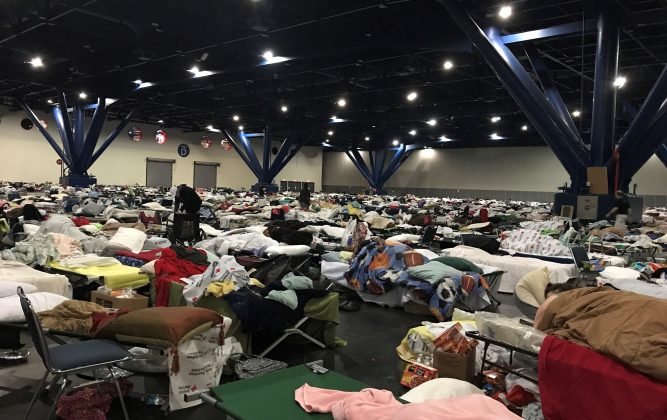
Tahirih is working with the Department of Homeland Security to address grievances about monitoring of disaster aid efforts by Immigration and Customs Enforcement (ICE). While immigrants were given assurances that enforcement efforts would not be exercised against those seeking assistance during and after Hurricane Harvey, ICE agents were seen patrolling shelters and other relief sites. Even more troubling, when Tahirih set up immigration and domestic violence assistance tables in the Convention Center shelter themselves, five different individuals supporting immigrants observed and photographed ICE agents patrolling the tables inside the shelters. Tahirih has organized three conference calls with Homeland Security to share this information with the Civil Rights / Civil Liberties department, and that team is coming to Houston to discuss and evaluate its response to the disaster relief efforts.
Project reports on GlobalGiving are posted directly to globalgiving.org by Project Leaders as they are completed, generally every 3-4 months. To protect the integrity of these documents, GlobalGiving does not alter them; therefore you may find some language or formatting issues.
If you donate to this project or have donated to this project, you can receive an email when this project posts a report. You can also subscribe for reports without donating.