By Nico Hermanu | Fundraising Officer
Project Initiation & Socialisation
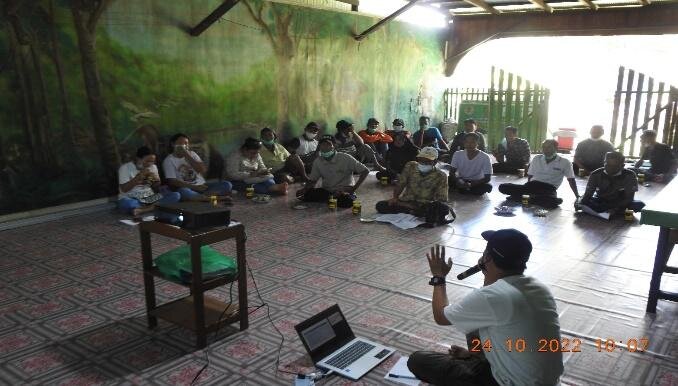
A meeting to socialize the project was held on October 13th, 2022, and attended by 22 male and two female members of the Mantangai Hulu Village. The village is located near the reforestation area, in one of the 15 villages where the BOS Foundation conducts its community empowerment program.
The village community gave a positive response to the project and set three goals to achieve: to reforest the previously damaged area with specific varieties of peat plants, to rebuild and preserve a healthy level of biodiversity in the area, and to develop a greater collective appreciation towards nature from the local community.
Following Activities
The meeting participants followed up with the following:
Working Agreement & Commitment
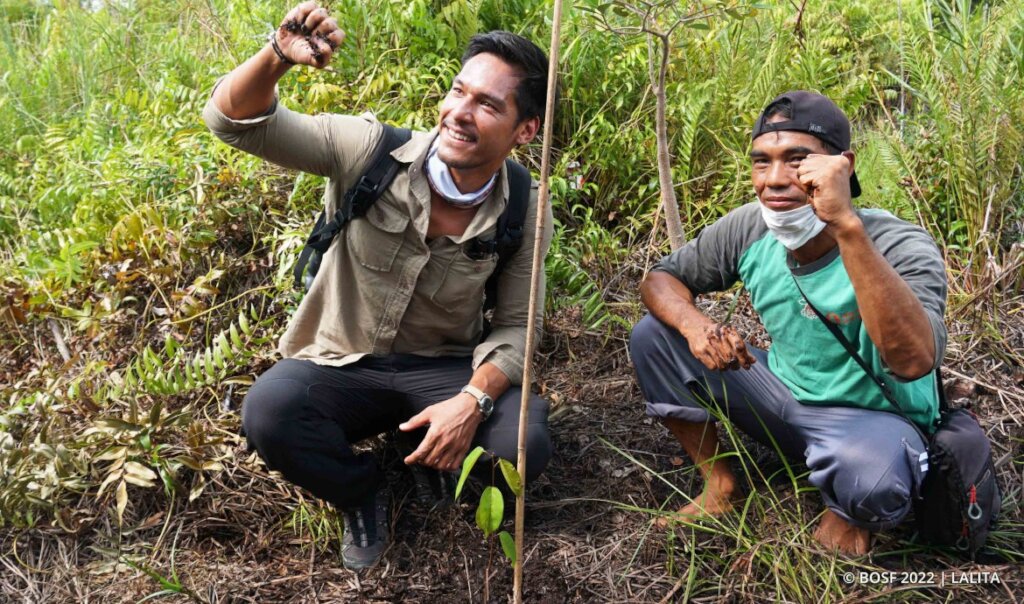
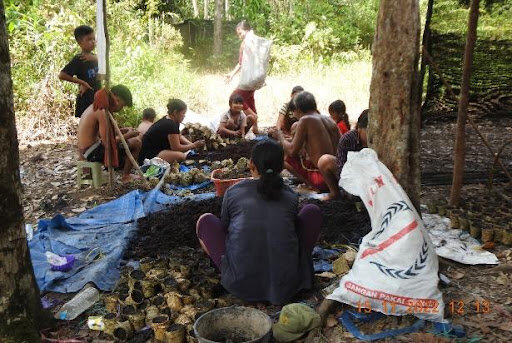
The community members willing to participate in this project were divided into three groups: Eka Kahimat, Bahu Himba, and Halajur Mahaga, with 32 men and 25 women carrying out the seedling production. The groups are based on the neighbourhood where the members live.
The groups agreed to evenly share the responsibilities of producing seedlings with all group members. The goal is to grow 48,880 seedlings, so each person will take care of 858 seeds.
Training in Seedling Production & Handling
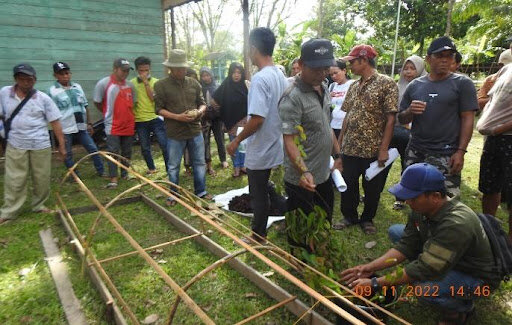
The training started on November 9th, 2022, in the Mantangai Subdistrict office. Seventeen representatives from the three groups (14 male & 3 female) were present to receive the training. The training materials were given by the Mawas Conservation Program Reforestation Team. The materials consisted of instructions on how to construct the nursery and knowledge regarding the maintenance of the nursery and seedlings.
The next step of training was a simulation of seedling production and handling. The whole training was completed in one full day.
The local communities traditionally depend on extracting natural resources, such as fishing, trading for various farm products, logging, and other unsustainable livelihoods. The idea of restoring habitat can be new to them. This is the reason why the Mawas team considers this training critical because the group members are not experienced farmers, especially for the native peatland plant species. The plant species to grow are Shorea balangeran – a type of a timber tree and several orangutan food species locally known as lampuda (Syzygium), hampuak (Baccaurea bracteata), rambangun (Euodia lunuankenda), parupuk (Lophopetalum javanicum), and tumih (Combretocarpus rotundatusretinitis).
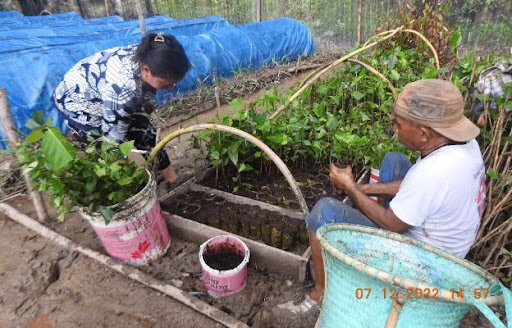
One thing that stands out from this project is the use of purun pouches to replace plastic polybags for carrying the seedlings and planting media. Purun (Lepironia) is a local water plant that the villagers use to weave into bags and for other uses. Using natural materials is considered more environmentally friendly and more aligned with what the BOS Foundation programs advocate.
Nursery Construction
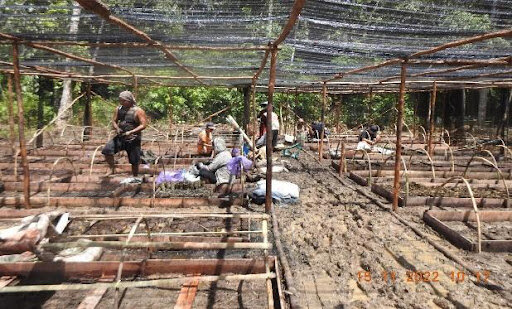
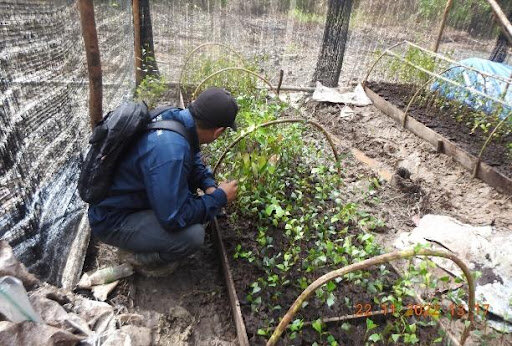
The working groups started to build the nursery in the second week of November 2022.
The Maintenance
The next step is to care for the seedlings up to the point that these seedlings are ready to plant. To optimally grow them and maintain humidity, the group also build a hood or dome inside the nursery.
This process will continue until the seedlings are ready to be transported to the planting site. We estimate that this stage will be done around July 2023.
Project reports on GlobalGiving are posted directly to globalgiving.org by Project Leaders as they are completed, generally every 3-4 months. To protect the integrity of these documents, GlobalGiving does not alter them; therefore you may find some language or formatting issues.
If you donate to this project or have donated to this project, you can receive an email when this project posts a report. You can also subscribe for reports without donating.