By Alessandra Carganico | Digital Marketing Officer
Below is the direct testimony of Hazem Basti, director of one of the community centers in East Aleppo. Through his story emerge the daily challenges, the commitment to fostering education, and the profound human impact the center is creating at the heart of the local community.
Hazem Basti
My name is Hazem Basti, born in Idlib in 1986. Initially, I studied at the Faculty of Law at the University of Aleppo, after which I dedicated myself to the private sector. I worked for an Italian clothing brand, Magilla, serving as branch manager and later working in their accounting department. Afterward, I moved between various local agencies and, after some time, I began working in community service. Additionally, during my involvement in social work, I pursued studies in Business Administration. I am currently studying this discipline and hope to graduate soon, God willing. At present, I am the director of the "Mustaqbal" community center in Al-Miyassar, a role I have held for four years.
We launched the activities at the Al-Miyassar center about four years ago. We entered an area that was completely new to us, with different customs and traditions; consequently, we had to start by familiarizing ourselves with the general environment. We came to understand the residents' habits and integrated into the surrounding context by connecting with the neighborhood mukhtar, prominent local figures, and the local sheikh. Through these contacts, we presented the services we offer and our purpose for coming to the area: namely, providing psychological support, raising the educational level—whether through literacy classes or formal schooling cycles—and offering pathways for disabilities, such as speech disorders and autism. We introduced ourselves to the neighborhood and, thank God, managed to win the trust of the residents. We registered high turnout from local families signing up to receive our services.
Regarding my current duties at the center, I coordinate with the staff to ensure everyone carries out their required tasks. I also guide, coordinate, and execute the strategic plan established by the organization for this area. Added to this is the relationship with the beneficiaries, aiming to reach each person as effectively as possible given that we work with very diverse categories of people. We manage registration procedures, communications with users, and the introduction of new services and programs. This summarizes my work at the center: coordinating employees, planning and monitoring new services, and managing ongoing activities.
What I love most about my job is the direct contact with people. We are truly very close to the local population, in constant communication with them, listening to their concerns. They come to the center because of the trust built over time, and sometimes they confide their personal problems to us. What I love is precisely this closeness to the community: we engage in dialogue with young and old alike, welcoming everyone's difficulties. The best part is that we provide services to people in need in a neighborhood characterized by extremely limited income.
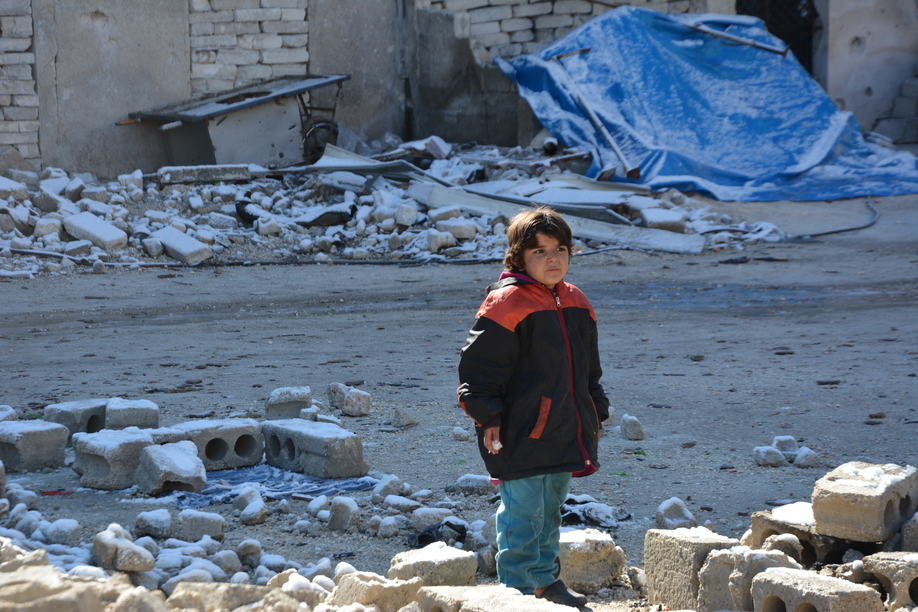
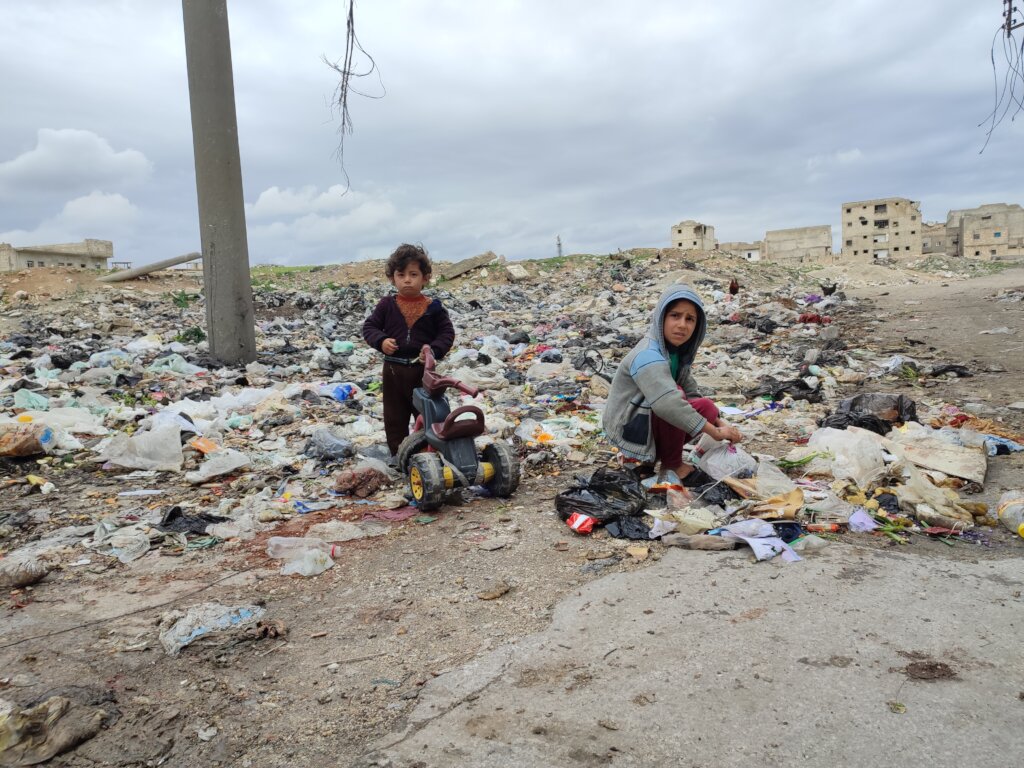
The programs we are implementing in the area were created to respond to dynamics present since the beginning of the crisis. Because of the war, many people had to drop out of school, many were displaced from their homes, and others could no longer afford educational costs. This created a deep void in their educational path: some had their studies interrupted, while others never had the opportunity to learn. In our programs, we offer academic support for those who attended school and dropped out, but we also offer literacy courses. There are many women who wish to learn to read and write because they never had the chance. Through our activities, we map out people and their specific needs: those who want to learn to read and write are enrolled in literacy classes, and we treat adult women according to this same principle. Those who want to pursue formal schooling receive our support through remedial classes, tutoring, or homework assistance. Our goal is to ensure they can follow school in the best possible way.
This is a vital intervention that we absolutely must carry forward. We have seen its concrete impact from many perspectives. For example, we had students with very weak academic levels; we worked with them step by step, and a clear improvement was recorded. Some of our students have even made it to university, entering important faculties: we have youths who chose emergency medicine and others engineering. On the other hand, there are women who previously could neither read nor write and who took their ninth-grade exams this year. We see that this work has a massive impact on the neighborhood, and the residents themselves are enthusiastic about the services offered by the center.
There is one story that touched me deeply: that of a woman who could neither read nor write. Initially, she came to the center to attend group psychological support sessions. Later, learning about our literacy course, she became enthusiastic and wanted to learn to read and write. At home she had two sons: one had dropped out of school and the other was working. Seeing their mother study, both expressed the desire to resume their education. We reached the point where the mother and son found themselves in the same classroom. She completed the second level of literacy and enrolled in ninth grade. While the mother was preparing for her ninth-grade exams, her sons were preparing for their high school graduation exams in the same year, tackling both diplomas together. This was a truly extraordinary and special story for our center.
Clearly, alongside the positive aspects in the neighborhood, we sometimes encounter negative dynamics that translate into daily challenges in our work. Often these involve rigid habits and traditions, or the initial acceptance of our presence in the area. For example, there are situations where parents agree to let their daughter study, but the brother firmly opposes it. We address these barriers: we talk to the parents to reassure them, and sometimes we must speak directly to the brother creating obstacles. We have managed to resolve many cases where families were opposed to their children's education, especially girls. We have unblocked many situations, even though deep personal mindsets change only over the very long term. With some people it worked and we managed to make a difference; with others it did not. Overall acceptance, however, has been good. There are periods when some people continue to reject these novelties, especially due to the influx of people who, with the return of stability, have returned to their original villages or relocated. In these cases, the initial mistrust from when we first opened the center resurfaces: they don't accept you immediately because they don't know you or who you are. We work through this as if it were our first year, and we are achieving excellent results even in these situations.
Among the various activities we offer, there are some where beneficiary attendance is currently reduced. If we look strictly at numerical data, we might think that a low number of enrollees is a negative factor for a program's sustainability. However, considering the center's four years of activity, we have already provided this service to the vast majority of the local population. In fact, we have already covered a huge number of users, returning many students to education and responding to the main needs of the neighborhood. To address this natural decline, we might decide to move to another area or neighborhood to meet the same type of need.
Currently, our center's premises in Al-Miyassar are located in a somewhat isolated position, halfway between the Al-Miyassar and Al-Jazmati areas. This makes access difficult for beneficiaries, as there is no public transportation in the immediate vicinity. Furthermore, the facility we occupy consists of only five classrooms in which we deliver all the center's services; it is a significantly restricted space. Despite this limitation, we have managed to guarantee the maximum possible benefit for users during this period. Now, God willing, we are taking steps to find a larger location, still within the Al-Miyassar area. A larger space will allow us to serve a greater number of beneficiaries and respond optimally to the residents' needs.
We have been searching for this new venue for about two months to transfer our activities. We encountered considerable difficulties because residents have returned to the area and everyone is renovating their own homes to live in them. The main challenge is that the few spaces we find are often destroyed or damaged by the effects of the war and the recent earthquake, or are properties that have been abandoned for a very long time. We evaluated several options, but they all required heavy restoration work or, in some cases, almost total reconstruction. In the end, we managed to identify a property that we consider very suitable: it is located in a densely populated area and is close to public transportation. We are currently working on this opportunity, but the project requires greater financial support to make this place ours. We must ensure we can carry out the necessary renovations so that it is safe and suitable for the beneficiaries who will attend it.
Project reports on GlobalGiving are posted directly to globalgiving.org by Project Leaders as they are completed, generally every 3-4 months. To protect the integrity of these documents, GlobalGiving does not alter them; therefore you may find some language or formatting issues.
If you donate to this project or have donated to this project, you can receive an email when this project posts a report. You can also subscribe for reports without donating.



Support this important cause by creating a personalized fundraising page.
Start a Fundraiser