By Michelle Riley | Director of External Affairs
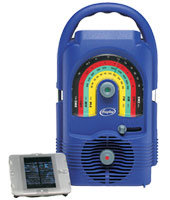
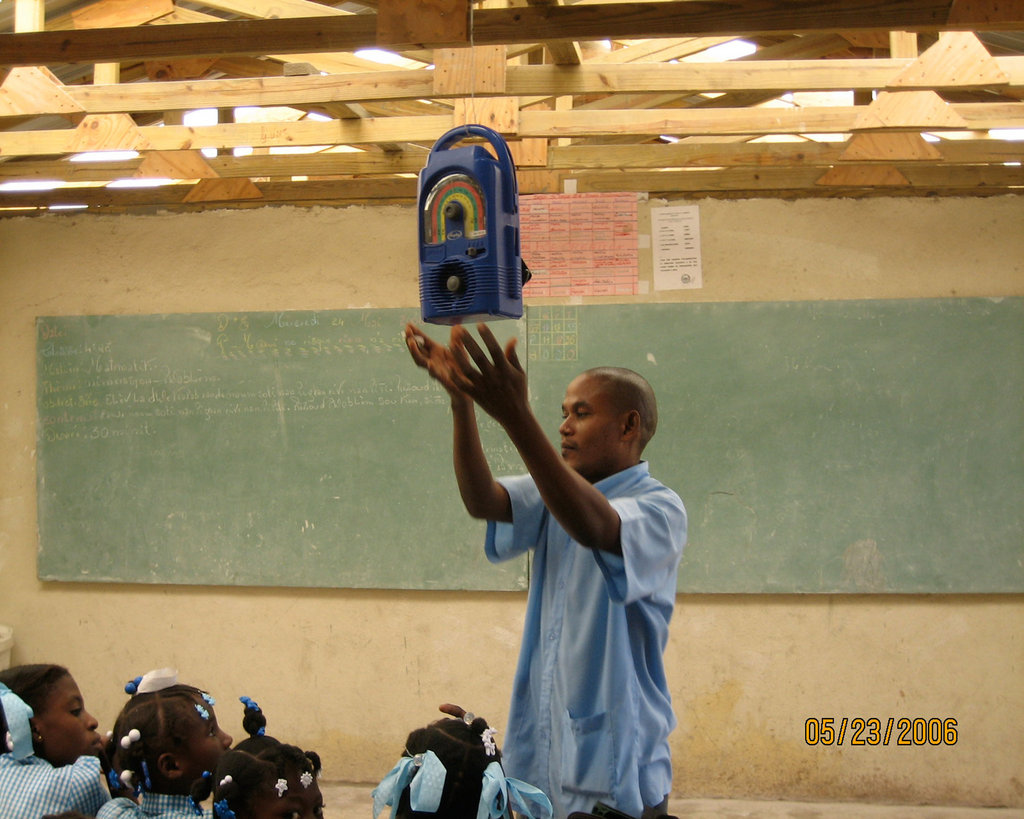
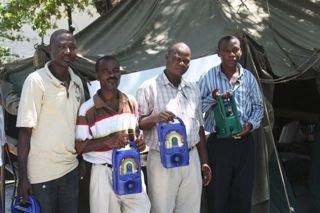
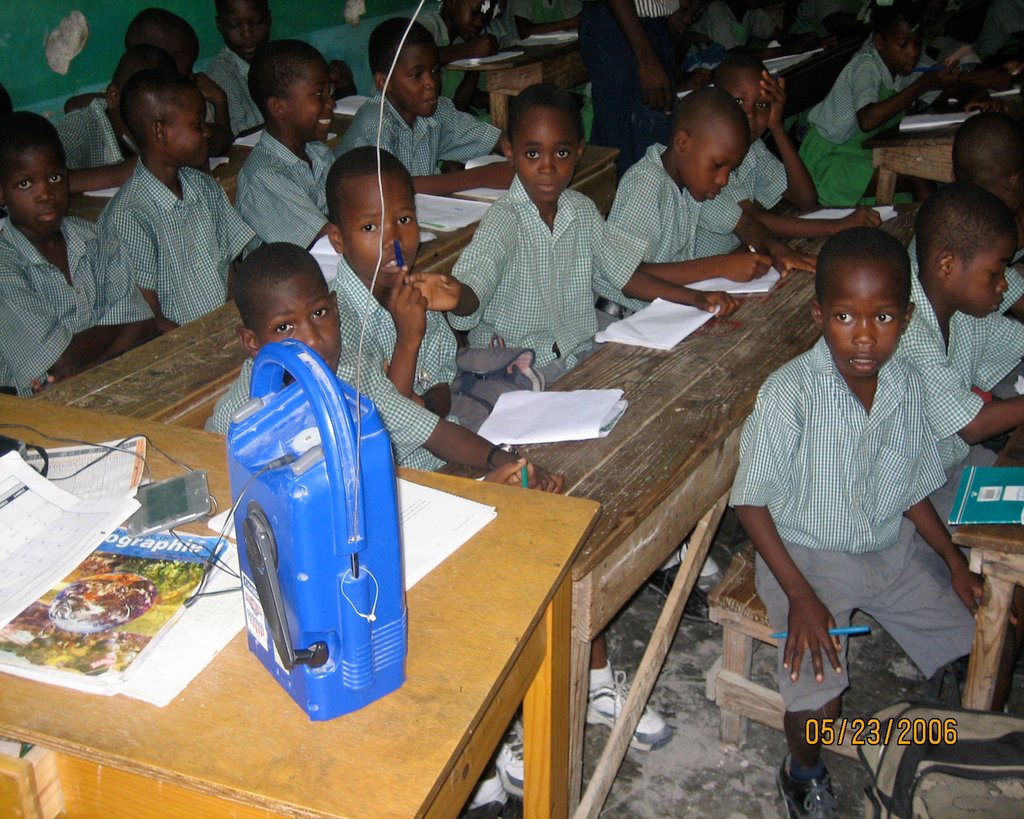
A thousand of Lifeline Energy’s wind-up and solar-powered radios have now been integrated into Haitian relief efforts. Lifeline Energy project manager Chhavi Sharma partnered with representatives from the National Democratic Institute (NDI), International Relief and Development (IRD) and the Sosyete Animasyon Kominikasyon Sosyal (SAKS) to distribute the radios to help some of the 1.5 million Haitians who remain displaced.
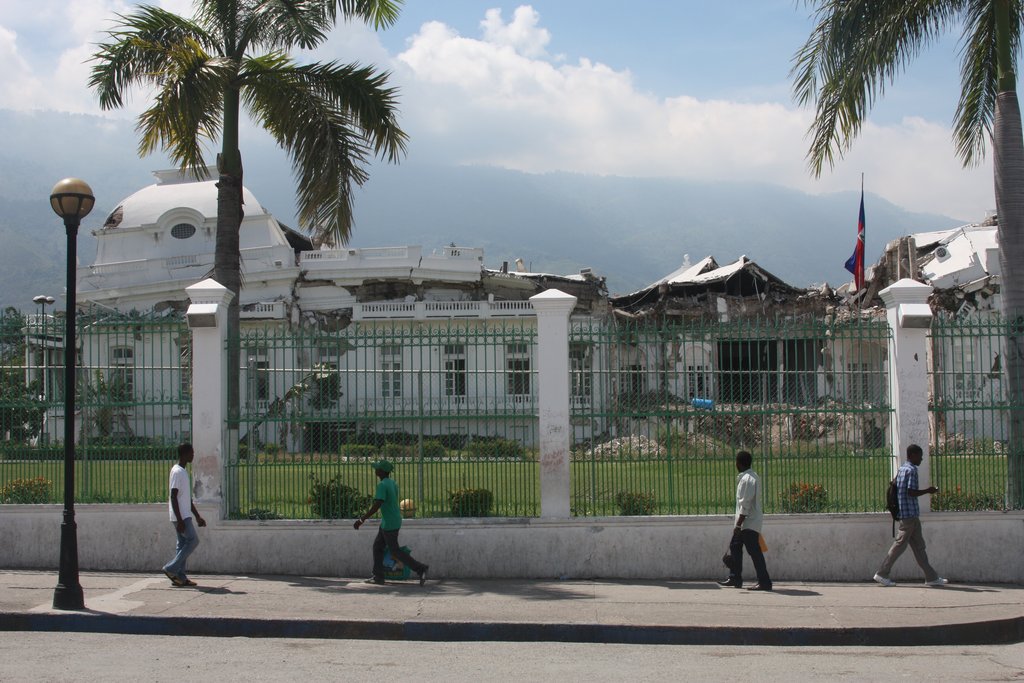
Launched immediately following the earthquake, Lifeline Energy’s Haiti appeal was initiated to ensure the vulnerable and displaced receive vital, ongoing information to help rebuild their lives. Since then, the radios have been distributed to hundreds of people who desperately need the radios for early hurricane warnings, information on reconstruction plans and updates on the country’s national elections – to name just a few.
Jean Evelt, 16, told Chhavi Sharma that he has been listening to political news on the radio. With national elections looming, Evelt said that before the radio he was unaware about the presidential and legislative elections being held in November. “Now I know that there are 19 presidential candidates, as well as who they are and which parties they belong to,” he explained.
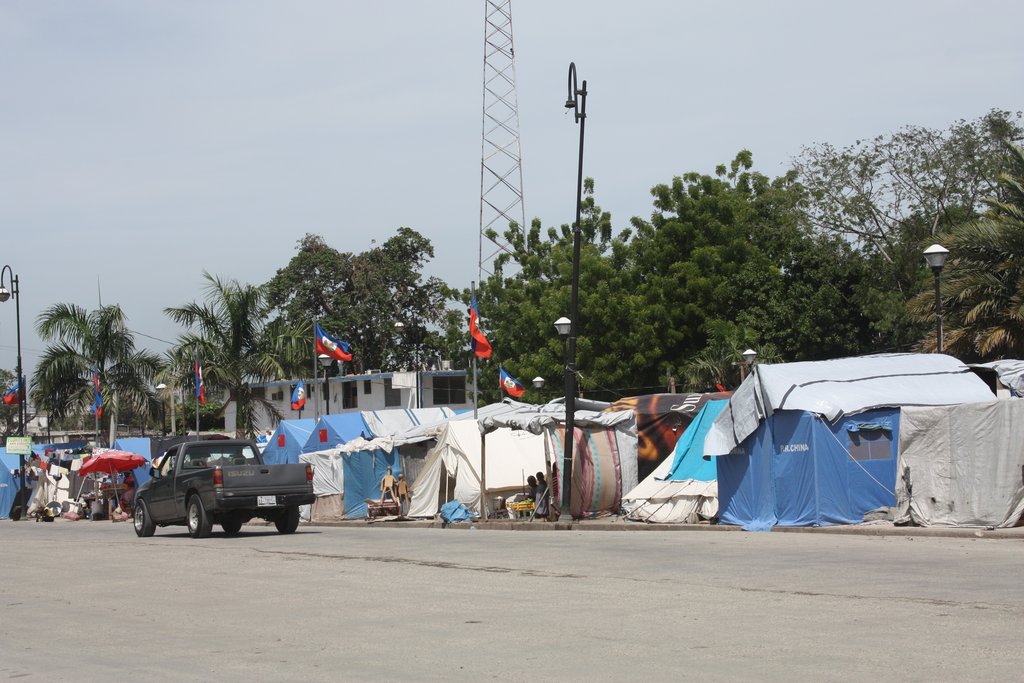
Evelt, whose father died during the hurricane, lost his family home in the earthquake and now lives in an IRD shelter – a home made of wood and corrugated metal. Temporary shelters cover the island, with locals referring to certain areas as “tent cities.”
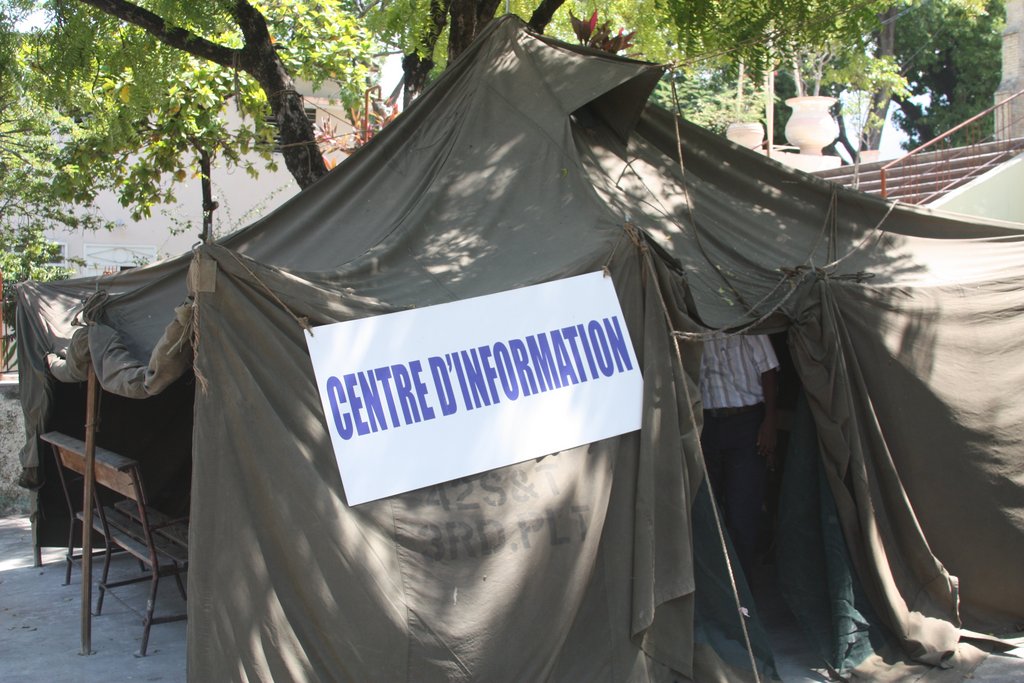
NDI – an NGO that we have worked with in the past – is distributing 400 of Lifeline Energy’s radios to people living in areas around citizen information centers throughout the country. One such area is Carrefour – an impoverished area near Port-au-Prince.
As for IRD, the organization has been allocated 552 of Lifeline Energy’s radios. The U.S.-based organization began its Haiti operations on January 18, six days after the earthquake struck, and has since provided water, food, sanitation, medicines and shelter material. Most of its relief work has been focused in the Leogane district, the area closest to the earthquake epicenter with more than 93 per cent destruction. According to an IRD report, every resident of Leogane was sleeping outside in makeshift shelters following the earthquake.
IRD has now set up 727 shelters to house families and aims to set up a further 1,700 by next year. Our radios are being circulated among the shelters for people to listen to information on hurricane and storm preparation updates and, imperatively, on reconstruction efforts between the government and the international community.
According to NDI and IRD representatives who spoke to Chhavi Sharma, people are especially interested in early weather warnings, so they can strengthen shelters, keep their legal documents safe and take care of their cattle in anticipation of adverse weather conditions.
Lifeline Energy’s radios not only protect Haitians now but also will protect them for years to come. Given that the Caribbean island is prone to hurricanes (in 2008, Haiti was rocked with four storms, which killed almost 800 people and effected a further 800,000), our radios provide these displaced people with critical information to help their future. In addition, the January earthquake has caused most communities to suffer from chronic power shortages, so our solar-powered and wind-up radios are vital tools.
To help the thousands of displaced Haitians, including 300,000 children, please visit Lifeline Energy’s appeal page.
Links:
Project reports on GlobalGiving are posted directly to globalgiving.org by Project Leaders as they are completed, generally every 3-4 months. To protect the integrity of these documents, GlobalGiving does not alter them; therefore you may find some language or formatting issues.
If you donate to this project or have donated to this project, you can receive an email when this project posts a report. You can also subscribe for reports without donating.