By Michael Helms | Visiting Engineer
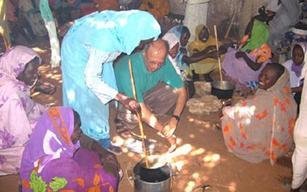
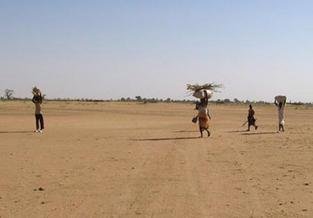
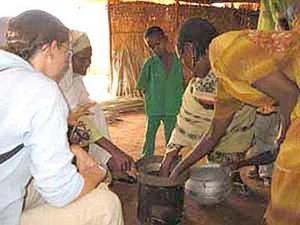
The temporary camps in Darfur have seen their populations increase as more internally displaced people (IDPs) arrive every day. Food is cooked in pots on wood fires outside of simple shelters. Firewood is available at a price from markets in the camps, or women have to walk for many hours to gather it. These women are often at risk from criminals who may steal their wood and/or threaten them with bodily harm. It is anticipated that by reducing the amount of wood needed to cook food, life will get better for the IDPs.
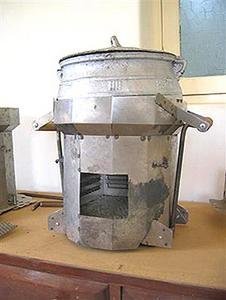
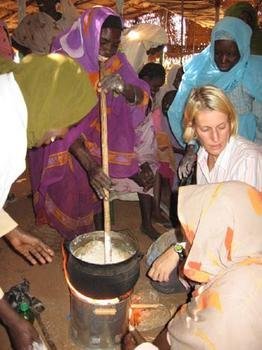
The Berkeley Darfur Stove (BDS) is a portable, fuel-efficient, sheet metal stove that uses much less wood to cook. The design, manufacture and distribution of the BDS is a team effort by CHF International and Lawrence Berkeley National Laboratories. The major benefits of the fuel-efficient stove are: less money spent on firewood, less time spent gathering firewood, improved personal safety, and a reduced impact on the environment.
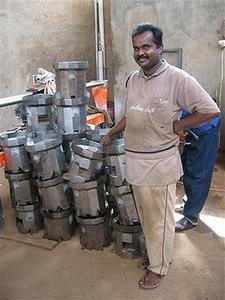
The BDS project achieved a major goal with the arrival of a mechanical engineer in Darfur. Michael Helms, VIP (Visiting International Professional) traveled to Darfur this week with several hundred pounds of tools and materials. Helms brought equipment with him to set up a metal stove factory. The simple, rugged tools will cut, bend and spot-weld the sheet metal used to make the stoves.
After arriving in Darfur, Helms met with local CHF staff to discuss their assessments of the first batch of stoves that were distributed to IDPs in November 2006. CHF interviewers reported that women using the stoves saved significant amounts of firewood. They also learned that the food cooked faster and tasted better when prepared in the new stove. The BDS design provides a cleaner, hotter fire, transfers more heat to the cooking pot, and uses less wood than the traditional three-stone cooking fire used by IDPs. Helms visited local businesses to assess availability of tools and materials, and made his first visit to a camp to learn how the stoves are being used. He is now working with the stove design team to enhance the stove's functionality, simplify its manufacture, and reduce total costs.
Project reports on GlobalGiving are posted directly to globalgiving.org by Project Leaders as they are completed, generally every 3-4 months. To protect the integrity of these documents, GlobalGiving does not alter them; therefore you may find some language or formatting issues.
If you donate to this project or have donated to this project, you can receive an email when this project posts a report. You can also subscribe for reports without donating.