By Desiree Obimpe | Communications Manager
The Problem: A Growing Health Worker Crisis
Across Africa, a silent emergency is unfolding. If current trends continue, the continent will be short of 6.1 million health workers by 2030. That number may seem abstract but every missing nurse, midwife, or doctor represents hundreds of people going without care: a mother giving birth without skilled support, a child suffering from malaria, or a family with no access to basic medical advice.
Today, Africa bears 25% of the world’s disease burden but has only 3% of its trained health professionals. The World Health Organization recommends 10.9 health workers per 1,000 people; in much of sub-Saharan Africa, that number is closer to one or less.
Behind this crisis lies decades of underinvestment in education and infrastructure. Many countries lack accredited training institutions, qualified instructors, and up-to-date curricula. In fact, 75% of Africa’s health training institutions are located in just four countries, leaving large parts of the continent with little access to quality medical education. For students from rural or low-income areas, studying to become a health worker is often out of reach.
Why It Matters
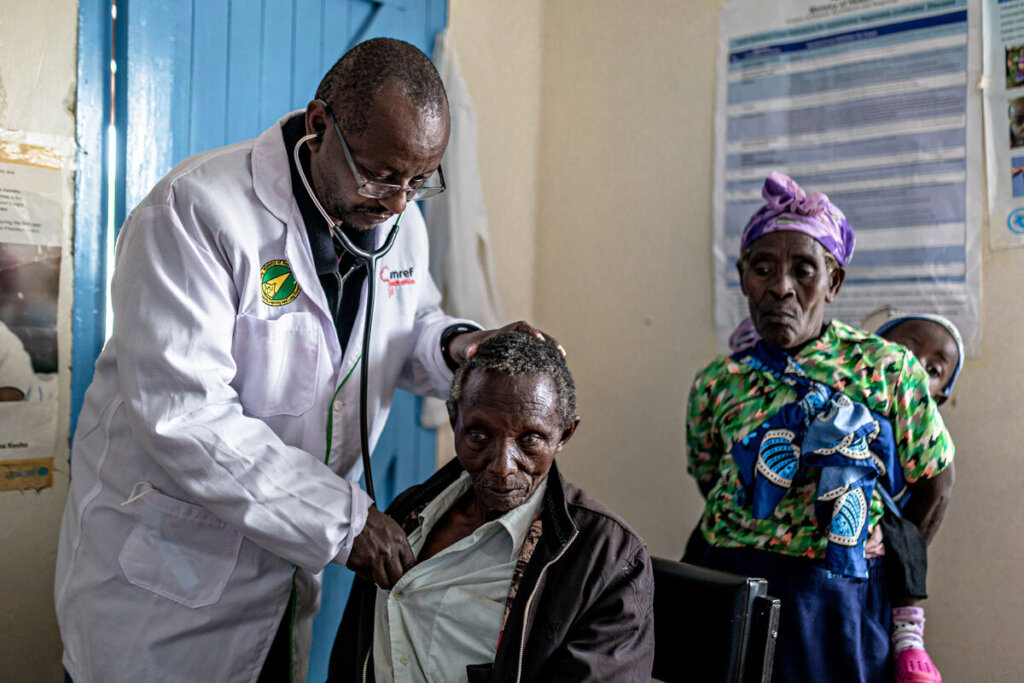
Without trained health workers, there can be no healthcare. A single nurse in a rural clinic may see 70 to 100 patients a day, providing lifesaving care, educating families, and helping prevent disease outbreaks. But with too few health workers, millions of Africans go without the care they deserve.
This shortage doesn’t just impact Africa, it affects us all. As we’ve seen through global health crises like COVID-19 and mpox, diseases don’t stop at borders. Strengthening Africa’s health workforce means building a first line of defense that protects lives both locally and globally.
And there’s an economic cost, too. Weak health systems reduce workforce productivity, hinder education, and slow economic growth. According to Amref’s data, closing the health worker gap could increase Africa’s GDP by $22 billion a year—a boost that benefits the entire global economy.
Amref’s Solution
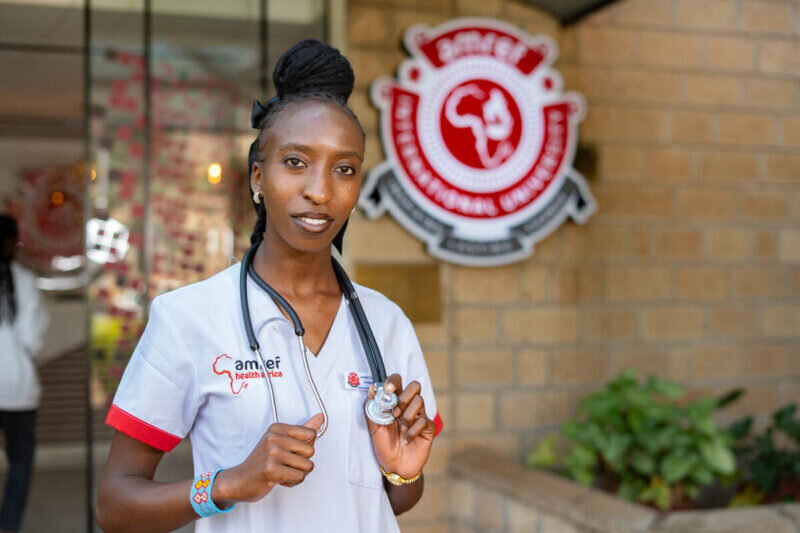
Amref Health Africa is tackling this challenge head-on through Amref International University (AMIU)—a pioneering institution founded to train the next generation of African health workers.
Unlike traditional universities, AMIU was born out of an NGO with nearly 70 years of experience improving public health on the ground. Its programs are led by Africans, for Africans, ensuring that training is relevant, practical, and rooted in the realities of community health.
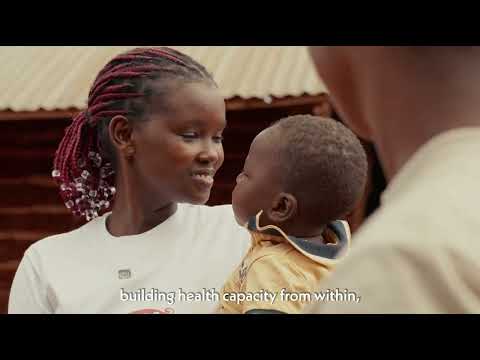
At AMIU, students gain the skills to address Africa’s most urgent health threats, from maternal mortality to non-communicable diseases and emerging epidemics. With your support, AMIU can expand its reach, upgrade training facilities, and open doors for more students from underserved communities.
Already, over 90% of AMIU graduates remain in Africa, serving in rural areas where the need is greatest. Every graduate becomes a multiplier of change—saving lives, mentoring peers, and strengthening the health systems their communities depend on.
By investing in AMIU, you’re helping to:
Africa’s health worker shortage is urgent and solvable. But we can’t wait. Every year we delay, millions more go without care.
You can be part of the solution.
Your donation today will help Amref International University train more health workers who will go on to serve thousands of people each year. Together, we can strengthen health systems from the inside out—and build a healthier, safer world for everyone.
Links:
Project reports on GlobalGiving are posted directly to globalgiving.org by Project Leaders as they are completed, generally every 3-4 months. To protect the integrity of these documents, GlobalGiving does not alter them; therefore you may find some language or formatting issues.
If you donate to this project or have donated to this project, you can receive an email when this project posts a report. You can also subscribe for reports without donating.



Support this important cause by creating a personalized fundraising page.
Start a Fundraiser