Give Orphaned and Injured Wildlife a Second Chance

by Rockfish Wildlife Sanctuary, Inc.
Play Video
Give Orphaned and Injured Wildlife a Second Chance

Project Report | Apr 19, 2017
RED HEADED WOODPECKER THRILLS RWS STAFF & VOLUNTEERS

By Liz Courain | Project Leader

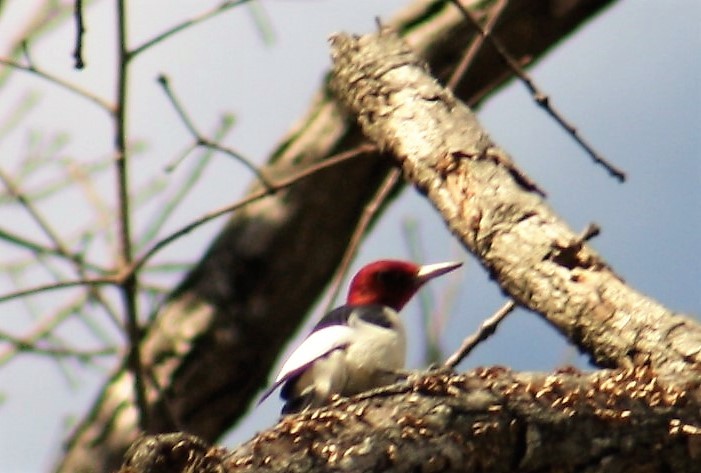
Red-headed woodpecker in the woods at RWS

In wildlife rehabilitation, the "next chapter" of an animal's life is rarely known. Wildlife rehabbers, both staff and volunteers, spend many hours feeding and watering animals, creating a clean environment, watching for markers of growth or recovery -- and finally -- releasing the animal into the wild. Usually, that's the end of the story. Sometimes it can be hard not to know the next chapter in an animal's life.

That's why the exploits of a particular Red-headed woodpecker have been so exciting. The story began in May 2015, when a Red-headed woodpecker was brought to the Sanctuary. It had been hit by a car at Lake Monticello, a residential community in Fluvanna County.

  • Since the woodpecker was struck by a car, Sanctuary staff had to assume that a concussion was likely, and began treatment.
  • The bird was put in a cage in a quiet place, and was given anti-inflammatories for 10 days.
  • For the first two days, the bird had no appetite, and was force-fed a special high protein formula.
  • A dish of meal worms was placed in the cage. When the bird began to eat the meal worms, force-feeding was discontinued. Weight was checked daily to ensure that it stayed stable.
  • Atter 10 days inside and doing well (the time required for observation for a concussion), the woodpecker was able to be moved to an outdoor aviary.
  • In the outdoor aviary the goal was to get stronger, eat well, and fly a bit.
  • Once everything seemed OK, the woodpecker was moved to the enclosure normally used for hawks -- it is big enough to practice flying.
  • After demonstrating continued strength and good flying ability, the woodpecker was released into the woods at the Sanctuary. It took flight and disappeared from view.

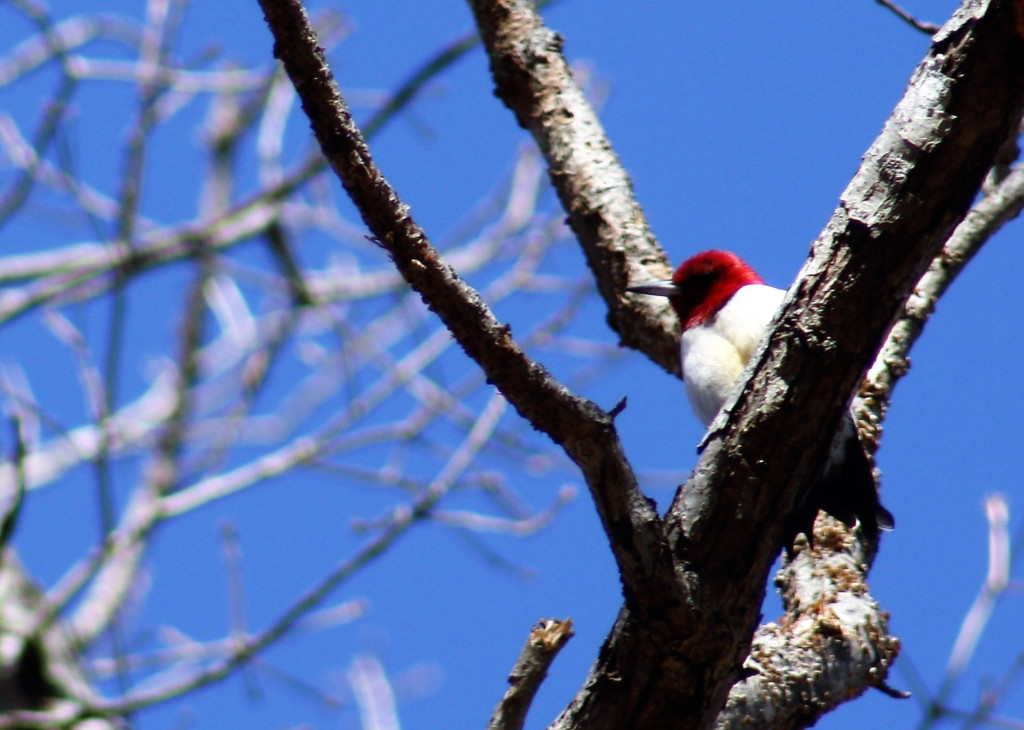
Fast forward to February 2017. A Red-headed woodpecker was spotted in the woods near the outdoor enclosures. Staff members commented that it seemed unusually comfortable with their movements as they cared for other animals. Soon it was revealed that there was a pair of woodpeckers, choosing to nest in the woods near the enclosures. These birds are wild and free, and could nest anywhere. At RWS like we think that one of the pair was the bird released in 2015, coming back to the place he received a new start in life.

As you can see from the photos the Red-headed woodpecker is a beautiful bird. Once common throughout the eastern U.S., the bird's population is declining. According to Audubon, "Reasons for decline are not well known; probably include loss of potential nest sites (owing to cutting of dead trees), [and] competition with starlings for nest cavities. When swooping out to catch insects in flight, [Red-headed woodpeckers] are often struck by cars along roadsides. 

Photo credits: Jessie Cole Copeland

Scouting for a nest cavity.
Seen through the branches
Share on Twitter Share on Facebook

About Project Reports

Project reports on GlobalGiving are posted directly to globalgiving.org by Project Leaders as they are completed, generally every 3-4 months. To protect the integrity of these documents, GlobalGiving does not alter them; therefore you may find some language or formatting issues.

If you donate to this project or have donated to this project, you can receive an email when this project posts a report. You can also subscribe for reports without donating.


Sign up for updates

Organization Information

Rockfish Wildlife Sanctuary, Inc.

Location: Shipman, VA - USA
Website:
Facebook: Facebook Page
Project Leader:
Jeff Wilbur
Shipman , VA United States
$18,058 raised of $50,000 goal
 
352 donations
$31,942 to go
Donate Now
lock
Donating through GlobalGiving is safe, secure, and easy with many payment options to choose from. View other ways to donate

Rockfish Wildlife Sanctuary, Inc. has earned this recognition on GlobalGiving:

Help raise money!

Support this important cause by creating a personalized fundraising page.

Start a Fundraiser

Learn more about GlobalGiving

Teenage Science Students
Vetting +
Due Diligence

Snorkeler
Our
Impact

Woman Holding a Gift Card
Give
Gift Cards

Young Girl with a Bicycle
GlobalGiving
Guarantee

Get incredible stories, promotions, and matching offers in your inbox

WARNING: Javascript is currently disabled or is not available in your browser. GlobalGiving makes extensive use of Javascript and will not function properly with Javascript disabled. Please enable Javascript and refresh this page.