By Liz Courain | Project Leader
It is an exciting time at Rockfish Wildlife Sanctuary. The spring and summer months are the "busy season," with animals arriving for rehabilitation and being released daily. The drama of the spring and summer is found in meeting the challenge of a large number of baby animals, along with other animals who need rehabilitation due to injury. No two days are alike, as the wildlife rehabilitation staff and volunteers flexibly meet the needs of different species and individual animals as they grow, change and prepare for release.
Here are a few of the current highlights:
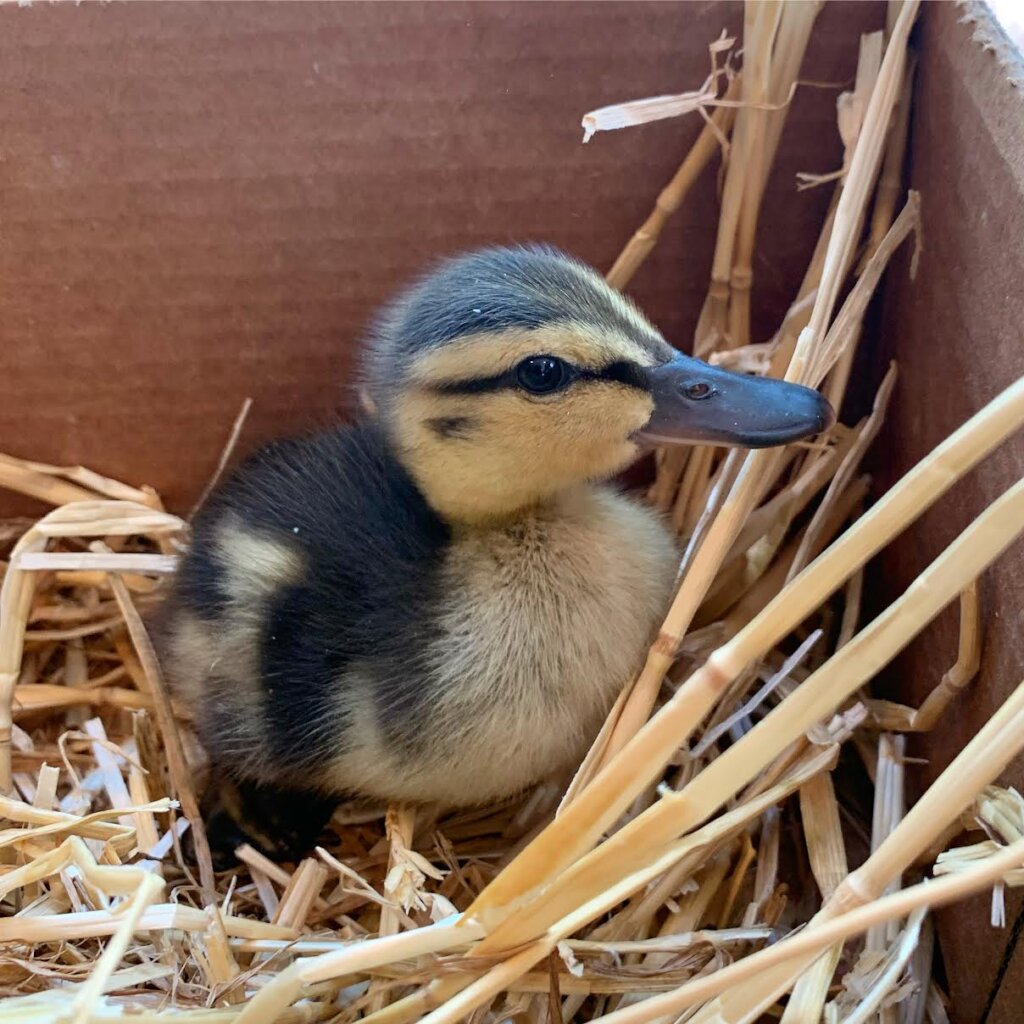
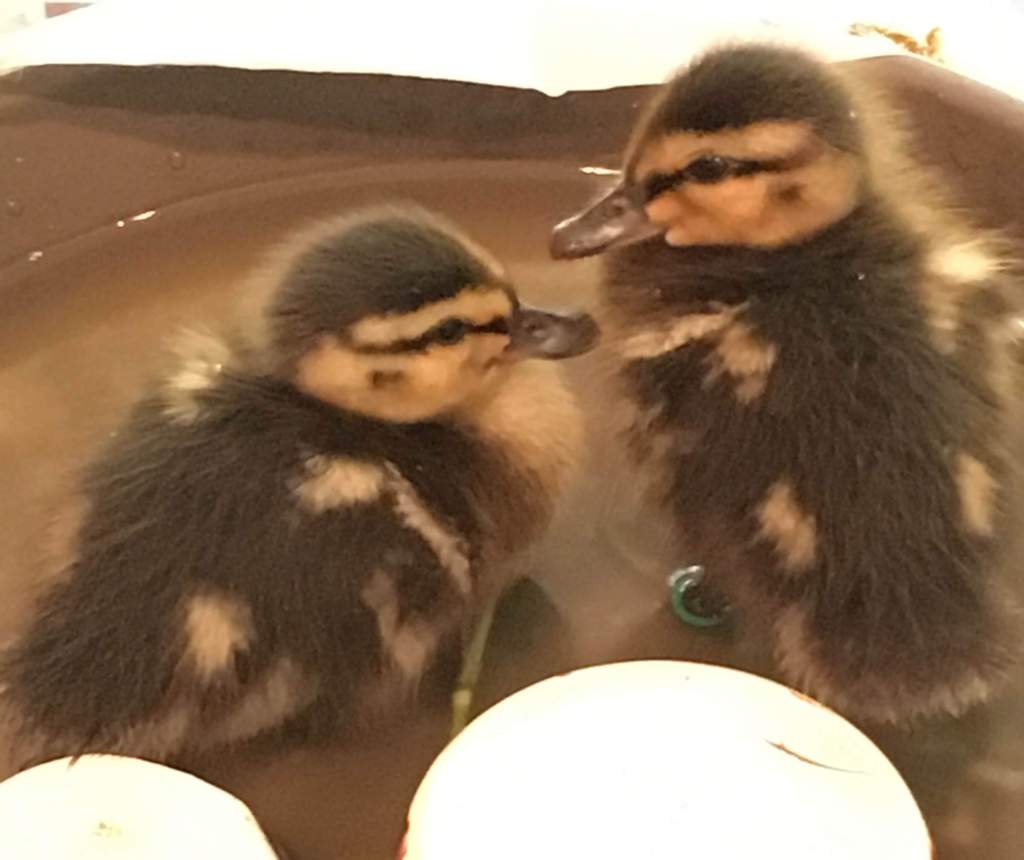
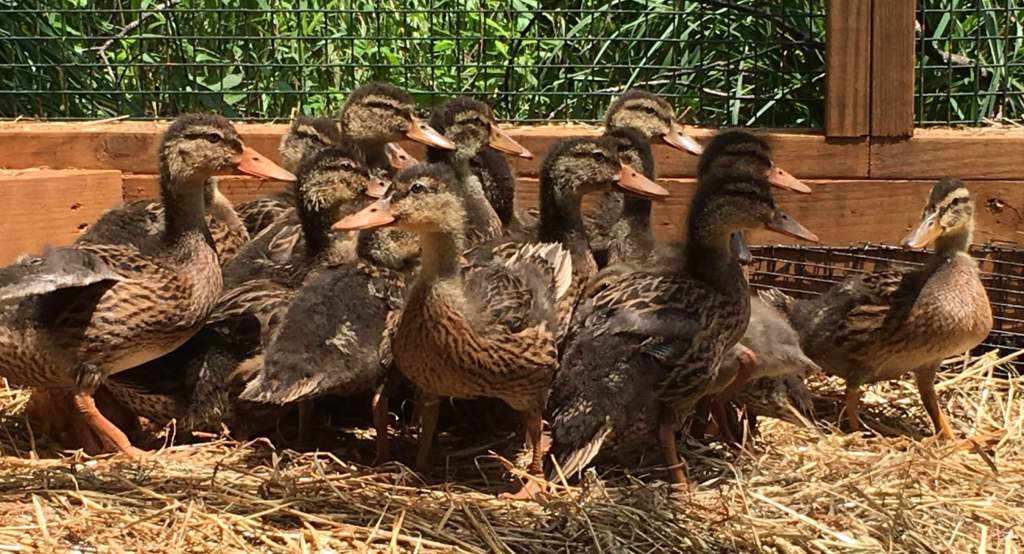
DUCKLINGS On a single day in June RWS received 56 ducklings for rehabilitation. They came in a group from a rehabber in Northern Virginia who specializes in ducks, but does not have enclosures large enough to accommodate the waterfowl as they grow. Thankfully, RWS has the large enclosures needed -- complete with a swimming area -- so we were able to take them in. While at RWS, ducklings are given a high quality waterfowl food base, and, depending on the species, are also offered mealworms, as well as lettuce and other greens.
The ducklings in the photo above are Mallards, probably the most well-known species of wild duck, thanks to the adult male's gorgeous iridescent green head and neck. Mallards are common throughout North America. In the wild they prefer to eat aquatic plants, berries, worms, and small fish. Adult Mallards average about two and a half pounds in weight, and are approximately two feet long.
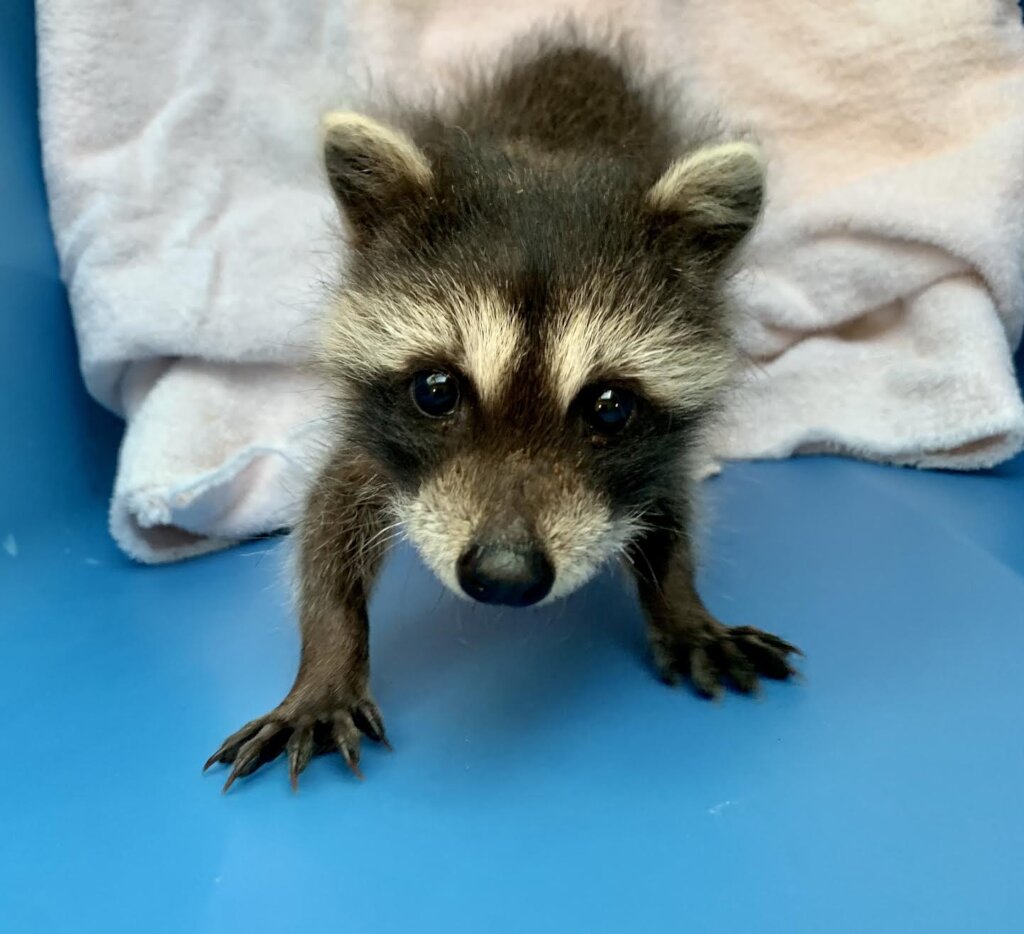
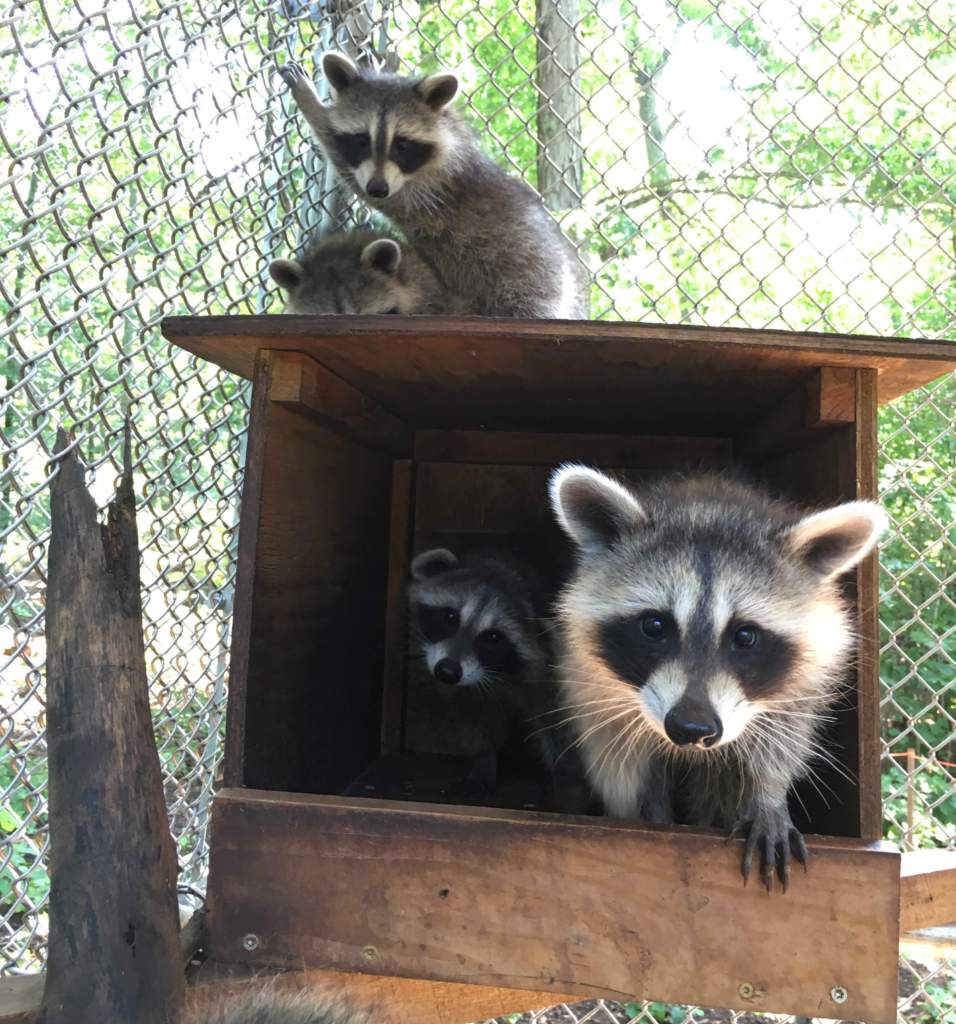
RACCOONS An unusually large number of raccoons have been brought to RWS so far this year. Raccoons are not released until they are 16-24 weeks old, which translates into lots of care from Sanctuary volunteers and staff. Baby raccoons are hand-fed a specialty formula until they are 8-10 weeks old. As with any baby, they are fed multiple times a day. When they are able to effectively feed themselves, they move to a diet of high quality dog food, puppy food, fruits, vegetables, eggs, nuts, and meats. Because of their extended stay at RWS and their high level of intelligence, raccoons are also provided with toys for enrichment, and an environment with opportunities for climbing.
Raccoons are easily identified by their face mask and ringed tail; like the Mallards, they are common throughout most of North America. In the wild, raccoons are omnivores, and are known for their willingness to eat most anything -- including carrion. Their preferred habitat is a heavily wooded area with water access, however, with habitat loss, raccoons are adapting to life in suburban and urban areas. These human-raccoon intersections are contributing to the large number of raccoons needing rehabilitation.
AND A GATOR! Thanks to our supporters, RWS was recently able to acquire a small utility vehicle, or "Gator." This is used to haul water, hay, food and other supplies to the animal enclosures farthermost from the Sanctuary. We are very thankful for this addition, as it makes life easier for our hardworking volunteers and staff. It also increases efficiency, which is important when caring for many animals at one time.
On behalf of the volunteers, staff, and most of all -- the animals -- of Rockfish Wildlife Sanctuary, we send our thanks!
Project reports on GlobalGiving are posted directly to globalgiving.org by Project Leaders as they are completed, generally every 3-4 months. To protect the integrity of these documents, GlobalGiving does not alter them; therefore you may find some language or formatting issues.
If you donate to this project or have donated to this project, you can receive an email when this project posts a report. You can also subscribe for reports without donating.



Support this important cause by creating a personalized fundraising page.
Start a Fundraiser