By jeff wilbur | Administrator
In her role as Carrie Bradshaw, the actor Sarah Jessica Parker once said: "You can't be friends with a squirrel! A squirrel is just a rat with a cuter outfit"
At Rockfish Wildlife Sanctuary, we would have to respectfully disagree. We believe that both squirrels and rats are cute in their own ways and very much worthy of our respect and care! Each spring, our new baby season tends to begin with the arrival of our first baby squirrel patients. We have a staff betting game called the Squirrel Pool, and our staff each picks the date they think our first baby squirrels of the season will arrive. What does the winner get? Baby squirrels to care for, of course! This year's winner got an extra big haul, we received three groups of baby squirrels in under 24 hours.
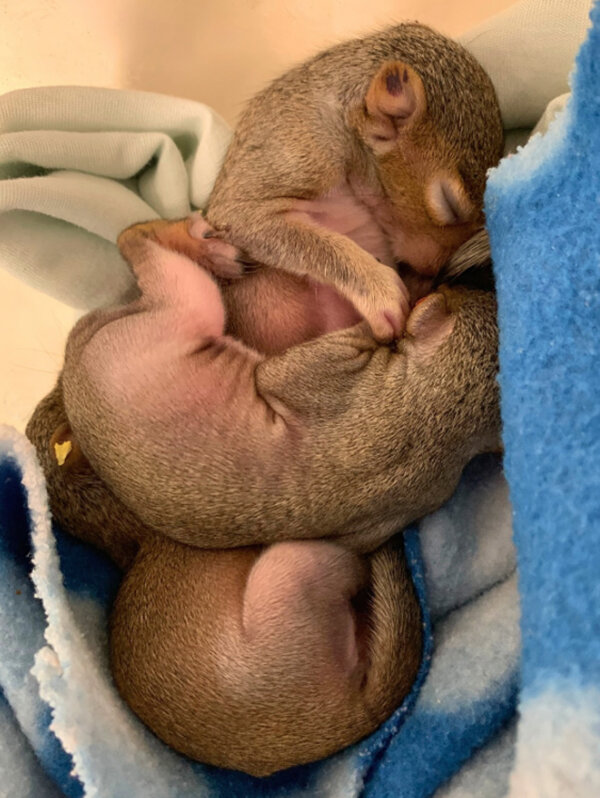
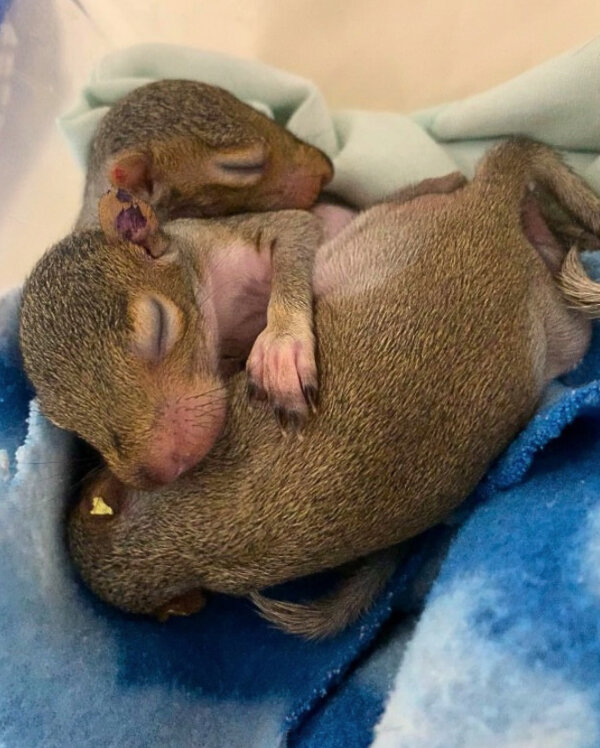
We get the majority of our squirrel patients due to people having tree work done and their nests getting destroyed, but this year one of our first three groups had a more unique story. They were found inside a bulldozer! An excavation company was kicking off the day at a job site, and right before firing up the machinery, one of their workers noticed a clumped nest of baby squirrels inside the bulldozer. It was unclear how long they’d been there, or if they had been towed there from another location when the bulldozer was brought to the job site. Their rescuer did the right thing in calling us immediately. We quickly realized that the chances of reuniting these babies with their mother were slim. No trees were nearby at this job site, limiting the likelihood that mom had secondary nests—or that mom was even around.
On top of that, the rescuer sent photos to our text hotline that showed the babies were quite skinny and dehydrated. The rescuer took off from the work site and drove out to the Sanctuary right away so they could get the care they needed. After fluid therapy, heat support, and proper nutrition, they survived their early life trauma. Now, they are thriving in care and are almost ready to move outdoors to a pre-release enclosure.
Around this time, our hotline received a call from a resident who had caught a large rat in a humane trap. He had heard this particular rat inside his wall for a couple of months and had even seen her running around a few times! When he caught her, he noticed she was missing one of her front legs and wanted to bring her to a rehabilitation facility for evaluation. Our staff was confident this community member had caught a roof rat or Norway rat, which are both invasive. For better or for worse, roof and Norway rats are almost guaranteed to be your neighbors if you live near other humans. Because they are not native, it is unlawful to rehabilitate these species beyond providing humane euthanasia – and for good reason, due to the immense ecological damage invasive rats have caused over the centuries.
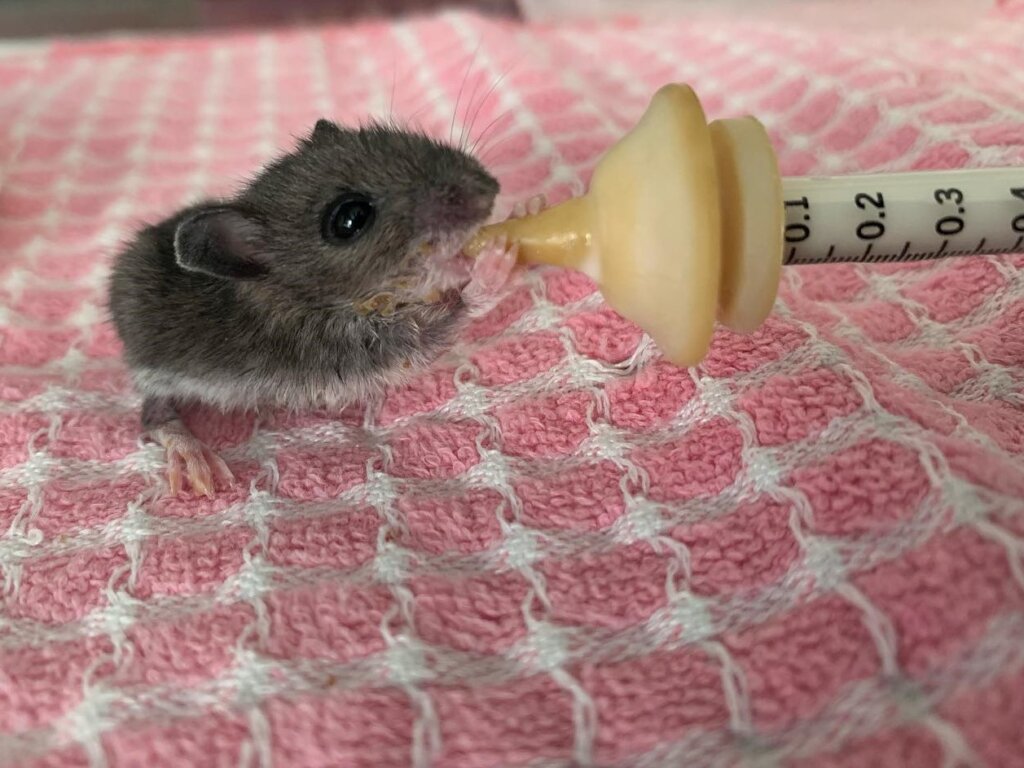
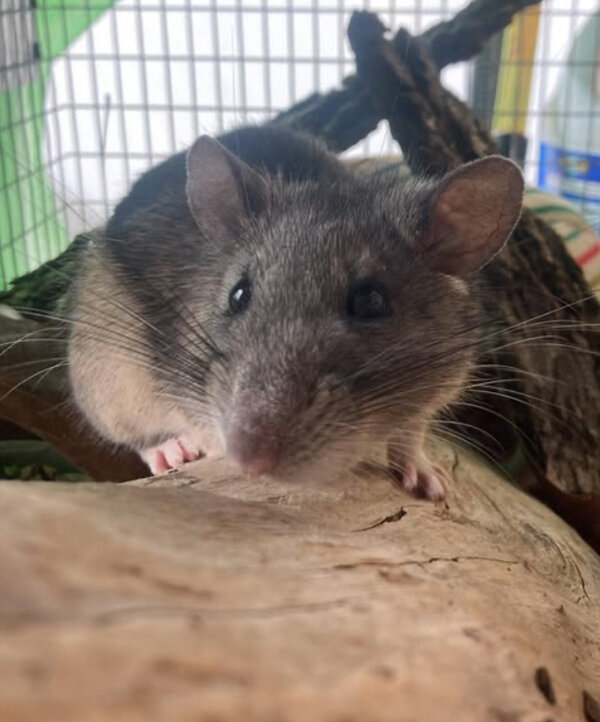
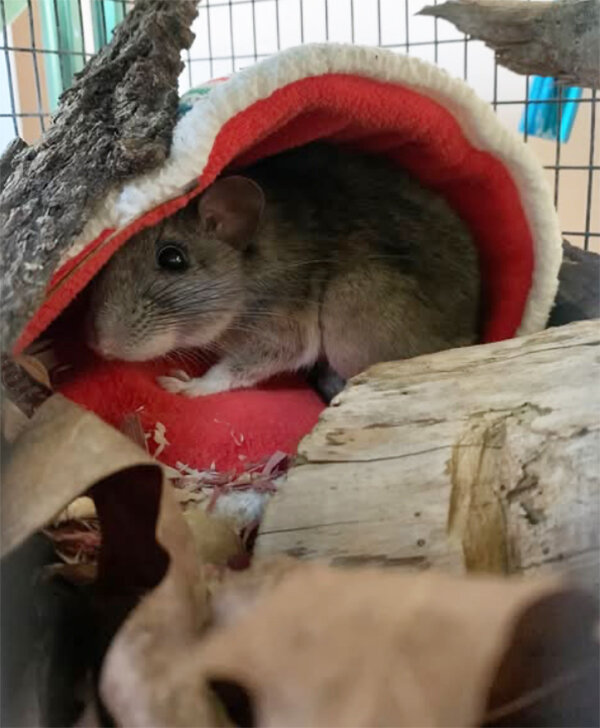
With this in mind, we were in for a delightful surprise when this community member sent photos of his three-legged rodent neighbor to our wildlife hotline. Rather than an invasive rat, we were looking at an adorable, native Allegheny Woodrat! We quickly admitted her as patient #25-016 for an evaluation. Despite their name and ratlike look, native woodrats are much more closely related to native white-footed mice, voles, and muskrats. Woodrats are essential to healthy forest ecosystems too. They spread native seeds, control plants, and even help feed their ecosystems by stockpiling food and supplies in their delightfully constructed nests, called middens.
Unfortunately, though, Allegheny Woodrats have been in steep decline. They are listed as a "Near Threatened" species on the IUCN Red List, a "Tier IV Species of Greatest Conservation Need in Virginia," and an endangered species in Indiana, Maryland, North Carolina, New Jersey, and Ohio while threatened in other states still. Because our population here is relatively stable, the Virginia Department of Wildlife Resources has worked with other state agencies to relocate certainindividuals into endangered populations across state lines. Doing so brings new genetic diversity into those dwindling communities and helps increase woodrat populations where they’re needed most.
We considered that relocation could be an option for this particular patient, too. However, after our friends at the Wildlife Center of Virginia checked out her missing leg and spoke with the Virginia Department of Wildlife Resources, the consensus was that this particular individual’s best chance at continued survival and reproductive success would be to bring her back to her territory.
We were thrilled to release her on private property within her original home range just a few days later! She scampered off quickly, showing little difficulty given her unique three-legged gait.
Both the very common squirrel and the very uncommon Allegheny woodrat play important roles in our ecosystem. We are very grateful to be able to help them both—and hundreds of other patients—get back to the wild where they belong by providing professional, compassionate care for animals in need. We could not do this vital work without your support! Thank you for helping us help wildlife.
Links:
Project reports on GlobalGiving are posted directly to globalgiving.org by Project Leaders as they are completed, generally every 3-4 months. To protect the integrity of these documents, GlobalGiving does not alter them; therefore you may find some language or formatting issues.
If you donate to this project or have donated to this project, you can receive an email when this project posts a report. You can also subscribe for reports without donating.



Support this important cause by creating a personalized fundraising page.
Start a Fundraiser