By jeff wilbur | Sanctuary Administrator
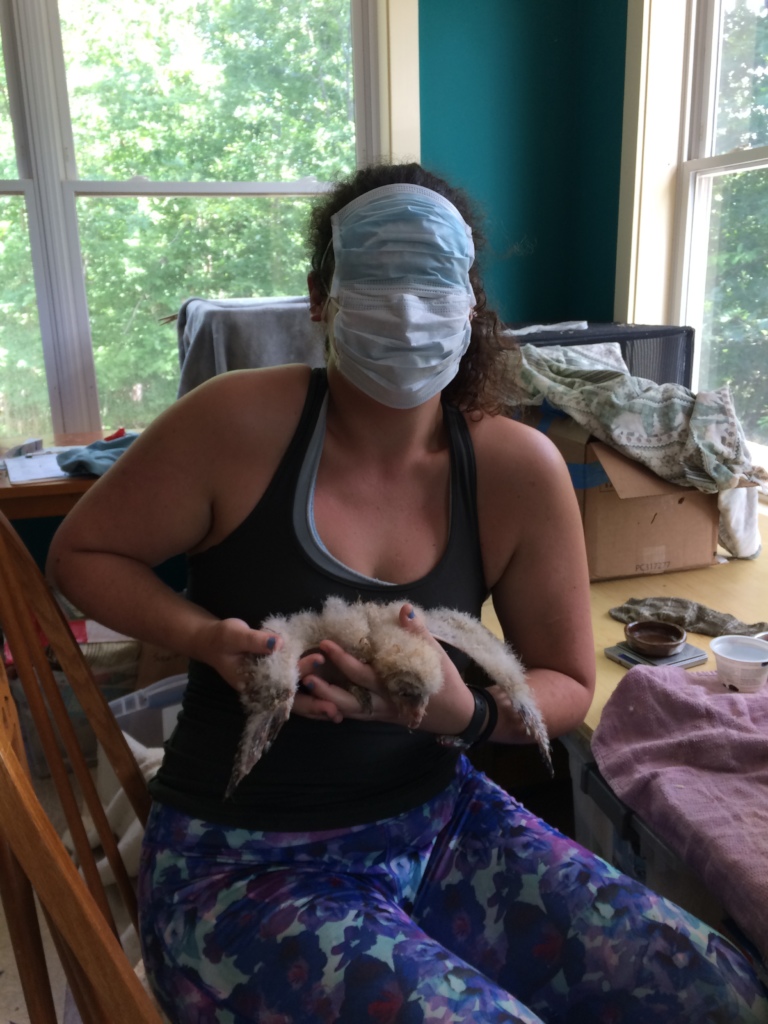
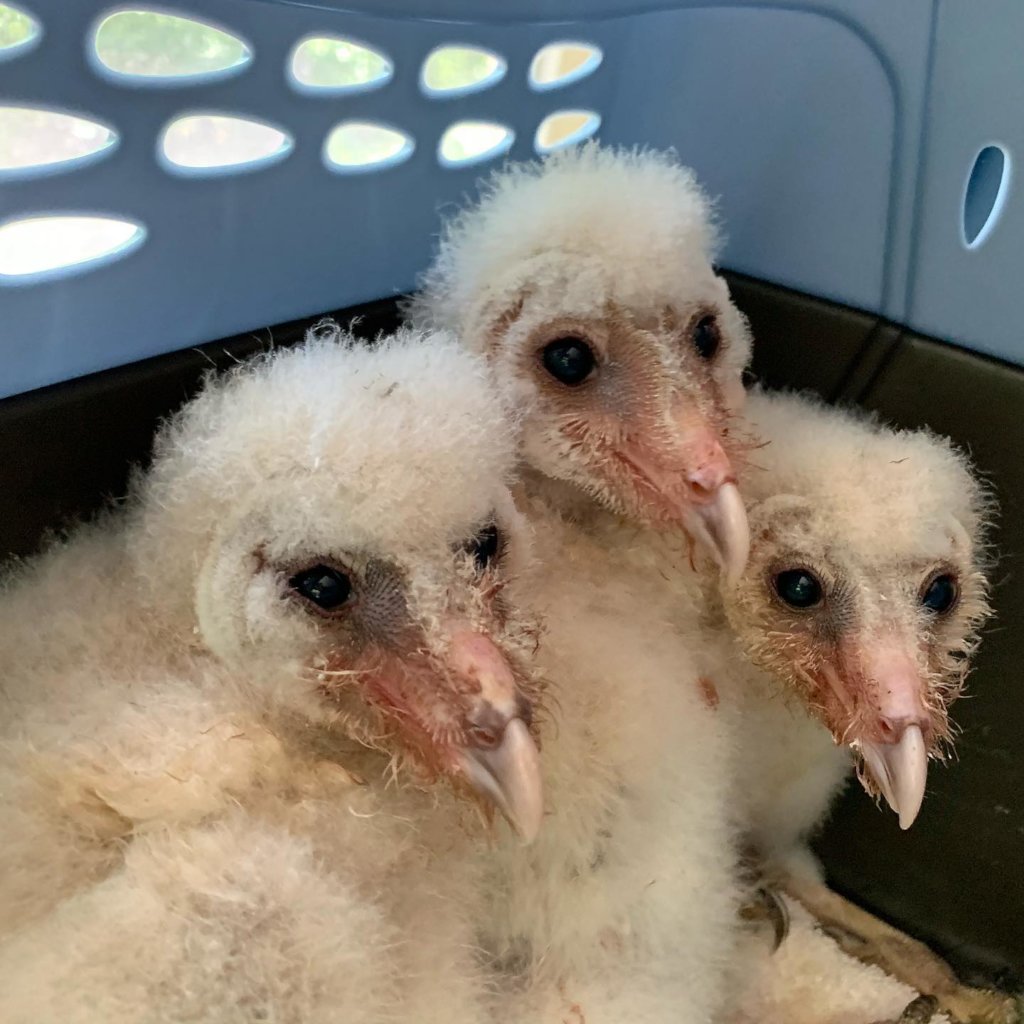
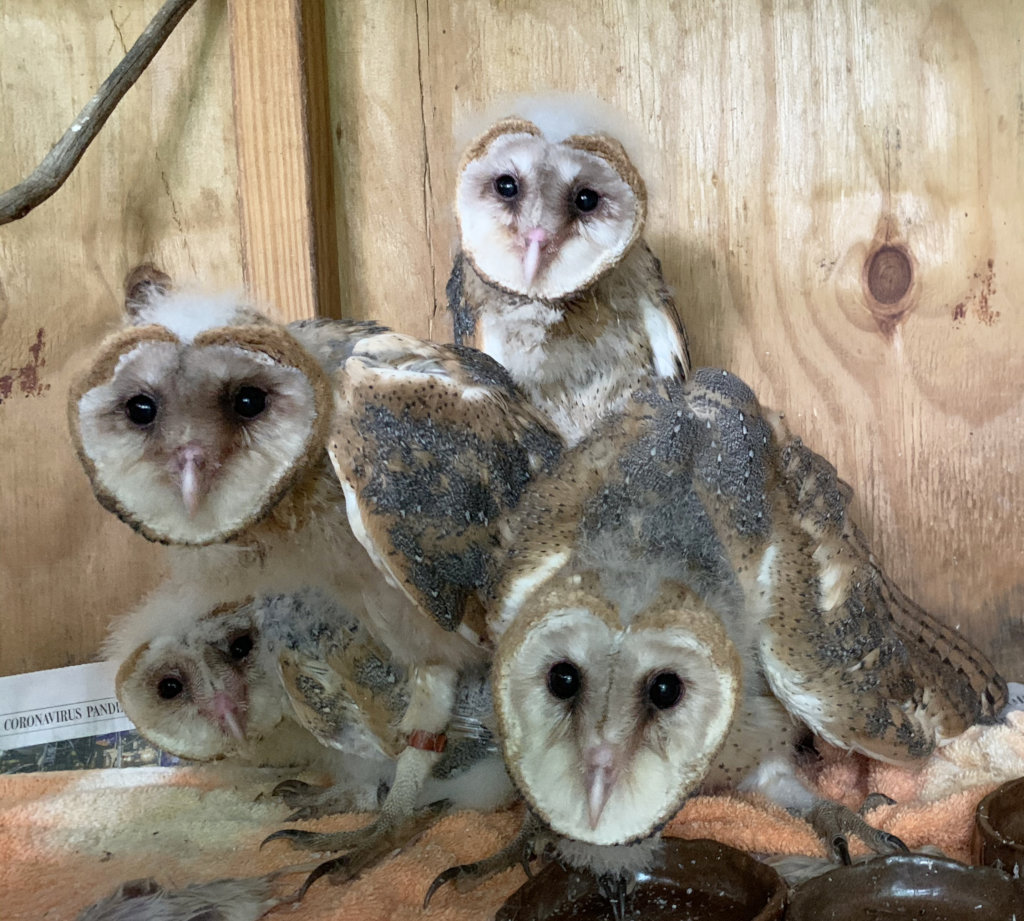
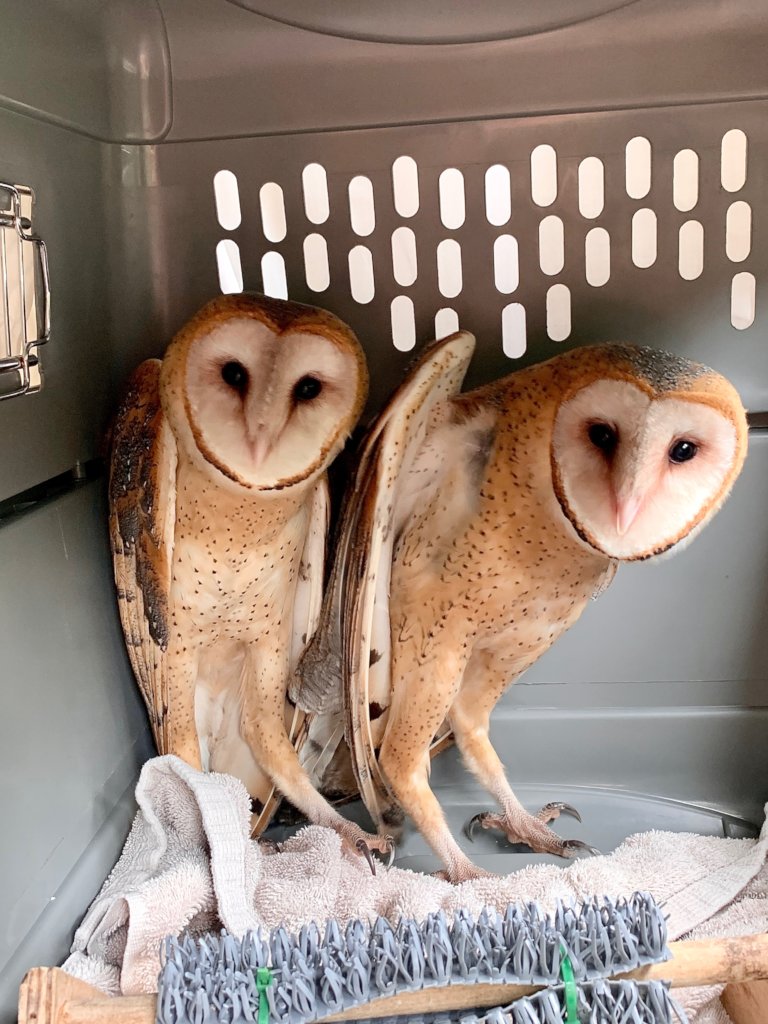
I remember my mother saying that to me constantly growing up (reminding me to close the door), and it was the first thought that came to me when our barn owlet patients arrived this summer. My second thought was, “Wow, barn owls are not the most attractive of all the babies we get to care for and rehabilitate!” But they sure grew to be some of the most amazing and beautiful creatures we’ve ever seen. Our owlets arrived after a nearby resident awoke to find them simply sitting in her fireplace one morning. They’d likely fallen down her chimney. Because re-nesting was not an option (no parent was seen), the owlets were brought to us so we could become their surrogate parents. Feeding and caring for these little guys required a bit of extra effort to prevent them from becoming habituated to humans. Their nursery set-up was covered so that they had no views of the daily activity happening around them, and we were totally silent to avoid them getting accustomed to human voices. At feeding times, our staff would completely cover their faces to avoid any human “imprinting.” To achieve this, we wore two surgical facemasks with a slight gap that allowed us to see down between them. We wore this goofy get-up to feed them their daily quota of chopped up mouse bits – which was a LOT of mice for a growing owl! The four of them averaged between fifteen and twenty mice per day for about six weeks, with their feeding schedule starting at six times per day and decreasing to three as they graduated from our nursery into a flight enclosure. That’s a long time to work with your whole face covered! After just about two months, our owlets were nearly fully-fledged owls. It was time for their final pre-release test: “Mouse School.” That’s where we introduce live mice to a raptor patient’s flight enclosure to make sure they can successfully hunt and catch their food before they are released back into the wild. All four of our owls passed with flying colors! After two and half months of care at RWS, we successfully released them on private properties where there were unused barn structures – this was a necessity since barn owl feathers are not very waterproof. They are now out soaring in the wild world as they were meant to be, and we were proud and excited to care for barn owlets at RWS for the first time in our center’s history. So no, while I don't live in a barn, I'm really glad these owls do!
Links:
Project reports on GlobalGiving are posted directly to globalgiving.org by Project Leaders as they are completed, generally every 3-4 months. To protect the integrity of these documents, GlobalGiving does not alter them; therefore you may find some language or formatting issues.
If you donate to this project or have donated to this project, you can receive an email when this project posts a report. You can also subscribe for reports without donating.



Support this important cause by creating a personalized fundraising page.
Start a Fundraiser