By Liz Courain | Project Leader
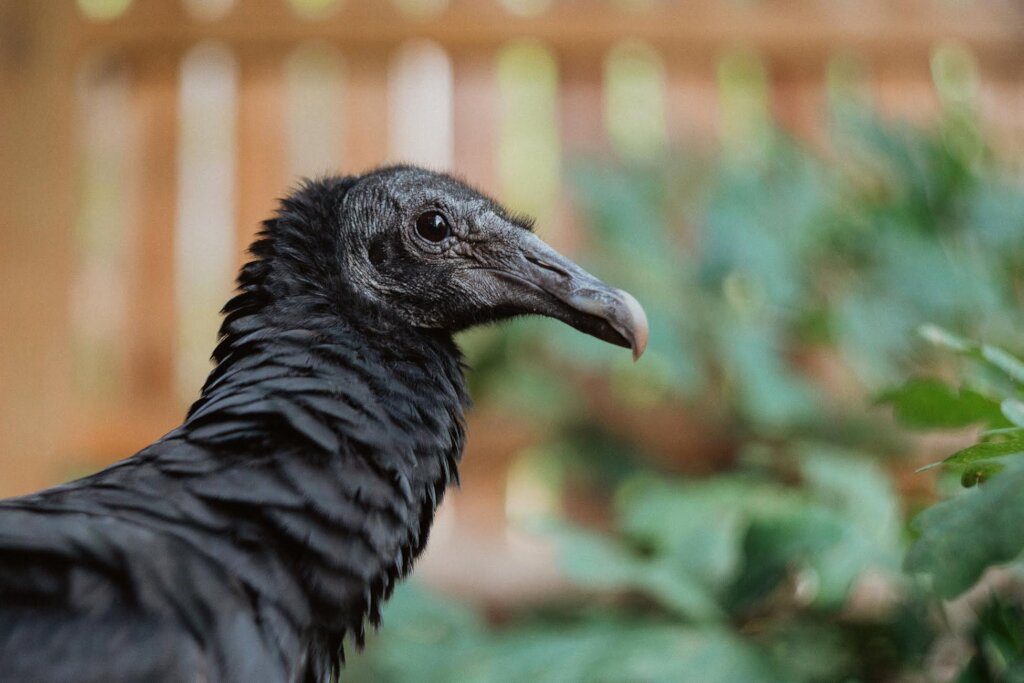
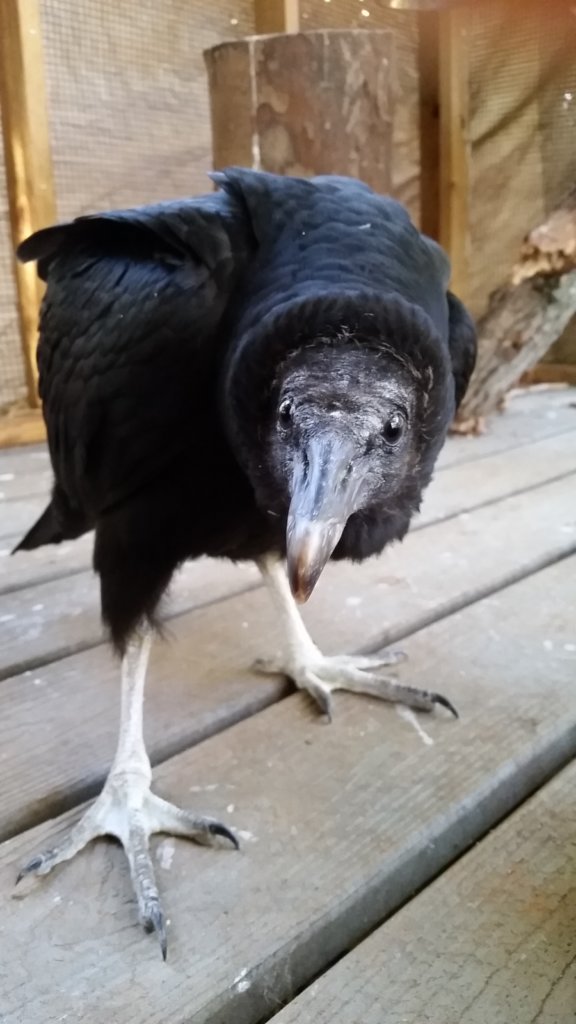
This American Black Vulture arrived at Rockfish Wildlife Sanctuary after being rescued by a Conservation Police officer from a private home in Lynchburg. A call had come into the department about a “tame” vulture that was harassing pets in a neighborhood. The officer arrived to find the vulture living in a woman's yard, where it had been kept as a pet.
This was possible because of an act of great cruelty – the bird was unable to fly, because its primary feathers had been clipped. These are the long, wide wing feathers required for fight. This wild bird, accustomed to soaring high in the sky, kettling with other vultures, and perching high in dead trees, was reduced to pecking around in a backyard.
Since it is unlawful to possess a vulture as a pet, the officer removed it from the home and brought it to RWS. When the bird was taken to an enclosure and let loose for observation, the damage to its primary feathers was immediately obvious. Vultures only lose two or three primary feathers per molt (once per year) so that they can continue to fly while the new replacements come in. It will take up to five years for this vulture to regrow all its primary feathers and begin to fly again.
Given its overly tame nature, lack of flight, and the length of time RWS would have to keep it for rehabilitation, the veterinarian at the Wildlife Center of Virginia recommended that the vulture become an education animal. Education animals are those that are unreleasable and are able to be used for public education. RWS applied for federal US Fish and Wildlife Service permits immediately, and we have received them.
Now named Rosie, the vulture eats rats and mice, enjoys pecking at shoes, and is currently in training to be the Sanctuary’s newest education animal ambassador. The training involves learning to work with an RWS staff handler, sit calmly on a glove, and eventually appear in public. Once he is comfortable in this role, Rosie and his handler will visit schools and other groups for wildlife education presentations, providing an up-close look at a fascinating creature.
Black Vultures and Turkey Vultures play an important role in the ecosystem by eating carrion. According to Kristin Madden of the U.S. Fish and Wildlife Service, Black Vultures “can digest herpes, anthrax, hantavirus. They can eat all of the dead stuff that clutters our land and metabolize it and get rid of the diseases.” Unlike Turkey Vultures, Black Vultures will also occasionally kill small animals for food and do check landfills and dumpsters for human discards. The American Black Vulture is found year-round in the southeastern US, Central and South America.
Links:
Project reports on GlobalGiving are posted directly to globalgiving.org by Project Leaders as they are completed, generally every 3-4 months. To protect the integrity of these documents, GlobalGiving does not alter them; therefore you may find some language or formatting issues.
If you donate to this project or have donated to this project, you can receive an email when this project posts a report. You can also subscribe for reports without donating.



Support this important cause by creating a personalized fundraising page.
Start a Fundraiser