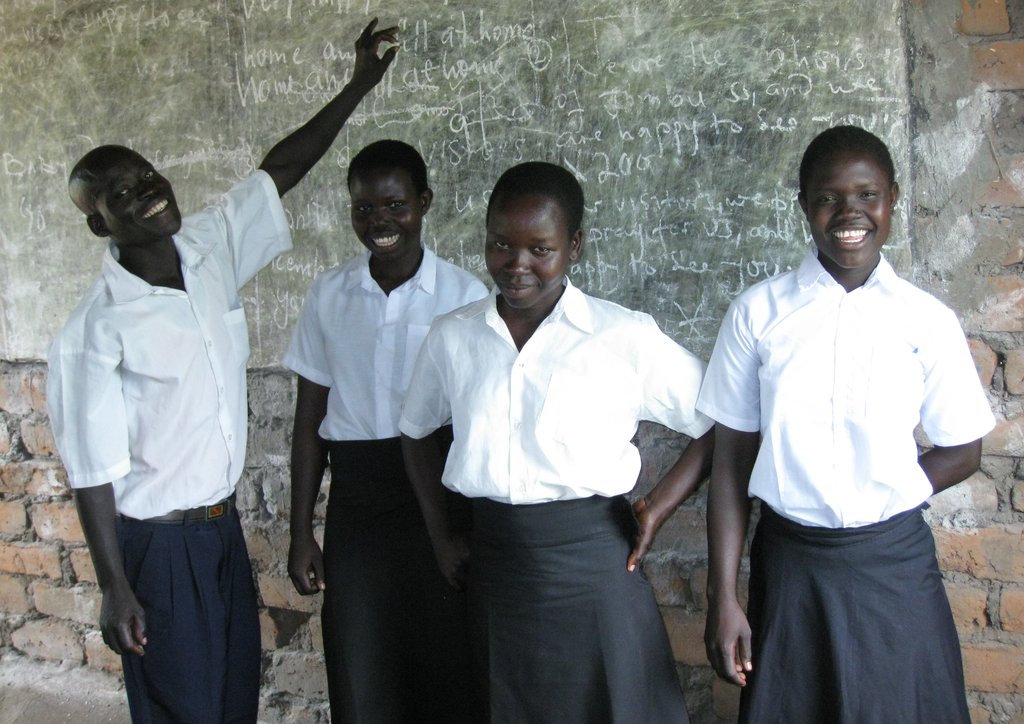
The Gender Equity through Education (GEE) Program provides financial and material incentives to over 4,500 girls to complete secondary school and women to enter the teaching profession. In South Sudan, less than 1% of girls complete secondary school and only 10% of teachers are women. Decades of civil war coupled with traditional cultural norms have undermined the role of women in public life and deprived most girls of the opportunity to attend school.
In South Sudan, the participation rates of girls and women in education are shockingly low. Women are said to comprise 65% of the post-war population, and many of them are now heads-of-household without income, skills, education, or observed property or inheritance rights. In spite of this majority, fewer than 10% of all teachers are women. Without these role models, gender equity at all levels of education will be significantly harder to achieve.
GEE supports gender equity by strengthening the education system through a three-pronged approach that emphasizes the reduction of financial and infrastructure barriers, social and cultural barriers, and institutional barriers to gender parity. GEE aims to increase the number of women teachers by increasing the supply of teacher-training eligible girls through secondary school support, and by supporting those women who choose to pursue training at teacher training institutes.
This is a 5-year activity under implementation in all 10 states of South Sudan. As the new nation builds its social foundation, immediate, proactive support of gender equity can lead to myriad social, economic, and environmental benefits. Research shows that educating girls has long-lasting economic, social and health benefits and contributes to a nation's development.