![Fixing Fula Kunda's broken pumps]()
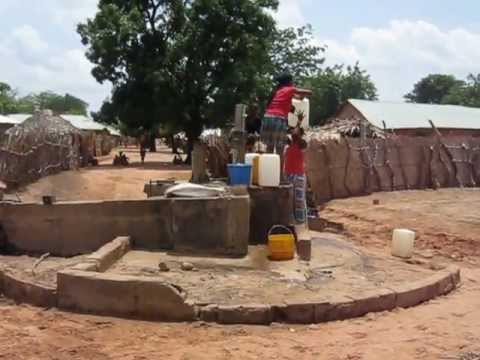
Fixing Fula Kunda's broken pumps
Dear Friend,
We made a short trip to Gambia this past April to carry out some quick water and sanitation projects.
On this trip, we successfully repaired three broken handpumps, scheduled maintenance for three additional pumps, constructed one toilet and two showering places, and distributed soap. Activities focused in five ethnic Fula villages, benefiting more than 1,300 local women, children, and men with increased water access and improved hygiene and sanitation conditions. 146 highlight photos can be seen
HERE.
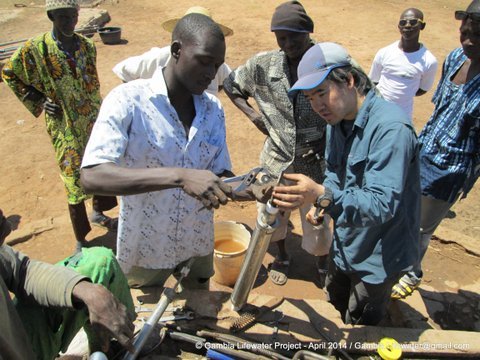
On April 8, 2014, we traveled to Fula Kunda, a village whose two pumps we had previously fixed through another Water Charity project last year. The team composes of Demba Jaow, a government-trained Mark II pump mechanic; Jaye Jallow, our local coordinator, well-versed in pump repair and fluent in three local languages--Fula, Wolof, and Mandinka; and myself. Demba, Jaye, and I had previously worked together to fix 39 pumps in 23 villages in the area. Our collaboration continued into this project.
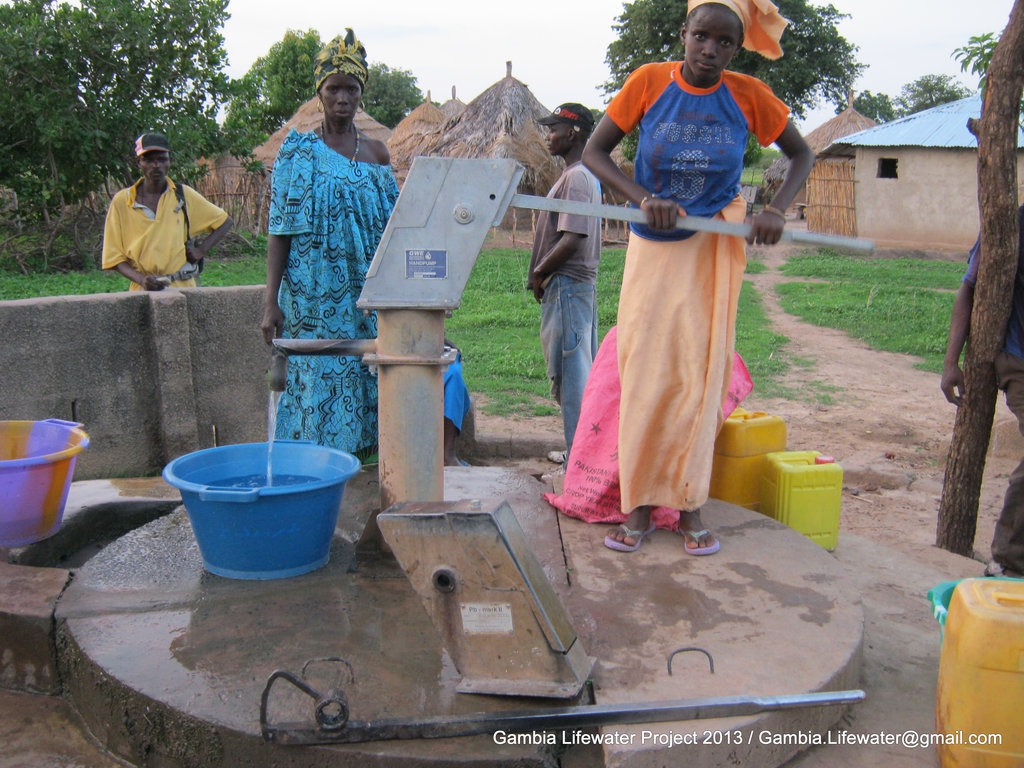
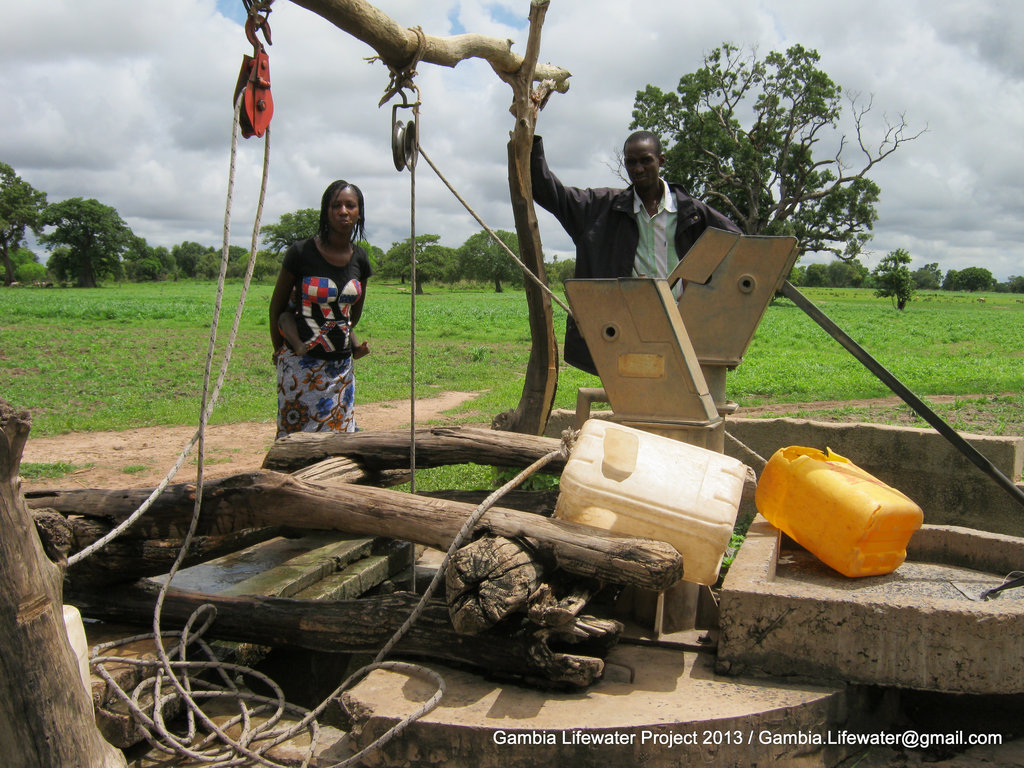
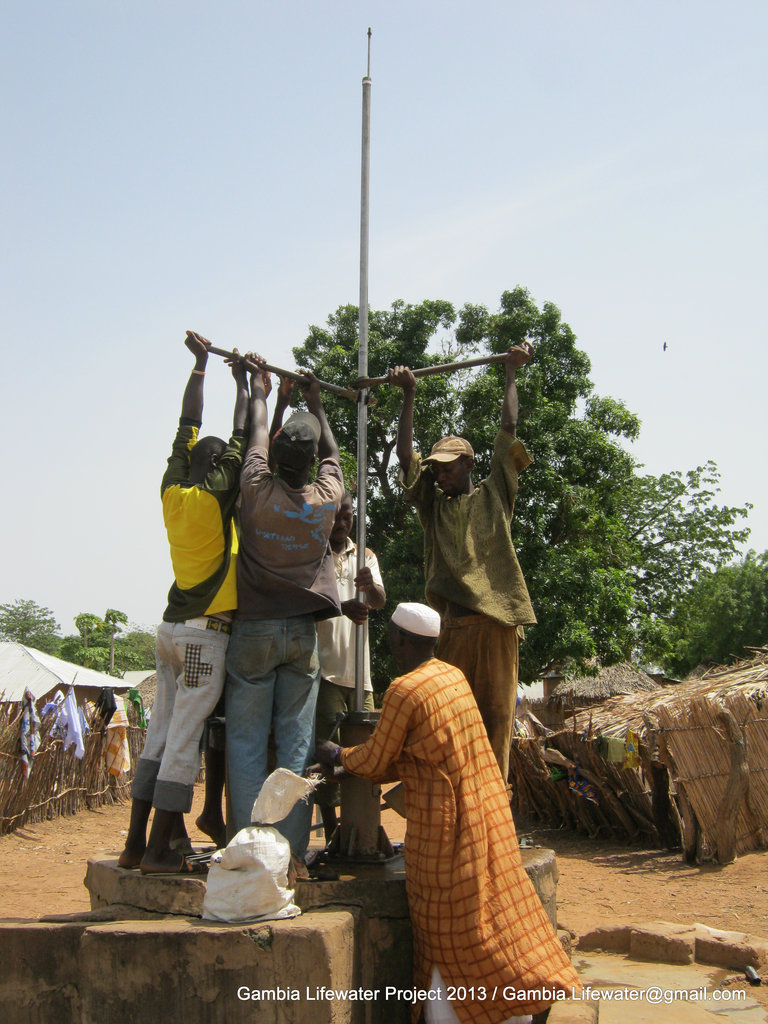
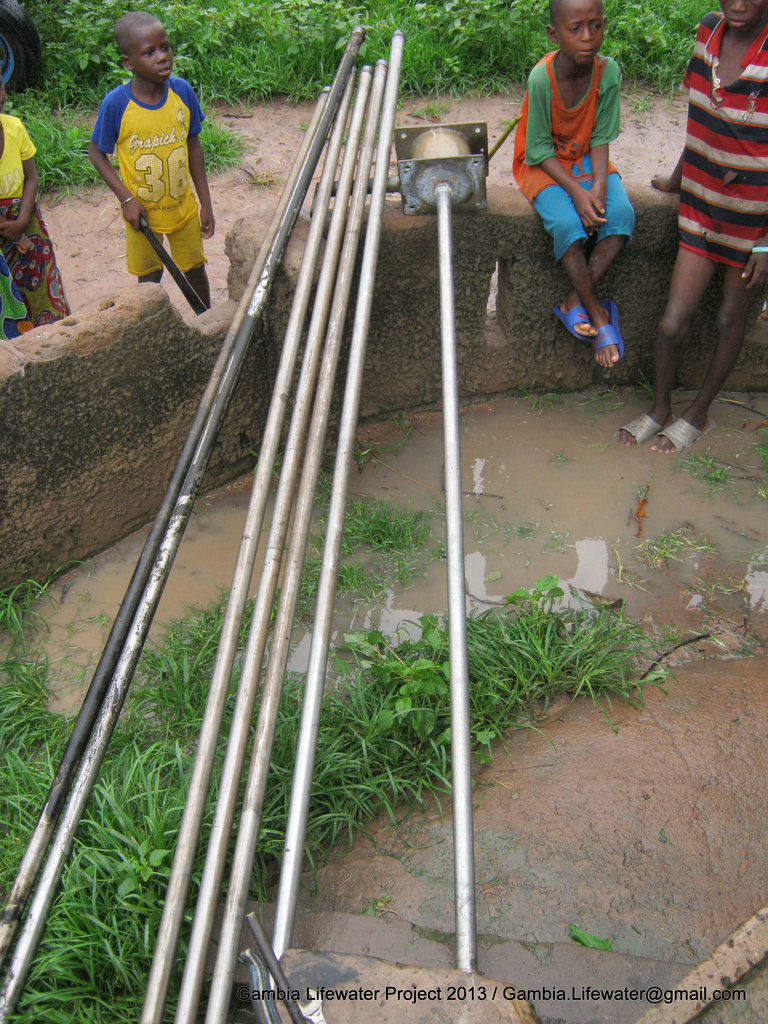
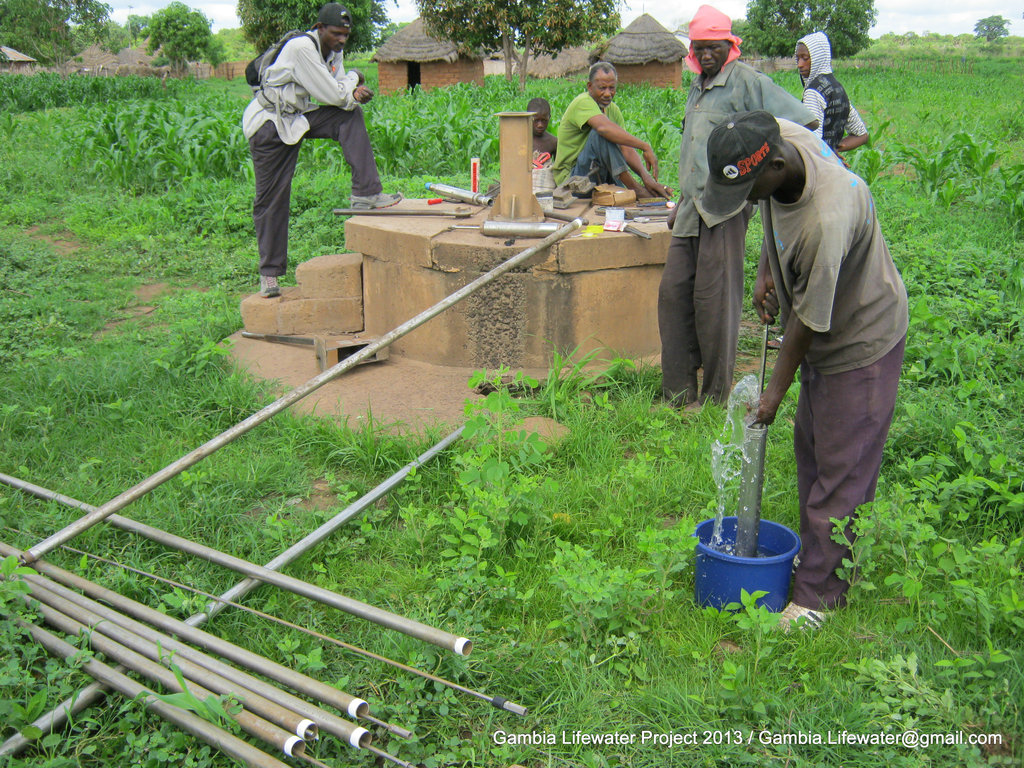
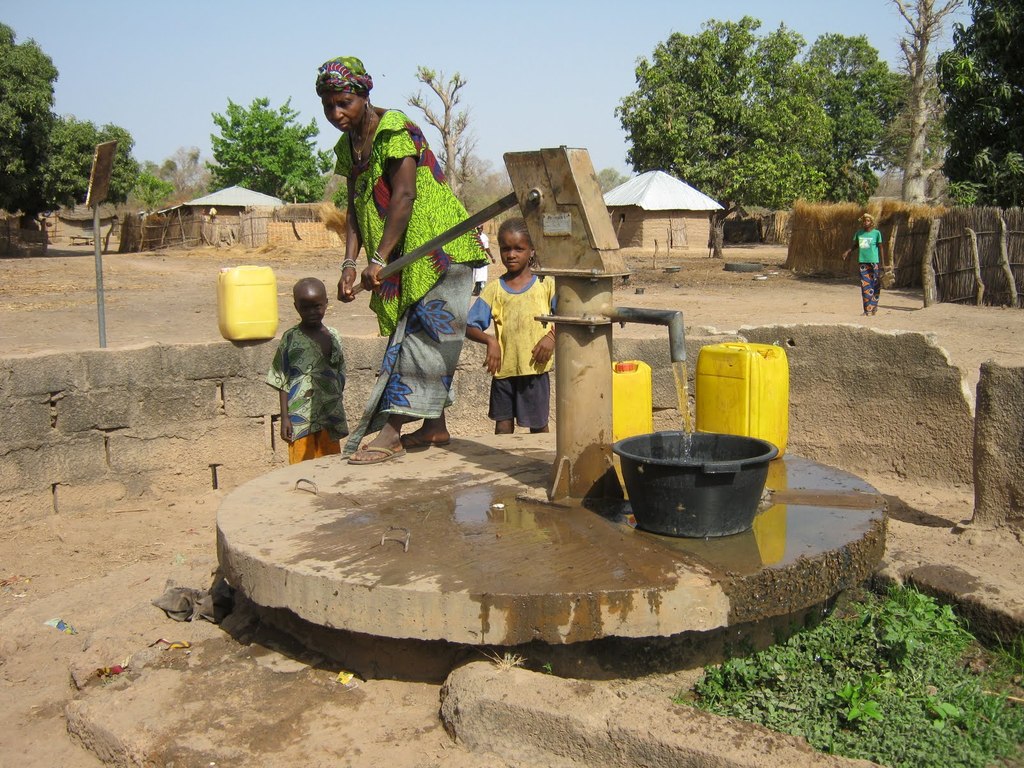
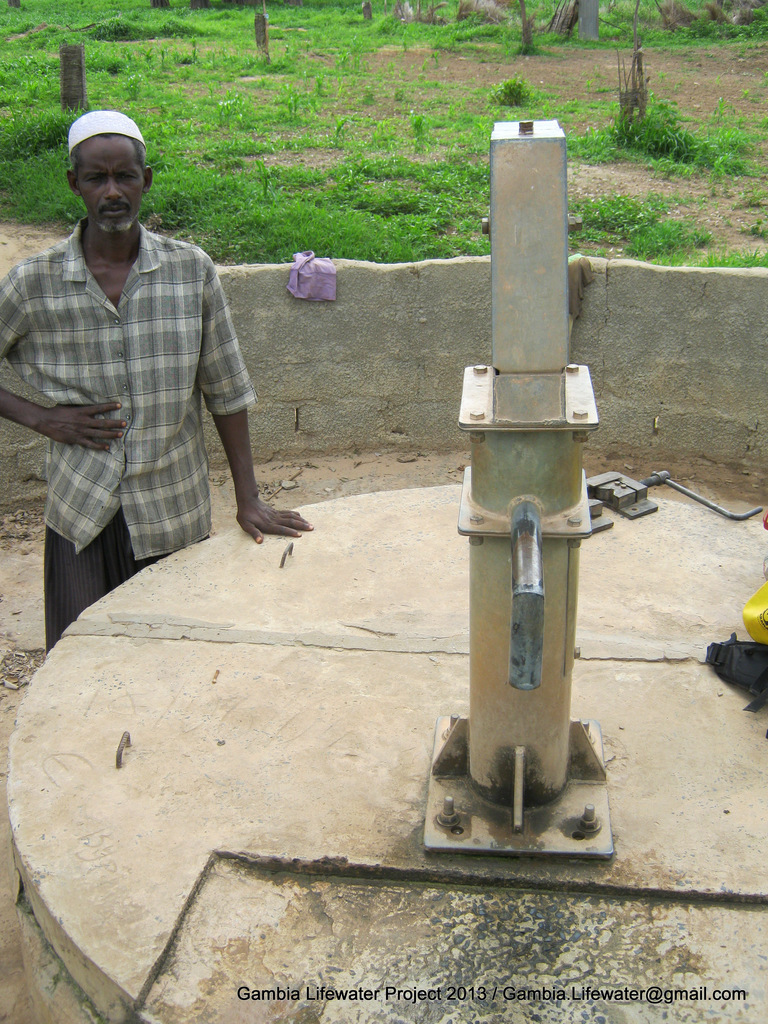
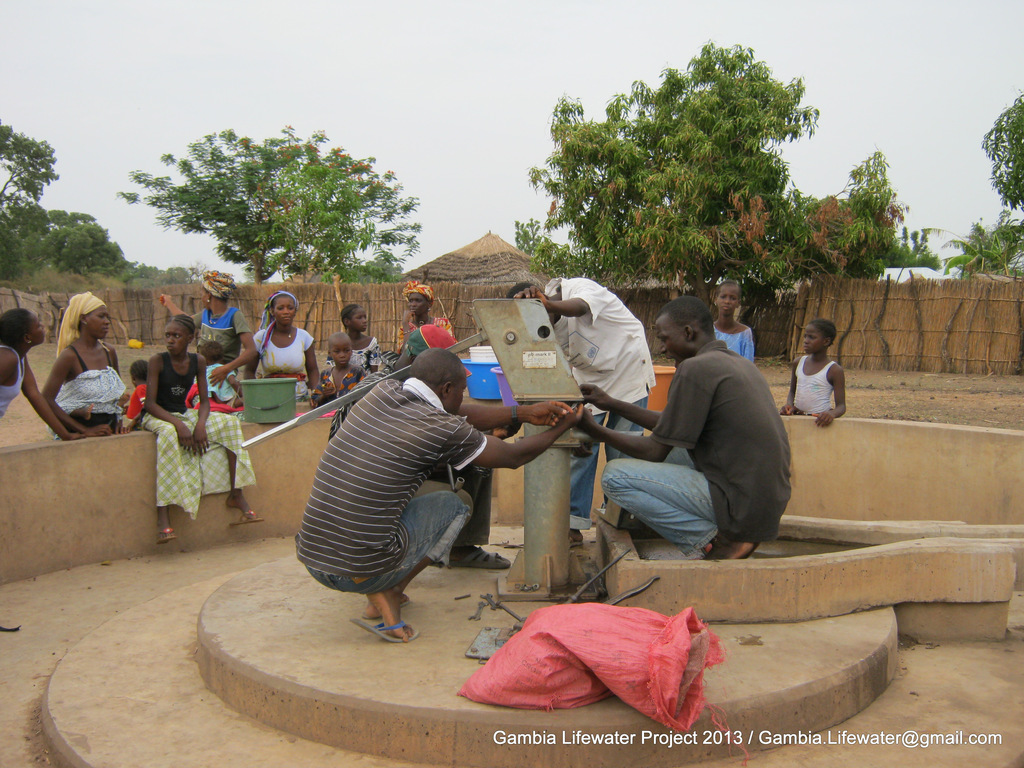
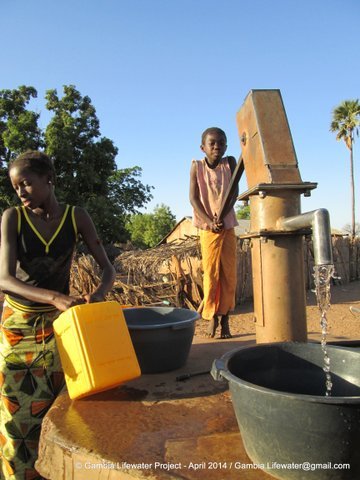
On our arrival, we found that one pump was not working at all, and the other one was leaking water from the bottom and not holding water. Each time someone wanted to draw water, they had to prime the pump to bring water up 22 meters. The team pulled out each of the pump's cylinders and pipes one at a time.
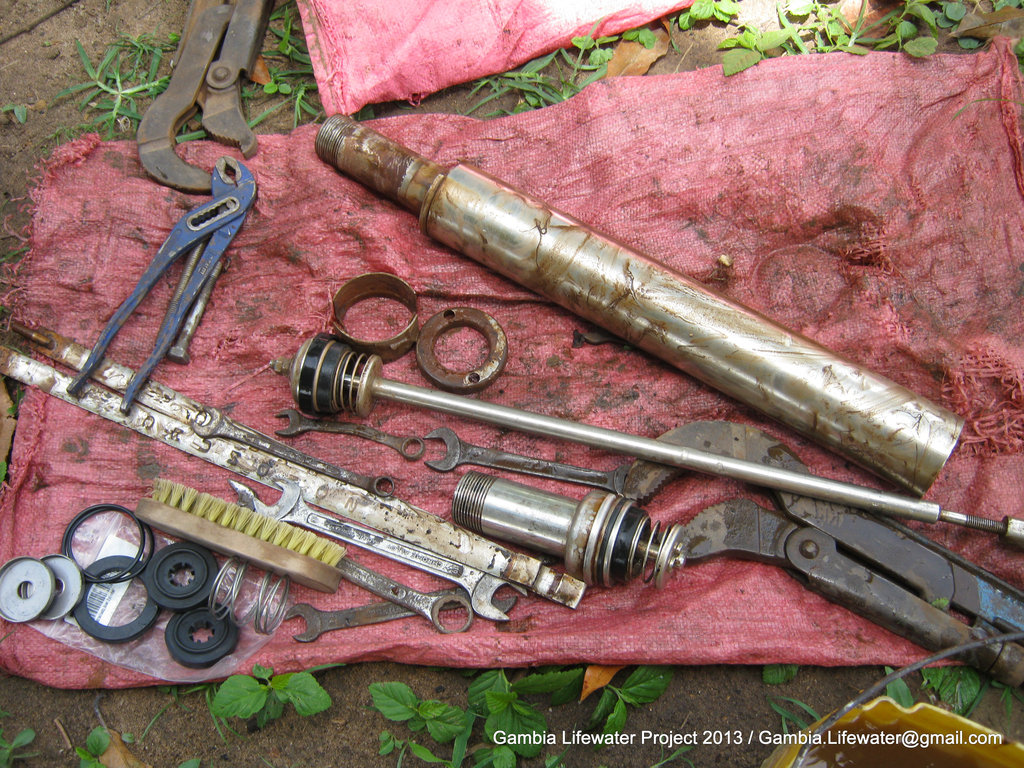
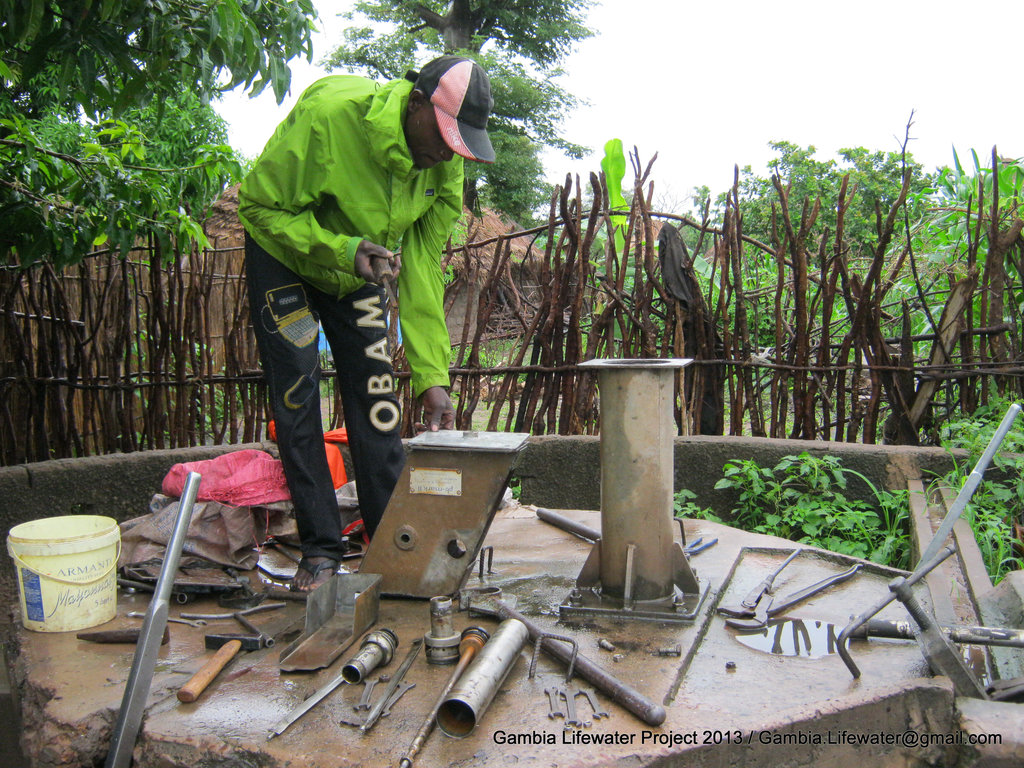
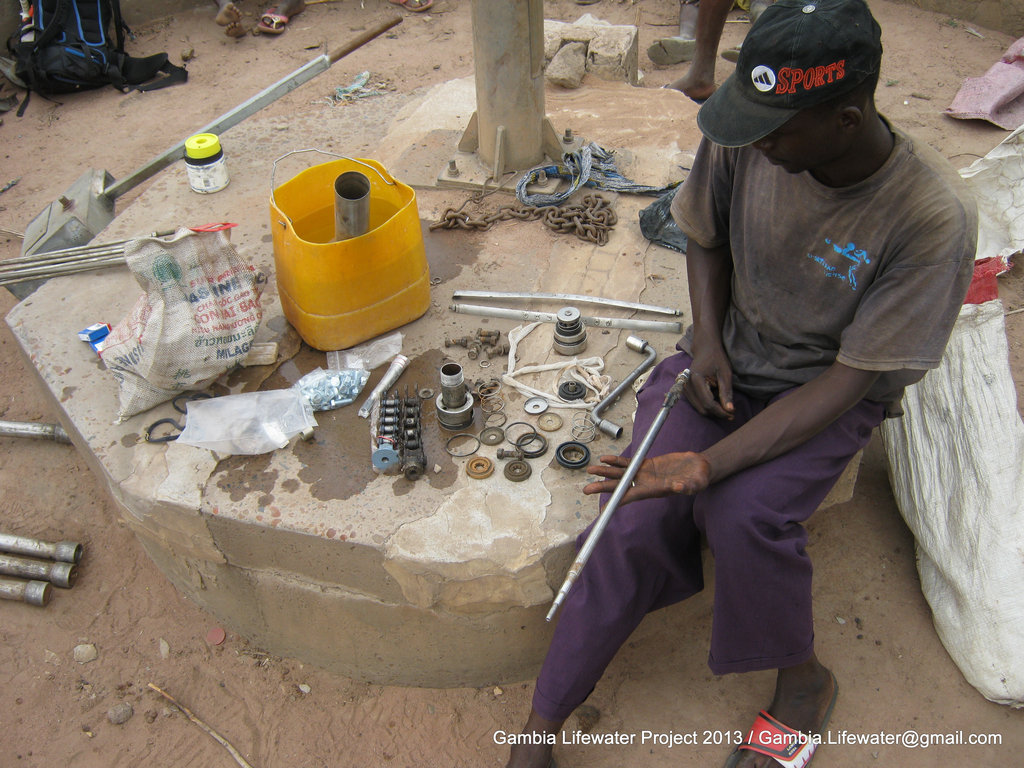
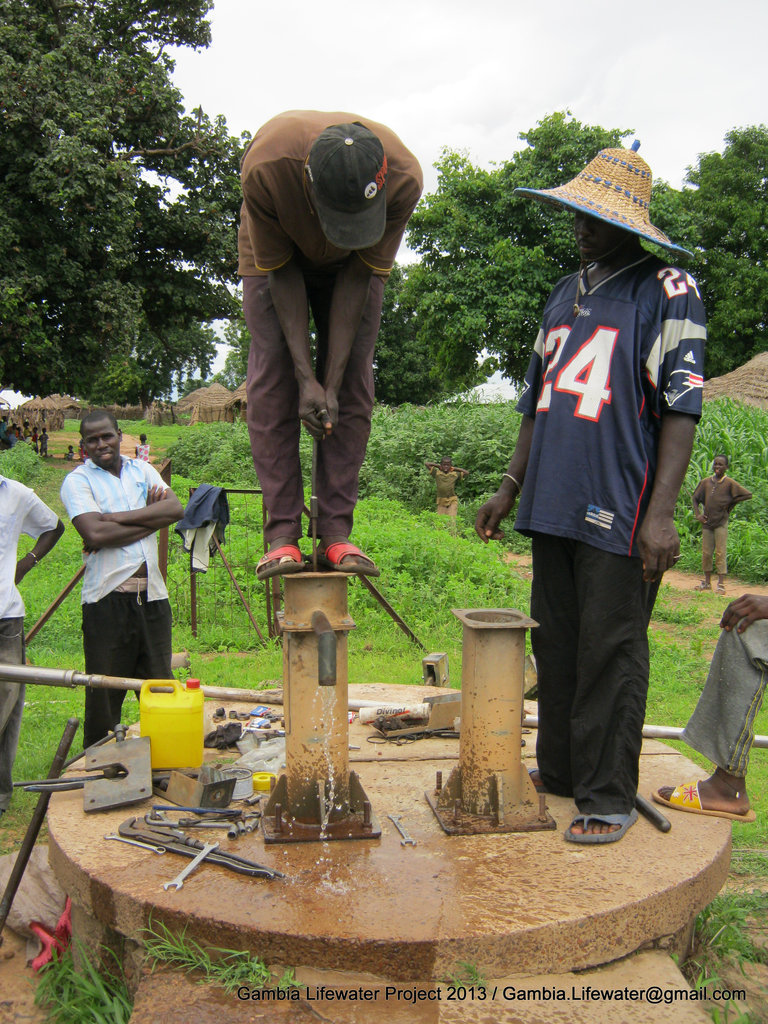
The first pump that was not producing water had issues in the cylinder. The metal clip that held the plunging head, gaskets, spring, and metal disc had broken, and the restraining check nut had fallen off the plunging piston. This caused the rubber pieces that push water up the pipes to fall out, rendering the cylinder useless. In addition to adding a new clip, the team added a male pipe segment in the cylinder end piece to lock in the cylinder straps. The force of the pump operation had slowly started pushing the strap hooks out. The addition of the pipe will hold the strap hooks in places, preventing them from popping out and the end piece from disconnecting from the cylinder and dropping into the water. After we tested the repair cylinder and put the pipes back into the well with new teflon seals, we also added a rod guiding plate between the water tank and pump head. This keeps the pipe rods aligned and reduces wear on the centralizer pieces and keep the rods from grinding again the pipes. We also added grease, in addition to the odd check nut and centralizer that needed replacing.
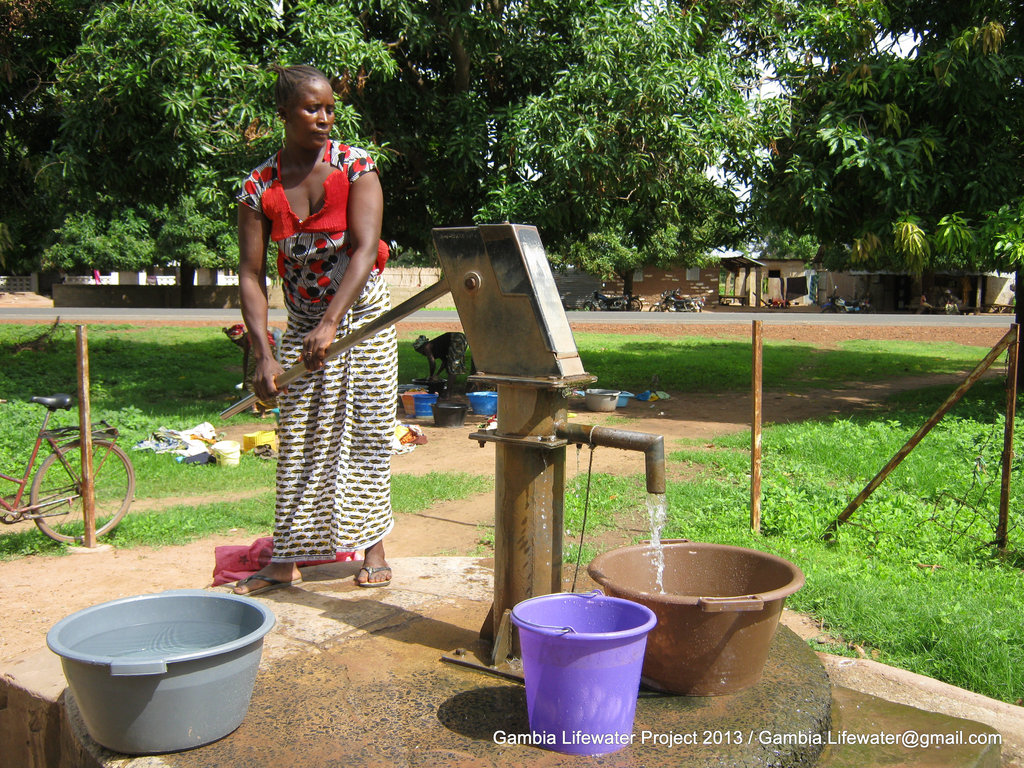
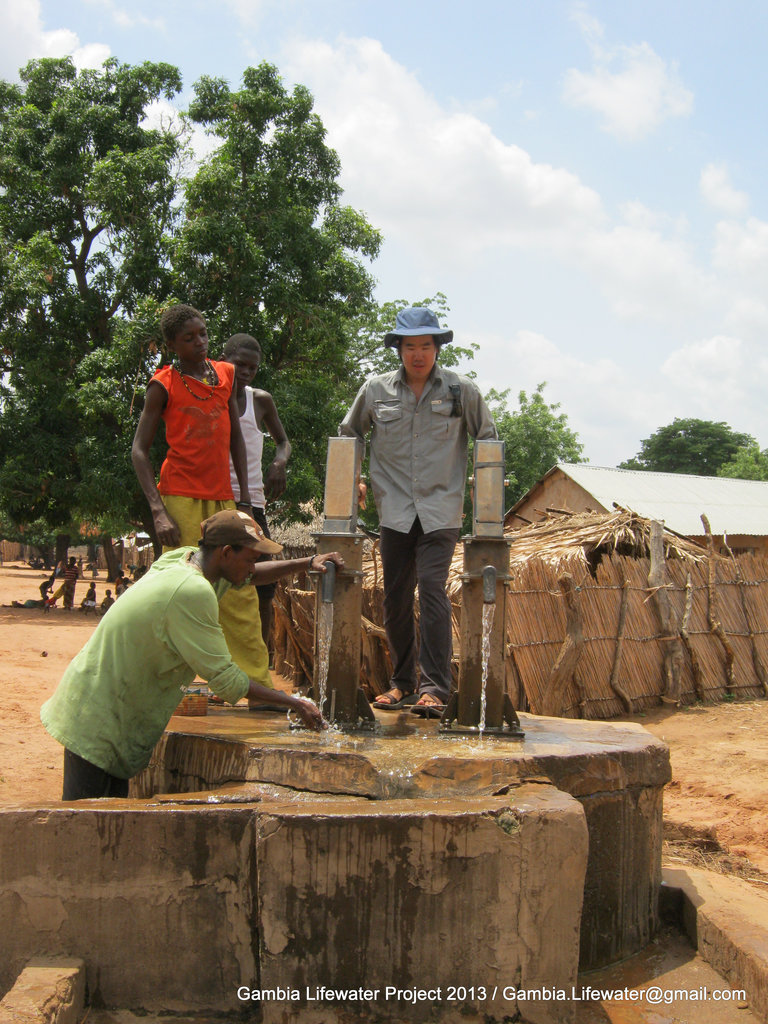
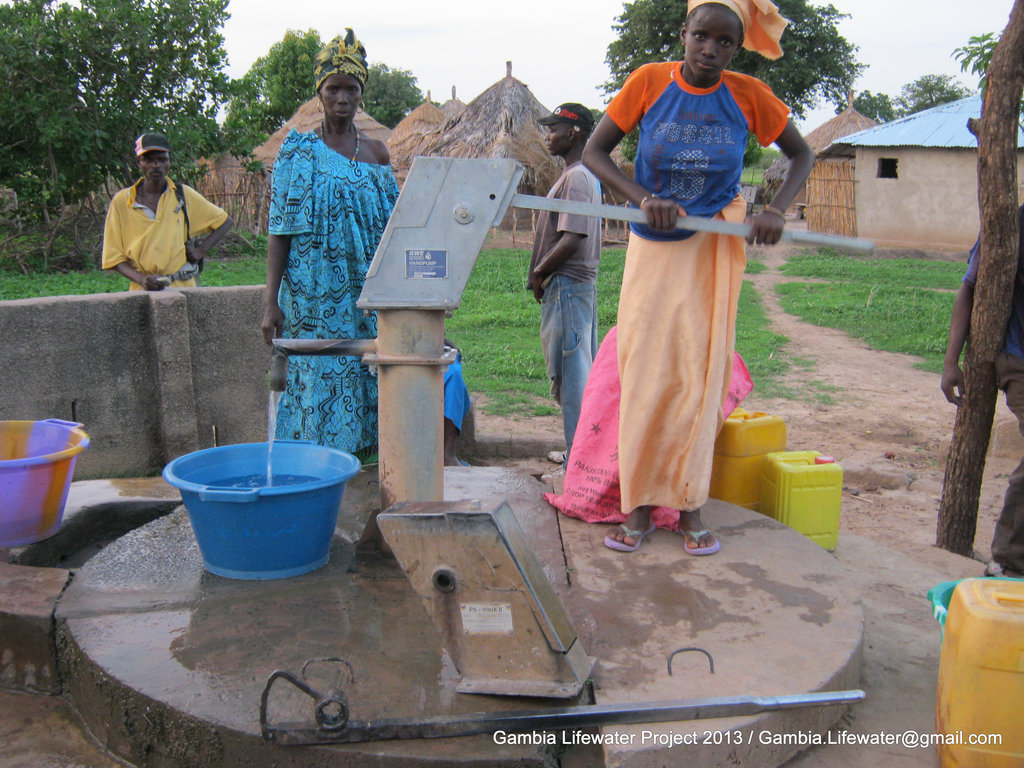
The second pump at Fula Kunda had a broken end piece at the end of the cylinder. This end piece is older and has welded parts. The welded joint broke, allowing water to leak. We replaced this end piece with another one and added new rubber gaskets, teflon seals, and replacement hardware for some parts. As we put the pipes into the well, they got stuck on an obstruction on the way down. And once we were able to put them in, we noticed the pump started drawing sand and then stopped working. We believe that some of the concrete rings within the well are starting to crack and letting in sand. The pipes likely got stuck to exposed rebar from broken rings. We pull out the cylinder, took out the sand that was clogging it, and put the pipes back in. By this time, the sun had set, and we had to close. Fortunately, when we returned on the 14th, we found that the second pump was drawing only miniscule bits of sand and clearing up. Both pumps were leak-proof and holding water. Fula Kunda's women and girls can now reduce the need to walk to the neighboring village to draw water.
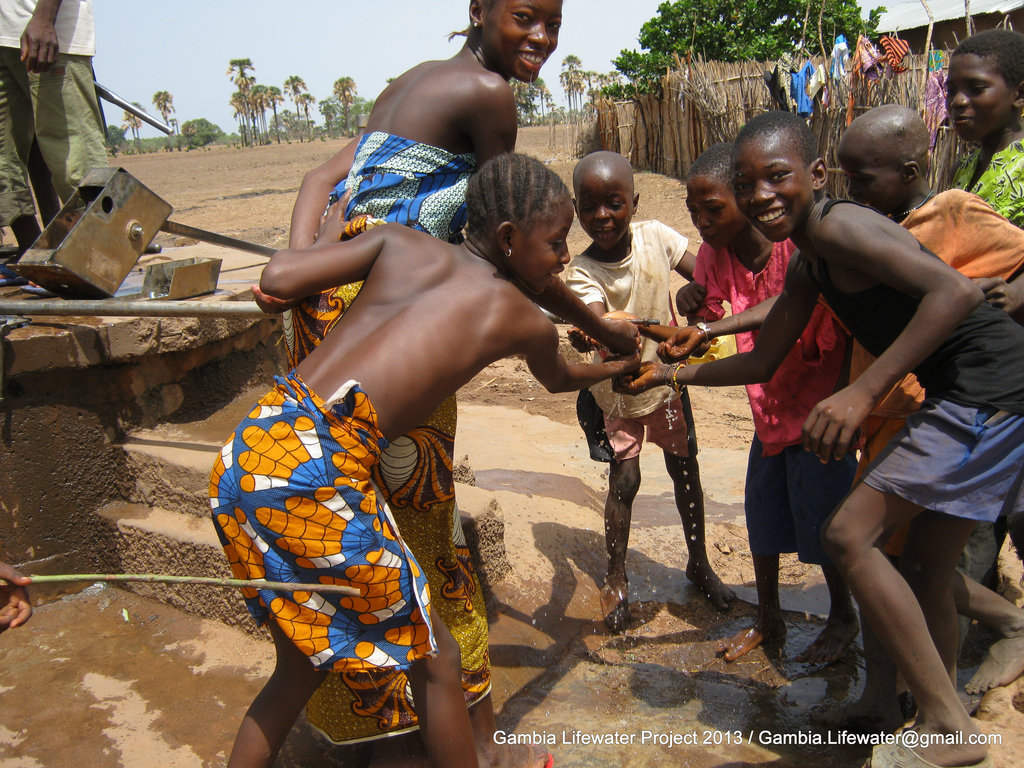
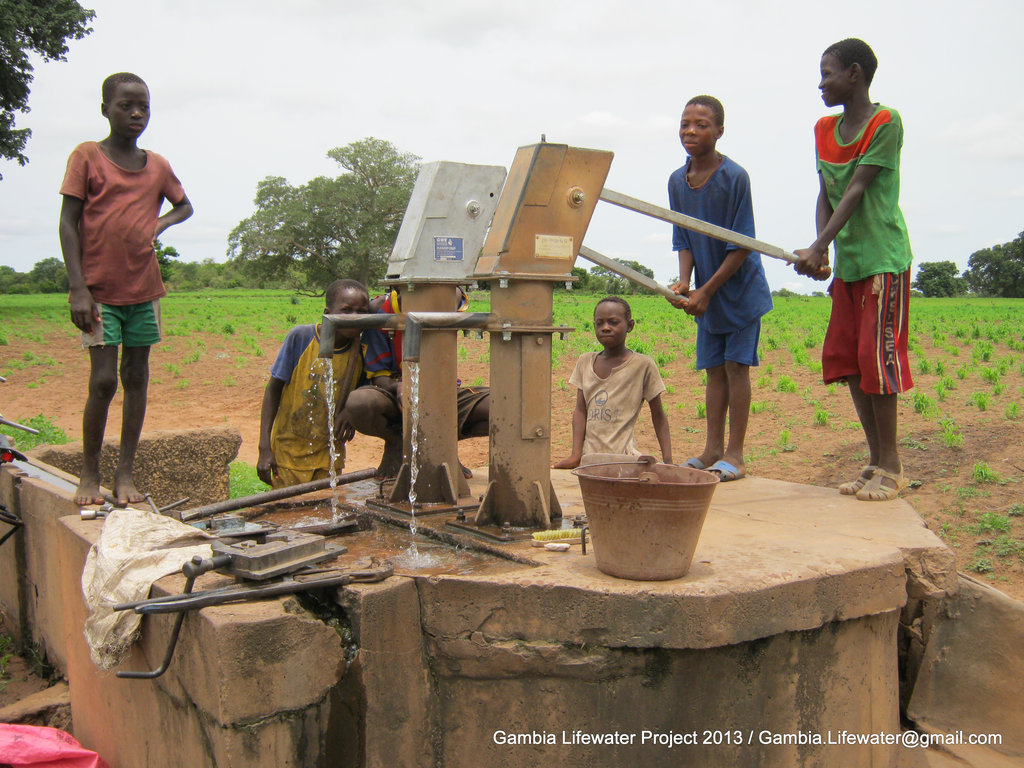
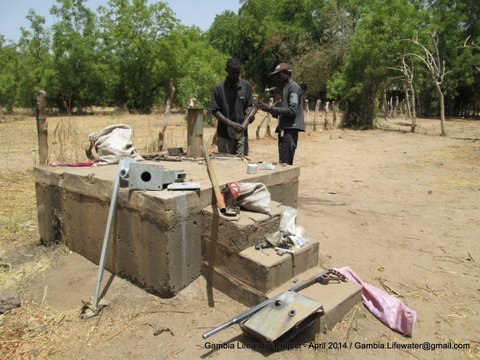
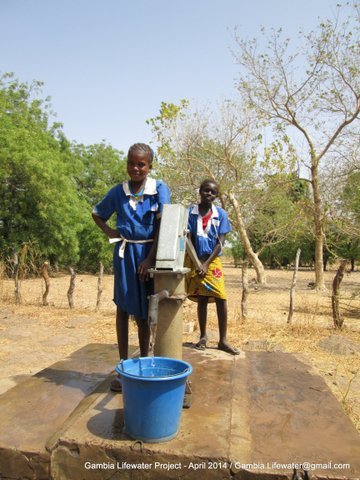
Last year, we visited Mount Carmel, an elementary school in Sare Gynalko village and saw that its garden pump was not working. This made it impossible to water the school garden. This year we were able to return-- The pump is 17 years old and had not been working for 4 years. Misuse and abuse had completely destroyed the pump housing and handle. On April 9th, we pulled out the pipes and added new cylinder gaskets and seals, new teflon seals, and new centralizers and rod couplings. We also pump in a new handle, head, hand axle, bearings, chain, hardware, and rod guiding plate. The pump is now producing water!
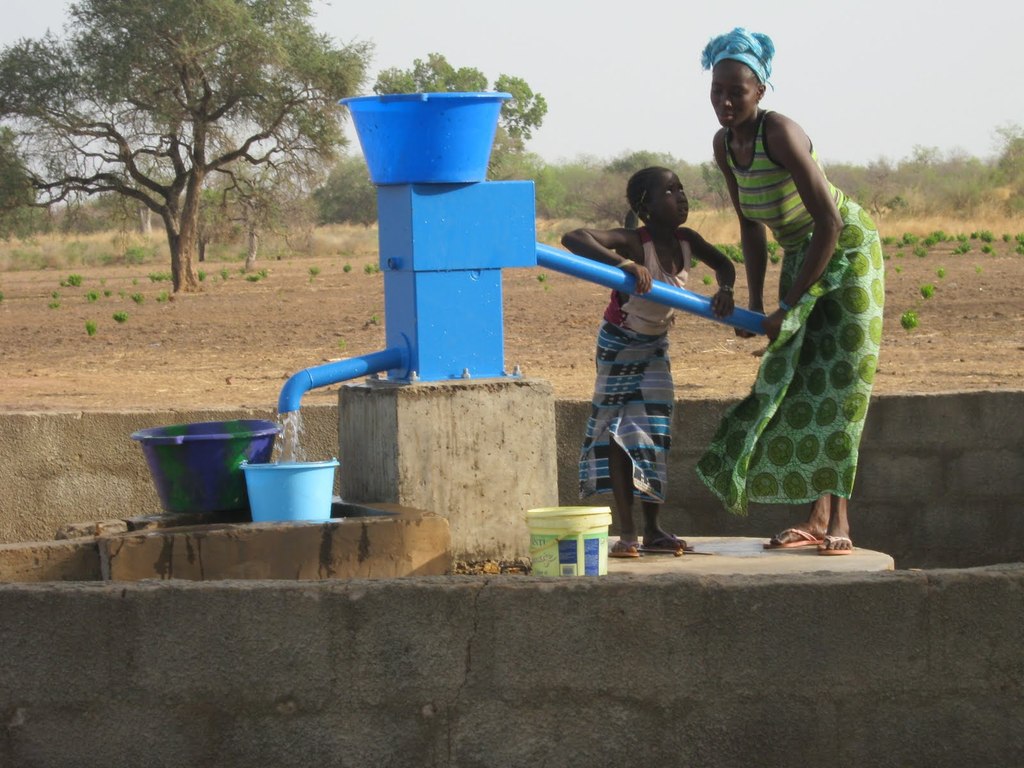
Secondly, this project also funded scheduled maintenance for the 3 Bluepumps installed in 2012 through Water Charity's
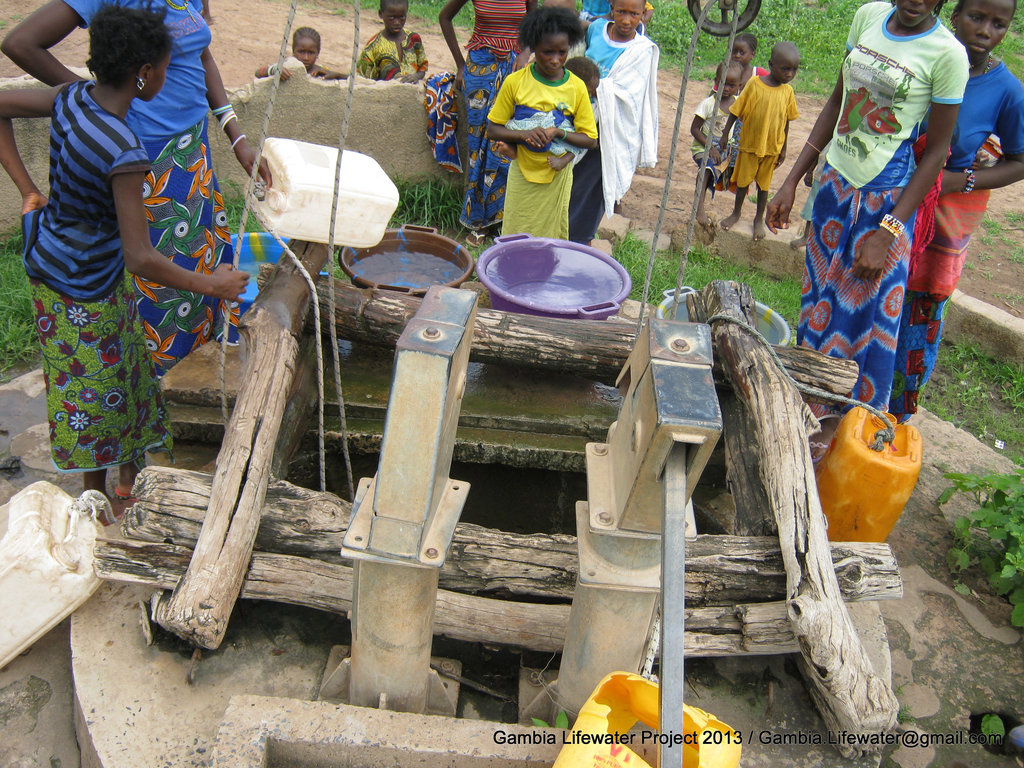
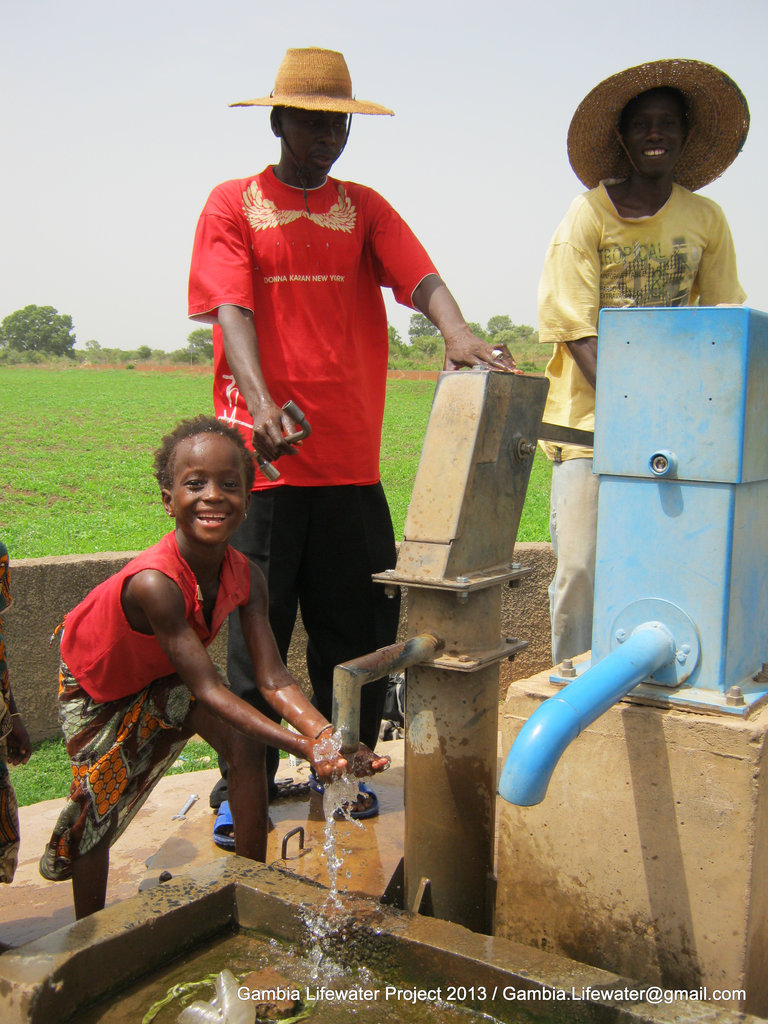
Choya, Si Kunda, and Kalikajara Pump Repair Project. SWE-GAM, the local distributor of the Bluepumps, will send a dedicated crew in the next month to Choya, Brikama Lefaya, and Madina Wallom villages to inspect each community's Bluepump cylinder, rods, centralizers, and internal parts and perform any necessary repairs/adjustment. Bluepumps are much more reliable and durable than the Mark II and produce more water. We've found that these three Bluepumps have turned into local water holes for many villages. Herdsmen from Jamara now take their cows to Madina Wallom to drink. Children from Sambang and Buniadu drink from the Bluepump at Brikama Lefaya on their way to and from school. Early preventative maintenance is key to keeping these pumps working and the water flowing.
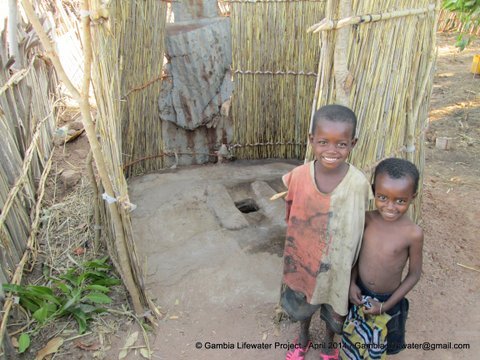
Next, this project constructed a toilet and two showering slabs in Brikama Lefaya village. The pre-existing toilet was caving in and filling up. The slab was cracking as well. A new toilet dug down 4 meters and a concrete slab with reinforced metal was built. Local labor was used to dig the hole, and a welder fused the metal supports. The result is a stronger and long-lasting toilet. Two showering slabs were built by Jaye and myself to give community members more comfortable and hygienic places to shower. We bought rebar, metal wire, concrete, and a bolt cutter from nearby Bureng. We also paid a local tractor to bring in loads of sand and rocks. We cut the rebar and tied sections with wire to make reinforced grids for the concrete. We then dug down about 4 or 5 inches for the slabs, inserted the rebar, and poured concrete. Next, we topped each shower slab with tiles to increase durability. Lastly, we made soakaway trenches around the slabs to promote good drainage of used water.
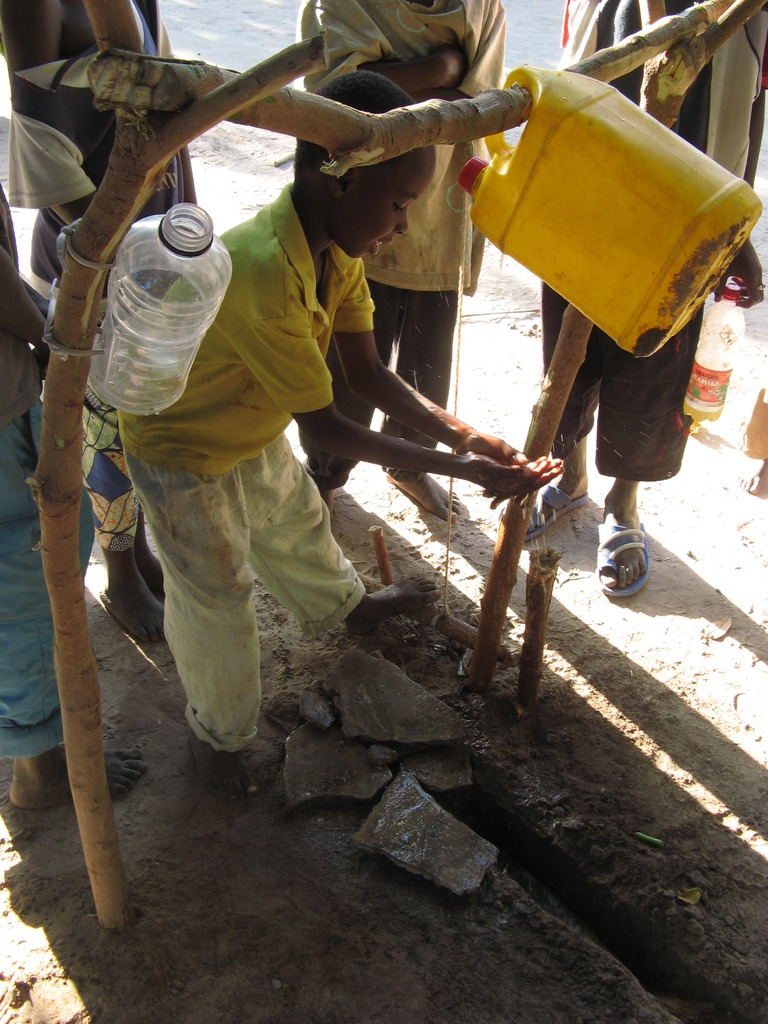
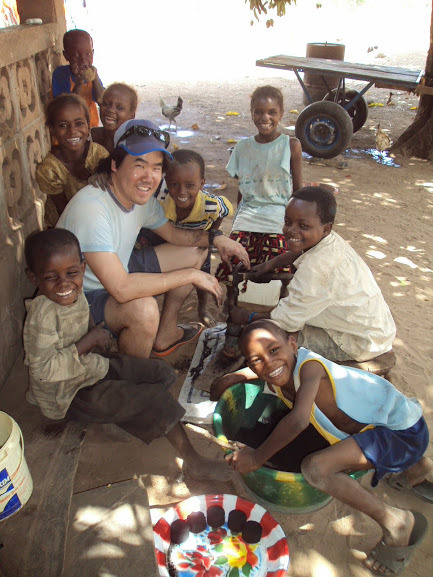
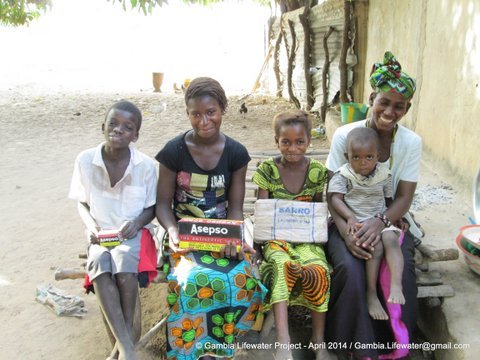
Lastly, we distributed soap to 9 families in Brikama Lefaya and Choya that regularly experience soap shortages. We purchased regular soap from Bureng and antibacterial soap from Soma. This injection of soap will give a boost to general hygiene in these villages and guard against common skin infections.
Thanks again for all your support! We were able to serve 1,300+ villagers in 5 communities with effective interventions with your assistance!
Sincerely,
Jeremy Mak
![Clean water flows again in Fula Kunda Village!]()
Clean water flows again in Fula Kunda Village!
![Fixing Mt. Carmel School's broken pump]()
Fixing Mt. Carmel School's broken pump
![Happy Mt. Carmel students with fixed pump]()
Happy Mt. Carmel students with fixed pump
![New Toilet in Sare Lefa!]()
New Toilet in Sare Lefa!
![Jainaba and her family happy at receiving soap]()
Jainaba and her family happy at receiving soap
![Share on Twitter]()
![Share on Facebook]()