By DR. J. TAGORE DEROSE | DIRECTOR
REPORT TITLE : DISASTER RECOVERY THRO TRAINING.
PROJECT TITLE :FLOOD DISASTER RESPONSE AT CHENNAI,INDIA.
PROJECT UNDER: FLOOD DISASTER RESPONSE AT TAMILNADU,S.INDIA.
PROJECT SITE:THIDIR NAGAR,SAIDAPET.
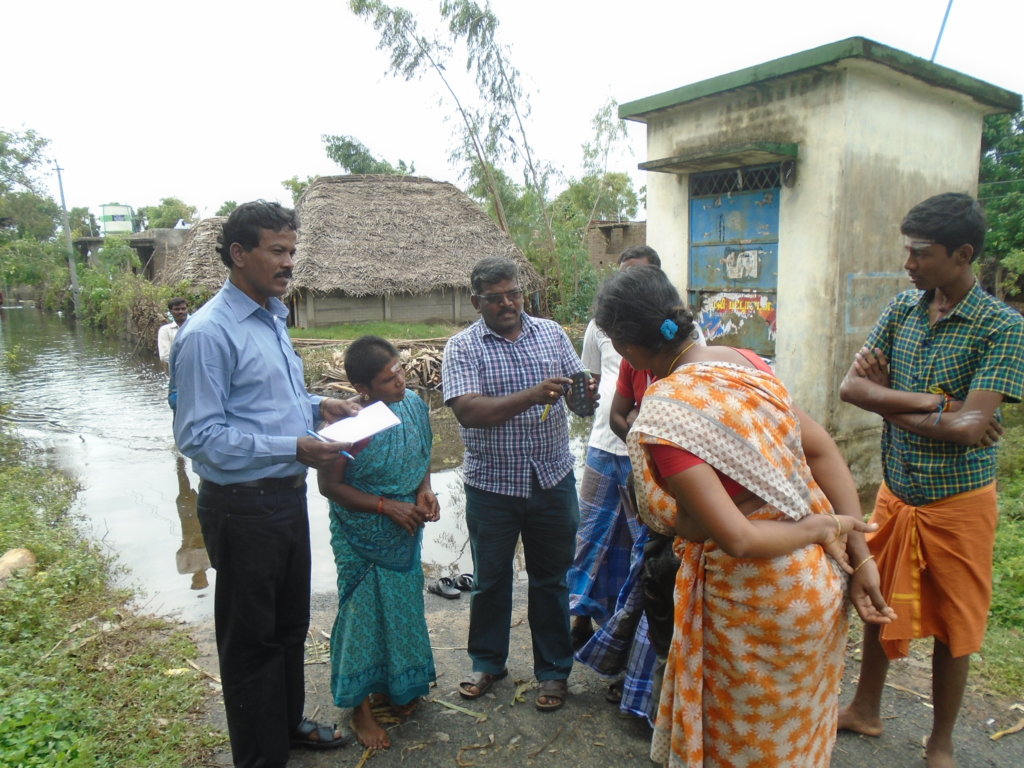
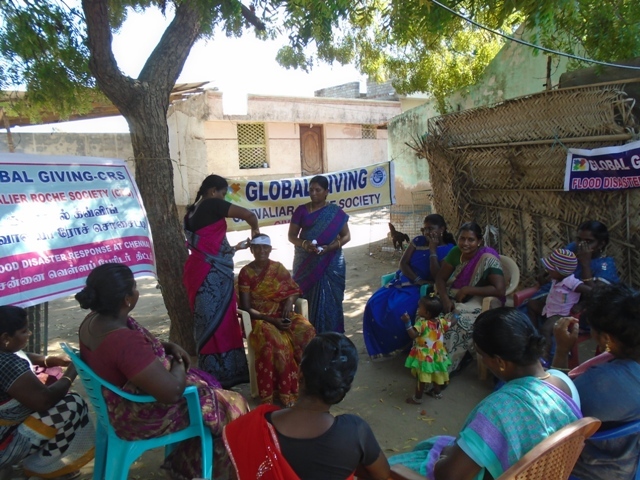
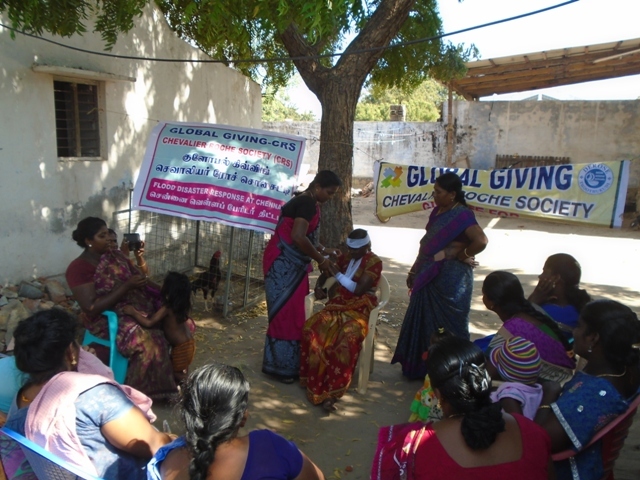
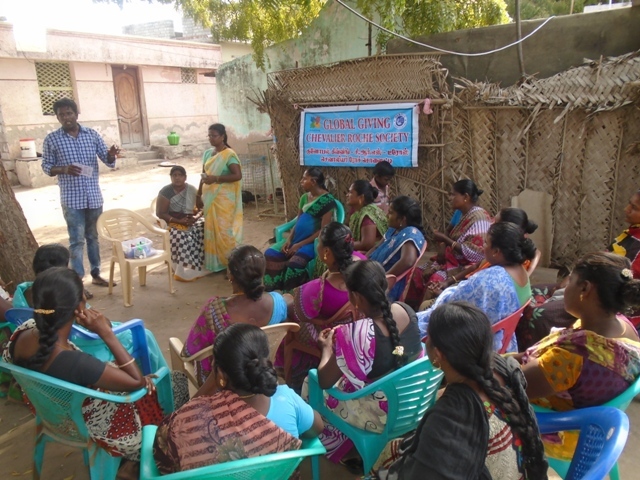
FIRST AID TECHNIQUE: For the people who are living in this area Thideer Nagar, Organizations GlobalGiving and Chevalier Roche Society provided the Training on Flood Disaster Management Awareness along with the necessary explanation and practical demonstration. In most of the places when a disaster Because of the necessary explanation and practical demonstration. In most of the places when a disaster is occurred mostly women are affected than men because of the fear and abandoned condition many women usually die during any disaster this must be noted and necessary action shall be taken to protect women. In many occasions because of the shyness women have lost their lives still in many occasions they are troubling much. In major accident occurred areas men have protected themselves and protected others also as many women have lost their lives if they are entangled in a critical position usually they feel shy to reveal their critical circumstance. That is why they meet many sufferings. As women did not content any other person, many women have lost their lives. Therefore it is necessary to provide First Aid Training to women. If they have such Training and experience, they can protect their parents, family members and also themselves. Having this idea in our mind we provided the First Aid Training Programme for the women in this Thideer Nagar area. First Aid is the emergency help with medication, at the spot of accident to be provided to the injured person or persons. In this situation what ever the articles we have and the medicines whatever we have. At first we must know clearly the affected persons physical condition. One who provided the first Aid Treatment must be courageous and self confident. Actually one who knows the First Aid Treatment must provide courage and counseling to the affected person. Following that we must know the physical condition disaster affected person we must check his pulse rate. This pulse rate must be checked with our fingers keeping at the affected persons pulse. Also we can check the pulse at joint place of hand, neck portion, temple portion of the forehead and chest portion, nostrils etc. Then we must check the breathing condition of the victim by keeping our fingers near his / her nostrils and find if he / she are normal breathing condition. If the victim is found not having the regular breathing and pulse beat, we must arrange the victim to lay flat pull his / her head backward and make the respiratory passage straight. Following this we must touch the left side last waist rib by our left hand – and keep our right hand upon that and apply some pressure upon that portion and provide some pressure to the heart. If we do so properly we can make the breathing and pulse beat normal.Also we must check if there is any injury or hurt in the victims body or bleeding is found, at first we must control the bleeding the affected person. To stop the bleeding of the victim we must hold tightly with our fingers. Then we must wipe with the help of a wet cloth and give, give some pressure. And following that we must make a tight bandage by rolling the cloth tightly If we do so Hemorrhage well be stopped. If any persons fracture in his / her heard or leg we must keep those bones straight, so that those fractured bones will not scratch with each other. Then we must keep a flat wooden piece or 1ft scale upon the fracture and below the fracture and make a tight bandage surrounding them. This bandage the injured leg or hand should not moved here and there. Then make a cradle like arrangement shall be made surrounding the victim’s neck and the injured hand. Certainly it would be much helpful for the victim. Soon he would recover him / she would not feel much pain and would feel comfortable. When the person who got the First Aid Help is in the conscious condition and he is able to sit we can take him to the hospital with the help of a chair and 4 persons, if there we 2 persons only to help him we can make a stretcher like arrangement. If there are four persons on the spot they can help to carry the disaster affected person with the help of a chair cot or bench they can carry him safety in the sitting position or laying condition. When he is laid on the cot or bench, he must be tied with the cot or bench so that he would not fall down. When the victim is carried by a cot bed 4 person can hold each leg of the cot or bench. When there are only two persons for help they carry a affected person by joining their (Volunteers) hands with each other like an anchor and they can make a chair like formation and the affected person can be seated upon that and he may be carried easily with the help of only 2 volunteers. When there is only one person at spot of disaster affected area he can be carried upon our back or shoulders by asking him to keep his hands up on our shoulders. In another way also we can help him to move from one place to another. We shall ask him to keep his feet upon our feet and ask him to join his hands surrounding our neck upon our shoulders. We must hold his hip firmly with our hands. Following this arrangement if we move step by step gently he can be moved to the necessary place with our efforts. If a disaster affected person is in the condition unable to walk we can spread a saree, or dhoti or a bed sheet upon the floor, both the sides we must keep a long or strong stick and roll up the cloth to some extent along with the sticks longitudinally that arrangement will come to a stretcher like formation and upon that we can ask the affected person to lay and two persons can carry him / her easily. The persons who carry this stretcher like arrangement must look the same direction both of the volunteers must hold the ends of the pulse on both the sides. In this manner they can carry a disaster affected person from a low lying area to a high place or from a high place to a low lying area. All these were performed in front of the people in this area along with practical demonstration.
DRINKING WATER CONSERVATION: Man’s basic needs are three. They are food, dress and shelter. Of which man can live even without food for a few days. But he can’t live without drinking water. We get drinking water from wells, rivers, ponds lakes etc. In the beginning water used was not purified. That is why many diseases were spread. In the earlier years there was no water famine because people did not destroy the forests so rain fell properly during the rainy season. During the present days forests are destroyed. That is why the seasonal rain is failed. Water scarcity is found. As the measure of rain fall is decreasing day by day ground water level is also decreasing. Industrial wastes released from industries are wastes released from industries are filled with plastic and chemical wastes. Therefore the ground water is polluted. If this situation continues, some countries including India would meet the drought condition without drinking water. U.N.O has made this announcement. In India instead of drinking water people use well water for their drinking purpose. This bad situation still continues here. Indian water Resource Research Group made an evaluation about water Resources in India and announced the results as above. In many states people travel from 3-5 km and get the drinking water for them. After the independence of our Nation thousands of dams have been constructed in India. Even it is so 90% agricultural lands, town areas and village areas have not been benefited still. If this situation continues so, in the future there will be a situation in India to have war for water. Indian water Resource Research Team has said so. Even through in Tamilnadu there are many dams, we are unable to manage the drinking water problem. It is a great problem that there is the Cauvery water dispute is between Tamil Nadu and Karnataka states. Like wise we have another dispute about Mullai Periyar Dam problem with the Kerala state. Still in some districts such as Ramanathapuram, Virudhu Nagar,Thoothukudi and Chennai districts except the rainy season. People are suffering much of this drinking water problem people are travelling a long distance to get the dirking water for them. It is a great hardship to a large number of people. That drinking water is also not enough for them. At the same time it is not pure recently a great drinking water problem was occurred in Chennai. By so many emergency actions, this problem was solved to some extent. Season rain fall measure is also very small. Because of this reason so many wells dried off. Sometimes water supply is stopped up to a period of 10 days due to the motor repair, Pipe line repair etc. As an average a person needs 90ltr. Water per day now days it is hard even to get 20 Ltrs Quantity of water. If a man drinks enough quantity of water it purifies his body properly, strengthens his intestine. Therefore drinking water is a necessary material of the humanity. As it is not received literality it spoils the health of human.
WATER TESTING USING WATER KIT:
TESTING PH :
PH means a measure of activity the H2 ion (H+) is reported as the reciprocal of the logarithm of h2 ion activity water contains 0% acidic substance 7% natural substance 14% basic substance. In water when the PH value is greater than 7 it is considered as acidic. The normal range of water of PH is 6.5 to 8.5 Testing PH value
- In general the water consists of PH value below (or) equal to 6.5
- Take 1 drop of sample water in an Ink pillar.
- Drop the water drop upon the PH sheet.
- When the value of PH is 6.5 it is very low and it is normal in range
2) TESTING CHLORIDE:
- Chloride is a substance which is used to measures the level of chloride
Present in your blood and urine.
- Chloride is of the most important electrolytes in the blood.
- Chloride is used to keep the amount of fluid inside and outside of your cells
- It also helps to maintain proper blood volume, blood pressure, and PH value of your body fluids.
- Tests for sodium, potassium and bicarbonate substances are usually done at the same time of a blood test for chloride.
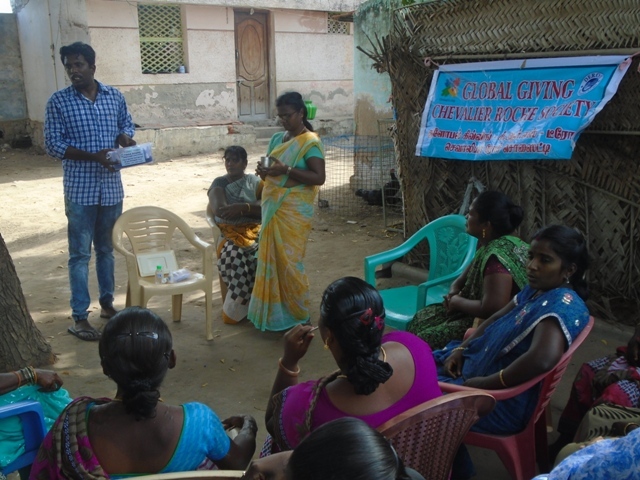
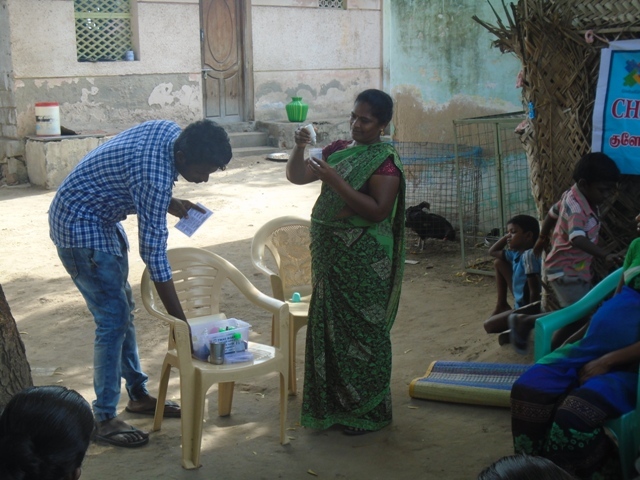
- Thus the process of chloride and other components are demonstrated theatrically to the victims in the slum area. After that chloride test was demonstrated to know then now much percentage content. Water to present in chloride of sample water.
TESTING CHLORIDE CONTENT:
- Take 20ml of sample water in a glass Jar.
- Add 5 drops of ‘’C1’’ fluid in it when this process is done there is little drop by drop change in colour of water sample and yellow colour occurs.
- Add 1ml of C2 fluid with the help of syringe add drop by drop fluid in the water sample where yellow colour is occurred.
- Lastly the solution mixed with C1 fluid and C2 fluid is shacked well properly for 2 minutes. Finally in the chloride test Thus the value of chloride present normally in the water sample. Vote of thanks was delivered to the vulnerable community by global Giving aided project staff team.
Project reports on GlobalGiving are posted directly to globalgiving.org by Project Leaders as they are completed, generally every 3-4 months. To protect the integrity of these documents, GlobalGiving does not alter them; therefore you may find some language or formatting issues.
If you donate to this project or have donated to this project, you can receive an email when this project posts a report. You can also subscribe for reports without donating.