By DR. J.TAGORE DEROSE | DIRECTOR
REPORT TITLE: EMERGENCY RESPONSE AT CHENNAI FLOOD AFFECTED SITES
PROJECT TITLE: FLOOD DISASTER RESPONES AT CHENNAI, INDIA PROJECT UNDER: FLOOD DISASTER RESPONSE TAMILNADU, S.INDIA
DISASTER MANAGEMENT TRAINING AT EZHIL NAGAR, CHENNAI
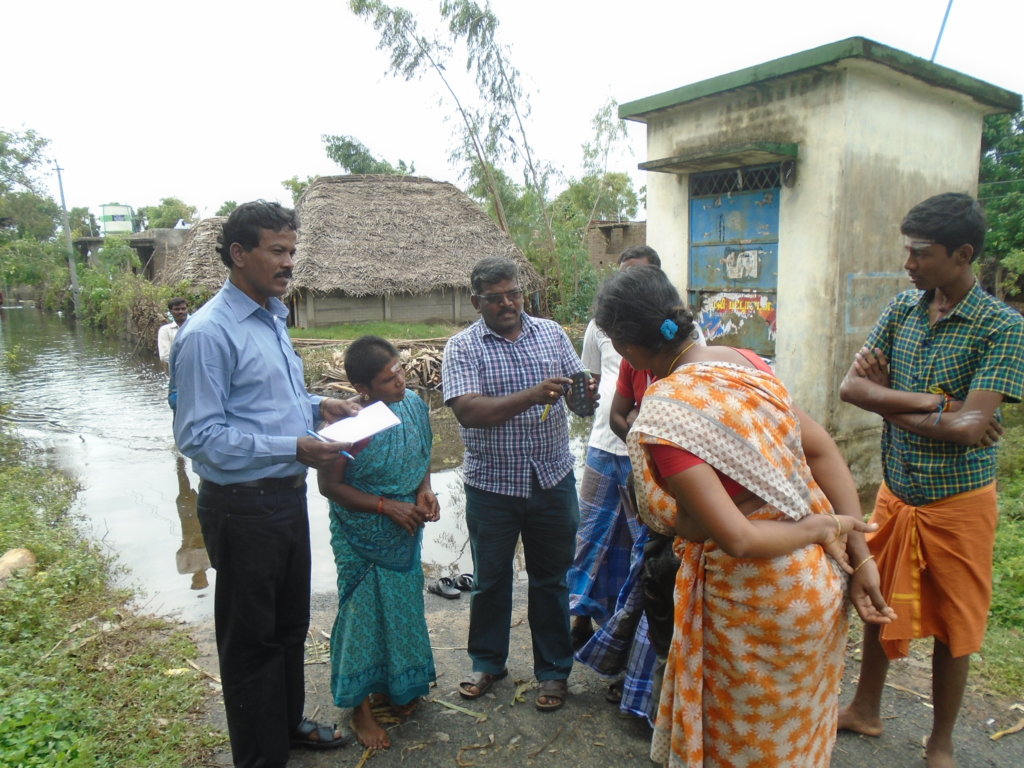
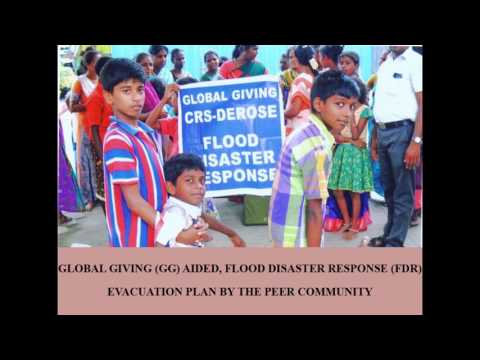
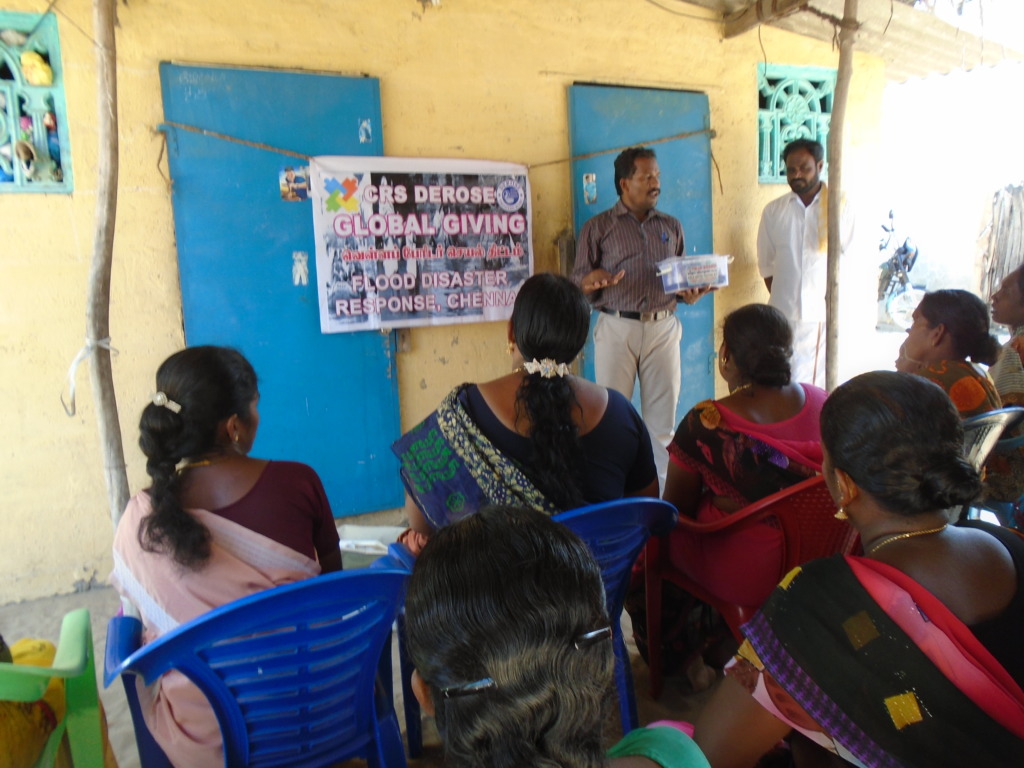
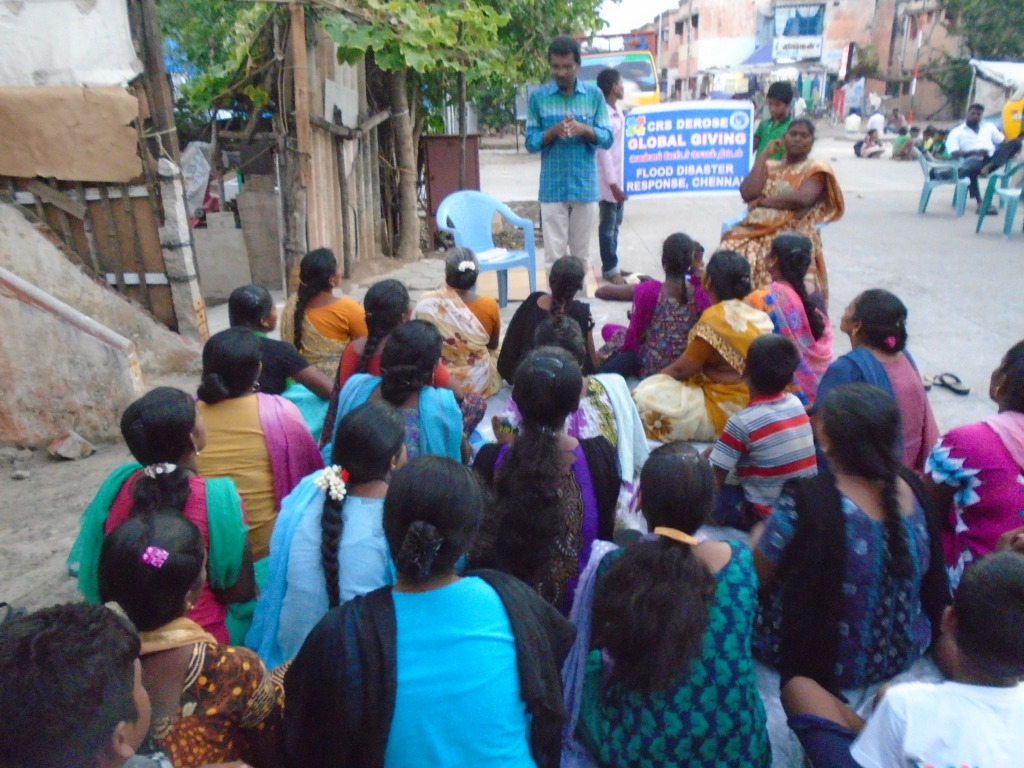
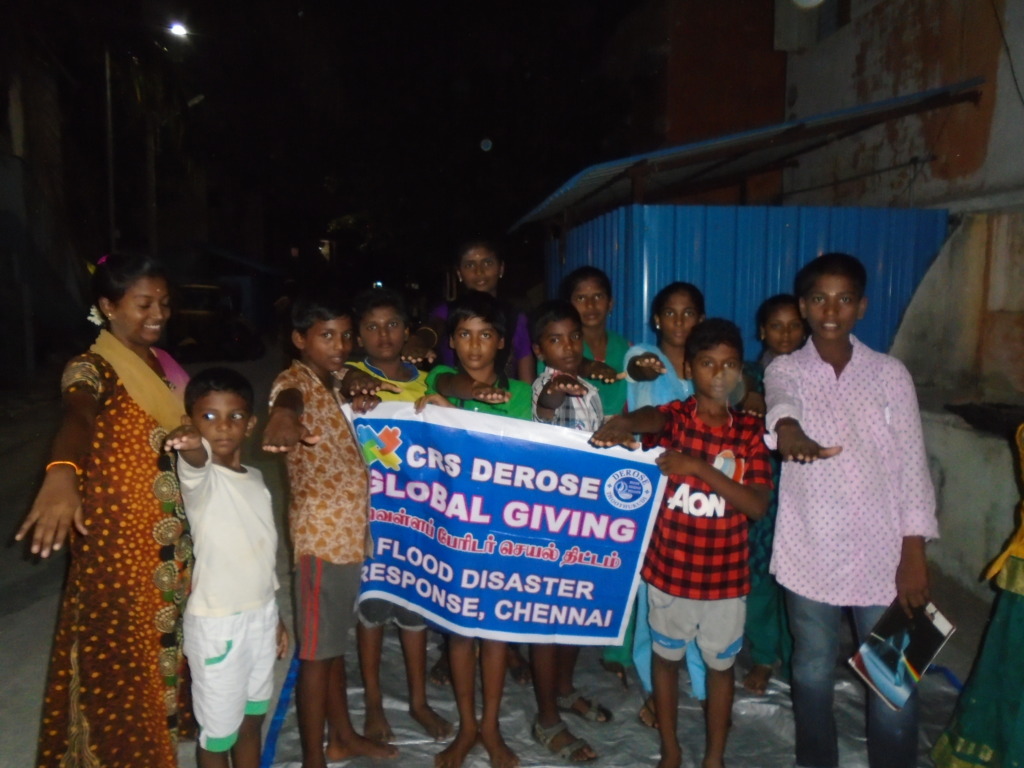
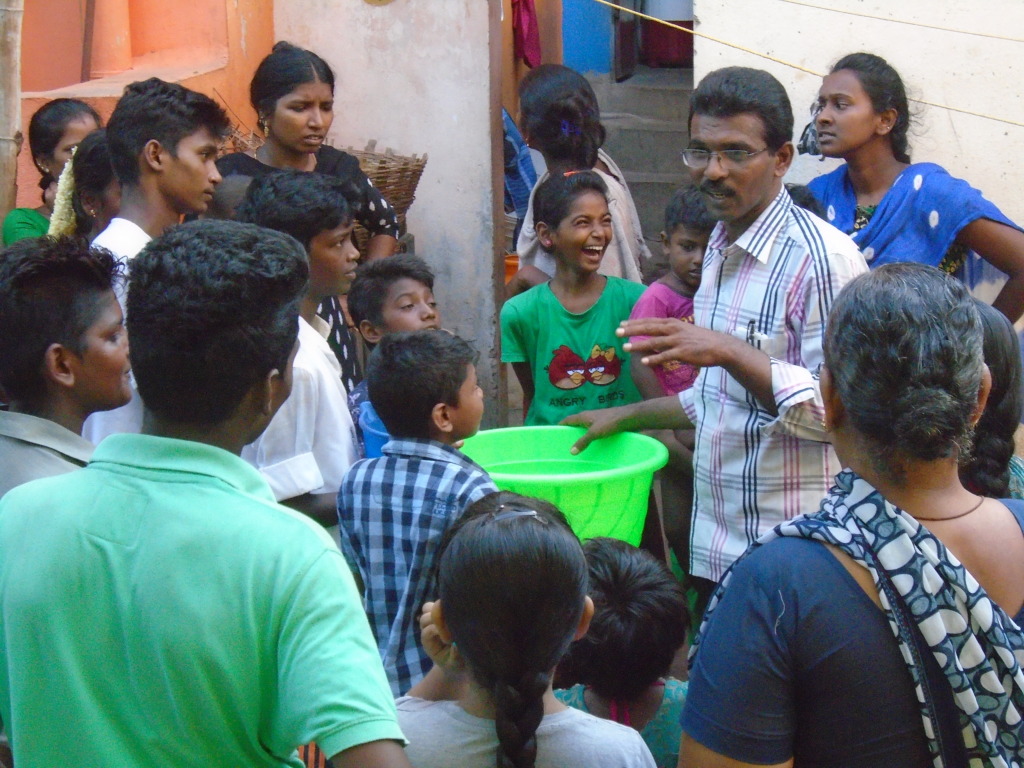
A training programme was conducted in Ezhil Nagar (flood affected site of Chennai) through Global giving aided project under Chevalier Roche Society. The programme mainly focuses upon disaster management. This serves to enhance the previous programme held in the past months. Participants who had already undergone the training as well as freshers took part in this particular training. Explanation was given on the types of disasters, the ways to protect oneself during the disaster, training to women, first aid walkthrough and instilled courage upon the minds to rescue people during disasters. Participants who are experienced in the training took initiative to lead by example, women self help groups got benefitted from alternative livelihood training which was held in addition. This greatly serves to improve the quality of a woman’s life. Finally the training on hygiene of drinking water was conducted which conducted the programme. The training is mainly practical in nature with theory taking a back seat. The different parts of the training are 1) Safety aid kit 2) Self - protection 3) Transportation of the victims 4) Water Hygiene and 5) Livelihood Training.
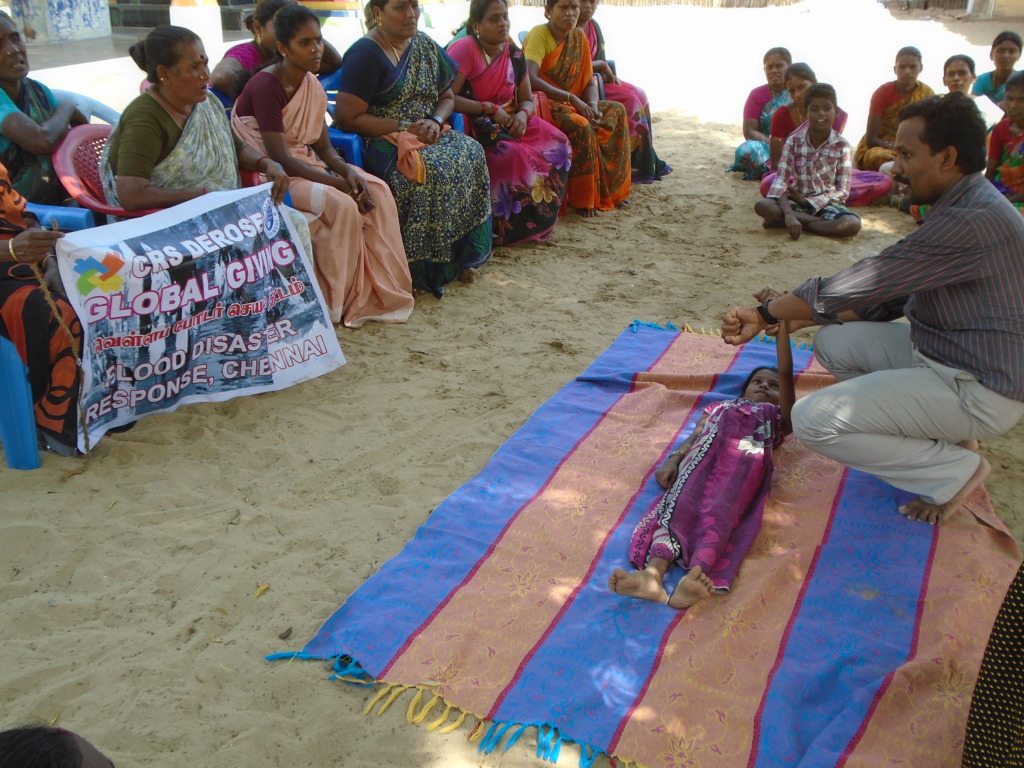
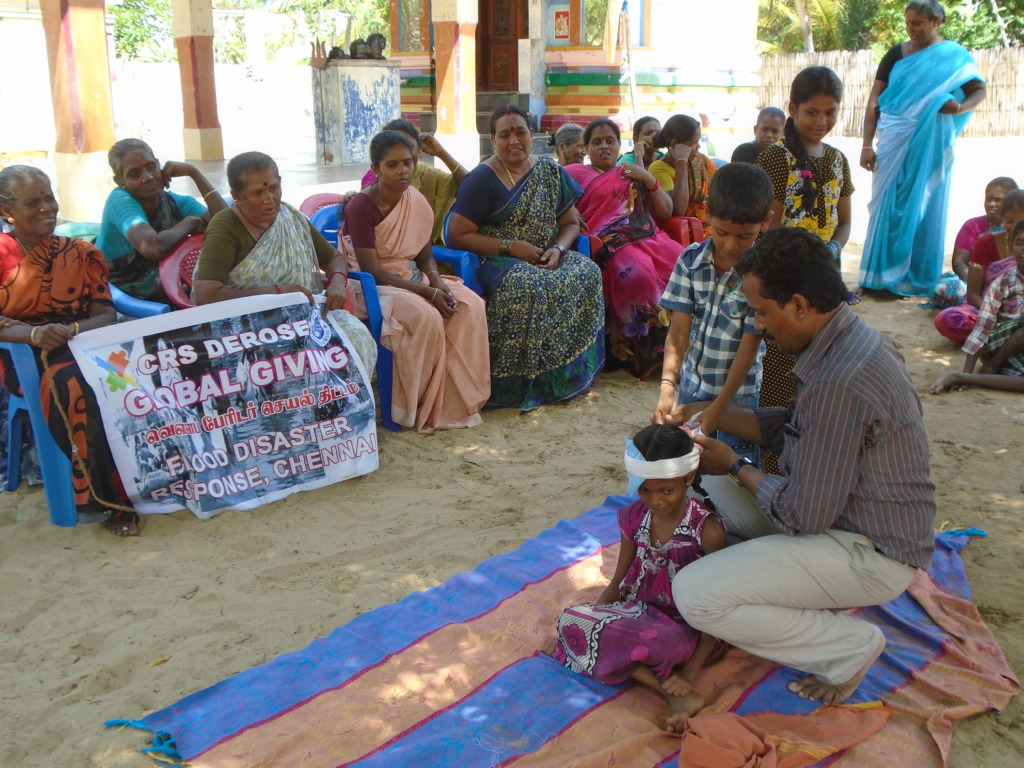
SAFETY AID KIT: Safety measures are very important during times of disaster. Care should be provided to the wounded as soon as possible. Clotting of blood is a common injury whereas bone fractures are severe ones. Training was provided on how to deal with these two. Bard aides are very instrumental in these safety methods. Mouth to mouth breathing (for artificial respiration) is also explained in detail with a view to save a life. SELF PROTECTION: Disaster may strike us at any time. We can’t be reliable only on external safety aids such as ambulance and fire service to help and rescue us. We must be prepared to tackle the situation by ourselves. This was illustrated through the self help training where the instructions and methods were provided to save oneself. EVACUATION OF THE VICTIMS: Hospitals should be neglected even if one considers the injuries to be a miner one. One should be alert and aware of what is happening around. One would normally carry a wounded person with a good will to save them. But this may lead to more dangers if they are not aware of the methods to evacuate them. When it is just a single person or volunteer, one could carry the victim in piggy back method. When there are two, they could make stretchers using clothes and blankets as well as the fireman’s method. In all these methods, one should take are to see that the method does not cause farther damage to the injured victim. DRINKING WATER HYGIENE: Water the main resource for humans are becoming more polluted nowadays. The cleanliness is a major attribute to be checked by the rural people to preserve their health. One could control the pollution of water resources by measuring the impurities in it through field Water Tool kit(FWTK). This method measures the acidicity, hardness of water Chlorine could make the water pure. LIVELIHOOD TRAINING: Money is required to run life. The ability to make money is limited to those affected by disasters as they might have last their belongings and properties. The women may be left desperate when husbands lose their jobs. This training focuses on those women and ensures that they have a steady flow of ineorne through the cottage industry by which they learn to do things and sell if to homes, thereby in clearing a favorable market. This opportunity provided to numerous affected women takes them out of than depression and leads then back to normalcy. Thus the training programme was conducted.
DISASTER MANAGEMENT TRAINING IN KANNAKI NAGAR, CHENNAI
The Disaster Management Training was organized and implemented by Global giving aided project through our NGO (Chevaliar Roche Society). The awareness Progamme was planned and implemented to give awareness to the unaware people of rural area. This is the Primary motive of our NGO. The Programme took Place in Kannagi Nagar, Chennai. The Programme was not only theoretical the people of Kannagi Nagar were practically illustrated so that they could gain more knowledge on saving themselves from any disastrous scenario. The Programme was divided into five parts. 1) Saving oneself in a disastrous situation.2) First Aid 3) How to evacuate the injured person to a hospital 4) Filed water analysis 5) Livelihood Training. SAVING ONSELF IN A DISASTROUS SITUATION: The affected community were practically demonstrated how to save them in a disastrous situations like earthquake, flood, fire accidents, etc. This demonstration was done by our NGO trained climate managers. FIRST AID: In this stage the people were illustrated how to provide first aid to themselves or to other people injured in a disaster. The people were advised on the usage of unnecessary medicines turmeric powder, tea powder, etc while providing first aid. The NGO trained climate managers showed the appropriate procedure to stop a blood cottage and on tying bandage to the injured persons. The NGO trained climate managers also demonstrated the procedure for tying bandages based on the injuries like sprain, fractures, etc. The people were advised to follow the demonstrated methods to be done so that the injured person can be prevented from more pain and injury.
EVACUATE THE INJURED PERSON TO A HOSPITAL: As it was a rural area the people would avoid going to hospitals. The NGO trained climate managers explained the people of Kannagi Nagar on the importance of taking treatment in a hospital while they are injured. The people were demonstrated practically on how to carry a person to the hospital who is injured severely. The people were told not to carry a person using their bare hands. They were introduced practically on building an artificial stretcher to carry the injured person. This method was done using cloth, blankets with steel rods or wooden sticks. If there is no proper articles for building a stretcher the affected community were recommended to use their bare hands to carry the person. But it also has a proper way of carrying an injured person. This was also illustrated to the affected community of Kannagi Nagar. FIELD WATER ANALYSIS: The awareness Programme conducted with the Field Water tool kit (FWTK) which is unaware in many rural areas. The use of this method is check the level of pollution in drinking water during a disastrous period. This use was delivered to the affected community of Kannagi Nagar. The practical method for water analysis to check the level of chemicals like chlorine, Iron, etc in drinking water. The people were told that the chemicals and instruments which are required for Field Water Testing is already given to their Panchayat office by our Chevaliar Roche Society. LIVELIHOOD TRAINING: Livelihood training Programme trains the uneducated women who are affected by the disasters strengthen their economy. Through this training these women enhance their financial status by running small scale industries. This they support their family by providing money when their husbands are unemployed. So women get involved in this training curiously.
Project reports on GlobalGiving are posted directly to globalgiving.org by Project Leaders as they are completed, generally every 3-4 months. To protect the integrity of these documents, GlobalGiving does not alter them; therefore you may find some language or formatting issues.
If you donate to this project or have donated to this project, you can receive an email when this project posts a report. You can also subscribe for reports without donating.