By DR. J.TAGORE DEROSE | DIRECTOR
REPORT TITLE : HEALTH AND DISASTER ASSISTANT TRAINEES BECOME MASTER TRAINER
PROJECT TITLE : FLOOD DISASTER REPONSE, TAMILNADU, S. INDIA
HEALTH AND DISASTER ASST TRAINING:
Our NGO is serving with Disaster management project / climate changes adaptation project for the past 12 years. India Even through our staff are working for full Time, our great expectation is to have the certified and faltered volunteer for our Disaster field work. Particularly our coastal districts are monthly, sea erosion sites. In addition to this, nearby Gulf of manner Coral Reef Island, an Island (Vaan Island) is submerging due to climate variabilities these fore we decided to make well known disaster trained, volunteers. For the past two decades we have conducted “Nursing Assistant” course with the aid of Govt. of India our present course we have given extra construction manly 3 agendas. 1. First aid (Evacuation) 2. Early warning system and 3. Community based Disaster Risk management principles (CBDRM). We have added the 50% Disaster management principles with already for 50% Health Assistant syllabus. In the Health Assistant regular syllabus, tolling subject already included. Anatomy and physiology, fundamentals of Nursing Assistant and bed making, community Health and child care our Health and Disaster Asst student’s going to the Govt. medical college Hospital for their external practical traing thro Indian Red cross society. Whenever we convene the first aid classes, for the Disaster project, our Health and disaster Asst students always serve us the volunteers / Master trainers / Climate managers. It also serves as the practical Demonstration cleanse. As for our knowledge in south TamilNadu, Six months duration Disaster management certificate course for our Global giving aided this Non formal Tuition fees external and internal practical training fees and also Examination fees met fully this Global giving project. During completion of course, they will acquires Health and Disaster Assistant certificates with Global giving emblem.
MASTERS TRAINERS/ CLIMATE MANAGERS:
This training is called as ‘’Training of Trainers’’ (TOT). It is especially, conducted for our Health and Disaster Asst training students. This training was offered continually for a 3 days. All techniques First aid were fairest to them. Simple methods of bandaging techniques, were thought to them. Buy whales the, existing live cost materials, it was taught to make the easy way of evacuation. What is early warning. How will it reach vulnerable community. Special focus was provided on handling the vulnerable community (women, children, Elders, Differently abled and patents) Simple and modern technologies were taught to them properly those who accomplished masters training are serving on going Global giving aided projects in Thoothukudi, Cuddalore and Chennai Districts.
EXPOSURE VISIT AT FIRE & RESCUE DEPARTMENT FOR MASTER TRAINERS
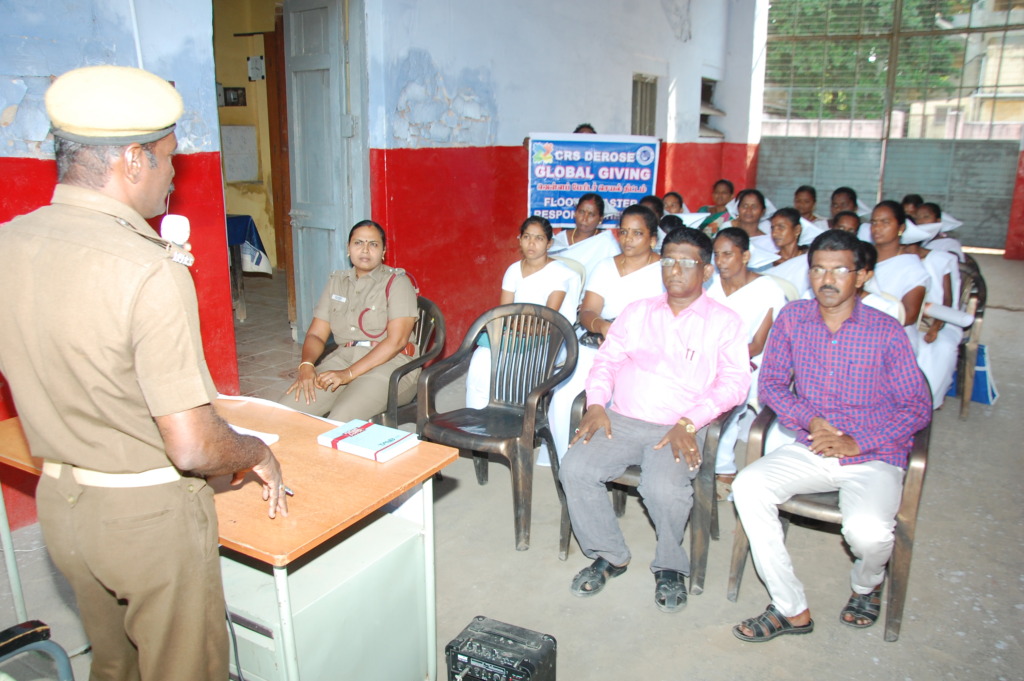
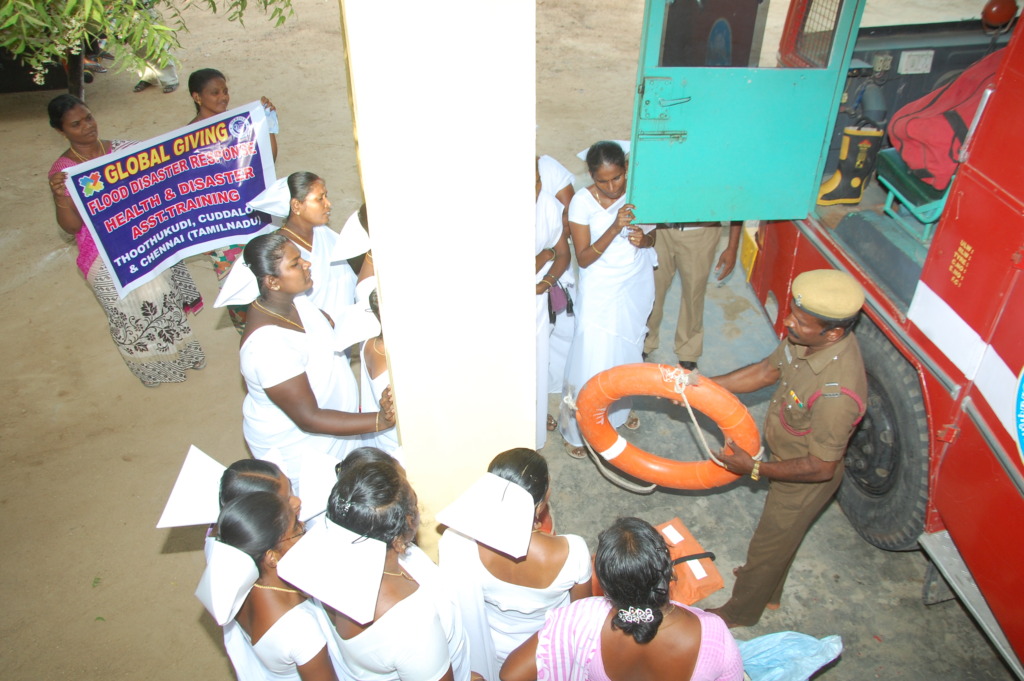
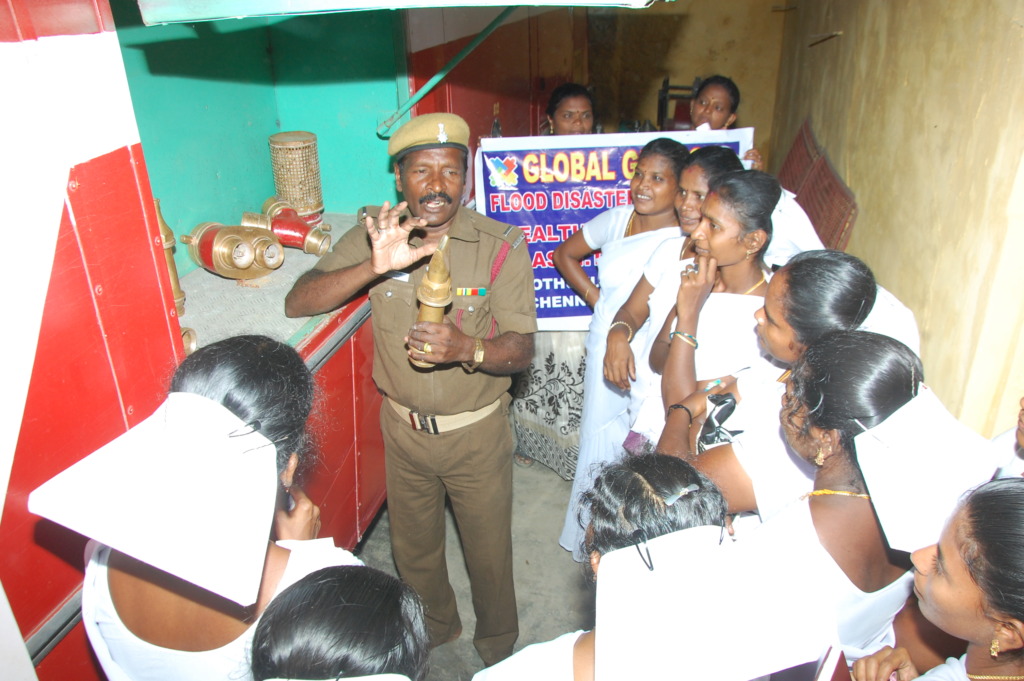
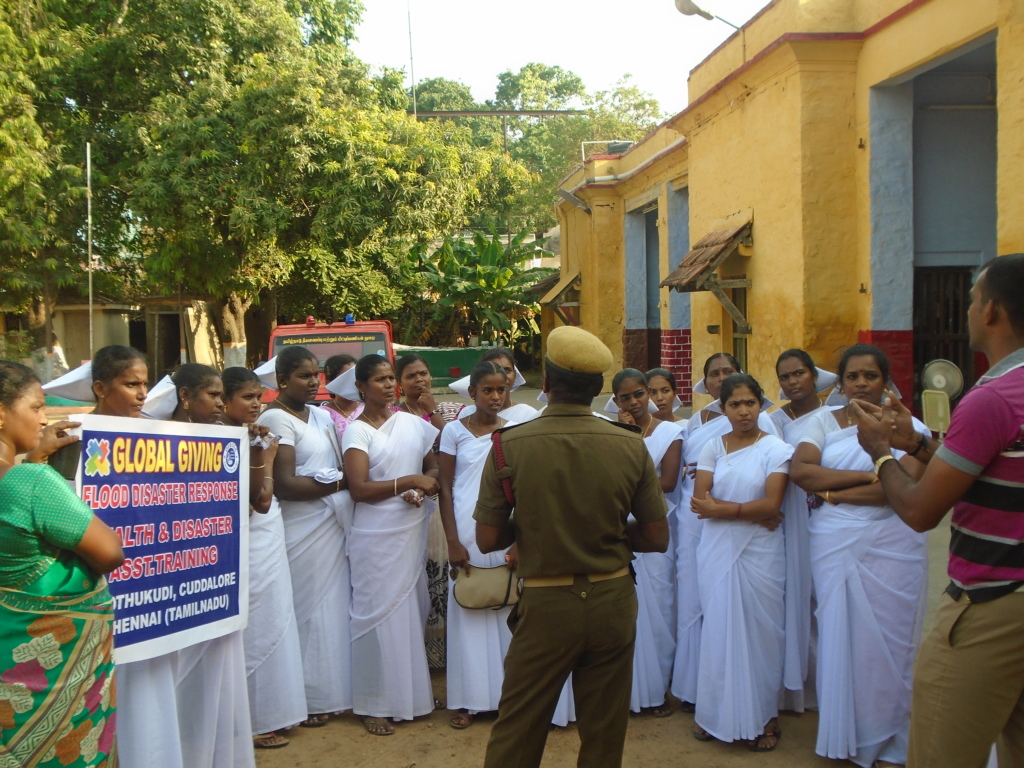
Girl students who receive training in Global giving aided free Health and Disaster Assistant were given continuous training in disaster management and fire rescue through Govt. of Tamil Nadu fire and rescue department Disasters come in May forms such as storms, flood, and accidents. This causes heavy damage. Lives are saved and taken to a safe place first aid is given. Warning and remedy action are also emphasized. Training was also given on how to manage fire accidents with the permission of fire service ad Rescue and under the leadership of the fire station offices the training was given in a practical method. How fire is caused? How to prevent it? How to mange it? These questions are answered in the training. After recurring this training the Health and Disaster Assistant Trainees go as instructor/ volunteer/ climate manager to disaster affected vulnerable area and train the affected community, as well as the students. Though this the instructor/ volunteer/ climate manager receive all the training. This training is held for this purpose(making master trainer)
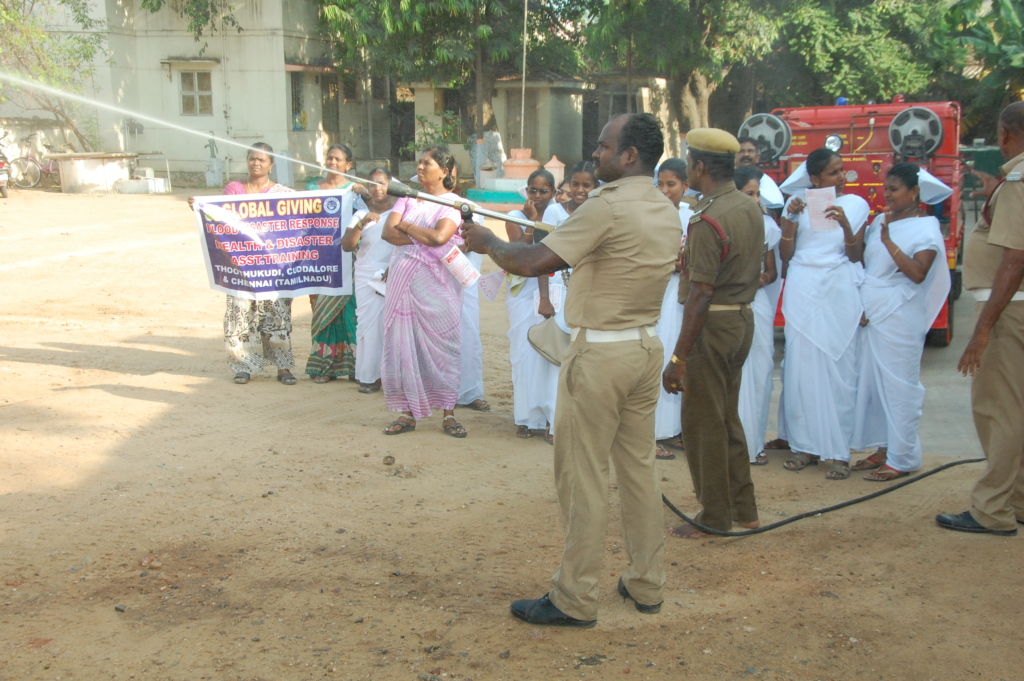
PREVENTION OF FIRE ACCIDENTS : This training was given by Mrs. Anandhi, a station fire officer.There should be on appropriate distance between two huts so that even if one catches fire the other does not get affected. This distance may range up to 10 feet. Do not use lamps without a chimney keep the lamp in a place such that the cats and rats do not disturb it. Do not leave the stove on and go and while cooking. Do not pour kerosene into the stove when it is on off the stove and pour it. Do not pour ashes with fire into the dustbin. Do not transport fire from one place to another without safety measures. Do not allow the children to play with matches. Throw the litter in a safe place and not near huts. Smokers should be careful with the fire form the cigarettes and must put if off. One should not smoke in the bedroom. Hay must not be kept near huts. Hay should be kept within a distance of 20 feet from one another. When using electric winces the joints should be covered in insulin tapes. Fire extinguishers through spraying of water from hose Mr. Murugan, the Head Constable and Mr. Ragavan The operator conducted the training on how to handle the hose to put out the fire. The fire service department makes the water from the vehicle to flow through the hose through the use of mortar. The water then comes out of with a force through the nozzle at the tip. The nozzle pipe should be held tightly with both hands and held close to the chest. This is done so that the hose doesn’t come out of our hands due to the force through which the water comes out. Depending upon the speed of the fire and the distance the speed of the water is controlled through the control value which is fixed. As the speed of the fire increases, the value of the hose should be opened and the speed of the water should be increased. Similarly when the speed of the fire decrease, the water speed is also automatically brought down. When the water from the hose flows out in one single direction at a force then the effect of the fire is reduced. Then the water is scattered and the fire is easily put out when it is sprayed on the ashes 100m and 200m hoses were demonstrated. If there is a fire in our neighborhood and the fire service is delayed. We can fix the hose to the wells and the water is sprayed. So that the fire is controlled and we don’t have to depend upon the fire service. DIFFERENT PARTS OF EXTINGUISHER: This training was given by Mr. Essaikkirajan a fire operator. Safety shoes must be worn by the men who extinguish fire so that they could remain safe and advance accordingly. Safety jacket for the body leather gloves for the hands and safety helmets are compulsory things to be worn. The pipes for spraying water should be made in copper. Otherwise the pipes would rust and be of no use. The joint cub also should be made in copper. Only then one could easily attach and detach if from the pipes. Heavy ropes around 100m and 200m should be kept. It helps in rescue operations when we have to climb tall buildings. A heavy hammer, Lever (Iron) should be kept so that they could be used to break down doors. The explanation of this mechanism was given through this training.
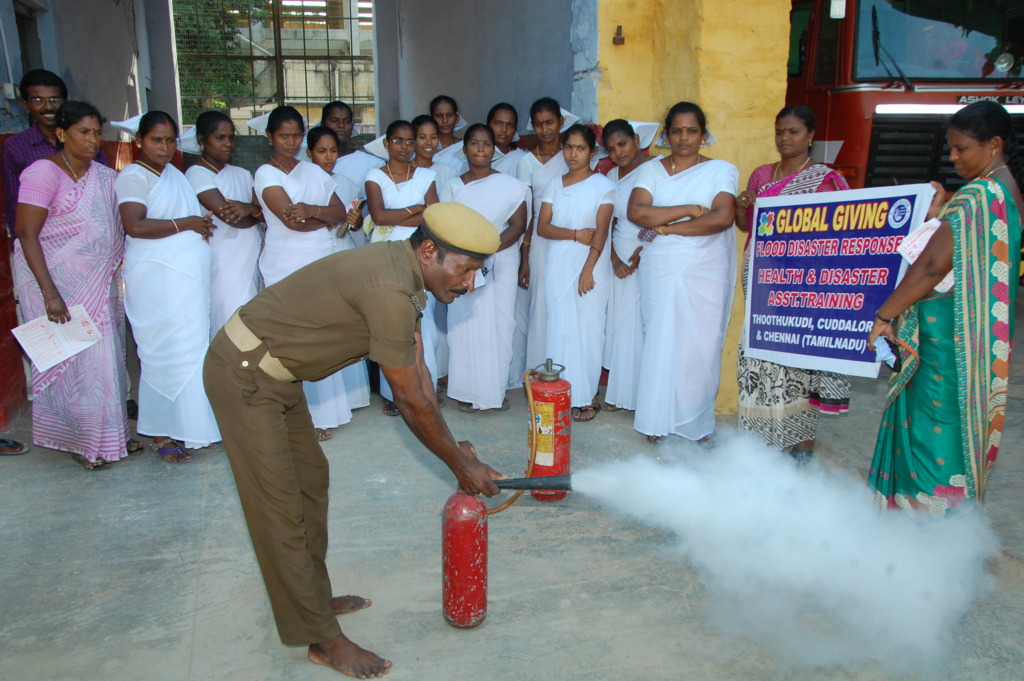
PUTTING OFF FIRE THROUGH CYLINDERS : Mr. Yoga Mani Sankar, a fire operator gave training on have to use fire extinguishers. There are two types of fire extinguishers. Which are classified as A and B. A type has a mixture of carbon dioxide and nitrogen mixed and comes out as gas. B type also has carbon dioxide and nitrogen. But is comes out in the form of liquid. A type is used to put off fire that spreads fast in the air. When there is fire the value at the mouth of the cylinder is adjusted and opened So that the gas is sprayed at the fire. The gas which comes out controls the spread of fire. When it is sprayed continuously in all directions the fire does not spread to other directions. When the fire is concentrated at one place B type cylinders are used. If there is fire in the electricity a paper files then is fire is at one place and these cylinders are used when the concentration of fire is heavy at one place, there is a chance to spread through the flow of air. So the vote of the B cylinders is opened and sprayed such that it mixes in the air and the liquid mixes with the fire. This controls the speed of the fire and on continuous spraying, the fire D putout. Therefore two kinds of cylinders must be kept in officers, schools, hospitals and other important place. On doing so, we could prevent disaster even before the fire service arrives. This kind of training was explained and provided.
Project reports on GlobalGiving are posted directly to globalgiving.org by Project Leaders as they are completed, generally every 3-4 months. To protect the integrity of these documents, GlobalGiving does not alter them; therefore you may find some language or formatting issues.
If you donate to this project or have donated to this project, you can receive an email when this project posts a report. You can also subscribe for reports without donating.