By Charles Githu & Elizabeth Waichinga | Fundraising and Communication Department
When noticed a swelling in her left breast, she immediately knew something wasn’t right.
“It was quite large, and deep down, I knew I needed to have it checked.”
She asked her husband to take a look. His response confirmed her fears.
“He told me I needed to go to the hospital.”
At the time, Lucy’s understanding of breast cancer was limited.
“All I knew was that a swelling in the breast could mean cancer.”
Fear took over.
Although she knew she needed medical attention, it took her two weeks to gather the courage to visit the hospital.
Looking back, she knows exactly what caused the delay.
“It was fear.”
Eventually, she sought care at Kenyatta University Teaching, Research and Referral Hospital (KUTRRH), where an ultrasound revealed a mass in her breast. A biopsy was recommended, followed by another anxious two-week wait for the results.
Then came August.
The day she would receive her diagnosis.
At the time, Lucy was already spending much of her time at the hospital caring for her father, who was facing health challenges of his own. Hospital corridors had become a familiar part of life.
She went for the appointment with her daughter.
When her name was called, she walked into the doctor’s office alone.
The doctor reviewed the results and delivered the diagnosis:
Invasive Ductal Carcinoma.
The medical term meant little to her.
“I asked the doctor to explain it to me like a child.”
The doctor’s answer was simple.
“You have cancer.”
To her surprise, Lucy didn’t cry.
She didn’t panic.
She didn’t even feel shocked.
Perhaps, somewhere in her heart, she had already prepared herself for the possibility.
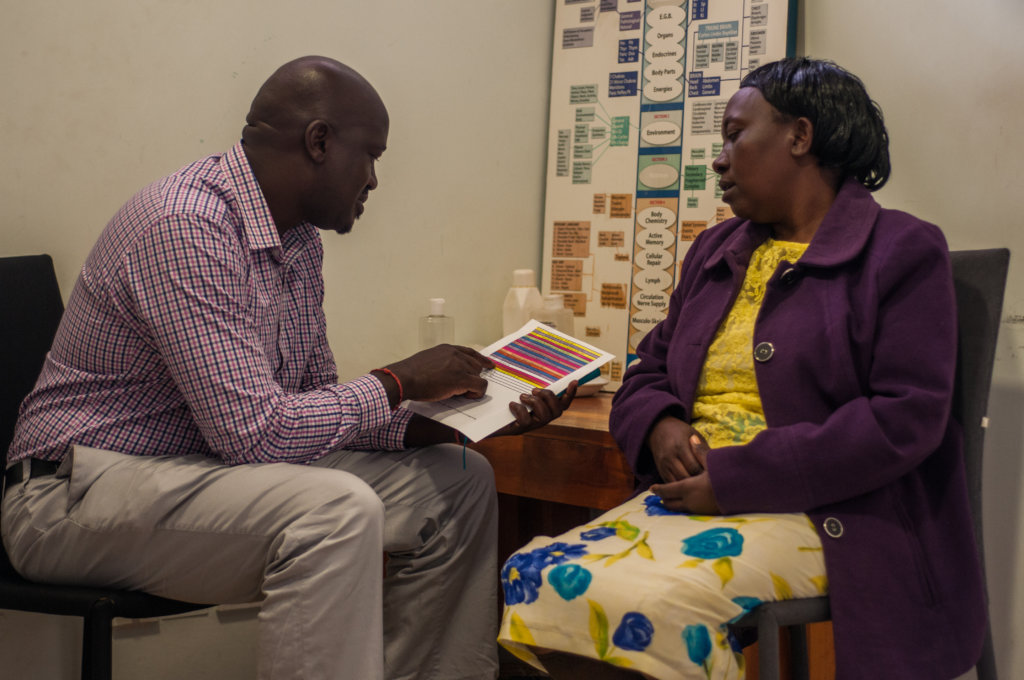
The doctor explained the next steps, including a CT scan and the development of a treatment plan.
Outside the office, her daughter waited.
The moment she saw her mother emerge, she rushed over, took the report, and searched online for the meaning of the diagnosis.
Silence followed.
As her daughter read, Lucy stood quietly, praying.
“I was asking God to carry me through.”
Then her daughter looked up.
The tears finally came.
“What hurt me most was thinking about my children. How would I face my daughter?”
But her daughter’s response became one of Lucy’s earliest sources of strength.
“She told me, ‘We will beat this.'”
Later that evening, her husband called from a safari.
Once again, Lucy found herself in tears.
“I cried and cried before finally telling him that I had cancer.”
His response never left her.
“He assured me that we would face it head-on; and most importantly, together.”
The waiting continued.
Long queues delayed her CT scan appointment, and Lucy briefly explored options at other hospitals. Eventually, she remained at KUTRRH and completed additional tests, including Immunohistochemistry.
The results helped shape her treatment plan:
Of everything that lay ahead, chemotherapy frightened her the most.
Like many people, she had heard stories about its side effects.
And then there was her hair.
“I had worn my locs for seven years. The thought of losing them was very difficult.”
Yet through every appointment, every consultation, and every difficult decision, she was never alone.
“My husband, my daughter, and my son were always there. They made sure I never went to the hospital by myself.”
For a long time, Lucy kept her diagnosis private.
Only her immediate family knew.
She did not want to burden her elderly parents, especially her father, who was preparing for surgery.
Then, on 7th November, the day she was scheduled to receive her first chemotherapy session, something remarkable happened.
She accompanied her father to one of his own medical appointments.
His results came back positive. This meant no medication and no surgery was needed.
Watching him receive encouraging news gave her unexpected courage.
“It strengthened me.”
That same day, she decided to tell her parents about her diagnosis.
Rather than fear, she found comfort.
“They encouraged me and reassured me.”
Soon after, she began chemotherapy.
Thankfully, the side effects were manageable.
Although she experienced hair loss, she remained determined to keep going.
Cancer changed many aspects of Lucy’s life.
To protect her immune system during treatment, she withdrew from many social activities.
She stopped attending church regularly.
She stopped going to chama.
She missed family gatherings.
Most of her time was spent indoors.
As often happens when people disappear from social spaces, questions and rumours began to circulate.
But Lucy’s focus remained on healing.
What she had not fully anticipated was the financial burden of treatment.
While SHA helped cover chemotherapy and surgery costs, hormonal therapy presented a new challenge.
The medication was unavailable at the hospital and had to be purchased elsewhere at a significantly higher cost.
The expenses quickly became overwhelming.
With treatment costs projected to reach nearly KSh 3 million, Lucy and her family were forced to fundraise from family and friends.
“It was difficult because I had tried to keep my diagnosis private. But I had no choice.”
It was during this period that she first heard about Faraja.
Through a support group at KUTRRH, she learned about the organisation’s work supporting cancer patients and their families.
“There were representatives from Faraja who were coordinating the support group, and they spoke about how they support families affected by cancer in Kenya. I decided to reach out and seek support.”
Faraja stepped in to cover four sessions of her hormonal therapy treatment.
But the support extended far beyond finances.
“I was received so warmly.”
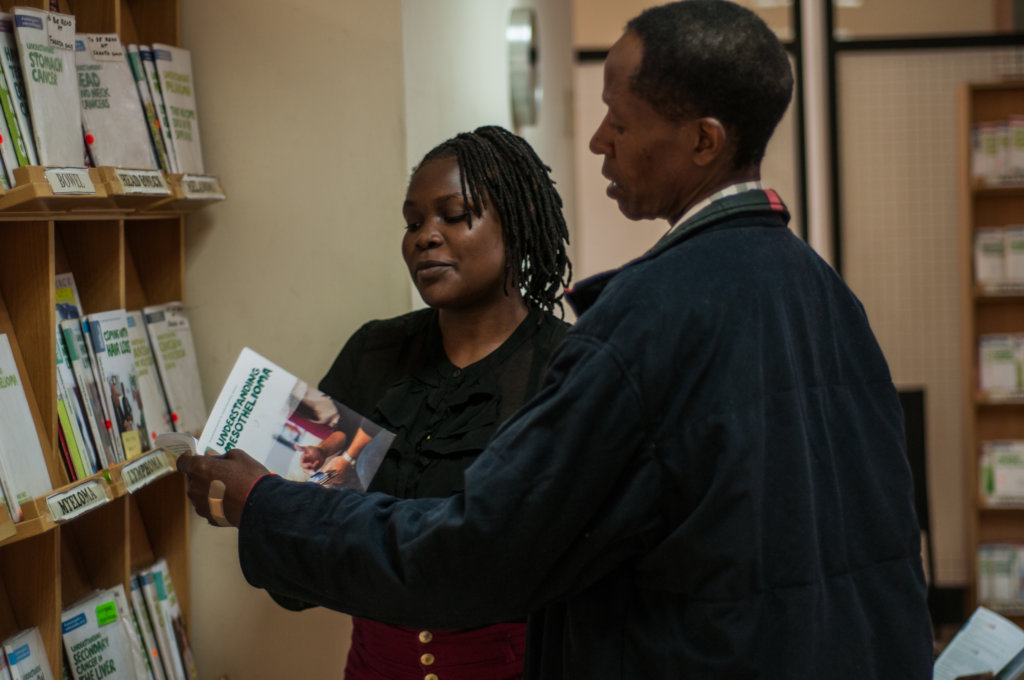
Through Faraja, Lucy attended patient empowerment sessions, support groups, nutrition talks, yoga classes, and creative activities such as embroidery. Some of these sessions were conducted virtually, making it easier for her to participate from home.
She also benefited from lymphatic drainage therapy. Following surgery, some of her lymph nodes had been removed, putting her at risk of developing swelling in her arm, a condition known as lymphoedema. The therapy helped improve lymphatic flow, reduce swelling, and made her recovery more comfortable.
“I have learned so much and met people who understood exactly what I was going through. Being around other patients made me realise I was not alone.”
Today, Lucy has reason to celebrate.
A recent CT scan showed no evidence of disease progression.
Receiving the news filled her with gratitude and renewed hope.
Reflecting on her journey, she says that support made all the difference.
“When I hear the name Faraja, I think of support, not only financial support, but emotional support too.”
And for those who may be standing where she once stood, newly diagnosed, frightened, and uncertain about the future, she offers a message drawn from her own experience.
“The first step is acceptance. Then have faith and surround yourself with a good support system.”
Throughout her treatment, Lucy often found comfort in scripture, particularly Isaiah 41:10: “Do not fear, for I am with you.” She says those words reminded her that she was never facing cancer alone.
“I believe it was my faith in God and the support of my family that pulled me through.
Faraja Cancer Support Trust offers a wide range of free services for anyone affected by cancer. These include free complementary services such as counselling, nutritional support, reflexology, lymphatic drainage, art and music therapy, support groups, and physical therapies like Zumba, all of which empower and build resilience to anyone affected by cancer, such as Judy.
Thank you for being a part of this life-changing work.
Project reports on GlobalGiving are posted directly to globalgiving.org by Project Leaders as they are completed, generally every 3-4 months. To protect the integrity of these documents, GlobalGiving does not alter them; therefore you may find some language or formatting issues.
If you donate to this project or have donated to this project, you can receive an email when this project posts a report. You can also subscribe for reports without donating.



Support this important cause by creating a personalized fundraising page.
Start a Fundraiser