We will be publishing a series of articles on the book "Shifting Perspectives" by Olivier de Brivezac and Emmanuel Comte. It is available in English and French (ISBN-10: 0976498650 and ISBN-10: 2747557588).
The book offers a series of vivid and easy-to-understand examples that help us to better understand our perception of difficult situations in life and the resulting effects on our psychological balance. We all have to cope with strokes of fate, illnesses, losses, difficult interpersonal relationships or other hardships. What then distinguishes people who apparently cope well with such difficulties from those who suffer greatly or even fall into despair from the conditions of their lives?
Here is a short excerpt from an earlier review of the book:
Most of us have probably had the experience of seeing only the negative side of things: complaining, blaming others for one's misfortune, not being satisfied with anything. If this state increases, every occurrence confirms the ill intention of others, every experience is an injustice. Sometimes we even go so far as to assume "that fate has conspired against us." This way of viewing life makes us pessimistic, demotivated, frustrated - it leads us to believe we are being treated unfairly or stirs up envy in us of all those "who are doing better off." It is easy to understand that this way of seeing things can lead to a lot of suffering. In their perception, the affected person lives on the dark side of life and feels persecuted by ill-intentioned contemporaries.
This is exactly where the book comes in. A person does not feel well, he suffers. Where does this suffering come from? On the other hand we often see people with difficult fates and who nevertheless go through life cheerfully and lightheartedly and even have the strength to cheer up others? Where is the difference? The authors see the answer in our thinking, in our way of perceiving things. Above all, our expectations, towards life or towards others, as well as the intentions we assume behind the actions of others, strongly contribute to our subjective perception.
This book attempts to provide us with means by which we can learn to diagnose "misconceptions" of our perceptions. On the basis of easily comprehensible testimonies of affected persons, the authors show how we can detect, recognize and define such thought structures in ourselves. Subsequently, the approach of "agathism" is presented and deepened. According to the authors, two aspects make up agathism: on the one hand, seeing things as they really are (realism), and on the other hand, seeing things from a positive perspective (optimism).
As a general rule, we can neither change external circumstances, nor the others. Therefore, it makes more sense to focus on the things that we can actually change. Among these changeable things is our own view/perspective on a difficult situation.
The challenge here is to take the "right" perspective. But what is the right perspective on a difficult situation we are currently in? This is exactly what we want to discuss in more detail in this series of articles. We will not only deal with the recognition of our distorted perceptions of a situation, but above all with the concept of agathism.
But is it enough to force ourselves to want to "see everything through rose-colored glasses" and to block out all bad experiences? We can certainly all give ourselves the answer ...
We will select individual topics and practical examples from the book and present them. The hope is provide help to cope better with the many challenges of life. To help better deal with stress, anxiety and other psychological problems that hinder our personal development.
Acknowledgements to the Fondation Ostad Elahi:
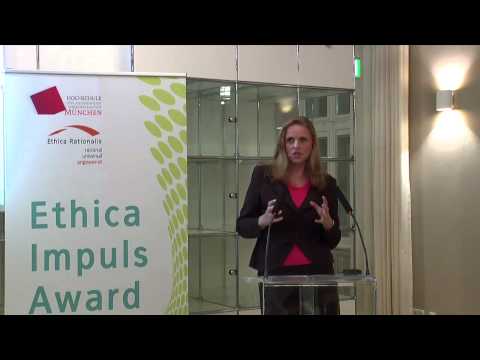
In this first article on the "Shifting Perspective" series, we would like to express our gratitude to the Fondation Ostad Elahi - Éthique et Solidarité Humaine [1], which granted us permission to present the content of the book in excerpts. However, all subsequent articles dealing with the content will not only be a repetition of the content, but we will always illuminate the content from the Ethica Rationalis point of view, i.e. we will focus especially on the practical application of the presented thoughts.
[1] Ostad Elahi, philosopher and musician, held a high judicial office, and his ethical reflections went far beyond his professional duties. Thus he became a sage of the 20th century. His philosophy of perfection, committed to both tradition and modernity, is to be understood as a response to the great questions that accompany man from the beginning and that are related to his identity and his raison d'être.
II "Shifting Perspectives (2)" - a difficult relationship
As announced in the previous article, we want to dive deeper into the topic of shifting perspectives by presenting practical examples from the book "Shifting Perspectives" by Olivier de Brivezac and Emmanuel Comte.
Generally speaking, as soon as we find ourselves in a subjectively difficult or stressful situation, the challenge is precisely to adopt the "right" perspective. But what is this right perspective on a given difficult situation? How and by whom is "right" defined? In this context, the adjective "right" describes the perception of the situation that is not only the least painful and stressful for the respective individual, but additionally offers the possibility to face a situation in a constructive and enriching way. It is not only about recognizing "misconceptions" in our perception of a situation, whereby a misconception is defined in such a way that our perception and evaluation of the situation makes us unhappy and we suffer from it. The counterpart to these misattitudes is the so-called "agathism". This refers to a perception that not only corresponds to reality - i.e. is not a fiction - but especially one that always includes the positive aspects contained in every situation, no matter how difficult it may be. This leads us to no longer feeling unfairly treated and misunderstood, helpless at the mercy of others and overwhelmed, and opens the door to self-determined, constructive action and higher resilience and satisfaction in life.
Let's get more concrete and examine the following situation to make the approach clearer: The example is about a difficult mother-daughter relationship under which both the daughter and the mother suffer:
My mother has many good qualities; she has done a lot for me and our family. I am well aware of this and, as a child, have a moral duty to respect her. Nevertheless, my mother has faults that are immediately obvious to others: a lack of tact and tactfulness, which is why I was ashamed of her for a long time, and she still often embarrasses me in company. For many years this quality in her bothered me and I suffered from it. All the petulant remarks I made in this regard only angered her and made her even more bitter. I focused completely on her faults until I saw only those and nothing else. I am well aware that I was wrong to do that. This doubled my suffering: on the one hand I could hardly bear my mother's mistakes, on the other hand I suffered from remorse because I felt exactly that I owed her respect and that my reproaches were misplaced....
What would now be a constructive and positive approach to resolve this conflict or at least make it easier to bear? Is it enough to force oneself to only want to see the good qualities and simply fade out all the bad qualities? In other words, just to "change my glasses" and from now on see everything only pink (positive) as far as the mother's behavior is concerned? If it were only so simple ... - one will not be able to avoid to work on the entire view. You can already guess that this process will require a lot of patience, can only proceed gradually and requires practical "exercise". One will not be able to take a more balanced view of one's situations in life and other people overnight.
So agathism is a learning process. It is not about blind optimism ("everything is rosy and everyone is good"), nor about reaching a state of indifference. On the contrary, it is about looking behind situations, understanding their triggers and mechanisms in oneself and others, and then drawing the right conclusions for thinking and acting ethically.
The first step could be that the daughter consciously begins to see the mother in her entirety. In other words, she should not only look at her mother's supposed faults that bother her, but should consciously focus on her mother's qualities, her strengths, and all the good things she has done for her daughter and the family - this leads to a broadening of perspectives.
A second step may be for the daughter to practice forbearance and consciously adopt a more understanding and tolerant perspective. She can ask herself: why does my mother often behave in such an unpleasant and tactless way, what have I possibly contributed with my behavior to her behaving in this way towards me and others - in other words, pursue the question of whether the trigger for my mother's behavior could also lie in myself? So what am I contributing (in a negative sense) to the situation? What is my part?
A third step could then be for the daughter to set herself a program with this new, consciously changed attitude toward her mother. This program (this homework) could be to engage more in direct exchange with her mother. Especially this point is of enormous importance, because it is not enough to work on the thoughts towards the mother. It is easy to deceive oneself and this work would not be profound enough. Only the reality, i.e. the direct exchange with the mother and the direct confrontation with the character traits of the mother and one's newly adopted, broadened perspective will show whether one has actually managed to achieve a real change of perspective. From experience, this will require a lot of direct exchange, where one will find oneself falling back into old patterns of thinking and behavior and one's reductive view of things over and over again. Without the repeated practice of the expanded view and this new, holistic pattern of thinking, there will be no lasting change of perspective.
Such a program will only be successful if the pressure of suffering in the respective situation is strong enough to experiment with a new approach. The goal here is to feel less stress and suffering, to get to know oneself and one's own impulses and desires better, and to approach other people in our lives with greater understanding and a more comprehensive view of the situation at hand.
Our next article will look at the forms of the "negative" view (pessimism).