By Randy Brown | Project Manager
Due to the ongoing Covid situation we are still unfortunately unable to hold any live events and have therefore continued to focus more on other activities.
For the 2nd quarter of 2021 we would like to report on 3 topics
1. A Podcast with our Partner ‘Bridge of Hope’
2. A new Ethical Dilemma: A walk along the promenade
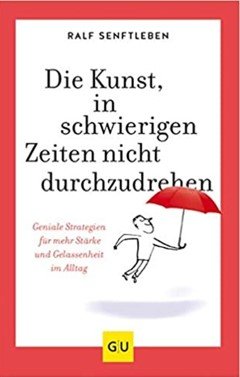
3. Book review: The art of not going nuts in difficult times: Ingenious strategies for more strength and serenity by Ralf Senftleben
##############.
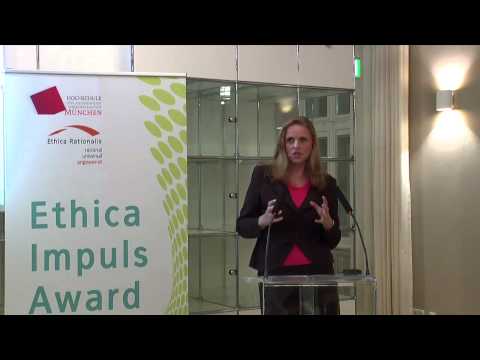
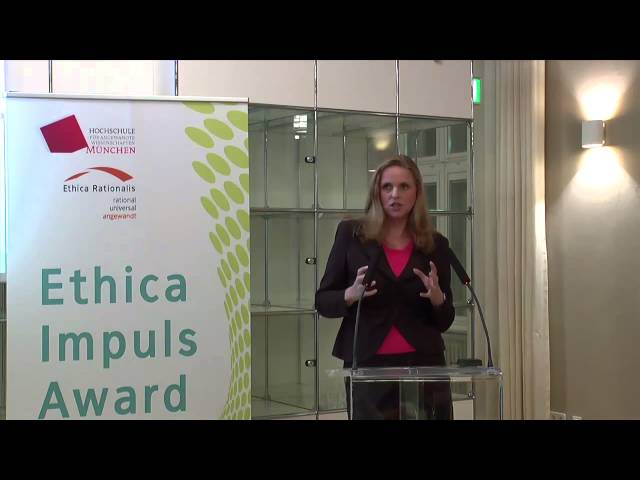
1. Video podcast with Arnd Weil from Bridge of Hope - "Poor and yet happy"
What motivates people to "quit", to give up their professional life and to take a completely new path, although they are still "in the best years" in terms of their professional careers and are still far away from retirement age?
We had already invited Arnd Weil from Bridge of Hope to tell us about his reasons for "stepping out" at a PhiloBrunch in autumn 2018, with the title “Life was good to me; it is now time to give something back! Experience report of a dropout”. His foundation Bridge of Hope, which he co-founded, and his projects in Tanzania were still in their infancy. We continued to support him and his foundation and then published an update on his projects in spring 2019. We just wanted to see what happens next and of course also satisfy the curiosity of our readers and PhiloBrunch participants as well as our own.
We stayed in contact over the years and then, during an exchange of ideas at the end of 2020, we found that Arnd had so many interesting experiences through his foundation work in Tanzania, be it in direct exchange with people on site, be it in within the framework of the foundation's work, be it in project work or in development cooperation, we quickly came to the conclusion that we had to post another article. This time, however, we decided to do a video podcast. The advantage is obvious: you can perceive Arnd and his message so much more directly.

The topic had to be something that was fully in line with the Ethica Rationalis DNA - the practical application of ethics. We wanted to find out what exactly Arnd and the Bridge of Hope are doing on site in Tanzania, especially in the field of education. But of course, we also wanted to know more about his personal experience in exchange with the local people. How do other peoples/cultures see themselves and the world? How do they deal with the daily challenges of life? What can we here in the West learn from a different view of things, often shaped by other living conditions, and thereby broaden our own horizons? And so we quickly came up with the title of the video podcast: “Poor and still happy ?!”. Whether the title is meant as a question (?) Or as an answer (!), Or even as both (?!), is up to the viewer to explore.
Here is what you can find in the podcast:
00:24 - Why did you decide to establish Bridge of Hope?
03:23 - What does applied ethics mean for you personally?
03:58 – Why'Bridge of Hope'? Why did you make 'Bridge of Hope' the focus of your life?
05:38 - 'Poor and still happy ?!' Question or statement?
07:09 - Here in the western world, our own satisfaction with life often depends on external circumstances. What experiences have you had with the people in Tanzania?
08:52 - What role do beliefs play?
11:53 - What does 'poor but still happy' mean?
13:08 - What role do technological innovations in education play in development aid? What does Bridge of Hope do in this context?
17:09 - Can you explain to us how you experienced the application of the Golden Rule in Tanzania?
19:32 - What can we in Germany learn from the people in Tanzania?
The Ethica Rationalis editorial team hopes you enjoy the video podcast!
https://www.youtube.com/watch?v=TzwwrwFAxQY
####################.
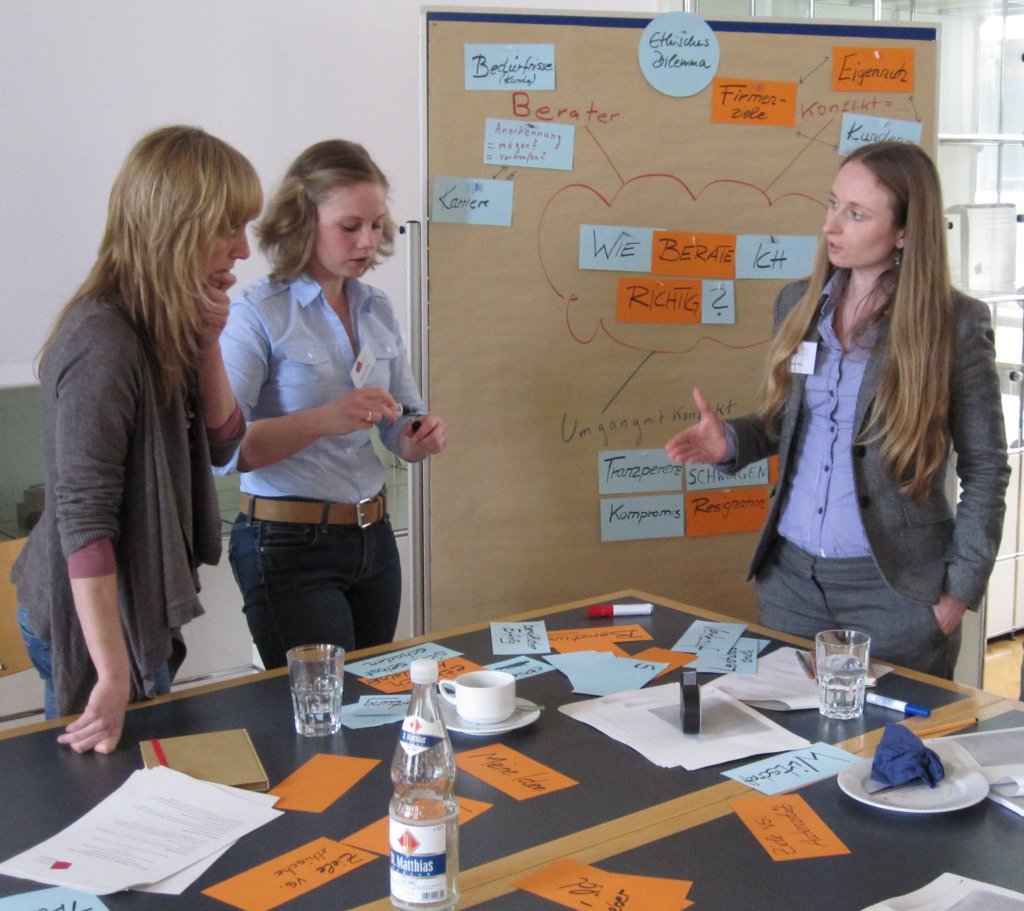
2. A walk along the promenade: an ethical dilemma - what do you think?
As part of our series of Ethical Dilemmas, which we have been doing since 2017, we would like to introduce you to another ethical challenge. Read Katharina's report below and cast your vote. Please note that it is not a question of ticking the 'right' or 'wrong' answer. Reality is far too complex. Even though the report is true, the exercise is virtual. The sole purpose of this survey is to encourage reflection and exchange.
A walk along the promenade

23-year-old Katharina has just arrived in Nice to study abroad. She is very tired from the trip, but happy. She has just toured her university “Université Nice Sophia Antipolis”, which is only a 10-minute walk from the beach.
Katharina is from Northern Germany and loves surfing. So she loves being close to the sea. She rented a car at the airport for the first few days in Nice and drove straight to the beach. Katharina parked the car with all her luggage near the Promenade des Anglais to enjoy the sun and the sea view. Then she walked the short distance to her university for a quick tour Now she just wants to go to her dormitory and relax from the trip.
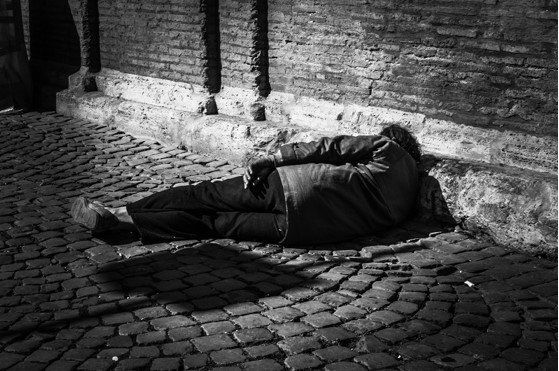
Suddenly she stumbles over the feet of a homeless man who is lying motionless on the ground. Out of sheer euphoria, Katharina only had eyes for the palm-lined, impressive promenade of Nice with its many people. She hadn't paid attention to her steps. Now she stands in front of this motionless body.
She actually wants to go to bed in her new home as soon as possible. Katharina weighs her options. There are plenty of people on the promenade who could take care of the homeless man. They can certainly speak French better than she can. Then again, none of them tripped over him directly. Maybe the other passers-by haven’t even noticed him, Katharinais unsure. She would prefer to just keep moving along.
What would you do if you were Katharina?
These are the options we offered to our readers (the percentages show how many people selected which option).
a) I would just keep walking. I'm too tired and the homeless man is surely just sleeping off his intoxication. (4%)
b) I would look around to see if anyone else has noticed the homeless person and see how they react. (2%)
c) I would speak to a passer-by and ask if they could help me. (16%)
d) I would speak to the homeless person and try to find out if he is just sleeping or if he needs help. (55%)
e) I would speak to a passer-by and ask for the emergency number. Just arrived in France, I don't know this number yet. (2%)
f) I would speak to a passer-by and ask if he could call the emergency doctor. With my little knowledge of French, I don't feel up to the situation of explaining my concern over the phone. (18%)
g) None of the above answers. (4%)
####################.
3. Book Review: The art of not going nuts in difficult times: Ingenious strategies for more strength and serenity by Ralf Senftleben
These are certainly tough times we are living in: a pandemic shaking the world, economic insecurity, destabilization of democracies, racism, extremism, isolation through pandemic measures, isolation through digitization, the looming conflict between the West, China and Russia, corruption, economic disruption by new technologies and business models (e.g. electromobility, Uber, amazon, etc.), the desolation of inner cities, Industry 4.0, climate crisis, energy turnaround, injusticeseverywhere you look.

All of that can really take a toll on us, it can make us feel stressed, nauseous, even leading up to tangible panic attacks. One can easily get the feeling that we are losing control, or we are overwhelmed. But some people cope better with this burden. What distinguishes these people from all of us who groan and moan under the circumstances? It cannot be a carefree life, because everybody is confronted with problems and difficult situations. Interestingly, it is often the people with the most difficult circumstances who go through life positively and constructively and can also support and help other people. What clearly distinguishes these people is 1) their attitude towards problems and adversity, and 2) a clear focus on circumstances that they themselves can influence.
The book “The art of not going nuts in difficult times (2020)" uses ten principles to teach us how to react to the chaos in our head and around us with distance, a clear view and prudent action.
Who should read it?
o Those interested in psychology
o Anyone who is on the verge of going nuts
o People who want to get through everyday life happier and more balanced
Based on 10 principles, the author shows strategies to tackle the everyday stress that surrounds us more calmly, smarter and more confidently. This is particularly important when we are in situations that stress us or even overwhelm us.
A brief overview of the principles that are highlighted in the book:
This principle consists of becoming aware that a lot of things like corruption, war, violence, or the corona pandemic can affect us very much, but all of these things have one thing in common, and that is the fact that we ourselves have little to no influence on these things. Even if we take a look at things closer to us, such as the mood of our neighbours or the health of our family, then here too we have little influence on them. Here we can either react to this loss of control with stress and anxiety or we can take a different perspective: focus on what you can change!
What do we have an influence on? What do you do, who do you spend your time with? Or how do you design your environment. This redirects your (limited) energy to concrete, useful things that you can directly or indirectly influence yourself.
We cannot change the world out there, but we can change our own behavior!
Don't wait until you burn out! Become aware of all of your tasks and decide whether you really have to do them or if you should hand them over to somebody else.
When you find the right task/job/vocation for youself, you will gain meaning, stable support and perspective.
The world is certainly not perfect. But it is better than it often appears to us.
We should get into the habit of regularly looking at things that are already going well and make gratitude a daily ritual.
It is up to us how we feel and react, because reality is to a large extent the subject of our very own interpretation.
Keep a healthy and friendly distance from your feelings and don't take them too seriously.
Dwell less in the past and in the future, instead live in the moment.
• Principle nine: Follow your inner compass of values
Make yourself aware of your values and follow them in everyday life.
The best way to face problems is to actively seek solutions or make peace with them.
As you can see from the chapter headings, the strategies behind the individual principles are well thought-out and proven. But, as always, the key to making lasting internal changes and internalizing these principles is to build them into our thinking through active practice and living these principles.
For example, you can try to keep a change diary, i.e. to observe and evaluate for yourself what experiences you have made with the implementation of the principles.
What you get when reading and internalizing the thoughts in this book are concrete and very pragmatic tools to have a positive effect on yourself.
Have fun and success with the reading and even more with internalizing and practicing!
• Publisher: GRÄFE UND UNZER Verlag GmbH; 3rd edition (November 5, 2020)
• Language: German
Project reports on GlobalGiving are posted directly to globalgiving.org by Project Leaders as they are completed, generally every 3-4 months. To protect the integrity of these documents, GlobalGiving does not alter them; therefore you may find some language or formatting issues.
If you donate to this project or have donated to this project, you can receive an email when this project posts a report. You can also subscribe for reports without donating.