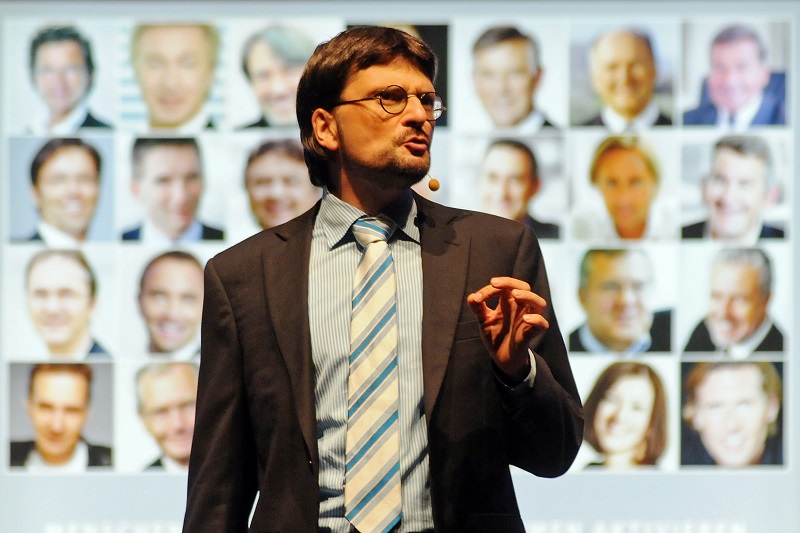
Picture by Wolfgang List
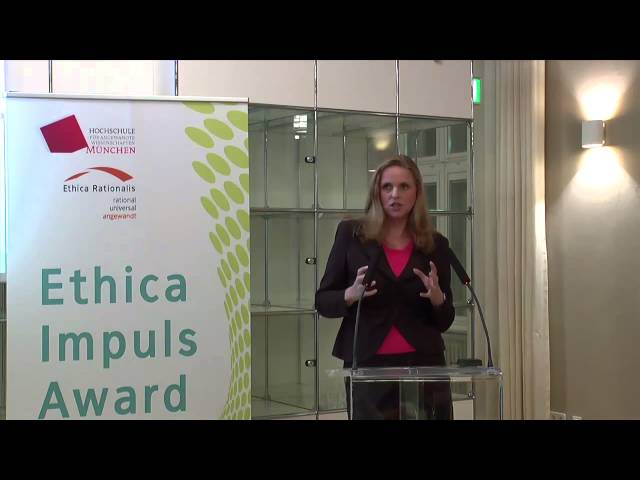
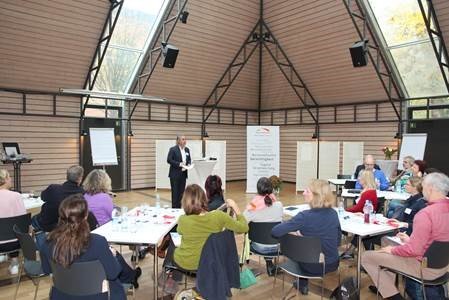
Who wouldn't like to take a look into the crystal ball? Erik Händeler somehow always carries one with him, but his prognoses for the future are not spiritual, but are based on sound research. His assumptions are based on the Kondratieff theory of long structural cycles. Erik Händeler is a futurologist. In our Philobrunch on April 13th he showed us the world of tomorrow.
A historical paradigm shift
Past changes to life and work, were for example the steam engine or electricity. Today it is digitalization that has ushered in a paradigm shift. But what's next? In order to make a projection for the future, it is first necessary to look into the past. According to the Kondratieff theory, innovations occur cyclically, in so-called long waves. These phases are triggered by disruptive technologies that increase productivity and thus lead to economic growth. When the productivity growth is exhausted, stagnation occurs. This consideration of the economic upswing and downturn is referred to as a Kondratieff wave. The first Kondratieff wave was generated by the steam engine, followed by the railway and electrical engineering. The 4th period was characterized by the automobile, today we are in the 5th cycle, the information technology*.
But how did these world-changing inventions come about? According to Händeler, there is always an economic necessity for innovation. Because when something becomes scarce, there is a need for something new. For example, the railway was invented because of logistical bottlenecks. Looking back, it all sounds very logical. But "what is the next bottleneck in developmental history", to put it in Handeler's words. The days when computers made the world more productive are long gone. And so the question is:
What will the history books refer to as the 6th Kondratieff wave?
According to Händeler: Health and dealing with knowledge.
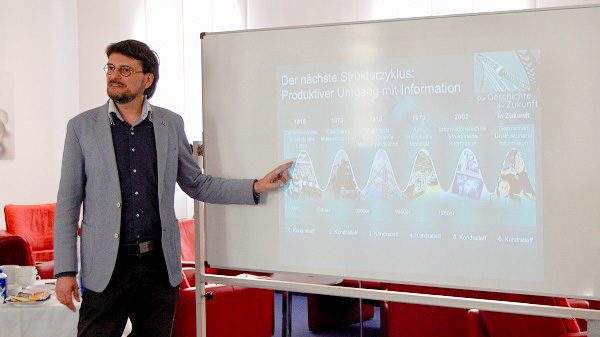
According to the futurologist, this is not about working harder, but about classifying knowledge. Big data is almost is already old-school in business. Data and knowledge multiply inexorably. The challenge is being able to deal with that and process the information acquired. There is no longer anything like the universal scholars of the past. In order to master the complexity of unstructured knowledge, we need people with a very broad general education on the one hand and specialists with deep niche competence on the other.
"Rubber hierarchies" are becoming more and more important
The reason is simple: thanks to globalization, a high-performance computer with exactly the same productivity can be located in many different parts of the world. Because it is able to perform the same calculations from any location. But the decisive difference are the people behind it. Those who can make more out of the results/knowledge will survive in the competitive environment. And one person alone will be able to do less and less. Interdisciplinary teams working on topics at eye level are the key to more productivity.
Personal sensitivities, power thinking and status orientation are counterproductive. More than ever, "rubber hierarchies" (as Händeler calls them) are needed. Today you are part of one team, the day after tomorrow you move to a different project. We need to dissolve rigid structures in order to increase productivity again, and knowledge exchange must take place bilaterally. Given today's information flood you cannot have your knowledge bearers only at the highest hierarchical level. Together rather than against each other is becoming more than ever a key success factor.
Scarcity is the driver of change. According to Händeler, mental and physical health is increasingly becoming a rarity.
The individual as part of a team becomes more and more important. If the construction worker used to lack the strength, he was provided with a jack hammer to boost productivity. Today we increasingly work in an "thought world" in which planning, consulting and organizing are essential tasks. The skills of the individual are no longer so easily replaceable. The shortage of skilled workers is becoming ever greater and special skills are in high demand. However, the best education won't help if you cannot utilize your competence due to a lack of health.
Looking to the future: focus on people
Summarizing the two future prognoses "Dealing with diffuse knowledge" and "Health", it becomes clear how much the the individual is moving into the foreground. Companies that universally act ethically (those that treat people with dignity) will be successful. Mobbing and the dog-eat-dog mentality were yesterday - today it is about appreciation and investment in health.
Participants raised the question whether we run the risk of neglecting people if we only focused on productivity? Putting people's health into the foreground, is indeed economically justified: burnout is not productive, so we should work to eliminate it. That is only rational. The fact that the individual benefits from increased efficiency is just an additional positive side effect. But Händeler also emphasizes that this is not the ultimate purpose. Our actions ought to stem from an ethical motivation. Acting economically entails social responsibility. But not only the company founder has a charitable mission. In order to promote a healthy environment, each and every one of us can contribute, e.g. by taking responsibility for our fellow human beings, and being willing to reconcile and cooperate. Health is always a combination of body and mind.
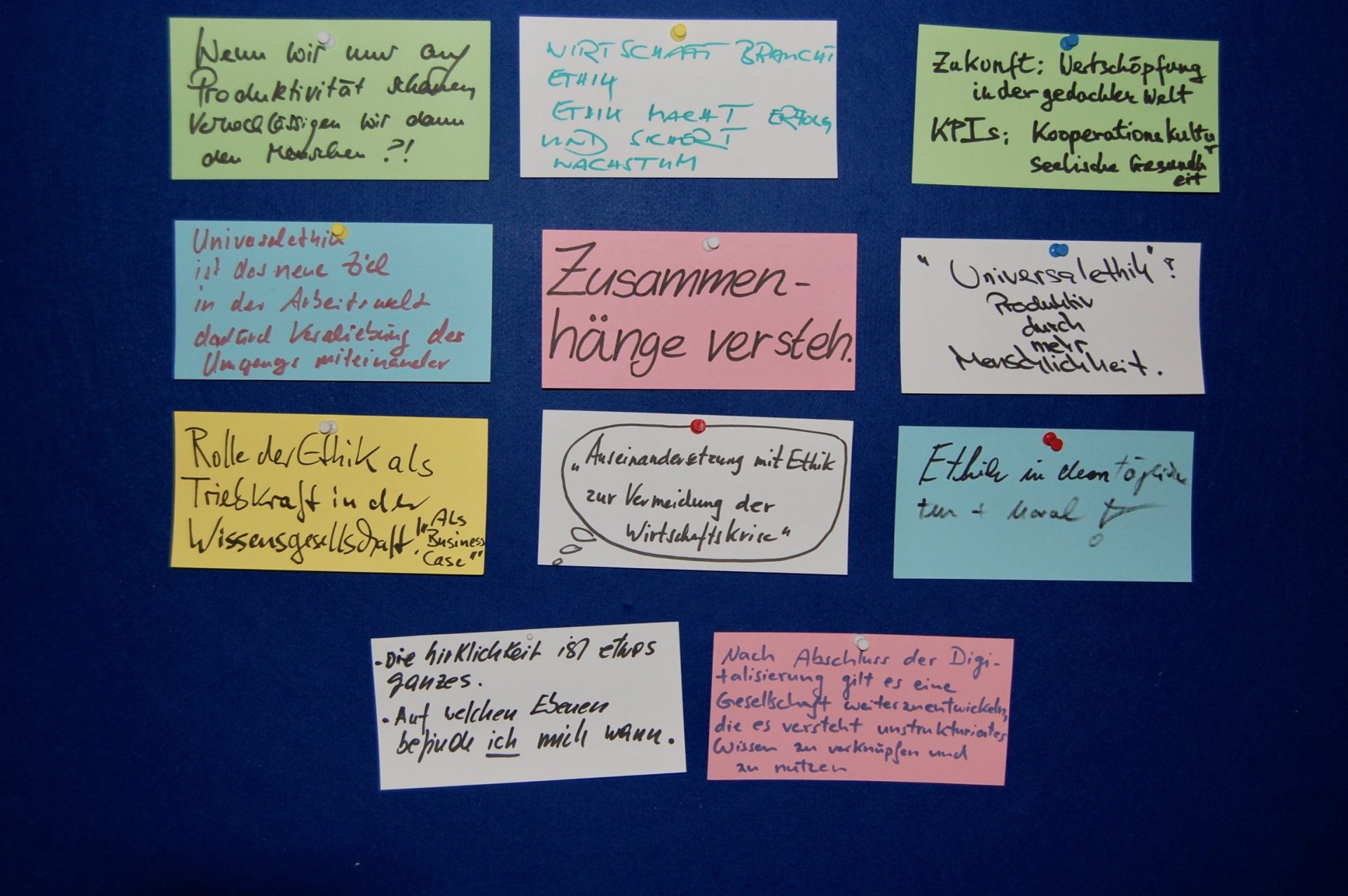
The higher the degree of digitization, the more important the person behind the technology becomes.