End Period Poverty: Help Keep 2000 Girls in School

by Health and Water Foundation
End Period Poverty: Help Keep 2000 Girls in School

Project Report | Nov 9, 2026
2nd & 3rd Quarter Report 2026

By Patrick Kiarie | Programs Officer

1. Project Overview

Between April and September 2026, the Girls' Education and WASH Project moved from planning to building. In the first quarter we completed the site assessment, design review and community consultations for a second gender-segregated toilet block at Nyanturago Primary School. Over the last six months we broke ground at Nyanturago, brought 25 more girls into the programme, launched our local sponsorship scheme, and widened the circle of teachers and parents who keep menstrual health on the school agenda in Kisii County.

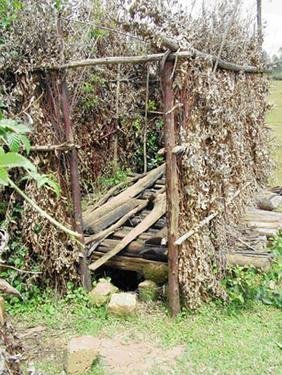
Our goal has not changed: no girl should miss school because she has her period, and no school should force girls to choose between an exposed latrine and going home.

2. Progress Summary

  • Funds raised this period (all channels, including GlobalGiving): USD 2,000
  • Girls sponsored this period: 25
  • Girls sponsored since January 2025: 70
  • Teachers active as WASH Champions: 16 across four schools, up from 10 in the first-quarter pilot
  • Parents and guardians reached through forums: 110

Nyanturago Primary School toilet block

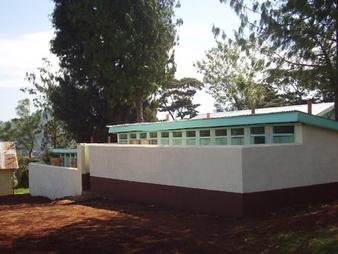
Construction began in May 2026. Our contractor worked alongside the school board of management and the local leaders who pledged their support in the first quarter, and parents contributed labour, sand and water to keep costs down. By the end of September the walls and roof were complete and finishing works were under way: doors, floor screeding and the handwashing station. The six-door block, built to the same design as Kerongo, gives girls private, lockable cubicles, a handwashing point and a space to change and dispose of pads with dignity.

Sanitary kit distribution

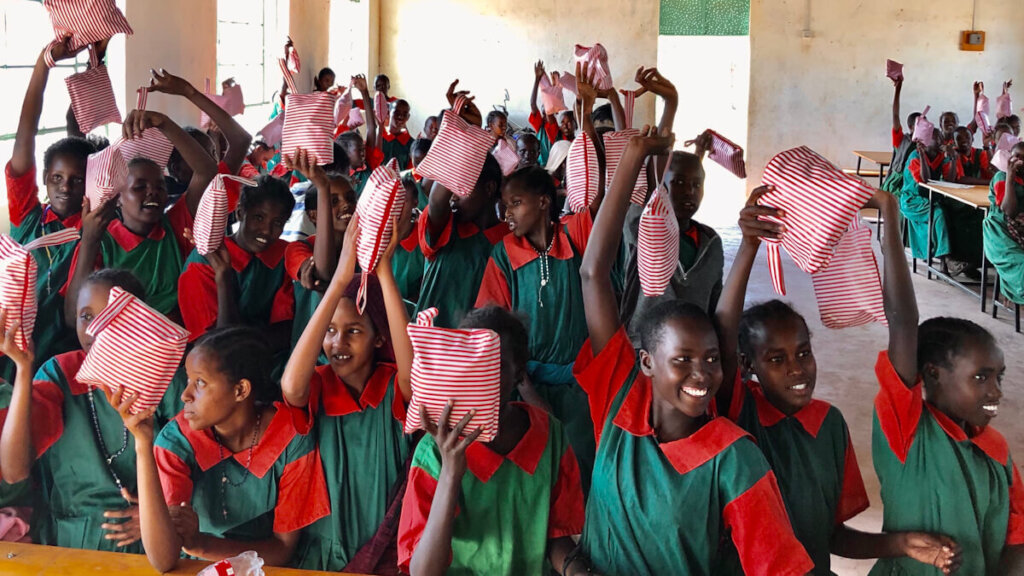
We supported 25 girls with reusable menstrual hygiene kits, soap and storage containers, beating our first-quarter target of 20. Every distribution came with a practical session on use, washing, drying and safe storage. Follow-up visits to 40 girls supported in 2025 and early 2026 found 36 still using their kits correctly; the remaining four received refresher guidance and replacement items.

Teacher WASH Champion Programme

The pilot group of 10 teachers grew to 16 across four schools. Champions lead regular hygiene sessions, keep a small emergency stock of pads in school, and act as the trusted adult a girl can approach when her period starts during lessons.

Parental engagement forums

We held three forums with 110 parents and guardians at Kerongo, Nyanturago and one neighbouring school. The discussions confronted the myths that keep girls at home during their periods and asked fathers, as well as mothers, to budget for sanitary supplies as they would for uniforms and books.

Adopt-a-Girl sponsorship

In July we launched Adopt-a-Girl, the local sponsorship model we committed to at the end of 2025. Seven individual sponsors in Kisii and Nairobi now cover a full year of kits and hygiene training for 12 of the girls supported this period. This is the start of a funding base that does not depend on a single donor.

Partnership with Kisii County

Our collaboration with the Kisii County Department of Health continued, with two joint health talks for pupils and one monitoring visit to the project sanitation facilities.

3. Impact Highlights

  • Girls supported through the project report attending school through their periods, and teachers confirm that sanitary-related absence among them has become rare.
  • The Kerongo Primary School block, completed in December 2025, remains in full daily use and is kept clean by the school WASH committee and a pupils' rota.
  • WASH Champions now handle menstrual health questions openly in class, and girls no longer need to invent excuses to leave a lesson.
  • Two neighbouring schools have formally asked to join the programme after seeing the Kerongo and Nyanturago facilities.

4. A Girl's Voice

Nyaboke, 13, is a Grade 7 learner at Kerongo. Before this year she stayed home for three or four days every month, using old cloth and afraid of being laughed at. She received her kit and training in May. She has not missed a school day because of her period since then, and in the second term she joined her school's science club, something she says she would never have dared to do before.

Name changed to protect her privacy.

5. Challenges

  • Construction costs: Cement, iron sheets and transport remain above our original estimates. This slowed the Nyanturago works and is the main reason the block was not finished by the end of September.
  • Demand outpaces supply: Two more schools have asked to join, and more than 60 girls in our current partner schools still lack reliable access to sanitary products.
  • Recurring need: Reusable kits wear out, so every girl we support carries a recurring cost rather than a one-off one. Sustained monthly giving matters more to this project than single large gifts.
  • Stigma: In the more remote villages, beliefs that menstruation is shameful still keep some girls silent and at home. This calls for patient, repeated engagement with families.

6. Next Steps (October to December 2026)

  • Complete and hand over the Nyanturago block, with a school WASH committee trained to maintain it.
  • Distribute kits to 30 more girls before the December holiday so they start the 2027 school year covered and we reach our target of 100.
  • Run our end-of-year survey on attendance and performance among supported girls.
  • Confirm the site for the third toilet block and open community consultations.
  • Present the project model to the Kisii County Government for inclusion in public school improvement plans.

7. Where We Stand Against Our 2026 Goals

  • Support at least 100 girls: 70 reached by September; 30 more planned by December.
  • Construct three gender-segregated toilet blocks: Kerongo complete; Nyanturago in finishing works; third site shortlisted.
  • School WASH committees: Established at Kerongo; Nyanturago's committee forms at handover.
  • Local sponsorship model: Adopt-a-Girl launched in July with seven sponsors.

8. Thank You

To every donor, teacher, parent and community leader who stood with us this year: thank you. Your support is the reason a girl in Kisii County can sit through a mathematics lesson without fear, and the reason a school that once had open pits now has doors that lock.

Here is what your next gift does:

  • USD 25 provides sanitary ware and hygiene training for five girls for a month.
  • USD 50 keeps one orphaned girl supplied and trained for a full year.
  • USD 1,000 builds one complete toilet unit with handwashing.

Donors in Kenya can give through M-Pesa Paybill 891300, Account GG67047.

Thank you for standing with the girls of Kisii County.

Share on Twitter Share on Facebook

About Project Reports

Project reports on GlobalGiving are posted directly to globalgiving.org by Project Leaders as they are completed, generally every 3-4 months. To protect the integrity of these documents, GlobalGiving does not alter them; therefore you may find some language or formatting issues.

If you donate to this project or have donated to this project, you can receive an email when this project posts a report. You can also subscribe for reports without donating.

Sign up for updates

Organization Information

Health and Water Foundation

Location: Nairobi - Kenya
Website:
Project Leader:
Health and Water Foundation
Nairobi , Kenya
$777 raised of $205,000 goal
 
4 donations
$204,223 to go
Donate Now

Help raise money!

Support this important cause by creating a personalized fundraising page.

Start a Fundraiser

Learn more about GlobalGiving

Teenage Science Students
Vetting +
Due Diligence

Snorkeler
Our
Impact

Woman Holding a Gift Card
Give
Gift Cards

Young Girl with a Bicycle
GlobalGiving
Guarantee

Get incredible stories, promotions, and matching offers in your inbox

WARNING: Javascript is currently disabled or is not available in your browser. GlobalGiving makes extensive use of Javascript and will not function properly with Javascript disabled. Please enable Javascript and refresh this page.