By Ana Laura Godinez | Project Leader
During this period, Fondo Semillas is accompanying 38 organizations working to prevent and address violence across all 32 states in Mexico. Together, these organizations are made up of 557 activists and are expected to directly reach approximately 38,500 people in the following 18 months.
The organizations work with diverse populations, including girls, young women, and adult women, as well as Indigenous, Afro-descendant, and women with disabilities. Their work also reaches lesbian women, trans people, trans men, non-binary people, older women, bisexual people, sex workers, and intersex people*.
They are employing a wide range of strategies to prevent and respond to violence. These include education and training, accompaniment and direct support, the creation of safe spaces for gathering, reflection, and emotional support; communication and narrative change, capacity strengthening and autonomy-building, community organizing and advocacy.
Many of them also focus on defending and expanding access to rights, particularly in relation to justice, sexual and reproductive health and rights, abortion, the search for missing persons, and the right to live free from violence. Others use digital tools and technology to strengthen participation, protection, monitoring, and access to information, while cultural, artistic, and sports-based practices are used to strengthen agency, visibility, and collective organizing.
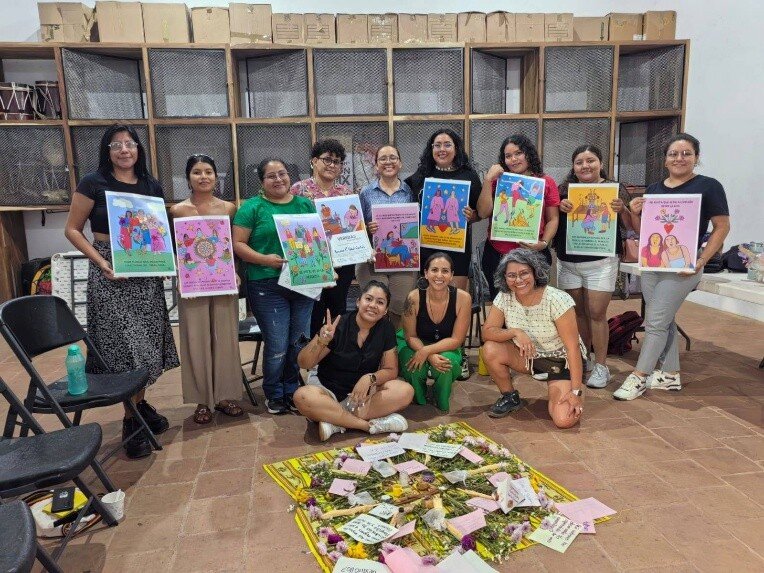
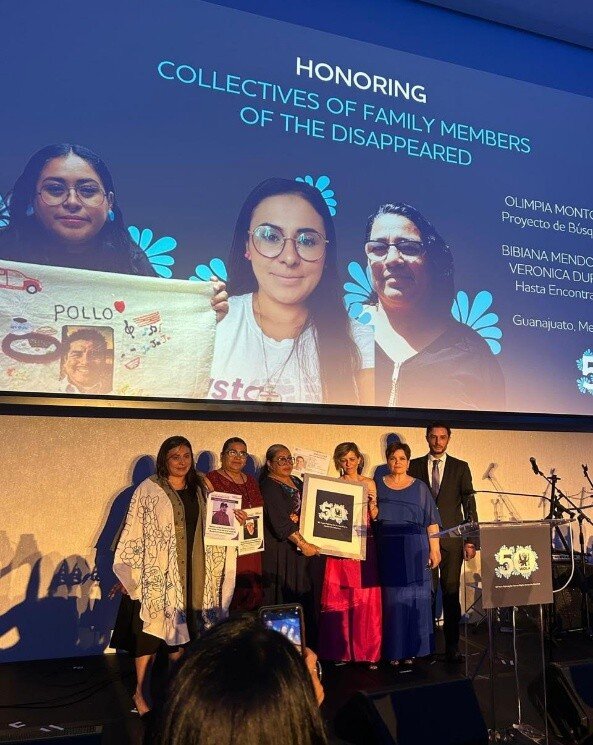
For example, Hasta Encontrarte works to advance access to justice, truth, and memory for families of people who have been disappeared, primarily in Guanajuato, while also working across Sinaloa, Mexico City, Baja California, Zacatecas, Jalisco, and Querétaro.
The organization currently accompanies 168 women within its network, most of them women relatives of people who have been disappeared. Its work combines practical accompaniment with collective action: members hold meetings with families, review case files, accompany the identification of remains, conduct field searches, organize talks at universities, and provide training to other search collectives. They also work to sensitize authorities and other institutions to the realities faced by families searching for their loved ones.
The search collectives’ work has also extended into public spaces and national moments of visibility. During the 2026 FIFA World Cup, which included matches in Mexico, groups of women searchers organized marches and public actions to draw attention to the country’s disappearance crisis, recognizing that international attention would be focused on Mexico. These actions were met with repression and other forms of violence against the collectives, underscoring the risks faced by women who publicly demand truth and justice.
Also, Búsqueda de Familiares Regresando a Casa, Morelos works in Morelos and Guerrero, accompanying approximately 200 women. Its work seeks to challenge narratives that criminalize people who have been disappeared, strengthen the autonomy of women searchers, and sustain those engaged in the search for their relatives.
Like Hasta Encontrarte, the organization combines search and justice strategies with community engagement: it works in schools to raise awareness, participates in the identification of remains and searches in the territory, reviews case files, and creates spaces for self-care and collective support.
In May 2026, the organization monitored the exhumation process of an irregular grave in Jojutla, Morelos. It also installed a peace mailbox in the community and uses its social media platforms to disseminate search posters and amplify cases of missing people.
Veredas Psicosociales, based in Oaxaca, focuses on addressing the effects of political and social violence experienced by women activists and human rights defenders, particularly among Indigenous communities. Its strategy centers on individual and collective care and healing, providing psychosocial accompaniment to help activists process and respond to the violence affecting their communities.
The organization has also contributed to public reflection through its article Desensibilización a la Violencia, which explores how people living in contexts of persistent violence may become emotionally desensitized as a way of adapting and protecting themselves. As the article explains, “When violence is persistent and structural, the body and mind seek to protect themselves by reducing the intensity of emotional responses.”
During these months, Veredas also worked on the second edition of the Community of Practice: Strengthening Civic Space in Oaxaca, together with other human rights organizations, creating a space for exchange and collective learning among groups working in challenging contexts.
Cuidados D-mentes is receiving accompaniment from Fondo Semillas for the first time. Based in Oaxaca, the organization works to challenge the pathologization of psychosocial disabilities among women and people of diverse sexual and gender identities.
Their strategies include workshops, training processes for first-level psychosocial care providers, engagement with the health sector, and the development of a planned Southern Congress on De-pathologizing Dialogues on Madness, which aims to open space for alternative understandings of mental health, disability, and care.
Finally,Ddeser Tlaxcala focuses on the prevention, intervention, documentation, and response to sexual violence, the disappearance of girls, adolescents, and women, and trafficking for sexual exploitation across 20 municipalities in Tlaxcala. Its approach combines community education and public awareness with prevention and access to information. The organization conducts forums, social media campaigns, and workshops with children and adolescents on sexuality, violence prevention, and serious crimes.
Through its social media platforms, they also disseminate information on gender-based violence, access to health services for women and people with the capacity to become pregnant, accompaniment services, and trafficking prevention. Together, all these strategies seek not only to respond to violence when it occurs, but also to strengthen knowledge, agency, and collective capacity to prevent it. In the following months, we will continue following up and sharing the advances of the organizations’ work.
Project reports on GlobalGiving are posted directly to globalgiving.org by Project Leaders as they are completed, generally every 3-4 months. To protect the integrity of these documents, GlobalGiving does not alter them; therefore you may find some language or formatting issues.
If you donate to this project or have donated to this project, you can receive an email when this project posts a report. You can also subscribe for reports without donating.



Support this important cause by creating a personalized fundraising page.
Start a Fundraiser