By Adriana Sanabria | Adriana Sanabria
Environmental education program
For the environmental education component, the children of La Amapola School, located in La Amapola de Puerto Jiménez, worked all together. In total, six sessions or workshops of environmental education were held, reaching a population of 16 primary school children in grades one to six. The environmental education sessions included a combination of didactic talks with interactive and playful activities for a better understanding of the of the topics to be addressed, the topics are intended to give students a clear notion of why we should conserve mangroves and the need of sustainability.
The first lesson "Knowing the Mangrove" was held on June 17, 2016, in which 18 children participated from first to sixth grade. The purpose of the class was to familiarize the children with the different aspects that characterize the mangrove ecosystem: main elements, biodiversity and adaptations to the environment. This was done through the game of "mangrove charts". Each letter corresponded to an animal with a description of its ecological function to the reverse; the objective was to comment the letter and place it in a poster that represents the mangrove ecosystem.
The second lesson "Building a mangrove nursery" took place on June 24, 2016, in which 16 children participated from first to sixth grade. The purpose of the class was to create a closer experience between child and plant through the construction of a nursery of mangrove plants, for this occasion was counted on mangrove pine nut and red mangrove seeds. One way to approach the student with the nursery was to assign each seedling the name of a child using plastic tags; also the students would continue pointing in a notebook the number of leaves and length of the seedlings following the growth of these.
The third lesson "Mangrove Threats" was held on June 29, 2016, in which 16 children from first to sixth grade participated. The purpose of the class was to raise children's awareness of the negative impact that human activities can have on mangroves, through a game of "basuritas" (‘trashy’) where students expressed in a drawing the things they would like to have in his farm; the things included in the drawing and its consequences on the mangrove were commented on, for each negative impact a little trash ball was put in the landscape drawing.
The fourth lesson "Dynamics of the watershed" took place on July 29, 2016, in which 12 children from first to sixth grade participated. In this class the students participated in a series of activities that included follow up the state of the nursery, games and the construction of a model referring to the elements that compose a watershed. In this way the students understood that if a misuse of the natural resources in the watershed is carried out it will lead to damage on the mouth of the basin where the mangrove is.
The fifth lesson was held on August 9, 2016, in which 12 children from first to sixth grade participated. The construction of the model relating to the Watershed was followed up. In addition the game "Mangrove Barrier" was played where the children, represented in two groups (Sediment and Pollution) were trapped by other students assigned as the mangrove; in this way the importance of the mangrove as an ecological filter towards the sea was represented.
The sixth lesson "Craft workshop with waste" took place on September 1, 2016, in which 12 children from first to sixth grade participated. The activity consisted of the elaboration of “Sea turtles" which are made out of waste material, in this way the students understood the meaning of reusing and creating art from garbage that would otherwise end up in mangroves.
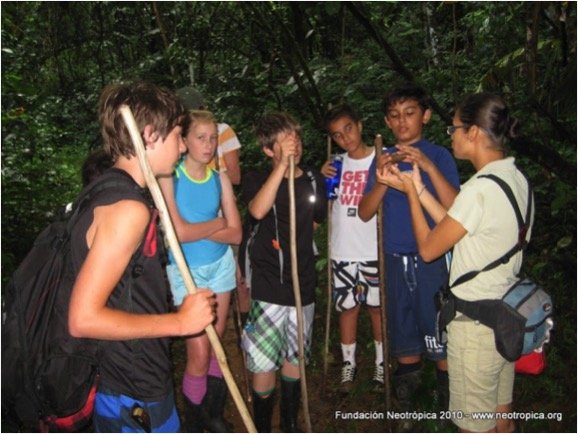
The dynamics and games made at the "La Amapola" school. The result in the workshop with the children is the awareness of the importance of protecting an ecosystem like the mangroves. This is how the Neotropical Foundation, once again, contributes to the construction of a better future with the protection and sustainable use of mangroves.
Project reports on GlobalGiving are posted directly to globalgiving.org by Project Leaders as they are completed, generally every 3-4 months. To protect the integrity of these documents, GlobalGiving does not alter them; therefore you may find some language or formatting issues.
If you donate to this project or have donated to this project, you can receive an email when this project posts a report. You can also subscribe for reports without donating.