By Stephen Perlman | Consultant, HTAC
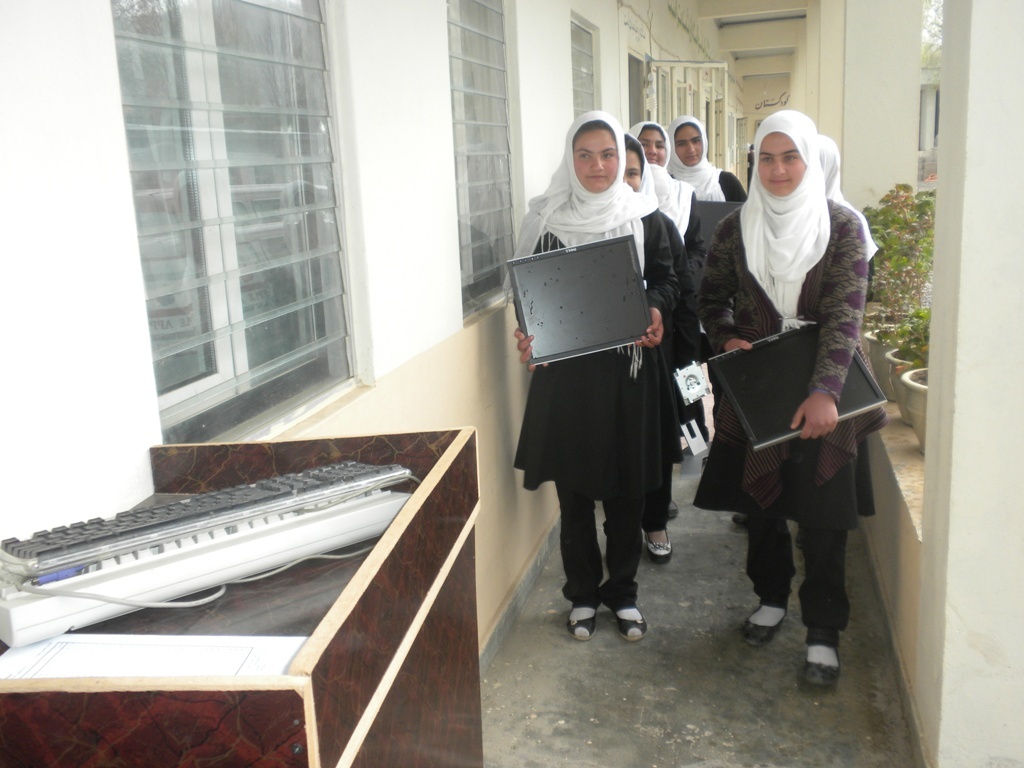
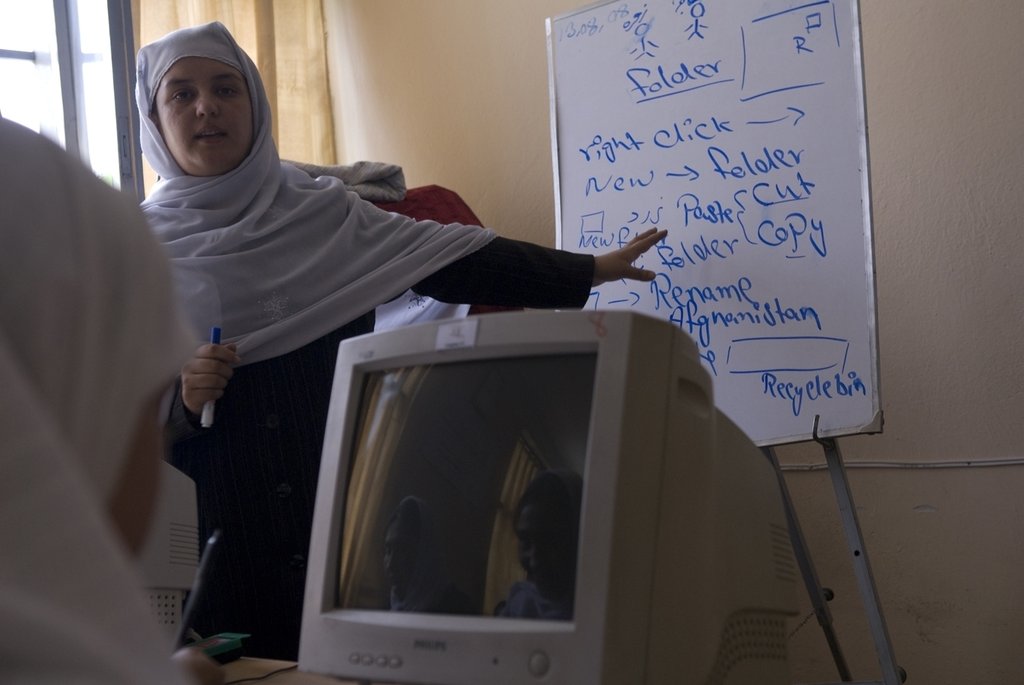
There was a noticeable sense of excitement and anticipation among the students at Khwaj Musafer Girls High School in this often neglected region of Afghanistan. The girls had quickly filled up a classroom that had been converted into a computer laboratory and they sat there in groups of threes, gazing at a computer screen, a keyborard and mouse for the very first time; eager, but patient as they waited to be introduced to their computer instructor and receive their first lesson.
For these students at Khwaj Musafer, this moment had been a long time coming. Several years ago, during one of HTAC's periodic visits to the region, our educational team met with students and their teachers. We had been providing this school with two programs and wanted to get their feedback.
They told us how much they enjoyed HTAC's hands-on environmental education program that was teaching them valuable lessons about taking personal responsibility for their health and local environment and they were eager to show us their litter-free school grounds and beautiful maintained school garden. They were also grateful for bringing peace education to the school and we were impressed, not only hearing how students were embracing the princicples of peaceful daily living, but sharing their lessons and peace stories with their parents and other family members.
But there was one subject that kept coming up in our discussions. "When can we have computer lessons at our school?" Many of these students came from poor families and after high school, they faced a predictably dim future of being married off and bearing children, unless they had job skills.
To make their wish a reality, HTAC reached out to our donors and friends, and with their help and a lot of work, a program began to come together. Most of the computer equipment had to be shipped to Kabul, Afghanistan, then delivered by truck to the school. Because the school lacked elecftricity, a generator was purchased to provide power to the computer equipment. We also had to raise funds to pay a qualified computer instructor who would visit the school, once a week.
It took a while, but when the moment came in late March, and seeing the looks on the faces of these girls, we knew the wait was worth it. The computer lab is not large; 15 girls at a time can sit by a computer for their once a week lessons, which means about 75 students are able to get a weekly lesson. But eventually, our goal (with your help) is to keep this program running at Khwai Musafer so that all 719 deserving girls can obtain computer knowledge and skills that will transform their lives.
Project reports on GlobalGiving are posted directly to globalgiving.org by Project Leaders as they are completed, generally every 3-4 months. To protect the integrity of these documents, GlobalGiving does not alter them; therefore you may find some language or formatting issues.
If you donate to this project or have donated to this project, you can receive an email when this project posts a report. You can also subscribe for reports without donating.