By Anna Demchenko | Grant writer
A Note to Our Donors: Where We Are Right Now
Before we dive into the numbers, we want to be transparent with you about the rhythm of this project — because understanding it will help you see exactly why right now is the most important moment to support us.
The Emergency Backpack project operates in cycles tied to the Ukrainian school calendar. The major procurement and delivery wave happens each summer, when families prepare for the new academic year that begins in September. This means that the period from February through May is our preparation phase: we are identifying beneficiaries, conducting needs assessments, building supplier relationships, and raising the funds that will power the summer delivery wave.
During the most recent quarter, our team deliberately redirected operational capacity toward two complementary programs — winter support for vulnerable families and urgent needs — while laying the groundwork for what will be the largest Emergency Backpack delivery season yet.
We are now ready. The needs are mapped. The families are waiting. What we need is your support to make this summer's deliveries happen at the scale these children deserve.
The Problem Has Not Gone Away
Since the full-scale Russian invasion began in February 2022, Ukrainian children have been living inside a reality that most of the world has never experienced. Air raid sirens interrupt lessons multiple times a day. Children grab their belongings and file into bomb shelters — sometimes for thirty minutes, sometimes for several hours. When they return to their desks, they are expected to concentrate, to learn, to grow.
For children from the most vulnerable families, this situation is compounded by material deprivation. Internally displaced families who fled Donetsk, Kharkiv, Kherson, Sumy, Mykolaiv and other frontline regions often arrived in new cities with nothing. Foster families and family-type orphanages (FTOHs) — which in Ukraine serve as the primary form of alternative care for children without parental support — care for large groups of children on limited state subsidies that do not stretch to cover individual educational needs. Children of military personnel are often raised by a single parent managing alone on a reduced household income. Children from large families face the familiar mathematics of too many needs and too little resources.
What unites all of these children is a gap between what they need to learn, develop, and feel safe — and what their families can provide. The Emergency Backpack project was built to close that gap, one child at a time.
Who We Serve: Beneficiary Profile
Our project targets five priority categories of children, all of whom face compounded vulnerability in the wartime context:
Internally Displaced Children (IDPs) — families who have been forced to relocate from active conflict zones, often multiple times, losing homes, communities, schools, and possessions in the process.
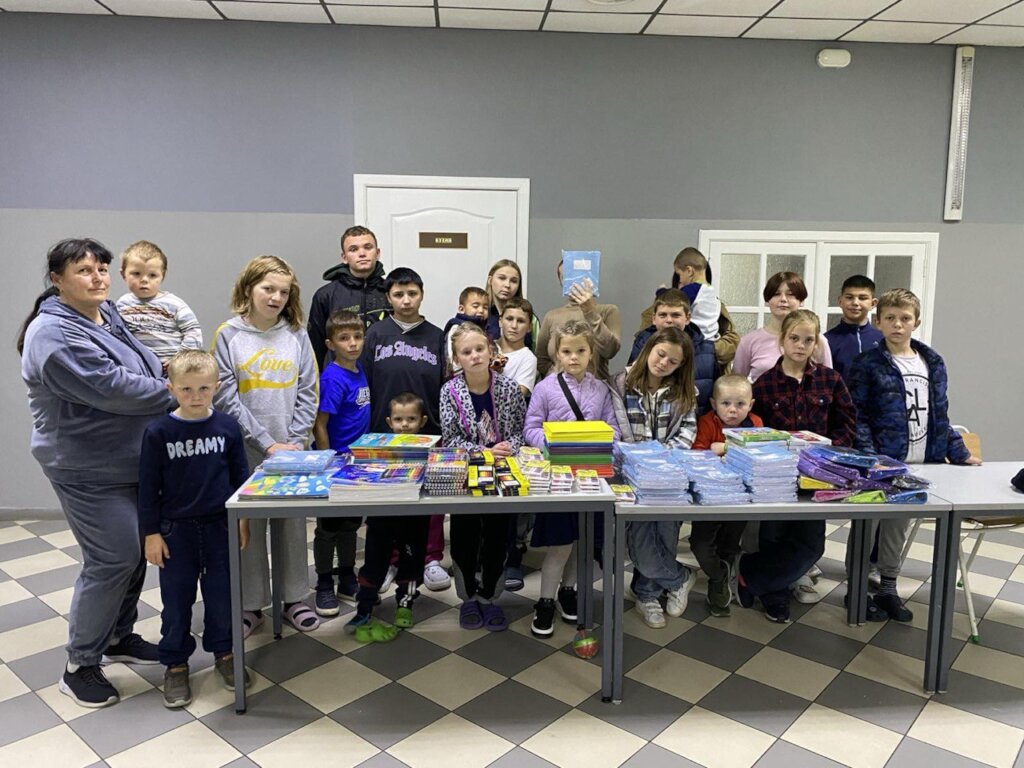
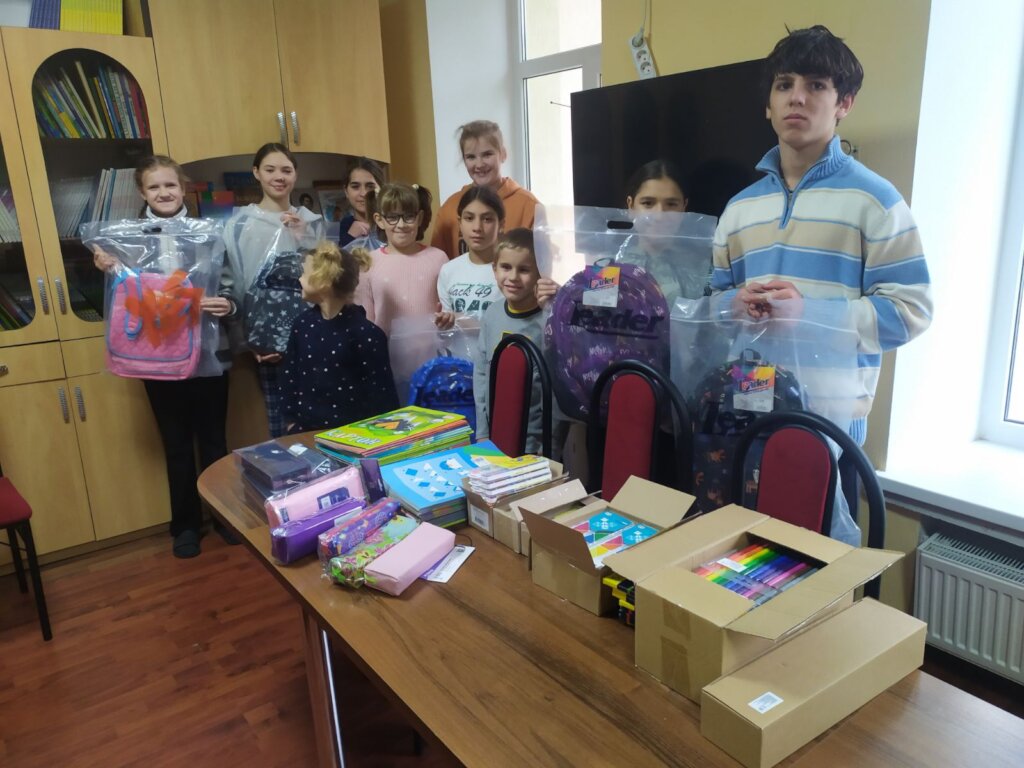
Children in Family-Type Orphanages (FTOHs) and Foster Families — Ukraine's FTOH system places groups of children without parental care into family-style settings led by professional caregiving parents. These families typically raise 6 to 12 children simultaneously. State support covers basic living costs but rarely extends to individual school supplies, creative materials, or comfort items. We work directly with FTOH families as our primary distribution channel.
Children of Military Personnel — with one or both parents serving on the front line, these children often live in reduced financial circumstances and carry an additional psychological burden of uncertainty about their parent's safety.
Children from Large and Single-Parent Families — already economically stretched before 2022, these families have been pushed further toward the margins by wartime inflation, displacement, and the collapse of local economies in affected regions.
Children Directly Affected by Hostilities — those who have experienced shelling of their homes or schools, witnessed violence, sustained injuries, or lost family members to the war.
What We Did: February – May 2026 Strategic Focus This Quarter
The February–May period is, by design, a preparation and bridging quarter for the Emergency Backpack project. Rather than conducting large-scale school supply procurements — which are most effective and most needed in the July–August window ahead of the September school year — our team focused on three parallel tracks:
Track 1: Winter and Transitional Support We continued to support our network of foster families and FTOHs with transitional-season assistance, ensuring that the families we work with had what they needed to close out the winter and move into spring.
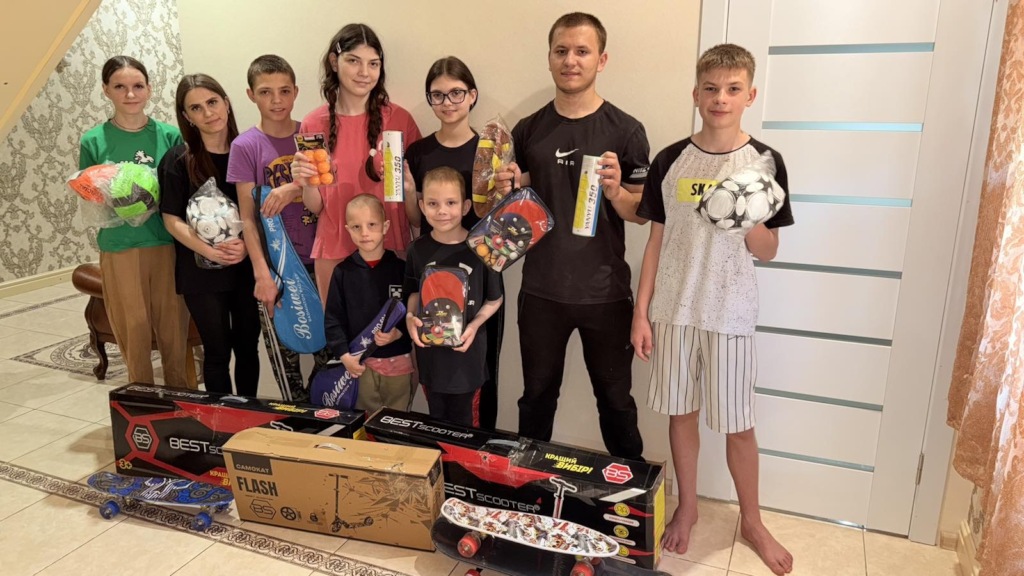
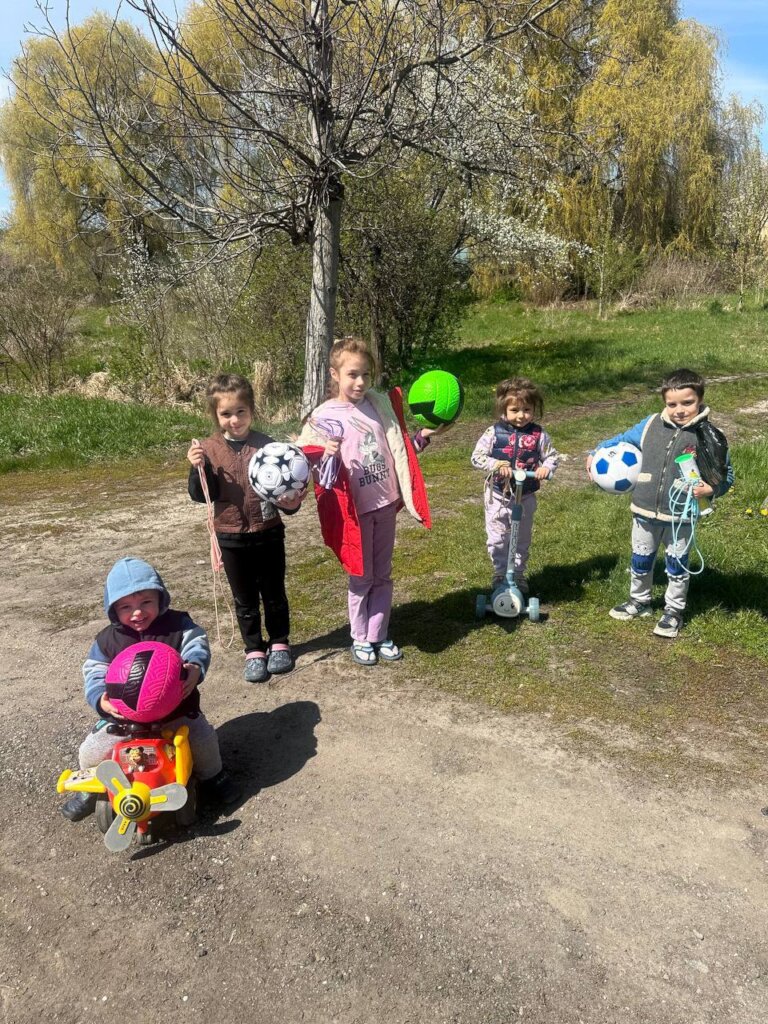
Track 2: Sports Equipment Distribution Some portion of our activity this quarter was directed toward physical well-being — an often-overlooked dimension of child welfare in conflict settings. Research consistently shows that physical activity is one of the most effective tools for managing stress, anxiety, and trauma responses in children. In April and May 2026, we delivered sports equipment packages to three FTOH families, reaching a combined total of approximately 23 children.
Deliveries in this cycle covered Kyiv oblast, Dnipropetrovsk oblast and Chernihiv oblast and included a broad range of equipment suited to different ages and interests — team sports, individual activities, and outdoor play.
Track 3: Needs Assessment and Beneficiary Mapping for Summer 2026 The most critical preparatory work of this quarter has been invisible to the outside world but essential to what comes next. Our project managers have been in active contact with our network of FTOH families and partner institutions, conducting structured needs assessments to understand exactly what each child requires for the upcoming school year. We are mapping grade levels, ages, specific supply requirements, and — critically — what emergency shelter comfort items each family currently lacks.
This last point deserves emphasis. The "emergency" in Emergency Backpack is not metaphorical. We are committed to ensuring that every child we support has not only the supplies they need for school, but also basic items designed for the hours spent underground: small comfort objects, drawing materials for shelter time, warm layers, and other essentials that make an unbearable situation slightly more bearable for a child.
Cumulative Impact: What This Project Has Delivered
Looking across the full project history through October 2025 - May 2026, the Emergency Backpack initiative has delivered the following:
Children reached directly: approximately 250 across all delivery cycles
Families and institutions supported: 17 FTOH families and foster care units, plus 1 specialized educational institution (Denyshivska Special School, Zhytomyr oblast, serving 88 children)
Oblasts covered: 11, including Kyiv, Chernihiv, Sumy, Kherson, Rivne, Cherkasy, Mykolaiv, Zhytomyr, Donetsk (origin), Luhansk (origin) and Chernivtsi
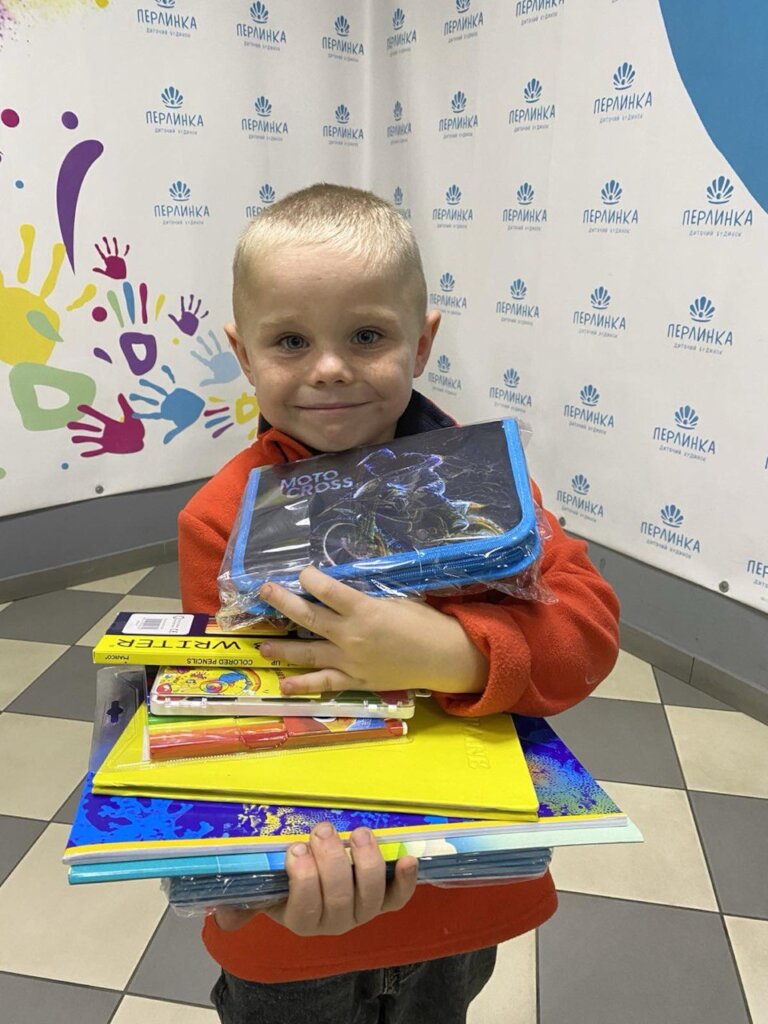
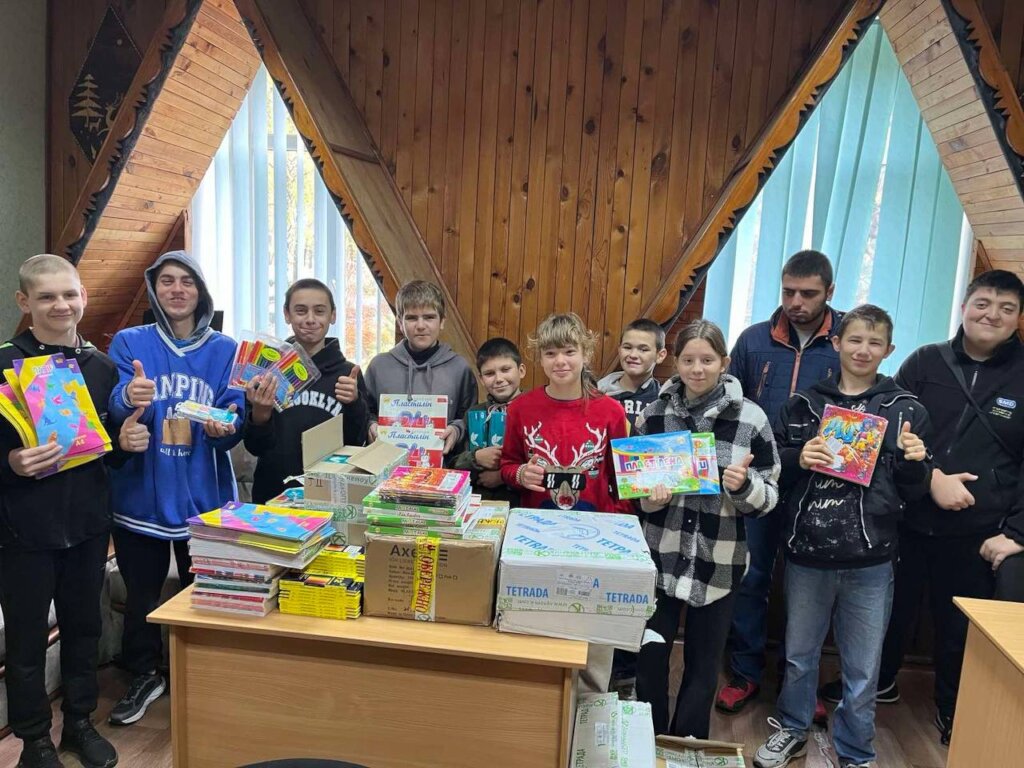
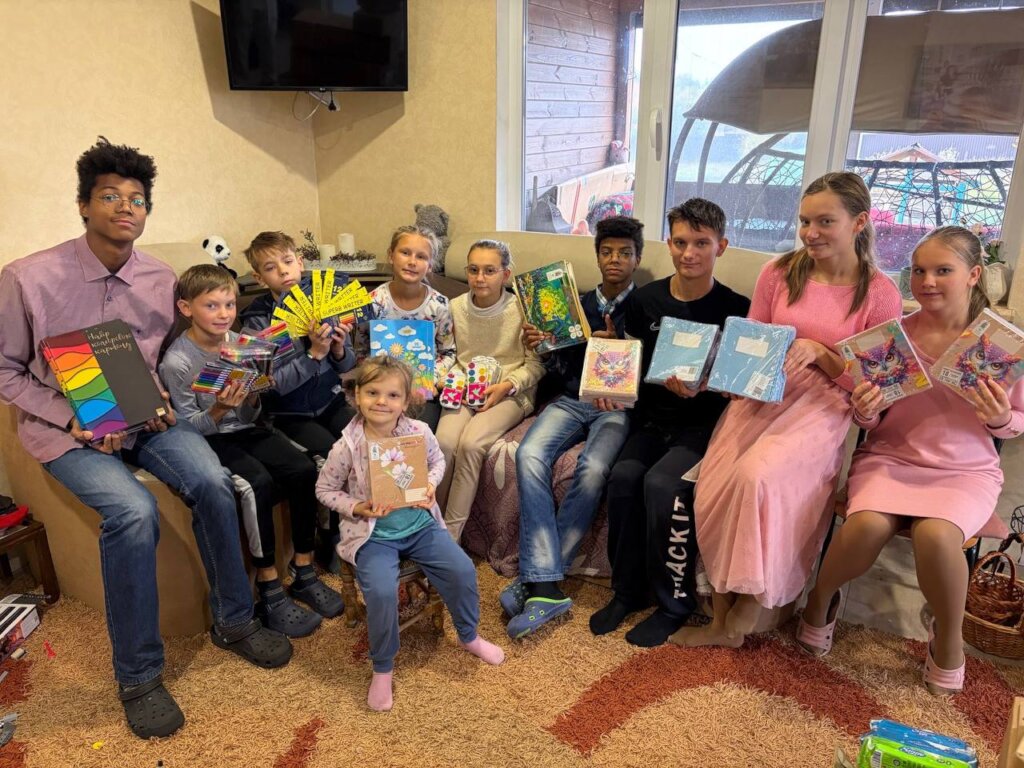
Procurement categories delivered to date: — Educational supplies: notebooks, pens, pencils, colored pencils, drawing albums, compasses — Creative and developmental materials: watercolor and gouache paints, modeling clay, markers, colored paper and cardboard — Sports and physical activity equipment: footballs, volleyballs, basketballs, badminton sets, table tennis sets, scooters, skateboards, jump ropes, sports uniforms and footwear
Looking Ahead: Why Summer 2026 Is Critical
The back-to-school season in Ukraine runs from July through late August. This is when families need to be ready, when procurement must happen, and when our capacity to deliver at scale will determine how many children begin September prepared — and how many do not.
We are currently finalizing our beneficiary list for the summer 2026 cycle. Based on our needs assessment work to date, we anticipate supporting a minimum of 30 additional FTOH families and institutions, reaching an estimated 300 to 350 children in this cycle alone.
The summer delivery will include two parallel components:
Component 1 — School Supplies A full back-to-school package for each child, matched to their age, grade, and specific educational needs. Every package will be individually assembled based on the case manager assessment conducted this spring.
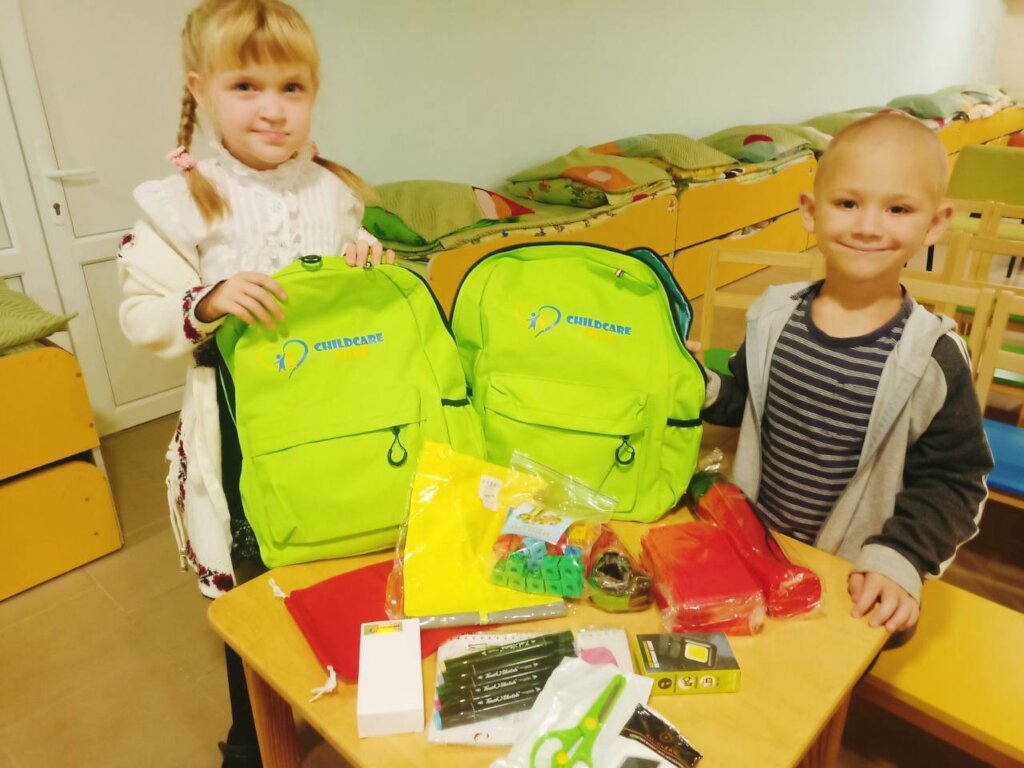
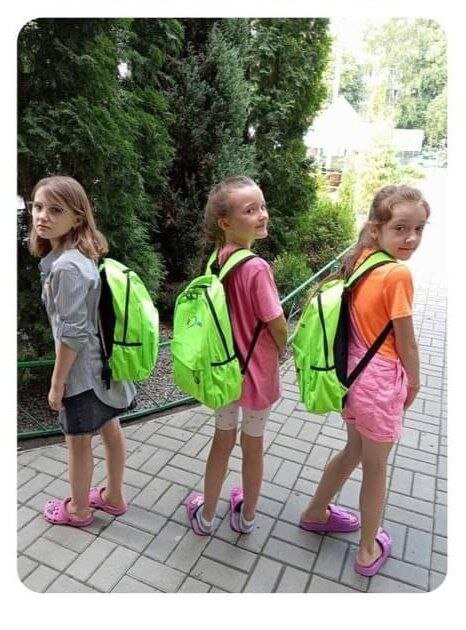
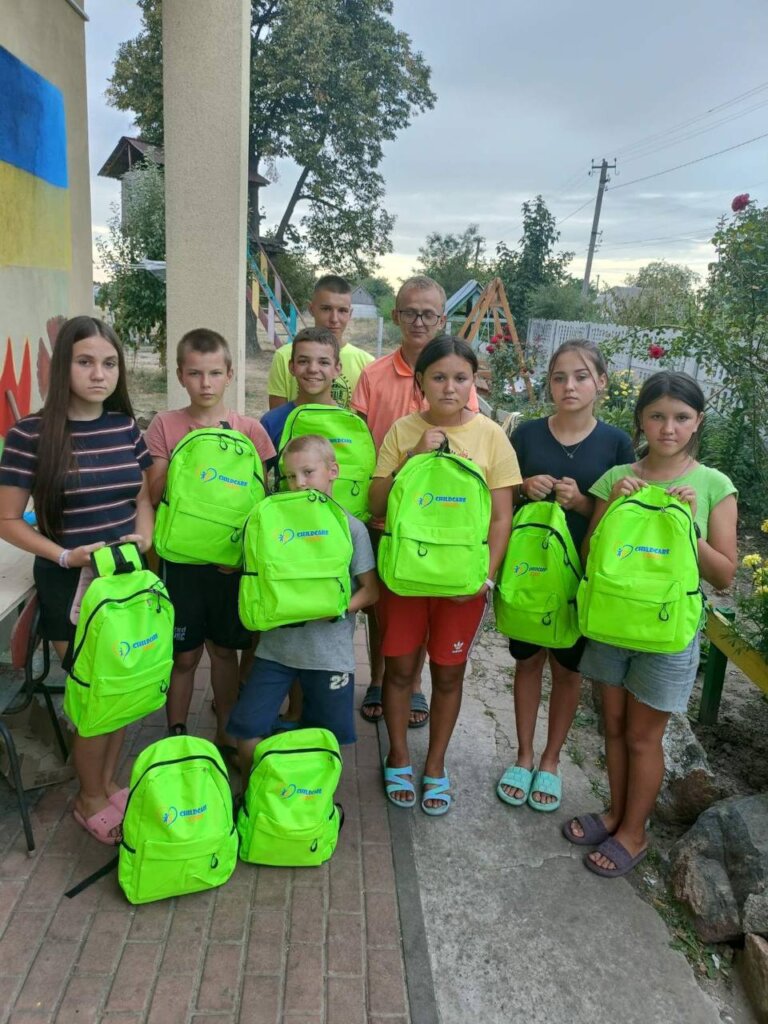
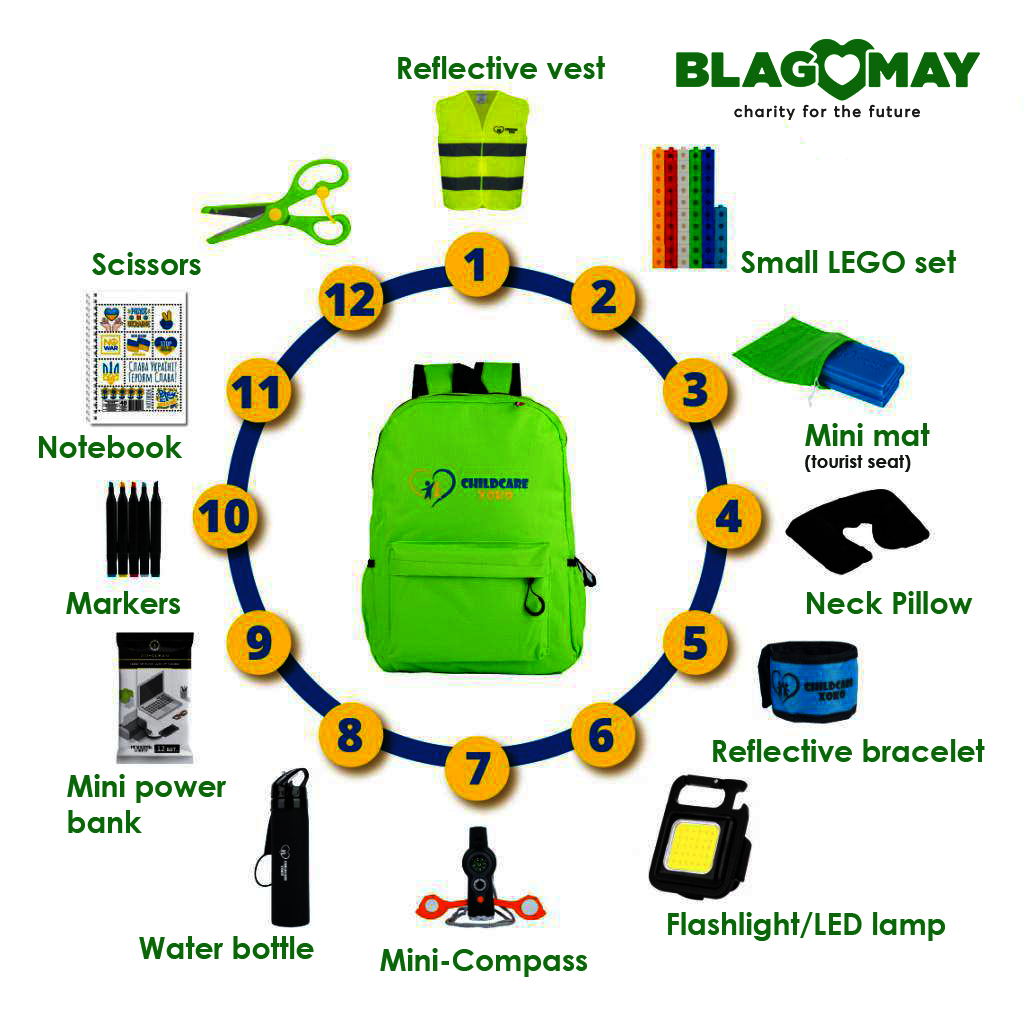
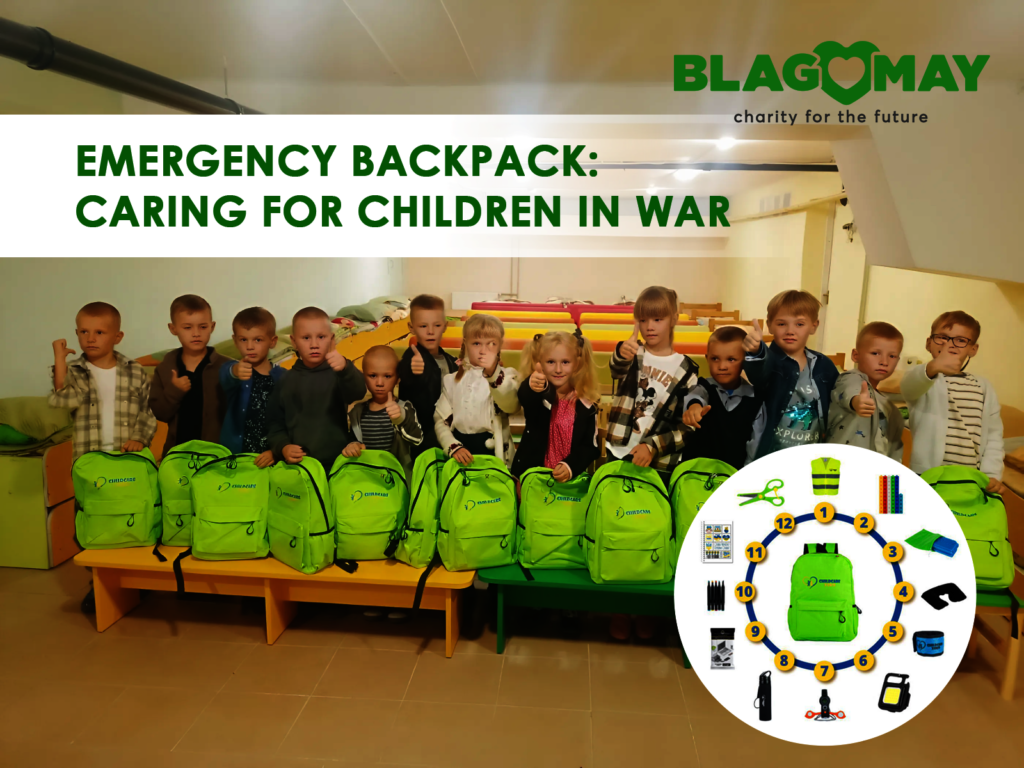
Component 2 — Emergency Backpack This is the expansion we are most committed to delivering this year. Each backpack is carefully assembled with 12 essential items designed for both safety and comfort during air raid alerts and time spent in bomb shelters: a reflective vest and reflective bracelet for visibility and safety, a flashlight/LED lamp and mini-compass for navigation in darkness, a mini mat and neck pillow for comfort during long shelter stays, a mini power bank to keep devices charged when power is out, a water bottle, a notebook and markers for drawing and writing during shelter time, scissors, and a small LEGO set — because even underground, a child needs something to play with. These items cost very little individually. Together, they give a child everything they need to feel safer, more comfortable, and less afraid. Their impact on a child sitting underground during an air raid alert is immeasurable.
What We Need to Make This Happen
To deliver both components to 300 children, we need to raise approximately USD 45,000 by July 1, 2026. Every dollar contributed between now and that date will be deployed directly into procurement and logistics for the summer cycle
None of this would be possible without you. Every donor who has supported this project — whether through a first-time gift or ongoing commitment — has directly put supplies into the hands of children who had nothing. You believed in this work when it was just a idea. We are deeply grateful.
Now we are asking you to take one more step with us.
If you have already given — thank you. Please consider sharing this project with a friend, a colleague, or a community that cares.
If you are reading this for the first time — this is your moment. These children are not waiting for the war to end to go back to school. They are going now, every day, under sirens and through shelters. Help us make sure they are ready
Project reports on GlobalGiving are posted directly to globalgiving.org by Project Leaders as they are completed, generally every 3-4 months. To protect the integrity of these documents, GlobalGiving does not alter them; therefore you may find some language or formatting issues.
If you donate to this project or have donated to this project, you can receive an email when this project posts a report. You can also subscribe for reports without donating.



Support this important cause by creating a personalized fundraising page.
Start a Fundraiser