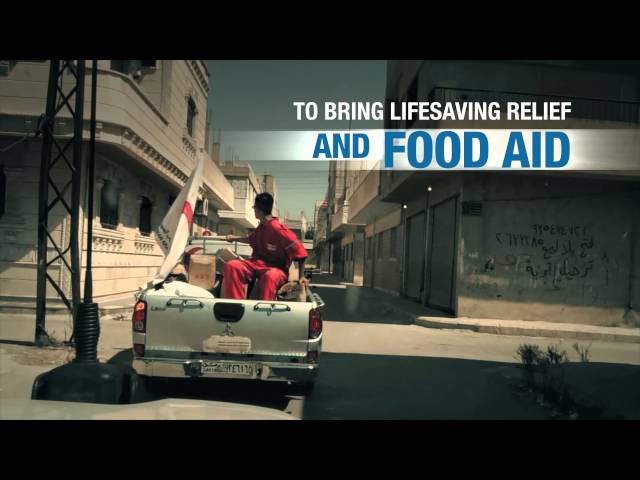

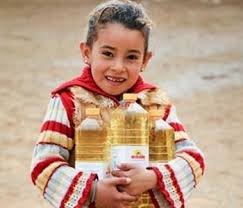
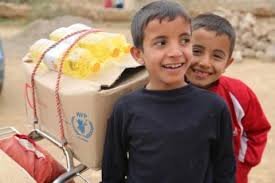
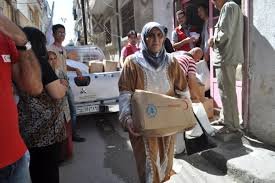

The Syrian conflict is entering its fifth year with some 12.2 million people in need of humanitarian assistance and 11 million more forced from their homes. WFP has supported the Syrian people since the first days of the conflict, and is now delivering food to almost 4 million people within Syria and nearly 2 million refugees in neighboring countries.
WFP Communications Officer Dina El-Kassaby (pictured above) has been working on the relief effort in Syria, including visiting hundreds of refugees and other people whose lives have been destroyed.
Below, she provides a personal account of the current conditions on the ground, and the efforts WFP is making to help those affected. She also sounds a note of hope for the future.
A year ago today, I was in Baba Amr, a town in the city of Homs that sustained heavy damage early on in the Syrian crisis.
I was speechless at the piles of rubble I saw everywhere I looked, the bullet holes in buildings and the grey miserable mess that surrounded me. The fighting had stopped and left behind a silent ghost town. I thought of the families who had been building memories there before this horrific conflict broke out, and what the city would have looked like a few years earlier with colour, trees and people.
As I looked at rows of empty apartments, I wondered where the young couples raising their children had gone, and if the elderly and disabled citizens managed to escape without injury. I could hear my footsteps in the silence around me and it was hard to imagine that there was ever life there before.
I took a photo of what was left of a family home, stunned that the wall had been torn down while the mirror in the bedroom was left intact. I couldn't believe my eyes. Though there were glimpses of hope, I had to try really hard to notice them. For example a few families had started moving back to whatever was left of their homes – most of the time with the windows and doors blown out. They just wanted to pick up the pieces and restart where they had left off.
Today, one year later, I am in Syria again. This time I am in Damascus, the capital city, and as I write this I'm distracted by the fact that I can hear traffic, motorcycle engines and honking outside. I can also hear laughter, music and occasional whistling and clapping at a party someone is hosting nearby. I just heard a gunshot and a cat meow. This morning, I heard explosions while I was brushing my teeth.
It is all too bizarre to believe my ears. It is really striking that the impact of this crisis was so visually apparent in Baba Amr, but so well disguised in Damascus. Shops and restaurants are open in the city, there are traffic jams during the day, men coming in and out of barber shops and cafés where people play cards and backgammon are open at night.
There is a façade of relative normalcy in the capital city, but I am not fooled by it. Speaking to my Syrian colleagues and the displaced families I have visited over the last few days, I can see how tired people are getting. "Syria is on the road to nowhere," one colleague told me. "This war stole my wife and kids from me," another said. The dark under-eye circles, the deepening frown lines and the pale complexions are a testament to the toll this war is taking on all Syrians.
As a Communications Officer for the Syria crisis, I often sift through photos, videos and statistics to tell the stories of the people I have met over the years in refugee camps or in shelters inside Syria. Sometimes I get too caught up in all the details to pause and reflect. But maybe that's a good thing, because when I do, I realize how terrifying this reality really is.
The Syria crisis is the worst humanitarian crisis of our time. Entering its fifth year, it continues to devastate lives and humanitarian needs have grown twelvefold since the start of the conflict in 2011.
Today, there are 7.6 million internally displaced people inside Syria and most of them have moved several times, losing their savings, health and patience each step of the way. Neighboring countries are now hosting 3.8 million refugees who are living in densely populated camps in the desert or in crowded apartments that they often share with other families.
While 9.8 million people inside Syria are in need of food assistance, hundreds of thousands are trapped in hard-to-reach and besieged areas. They are desperate, out of WFP's reach and falling victim to hunger. I'm worried about them.
Despite all odds, our achievements here are tremendous. Every month, WFP reaches around 4 million people inside Syria and close to two million refugees in the neighboring nations. Since the start of the crisis, WFP has delivered more than two million metric tons of food to save the lives of displaced families on the move. We have also injected over $1 billion into the economies of the neighboring countries through the food voucher programme we use to support refugees.
Soon, this conflict will end and Syrians will come home to rebuild their lives and their country. I need to believe this to keep up the drive to serve. All of us must stand by the people of Syria and help them cope with the enormous difficulties they face so that they do not give up hope.
I promise I will not give up.
Photo credit: WFP/Rein Skullerud