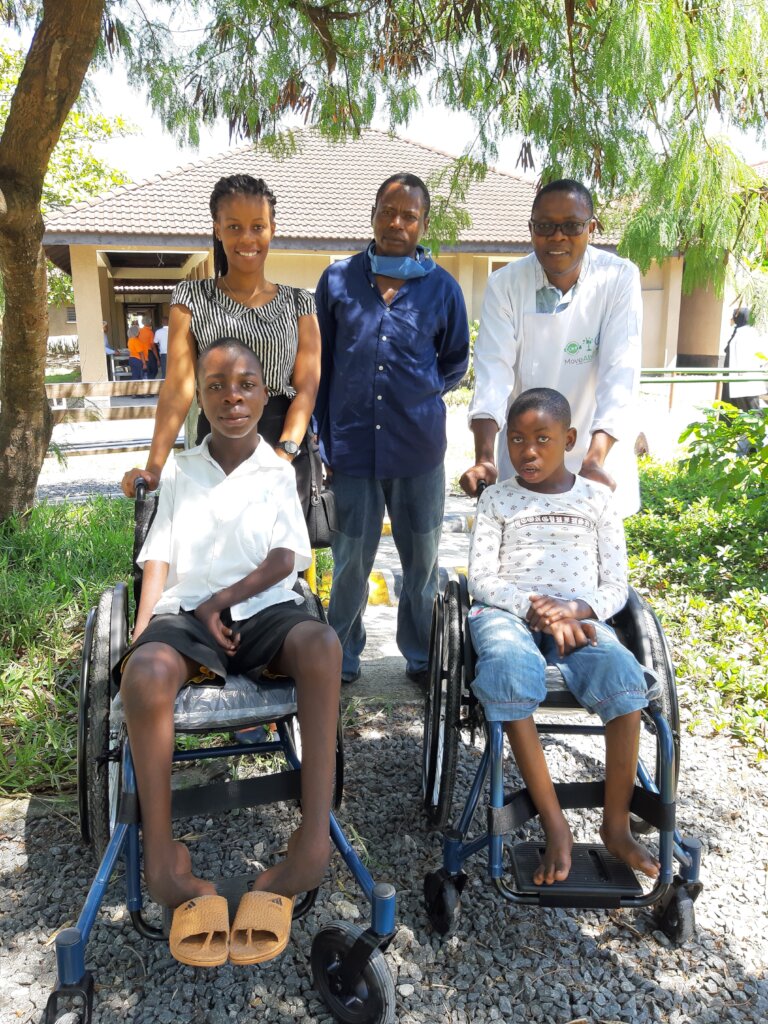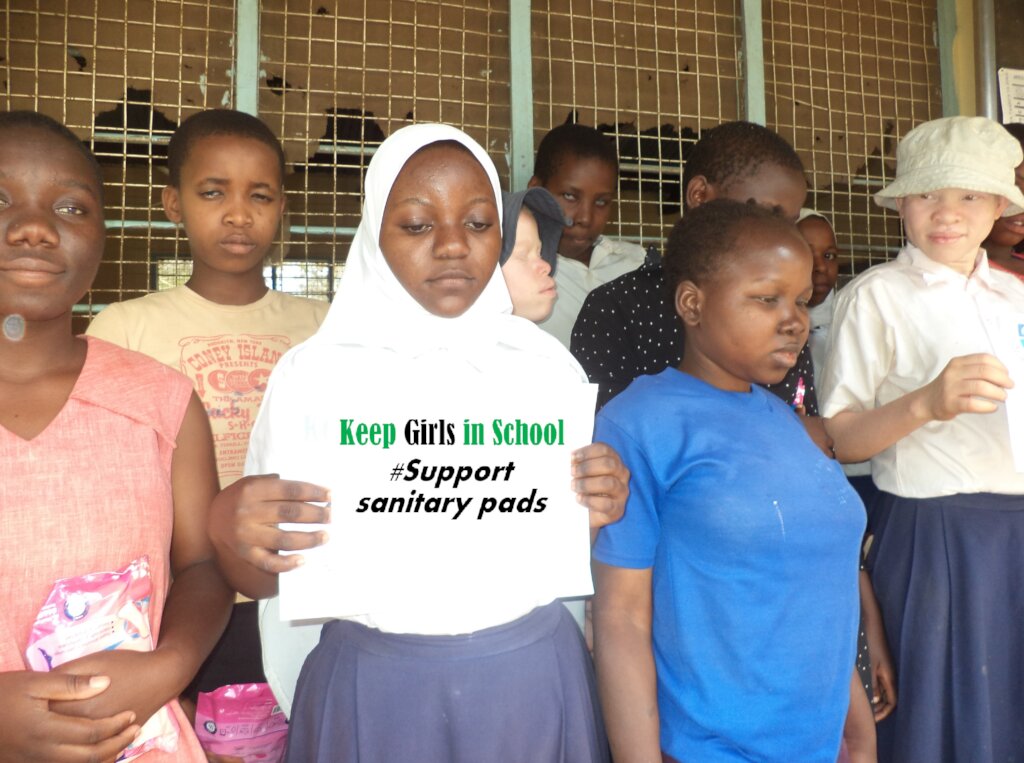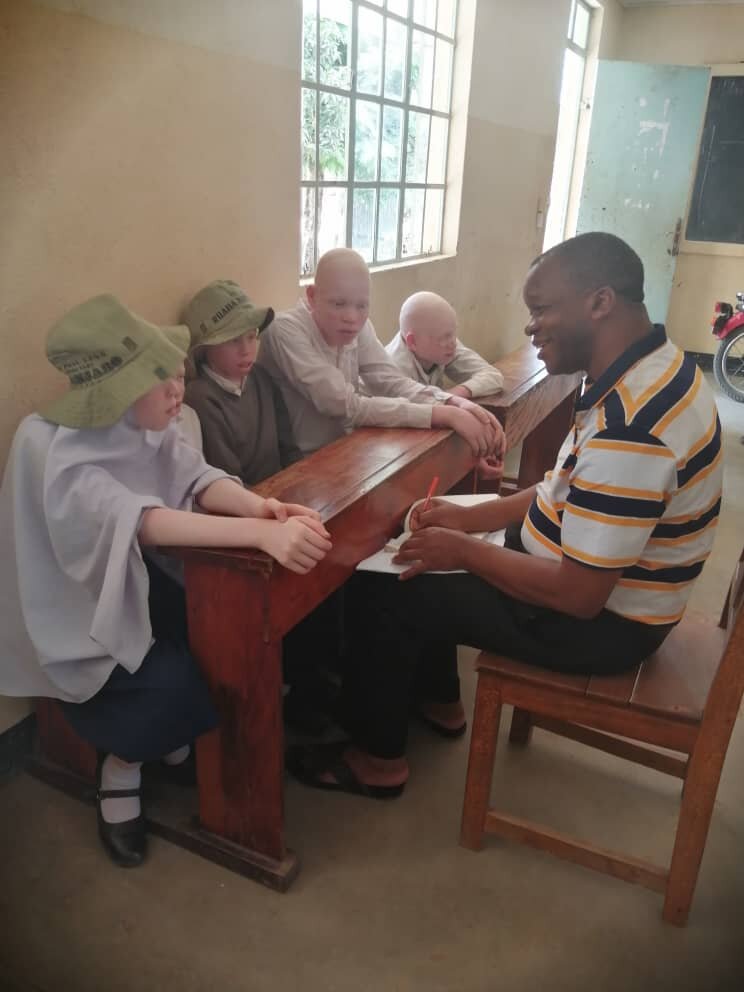
CDTF collaborates with local authorities, communities and public schools dealing with children with disability in Tanzania to identify children living in vulnerable situations (low-income, marginalized e.t.c.) to support them. Support includes education, counseling and healthcare needs such as sanitary pads for menstrual, hat skin lotion, optical, telescope, health care insurance and wheel chairs to access education.
Children with disabilities in Tanzania face major barriers to education due to limited resources and discrimination. In 2018, only 15.5% of 362,847 disabled children aged 4-14 were enrolled in school. Poor learning conditions, lack of assistive tools, and health challenges lead to high dropout rates. Girls face menstrual hygiene insecurity, causing exclusion and shame. Limited access to protective skincare and optical aids further impacts their health and academic success.
Our strategy will be in three-fold: Education, Counseling and Delivery. CDTF will hold community education on the rights of disabled children to education and care, fostering support. To develop workshops to educate girls on biology and hygiene best practices, provide counselling sessions and distribute informative booklets. Distribute sanitary products, hats, skin lotion, optical aids, and health insurance, wheel chair to improve well-being and accessibility for disabled children
This initiative will reduce school dropout rates and improve performance for children with disabilities. It will also decrease the use of unhygienic alternatives, increase access to affordable sanitary products, and raise awareness of menstrual hygiene. Additionally, it will reduce exclusion and feelings of shame, lower skin cancer risks, and enhance visibility for students, improving their ability to read books and blackboard notices.
This project has provided additional documentation in a PDF file (projdoc.pdf).



Support this important cause by creating a personalized fundraising page.
Start a Fundraiser