By Aakriti Srivastava | Project Leader
To our partners, supporters, donors, mentors, volunteers, and the entire e2e team, Thank you, for supporting causes that promote the empowerment of women through education. All of us at enlighten 2 empower (e2e) appreciate your contributions, whether it is time, effort, guidance, and/or financial support. Your assistance has enabled us to raise over 9,200 USD on this platform. A special shout out to the staff of Urmul Setu in Lunkaransar and at the project site in Rajasar—we couldn’t have done it without your support.
e2e’s primary objective is to help illiterate teenage girls who have dropped out of school, become literate and numerate. We are doing this by engaging our students in a unique program—an intensive two-month on-site/in-country literacy camp followed by an eight-month online curriculum. In addition to educating the girls, this innovative program is designed to give them skills to become financially independent; to enable them to stand up for themselves, especially when faced with physical or psychological aggression; and, to foster their self-confidence
Quarter HighlightsWe are making good progress in achieving our fundraising goals—your donations are helping us provide the tools and resources needed for the program to succeed.
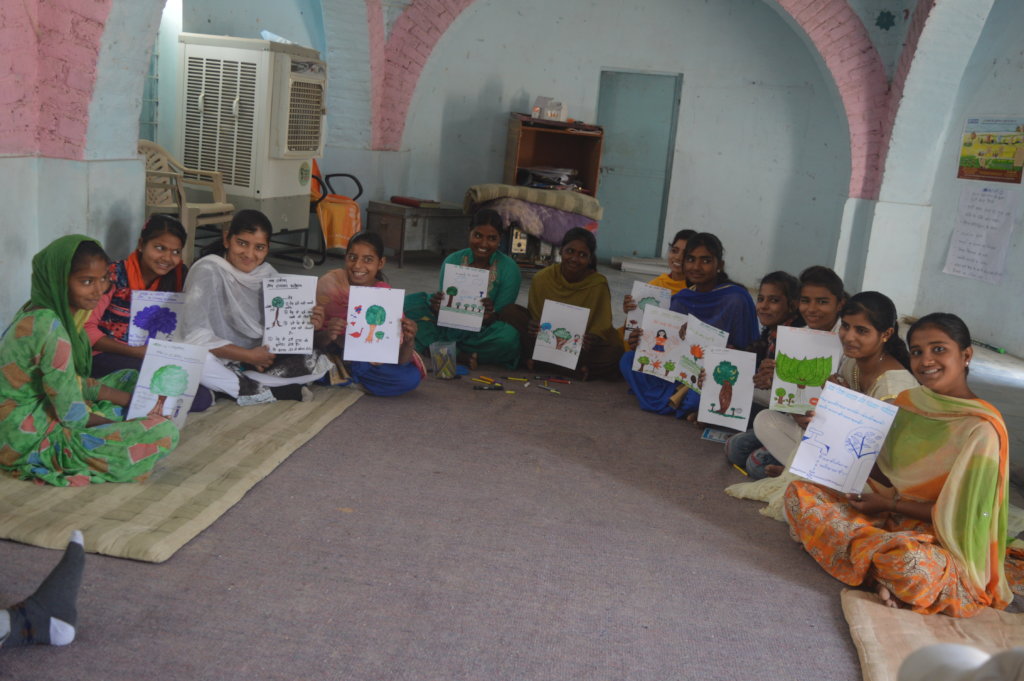
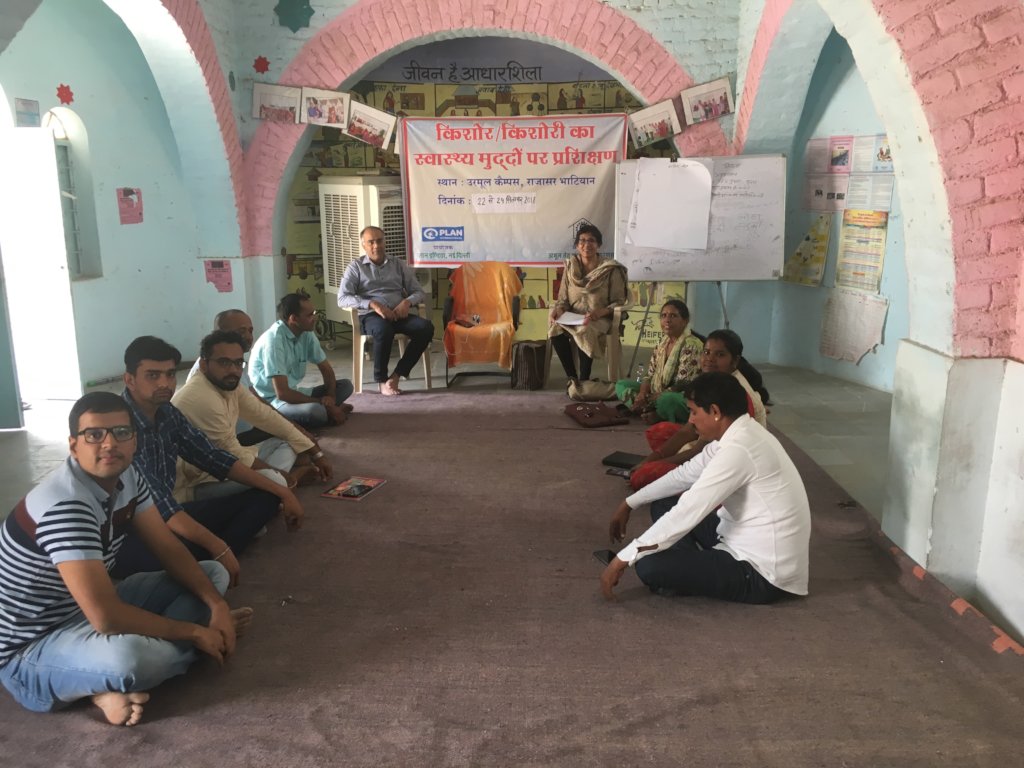
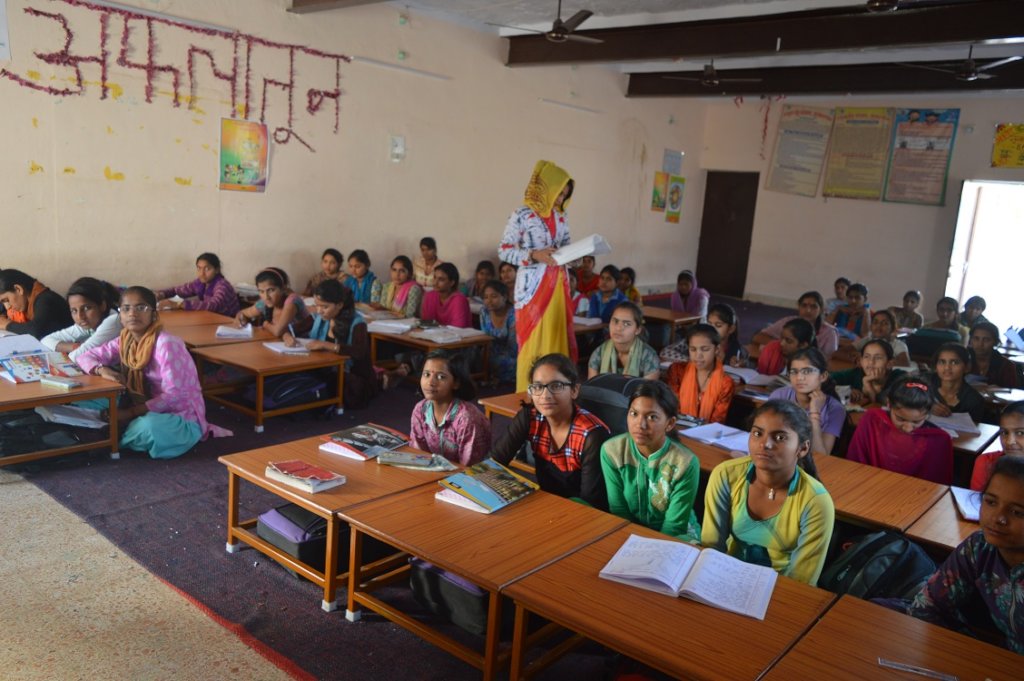
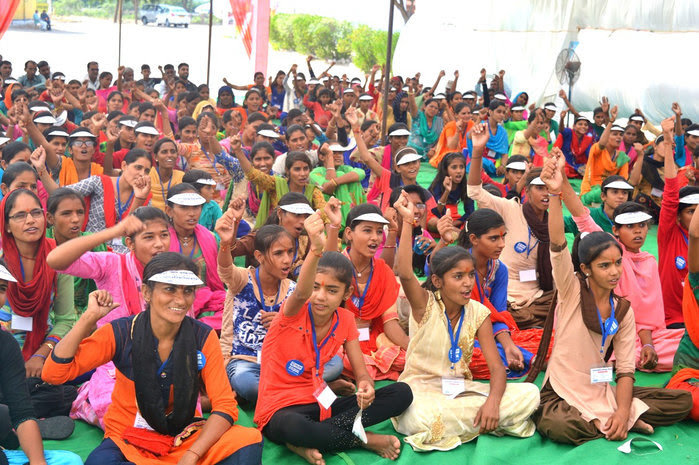
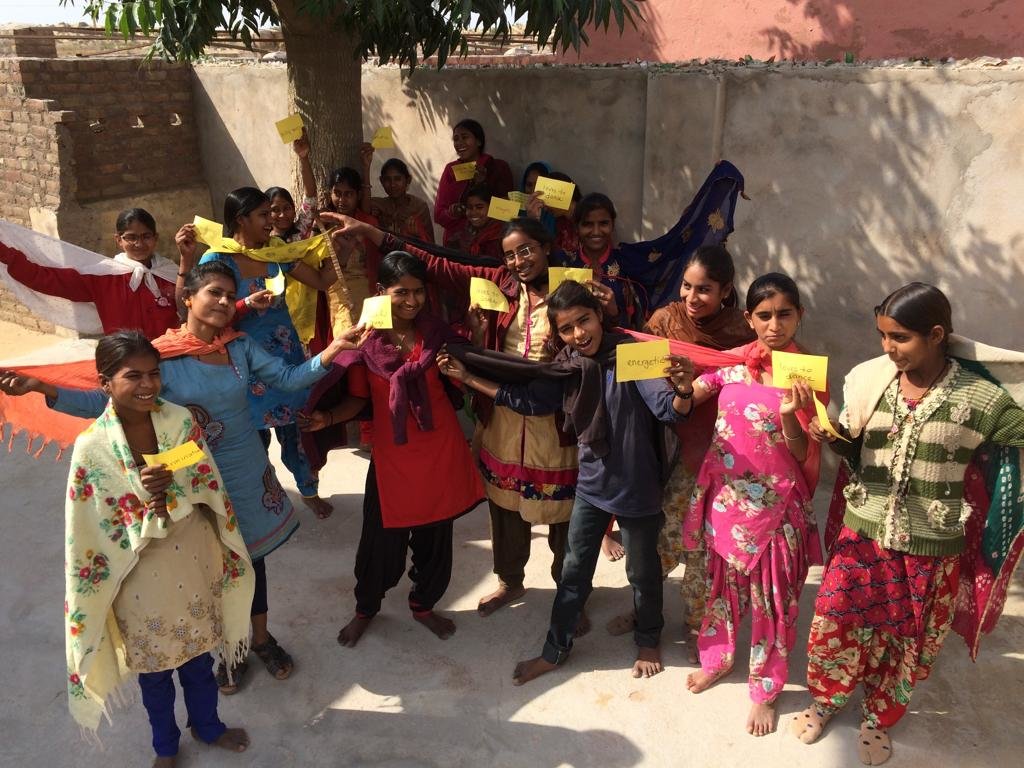
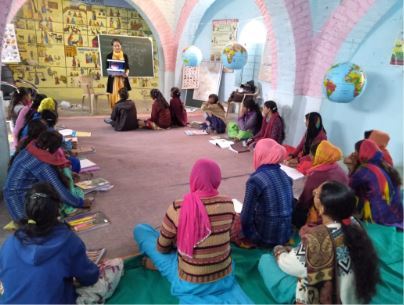
Initiation: The BootcampAfter planning, researching and strategizing, the much-awaited bootcamp began in Rajasar, Rajasthan on February 18, 2019. On the first day, although hesitant, the 28 girls were happily curious about where they would spend the next two months and with whom. Overcoming social barriers, was one of the primary challenges they faced. They also had to deal with the prejudices and norms that challenge girls at every step of their journey into womanhood. Workshops, talks, and discussions that range from the challenges of living in extremely patriarchal societies to topics such as menstruation that are taboo in these communities have helped to smooth the way, while weekly speakers enlighten the girls about the range of opportunities that could be accessible to them even as the learn about how to deal with social and personal challenges.We encourage our students to work cooperatively and treat each other as equals. This was especially important in the first couple of weeks because children from different castes were loathe to interact with each other or even sit next to each other. Getting them to understand the importance of respecting the thoughts and ideas of their classmates as individuals has been a challenging but necessary endeavor.
Developments and Curriculum:
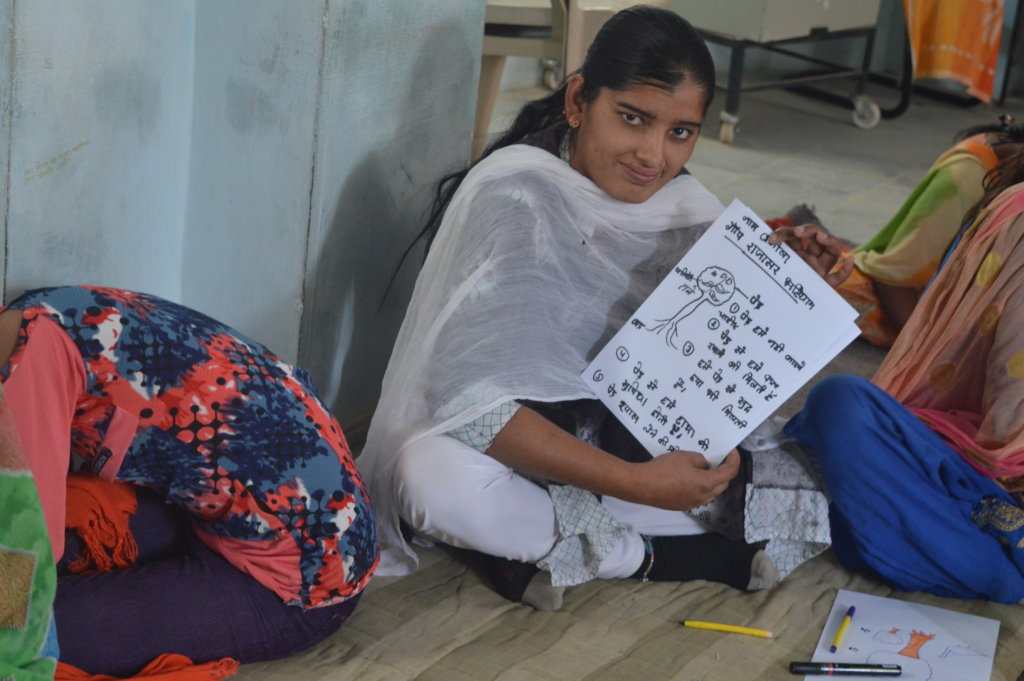
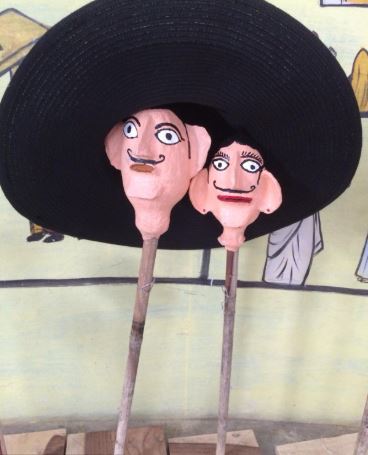
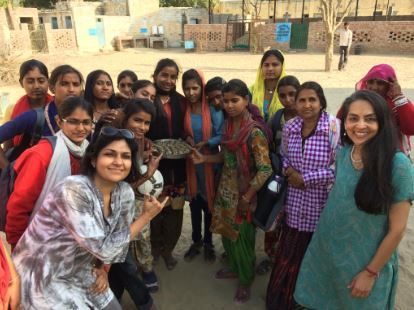
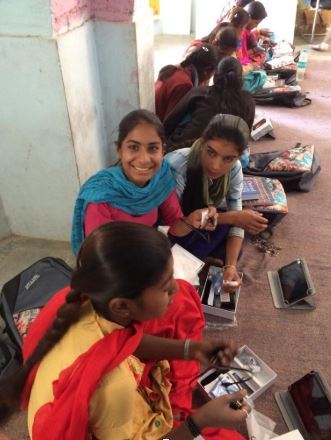
Our aim is to help our students see the potential in themselves and give them the tools to prevail against limitations that would inhibit or hinder them. This is a collective goal for all of us who are working with the girls during the course of this program. Each of us does this by engaging the children using different modalities.The following categories give a broad overview of material that has been covered and events the girls have experienced thus far during the bootcamp.INTRODUCTIONS. At the beginning of the bootcamp, introductions were made, and everyone wrote their names on the board and then used alphabet beads to string their name together. They also practiced greeting a person in English and created a model family tree.VOCABULARY. The girls practiced names of different body parts in Hindi and English, and then did some stretching exercises to strengthen the association. Expanding their vocabulary in both languages by consistently engaging with all 4 literacy skills—listening, speaking, reading, and writing—forms the core of our program.TABLET COMPUTERS. The girls have learnt how to use the tablets to access the day's lesson via an email link. They have also engaged with familiar English words related to the use and care of their tablets, such as, charge and touchscreen. Notably, they did not realize these words were in English since they are ingrained in the Marwari vocabulary.GEOGRAPHY. The girls were introduced to the concept of place and region, and that of geographical comparisons between India, the US, and the UK—in relation to their positions on the globe, rainfall distribution, national birds, and cardinal directions.QUESTIONS & ANSWERS. The girls have been asked, to answer questions such as “What were you doing before returning to school that you miss doing?” and “What do you like about being in school?”FIELD TRIP. During a trip to URMUL's Lunkaransar campus, our students met Deeya Bajaj via a video call and heard about her expedition to Mount Everest. While Carol and Brittany Phelps used miming techniques to teach the girls new vocabulary in English.EARNING AN INCOME. The Income Generation Program Head from Urmul Desert Craft spent a day with the girls and talked to them about how women in Rajasthan are providing for themselves and earning a living through embroidery and other scalable enterprises. Following the presentation, the girls participated in a practical demonstration of how to transact business.PUPPETS. The students have learned how to create traditional papier mache hand puppets. And, under the tutelage of puppeteer, Lal Puri ji they performed a play about gender inequality and child marriage for their parents.SPIRITUALITY. Morning prayers were initiated by one of our students, as were Yoga sessions, both with the aim of promoting spiritual well-being and the significance of a woman's role in society.SHAPE. The significance of shape use was discussed as part of an exercise in drawing the Taj Mahal. The lesson also included a review of various shapes.MAPPING. The girls were able to follow a map of India that was outlined with masking tape on the classroom carpet, which helped to bring the idea of neighboring countries to life.DIVERSITY. A teacher from Kerala wore her traditional dress and brought Mysore Pak as a treat for the children, enabling the children to experience some of the diversity with India.COOKING LESSON. As part of a lesson on nutrition, the girls cooked healthy laddoos.The Girls’ Experience with the TabletsLearning how to use a tablet computer has boosted the confidence of many of the girls. Prior to attending e2e’s literacy camp, these girls had never been allowed to use a phone without permission from a male member of their family. Perhaps this had an impact on their response to using tablets, because after the initial excitement, a few girls were afraid they didn’t understand how to use the tablets and didn’t want to handle them. This is where the learning began.The excited chatter had to be calmed for slow detailed instructions to be heard, and by the second lesson, the girls could open email links, and leaned about Google search and how to change the input language.The discussion about internet safety, passwords, and social media—including the posting of photos—interested them, and it was wonderful to see the ‘Eureka!’ moment when they realized the potential of social media.The girls are accessing class lessons, whether videos or PowerPoint presentations, which is building their confidence and increasing their attention level in the classroom.The girls currently share the tablet computers as we have more girls than tablets; but we have found this aids teamwork and have varied partners for the tablet lessons. It is our goal to eventually provide each girl with her own tablet. In the interim, the necessary software and learning applications have been uploaded and will be sufficient for the duration of the eight-week camp.While we are buoyed by the success of our initial camp, we acknowledge that educating the girls of Rajasthan will be a long and complicated process and are committed to doing everything we can to enrich and improve their lives through literacy and education. For this reason, we hope this community will continue to help and support us in achieving these goals.Success Stories
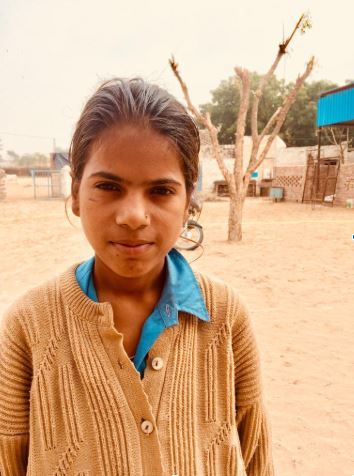
Fighting Caste DiscriminationThe caste system, which might be considered to be an archaic concept only referenced in history lessons and textbooks, is still quite prevalent in many areas of India, including rural Rajasthan. Unexpectedly or not, this has been an issue even in our classroom: upper caste girls have been uncomfortable eating with those not of their caste; a cemetery worker’s daughter has been reluctant to use the communal water cup due to her caste; a girl’s ostracization by the villagers because of her brother’s handicap has caused her to habitually maintain her distance from them, as she is considered to be lower than even the untouchables in the caste hierarchy of the region.Our goal is to educate our students in a holistic way—and that means educating the whole child. Thus, we attempt to counter discriminatory behavior by intentionally pairing girls from lower and upper castes in group situations like tablet sharing.Socially ostracized students—who belong to untouchable families—are being assimilated into the e2e program regardless of their aptitude. These children continue to be discriminated against by society and are frequently prevented from attending class by their families so that they can assist with manual chores like cleaning after weddings in the village. By instituting an ameliorative approach in our classroom the divide between groups is lessening. The girls are more comfortable with and respectful of each other now.Shaping MindsOur youngest student is a 10-year-old girl, who has never been to school before. However, she is extremely enthusiastic about the e2e program and arrives an hour-and-a half before class starts, She had started checking in with the coordinator every day, starting ten days before the e2e team was scheduled to arrive at the village. Even though she was completely illiterate at the beginning of the program, in just a couple of days she managed to learn to write basic words like cup and bus in English.An extremely bright young child, she proposed some of the most innovative ideas when the kids were proposing ways of generating income with the resources they have, such as, selling roasted seeds of harvested fruits. She brings an extraordinary level of energy and enthusiasm to everything the class does—dancing, learning, reading; even while simply walking from one place to another, the child displays an extraordinary level of energy towards everything.In addition to the academic enhancements, we are making a difference in other arenas, too. One day, this child's grandmother, (who she lives with because her family cannot afford to feed five children), visited the campus and told us about how this child who used to spend her days playing in the dirt, now bathes and braids her hair every day before class and will even wash her clothes herself just to ensure she is clean and on time when she gets to school.Our program is helping shape these young minds; it is already altering the views of not just our students, but also those of their families. Parents are more willing to send their daughters to school and are inspired to further educate their children.
Links:
Project reports on GlobalGiving are posted directly to globalgiving.org by Project Leaders as they are completed, generally every 3-4 months. To protect the integrity of these documents, GlobalGiving does not alter them; therefore you may find some language or formatting issues.
If you donate to this project or have donated to this project, you can receive an email when this project posts a report. You can also subscribe for reports without donating.