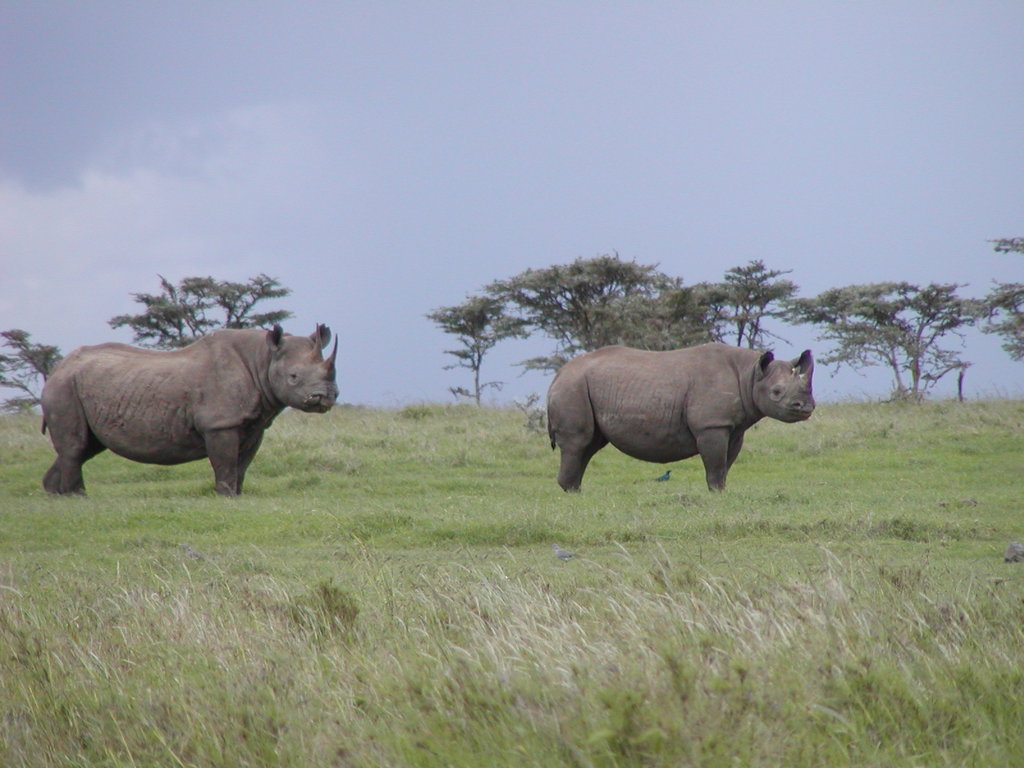
Over 40 years, poaching reduced Kenya's population of black rhinoceros from 20,000 to a mere 539. Earthwatch researchers and volunteers are bringing black rhinos back from the brink of extinction.
Poaching reduced Kenya's black rhinoceros population from 20,000 to a mere 539. Fenced-in, scout-patrolled sanctuaries like this 100-square-km reserve have literally kept rhinos alive as a species in Kenya. In the wake of this success, new concerns have arisen: potential competition with giraffes and elephants, calf predation by hyenas and lions, even having too many rhinos in enclosed reserves. Only close monitoring of this sanctuary will enable Kenya's black rhinos to avoid extinction.
This project gathers data on the distribution of wildlife and rhinos, measuring the composition and condition of the vegetation that competing large animals eat as well as changes in rhino populations to allow for changes in conservation policies.
This project will improve rhino conservation tactics at Ol Pejet and other Kenyan sites, and give rhinos a chance to reach sustainable wild and protected populations.