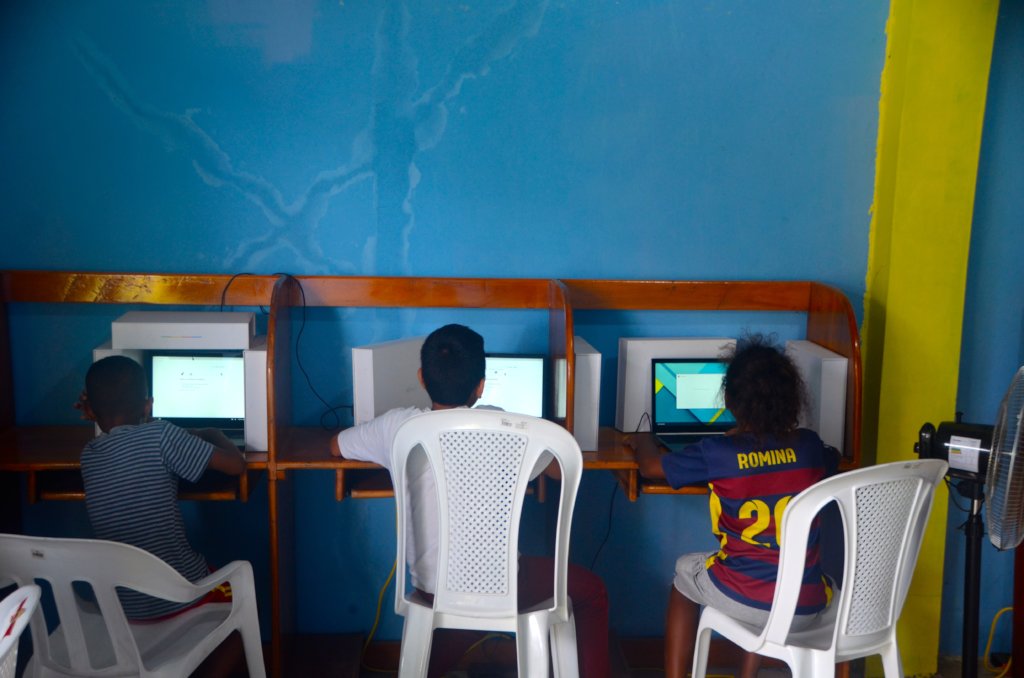
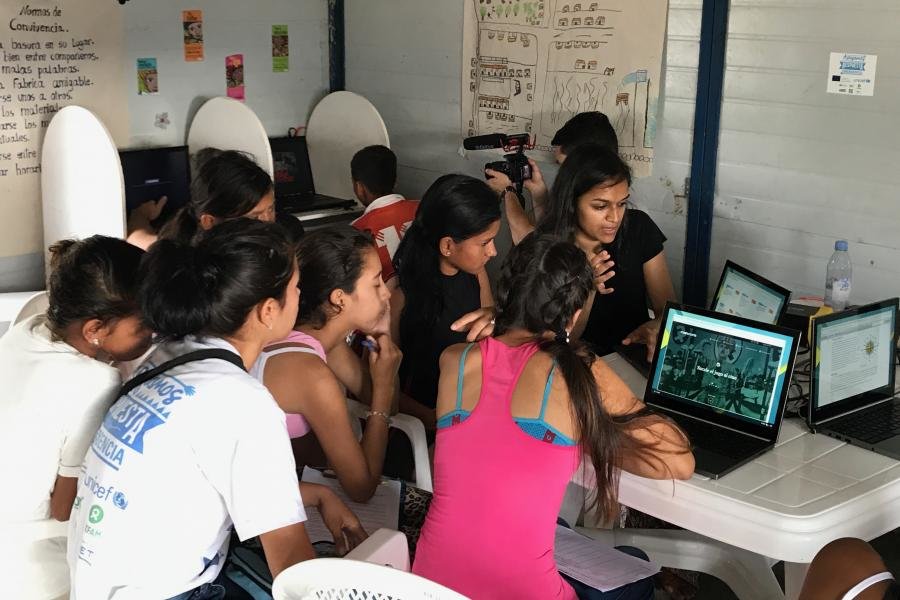
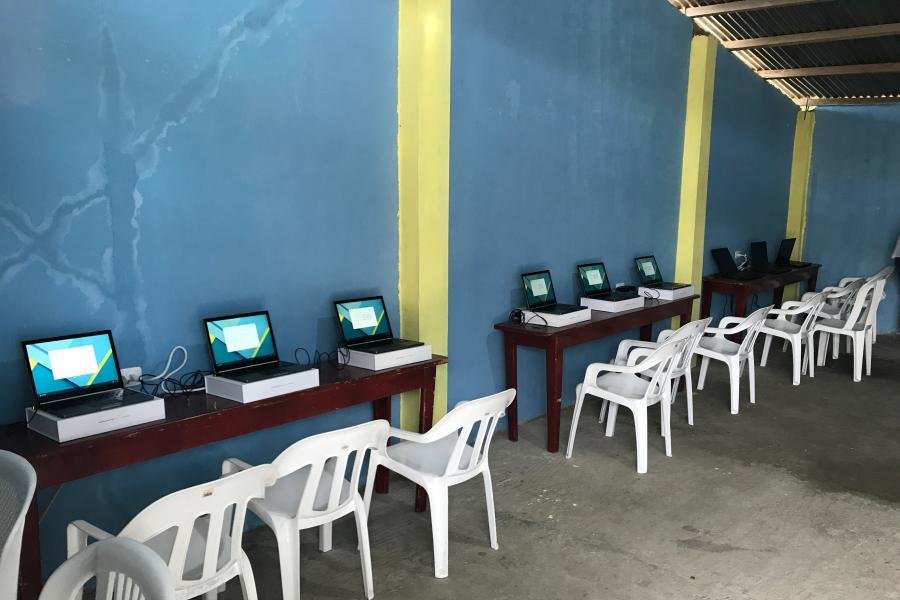
In 2016 a powerful 7.8 magnitude earthquake severely affected Coaque, an under-resourced Ecuadorian community. In 2017, Tufts International Development, partnered with Libraries Without Borders and Avanti, created learning spaces where we set up digital servers and laptops and trained local residents on how to use the technology to lead capacity-building activities. We are currently focused on the sustainable continuation of this pilot program as well as beginning our search towards expansion.
In August of 2016, the Tufts ID team traveled to Ecuador to meet with organizations working on education in post-earthquake emergency programs. Based on feedback, we observed three major challenges: 1) Due to the widespread destruction of schools, students have stopped receiving formal education; 2) Students in temporary learning spaces come from a wide range of ages and literacy levels; 3) Teachers are not fully qualified in the variety of subjects and content they are expected to teach.
The e-library Program offers a flexible and dynamic educational environment adapted to the requests of the community. The program allows for effectively decreasing the gap in information access and increasing curiosity while expanding students' professional opportunities. The Tufts ID team is specifically partnered with Libraries Without Borders to ensure that the technologies will learn from earlier e-library implementations in disaster contexts where there is little robust evidence of impact.
The e-library programs increase literacy, numeracy, and digital literacy for K-12 students in Coaque, with the ultimate goal of increasing professional opportunities for extremely disadvantaged groups. Tufts ID recently hired a local program manager, enabling the community to fully operate the program self-sufficiently and organize weekly workshops in the centers. In addition, ID has been corresponding with local universities to aid in the continuation of the program after phasing out.