By Abby Crouch | Donor Relations
Ollie’s rare diagnosis and his miraculous recovery at DoveLewis 
Ollie, a Sheltie from SE Portland, loves the outdoors. He gets excited every time he sees his family load the camping trailer. But a recent adventure to the Umpqua River and Eastern Oregon left Ollie fighting for his life.
About a week after returning from their trip, Ollie's family noticed that Ollie was increasingly lethargic. He was very weak, finding it difficult to walk, and he would only eat when he was hand fed. Other than a bit of hip pain in prior years, this 10-year-old dog was previously healthy and acting normally.
Ollie's family didn’t wait long before taking him to their regular veterinarian, who conducted a full range of tests, including blood work, a urinalysis, and a variety of X-rays. But they simply couldn’t find a reason for Ollie’s diminishing health. He was given medication that could potentially help, but Ollie only got worse the next day.
At this point, the pup was almost completely paralyzed and unable to eat or go to the bathroom on his own. Since there seemed to be no treatment to fix Ollie’s condition and his quality of life was rapidly deteriorating, Ollie's family made the extremely difficult decision to put Ollie to sleep at DoveLewis.
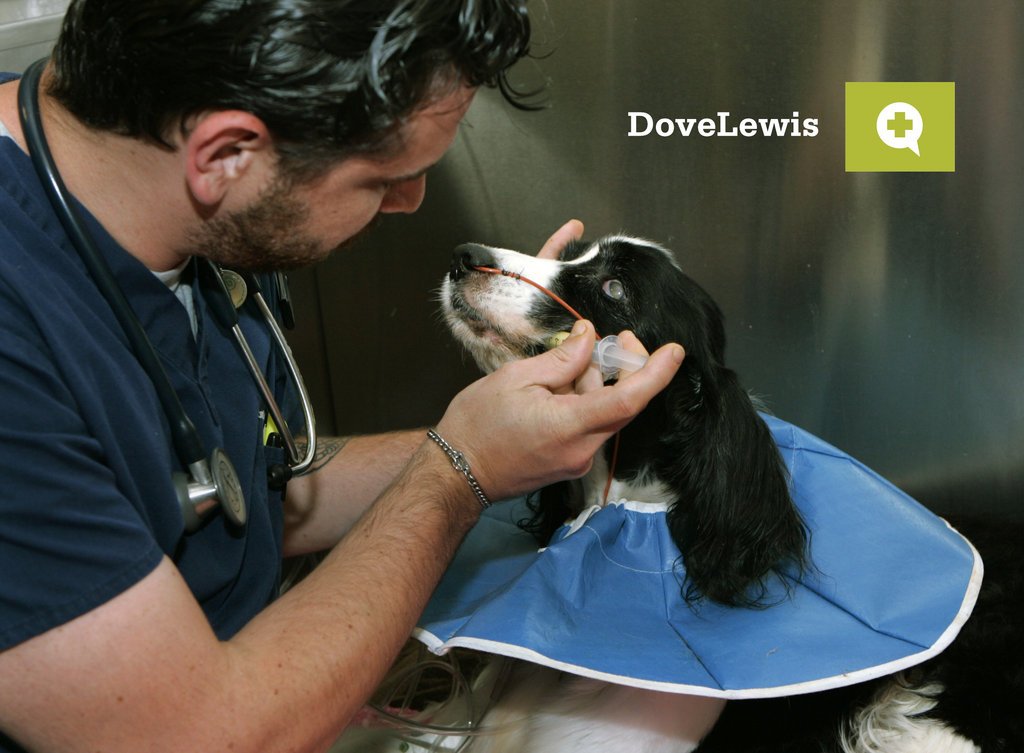
Dr. Adam Stone, one of DoveLewis' veterinarians, was charged with Ollie's end-of-life care, but he couldn't help wondering why an otherwise perfectly healthy dog was experiencing paralysis. As he and extern Neeha Golden were examining Ollie, Neeha was comforting Ollie by scratching behind his ears and felt a lump in his thick fur. The lump turned out to be a tick. Dr. Stone throught back to a rare condition he learned about in vetinary school - tick paralysis, though he had never seen an actual case of tick paralysis. It is so rare that only one other veterinary professional at DoveLewis had ever seen a tick paralysis case. The condition occurs when the saliva secreted by the tick gets into the dog's system over a prolonged period of time. It affects the dog's neurological system and can cause paralysis. Only certain species of ticks can cause this damage and removing the tick is completely curative. Dr. Stone discussed this potential diagnosis with Ollie's family. He told them that Ollie should show signs of improvement in three days if this truly was the cause of his ailment. The hospital staff completely shaved Ollie's body to be sure there were no additional ticks hiding in his fur and discharged him to go home with his family to be monitored carefully. That night, only about 10 hours later, Ollie's family was surprised to hear the clicking of Ollie's nails on the hardwood floor. Ollie was up, roaming the house and ready to be let outside for a bathroom break! Ollie's family was astounded by the quick turnaround. Today Ollie is back to normal, - lively, active and ready to embark on his next outdoor adventure.
FDA Warns of Xylitol Toxicity for Dogs 
The Food and Drug Administration (FDA) has issued a strong warning about the dangerous effects that can occur when dogs consume xylitol, an artificial sweetener commonly found in sugar-free gum, toothpaste, mouthwash, candy, vitamins, medication and specialty nut butters. Recently, DoveLewis has seen an increase in cases involving xylitol poisoning.
“Xylitol can cause a rapid increase in insulin levels and a drop in blood glucose. It is quickly absorbed from the stomach, and you often see the effects as soon as 30 minutes after ingestion,” said Dr. Ladan Mohammad-Zadeh, a DoveLewis critical care specialist. “When this sugar substitute is ingested, it can cause vomiting, hypoglycemia, seizures and, in extreme cases, liver failure.”
Liver failure may not manifest for eight to 48 hours after ingestion, so it’s critical to visit an animal hospital immediately if you suspect your dog has ingested a product with xylitol, said Dr. Mohammad-Zadeh.
Pet owners should especially be aware that manufacturers are starting to include xylitol in specialty nut butters, which are often used as treats for dogs. While most of the major brands have refrained from using this ingredient, owners should always check the ingredient list prior to offering their dog a special treat.
DoveLewis suggests knowing what products in your household contain xylitol and keeping those safely out of reach of your furry friends at all times.
Taro’s Fight for Life: CPR and DoveLewis' Blood Bank save Taro 
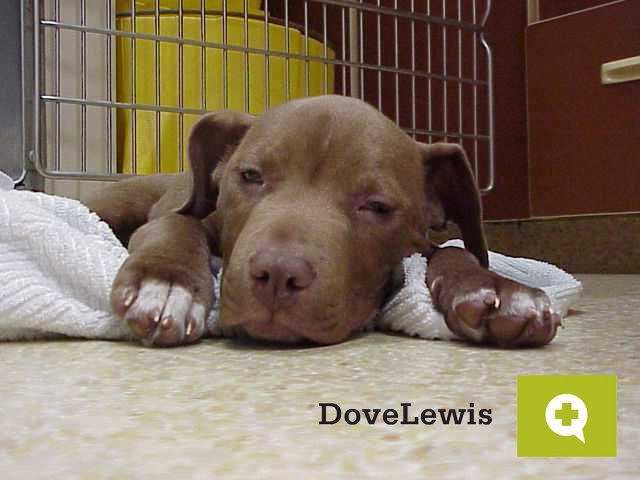
During an emergency visit to DoveLewis, a two-month-old Collie mix named Taro flatlined on an exam table – no heartbeat, no breathing. But this was not the end for the young pup; he still had some fight left in him.
Earlier that day, Taro’s owner could see that something was clearly wrong with his new furry friend. Taro woke up pale and lethargic and was having trouble standing on his own. He had also developed a hematoma (swollen blood clot) under his tongue. Without delay, Taro's family rushed Taro to DoveLewis for an emergency visit.
DoveLewis doctors examined him immediately. While a cause for his condition was not easily determined, his doctor suspected that Taro may have ingested some rat poisoning at a farm he recently visited. Taro was becoming increasingly unstable, and the staff determined he was in dire need of a blood transfusion to stay alive.
Just as doctors were preparing the little pup for the procedure, Taro’s heart stopped beating and his breathing ceased. He was dead for nearly 11 minutes.
During those crucial minutes, doctors worked quickly to perform CPR, which started his heart again. Then they administered an accelerated blood transfusion into Taro’s struggling body. Taro received three transfusions that day.
“It was a dramatic half hour,” said Dr. Ladan Mohammad-Zadeh. But all the quick action paid off. Taro was on his way to recovery, though doctors knew it would take some time for Taro to completely heal from such a traumatic experience.
Taro is now fully restored to good health; he is a very active puppy, plays outside every day, and he loves to run through the woods and accompany his family on hikes.


Thanks in advance for your support of DoveLewis Emergency Animal Hospital through Global Giving. We could not be here for the 13,000+ injured or ill animals who come through our doors every year without our wonderful supporters; the animals send their thanks too!
Links:
Project reports on GlobalGiving are posted directly to globalgiving.org by Project Leaders as they are completed, generally every 3-4 months. To protect the integrity of these documents, GlobalGiving does not alter them; therefore you may find some language or formatting issues.
If you donate to this project or have donated to this project, you can receive an email when this project posts a report. You can also subscribe for reports without donating.