By Abby Crouch | Donor Relations
Ellie's "Dove Story":
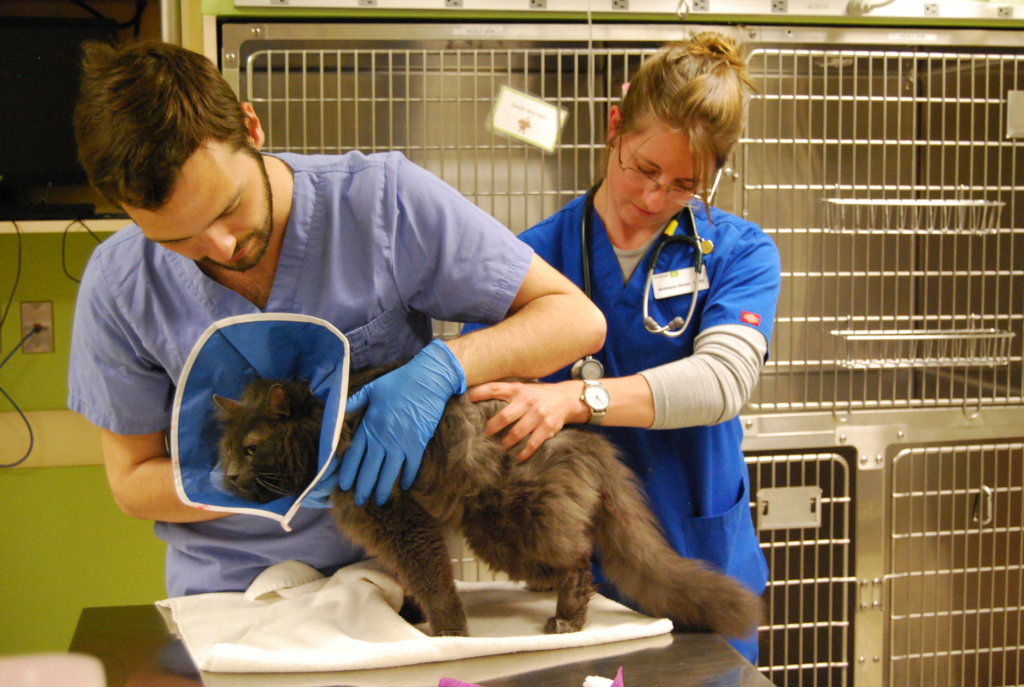
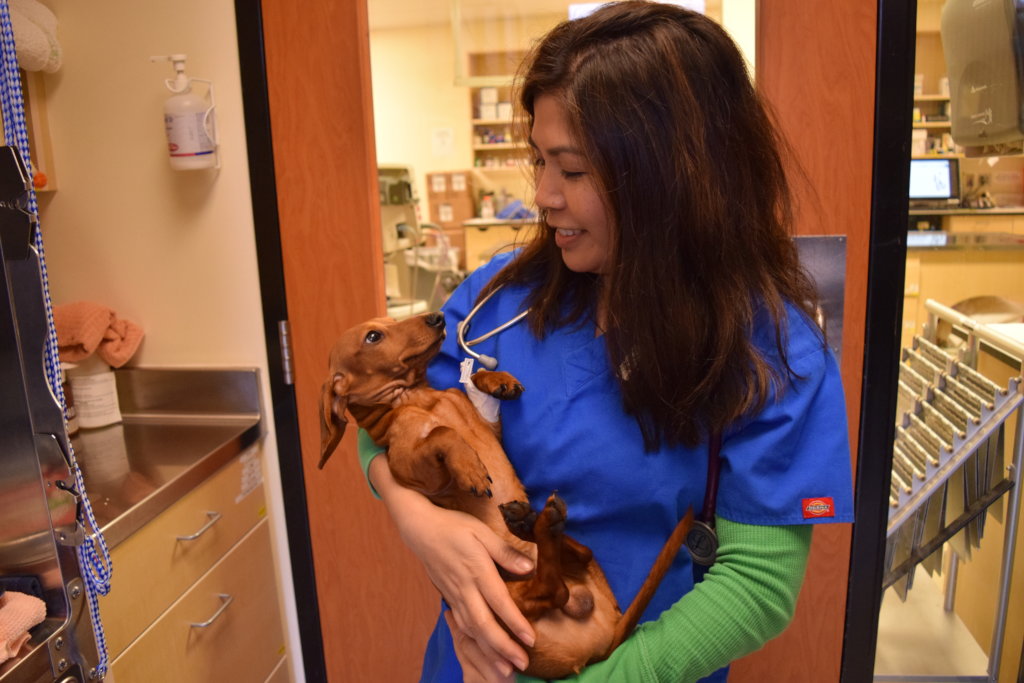
DoveLewis treats over 13,000 injured or ill animals every year. Over the past 42+ years that DoveLewis has been providing emergency veterinary care for the pets and strays of the Portland Metro Area, the DoveLewis clinical team has removed a variety of 'foreign bodies' (things they eat but should not eat) from animals such as pieces of tennis balls, thumb tacks, a door stop, magnets, fish hooks, all kinds of toys and squeakers, corn cobs, a bike glove, ipod ear piece, pacifier, socks, an earring, ribbon, string, a popsicle stick, needle & thread, and a Brillo pad, just to name a few 'foreign bodies' we have removed at DoveLewis.
Ellie, the dog who ate hundreds of water absorbing floral beads - was 'a first' for the clinical team at DoveLewis. Water absorbing floral beads are used in floral arrangements to evenly disperse water in vases. These beads start as very small, hard balls, and they expand when they get wet to about the size of marbles. Luckily, Ellie's family was home and knew she had eaten some of the water absorbing floral beads, but they did not how many she had eaten. Ellie's family quickly brought her to DoveLewis; the clinical team gave Ellie medications to induce vomiting and found she had indeed eaten alot of the floral beads. Ellie had exploratory surgery and the surgical team removed many more of the floral beads in surgery. Thankfully, Ellie recovered well from surgery, and continues to do well. Here is a link to the KPTV-Fox Channel 12 coverage about Ellie and her very unique "Dove Story":
Ellie, the 'expanding-floral-water-bead' eating dog
DoveLewis Blood Bank Helps Save Oregon Zoo’s Baby Gazelle:

Prior to the Oregon Zoo’s arrival of the Speke’s baby gazelle Juliet, the veterinary team there considered the possibility that if she were rejected by her mother when born, Juliet would need a plasma transfusion for antibody transfer. Kristin Spring, CVT, veterinary hospital manager at the zoo, had previously worked at DoveLewis, so she knew exactly where to find the resources they needed to be prepared for the arrival of the new calf.
Before the gazelle’s mother, Pansy, was expected to give birth, Kristin reached out to DoveLewis Blood Bank Director Jill Greene, CVT, to get the supplies she would need to obtain a blood donation from Pansy. Jill and Kristin discussed a plan for when the calf was born, arranging for DoveLewis to provide all the necessary supplies and services free of charge as a community service. Because the calf would need just the plasma, Jill planned to come to the DoveLewis hospital when the newborn arrived to process the blood in the blood bank’s centrifuge.
The DoveLewis Blood Bank only takes donations from and provides blood for cats and dogs, so large animal blood processing has not been a common practice in the hospital. Jill prepared for the separation by researching large animal blood separation and transfusion. She used protocols for horse blood separation, which would work for the gazelle’s needs.
When Juliet was born, it was determined that she did indeed need a plasma transfusion and the zoo’s veterinary team went into action. They took blood from the mother Pansy and called Jill to meet Kristin at the hospital. Jill dropped everything and went to DoveLewis to process Pansy’s donated blood to be transfused to Juliet. “That’s what we do as an organization – we work hard and we save lives”said Jill. “I was happy to do it and I would certainly do it again.”
As soon as Jill was done processing the blood at DoveLewis’ Blood Bank, Kristin was able to take the fresh plasma back to Juliet. The transfusion was successful and with much love and care from the veterinary staff at the Oregon Zoo, Juliet is doing well.
How to Build a First Aid Kit For Your Pet:
At DoveLewis Emergency Animal Hospital we do not offer routine veterinary care as we only see patients who have veterinary emergencies. Every pet owner should have a pet first aid kit handy in case of emergency. If you need to put one together, we’ve got you covered. Below is a list of many of the essential items your pet could need in the event of injury or trauma. Keep in mind that if you give your pet first aid care, follow your treatment up with immediate veterinary attention. First aid is not a substitute for emergency veterinary care, but it could save your pet’s life or prevent further injury until you see a veterinarian or critical care specialist.
How to Build Your Pet's First Aid Kit:

We could not do all we do at DoveLewis Emergency Animal Hospital for the 13,000+ injured or ill animals we see here every year without the support of our wonderful donors; thank you in advance for your support of DoveLewis!
Links:
Project reports on GlobalGiving are posted directly to globalgiving.org by Project Leaders as they are completed, generally every 3-4 months. To protect the integrity of these documents, GlobalGiving does not alter them; therefore you may find some language or formatting issues.
If you donate to this project or have donated to this project, you can receive an email when this project posts a report. You can also subscribe for reports without donating.