By Sonja Pagniano, CFRE, MPA | Executive Director
The rivers in western North Carolina look harmless on a map. They wind through the hollows between the Blue Ridge ridgelines, small, familiar, unremarkable to people who have lived alongside them for generations. In late September 2024, Hurricane Helene turned them into something else entirely. They swallowed highways. They took out bridges. They pulled entire homes off their foundations and carried them downstream.
When the water receded, the geography of healthcare access in the region had changed. Healthcare facilities that for some were already 30 minutes to an hour away were now unreachable. Supply chains were interrupted. And in community after community, one question emerged: who is still open?
In most cases, the answer was the independent community pharmacy.
At the end of March 2026, I visited ten of those pharmacies across western North Carolina as part of the NCPA Foundation's disaster relief and response programming, generously funded through the Center for Disaster Philanthropy and the Truist Foundation's Western NC Recovery and Resiliency Fund. I went to document impact and outcomes. I came home with something harder to quantify.
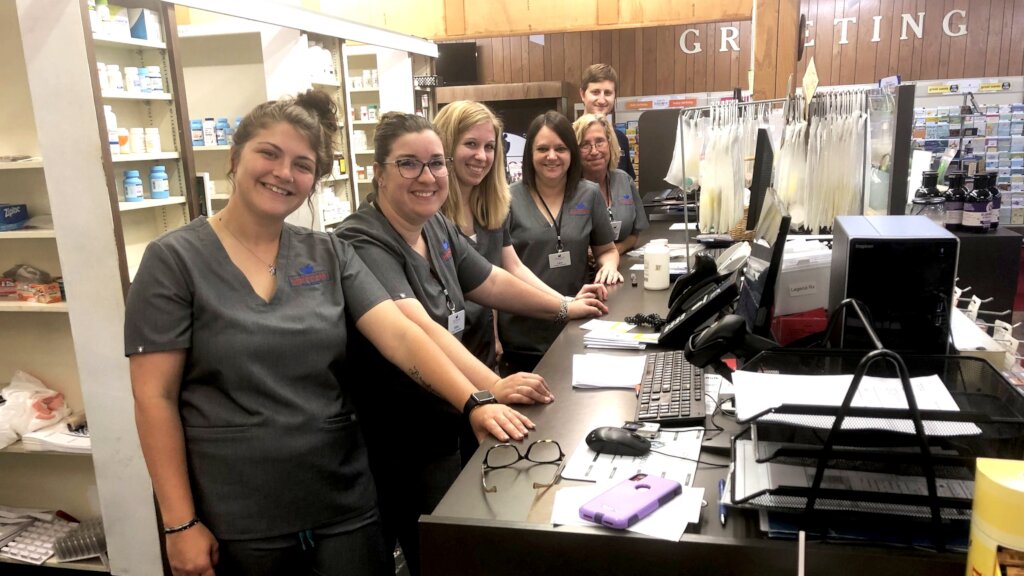
At every stop, I met people who had stayed. Who had showed up the morning after the storm, unlocked the door, and started figuring out what their patients needed. Who had sourced medications, found transportation, tracked down formula, and in some cases helped patients find a place to sleep, all while managing their own losses, their own fear, their own grief.
These are the people this work is really about.
Keeping the Lights On
At Warrensville Drug Store in Ashe County, pharmacist and pharmacy manager Michelle Townsend described what those first days were like: three to four feet of water in the basement, roads toward Tennessee completely washed out, no grid power for three to four days. Patients were cut off. The pharmacy was too. And yet they stayed open.
Nine pharmacies across the Western NC region received backup power generators through the grant, a mix of whole-building systems and portable critical systems generators with solar capability.
At Warrensville, the new generator isn't just a piece of equipment. It's a guarantee that the next time the grid fails, the pharmacy won't. In rural communities, that guarantee is not a small thing. It is, for many patients, the difference between receiving care in the days after a disaster or not receiving any for weeks.
The Work That Was Already Happening
That spirit of showing up, of doing what needs to be done without waiting to be asked, was not something Helene created. It was already there.
Through our partnership with CPESN-NC, 23 independent pharmacies across the region recorded more than 800 patient interventions in under six months, a pace I was told typically takes other networks a full year to reach. That number tells part of the story. The site visits told the rest.
At Sona Pharmacy and Clinic in Asheville, staff had identified long before Helene that transportation was the single greatest barrier their patients faced. They'd built a structured medication management and delivery program, Sona Access, to help individuals age in place and reduce caregiver burden. When a family lost their only vehicle to the storm, Sona's team sourced a replacement from out of state. They didn't wait to be asked. They just solved the problem.
One pharmacist, reflecting on what the grant made possible, said it plainly: "The program helped the pharmacy tremendously by reimbursing for things we typically were already doing for our patients. A small community pharmacy provides these services routinely."
That line has stayed with me. These pharmacies were not doing extraordinary things. They were doing ordinary things, the things they have always done, but under extraordinary circumstances. The grant didn't create the capacity. It recognized it, and hopefully will amplify it.
What Nobody Warned Them About
That capacity, it turned out, came at a cost that had gone largely unacknowledged.
The grant's Mental Health First Aid component, provided in partnership with NCPA, was designed to train pharmacy staff to recognize and respond to mental health crises in their patients. But the survey responses we collected revealed that the staff themselves were struggling.
A postpartum employee described searching for infant formula in the dark, without power. A parent described hiding their fear from a four-year-old while listening to their roof come apart overhead. Staff described months of ongoing anxiety triggered by rain, by wind, by the sound of chainsaws in the distance. One person wrote: "I was too busy caring and serving others to really think about myself. I feel like I now have PTSD to a degree."
We listened. Toward the end of the grant period, we adjusted our programming to include mental health microgrants for pharmacy staff, with the explicit encouragement to invest in their own wellbeing, not just their patients'.
During my site visits, staff were friendly and gracious. They were also, more than once, in tears. Not for themselves, they were quick to clarify, but for their patients. For the neighbors who hadn't come back. For the regulars whose homes were gone.
These individuals are disaster responders. They stayed open when others closed. They followed up long after the news cycle had moved on. And when they finally had space to reflect, whether in a survey or in a conversation with me, what surfaced was grief, exhaustion, and a deep, unacknowledged need for care.
The profession must build systems of support that match the weight of what is being asked of these people. Not as an afterthought, but as an ongoing responsibility.
What This Proves
The pharmacies of western North Carolina didn't become essential during Helene. They already were. The storm just made it impossible to look away.
What this grant demonstrated, and what funders, health systems, and policymakers need to understand, is that investing in community pharmacy infrastructure is not a niche priority. It is a rural healthcare strategy.
Emergency preparedness, workforce resilience, community health access: these are not separate programs. They are a single, coherent model for how independent pharmacy serves rural America.
The next disaster is not a question of if. When it comes, these pharmacies will again be among the first to open their doors. The NCPA Foundation is committed to making sure they are ready, and that when the water rises, they are not facing it alone.
Links:
Project reports on GlobalGiving are posted directly to globalgiving.org by Project Leaders as they are completed, generally every 3-4 months. To protect the integrity of these documents, GlobalGiving does not alter them; therefore you may find some language or formatting issues.
If you donate to this project or have donated to this project, you can receive an email when this project posts a report. You can also subscribe for reports without donating.



Support this important cause by creating a personalized fundraising page.
Start a Fundraiser